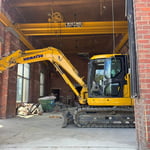
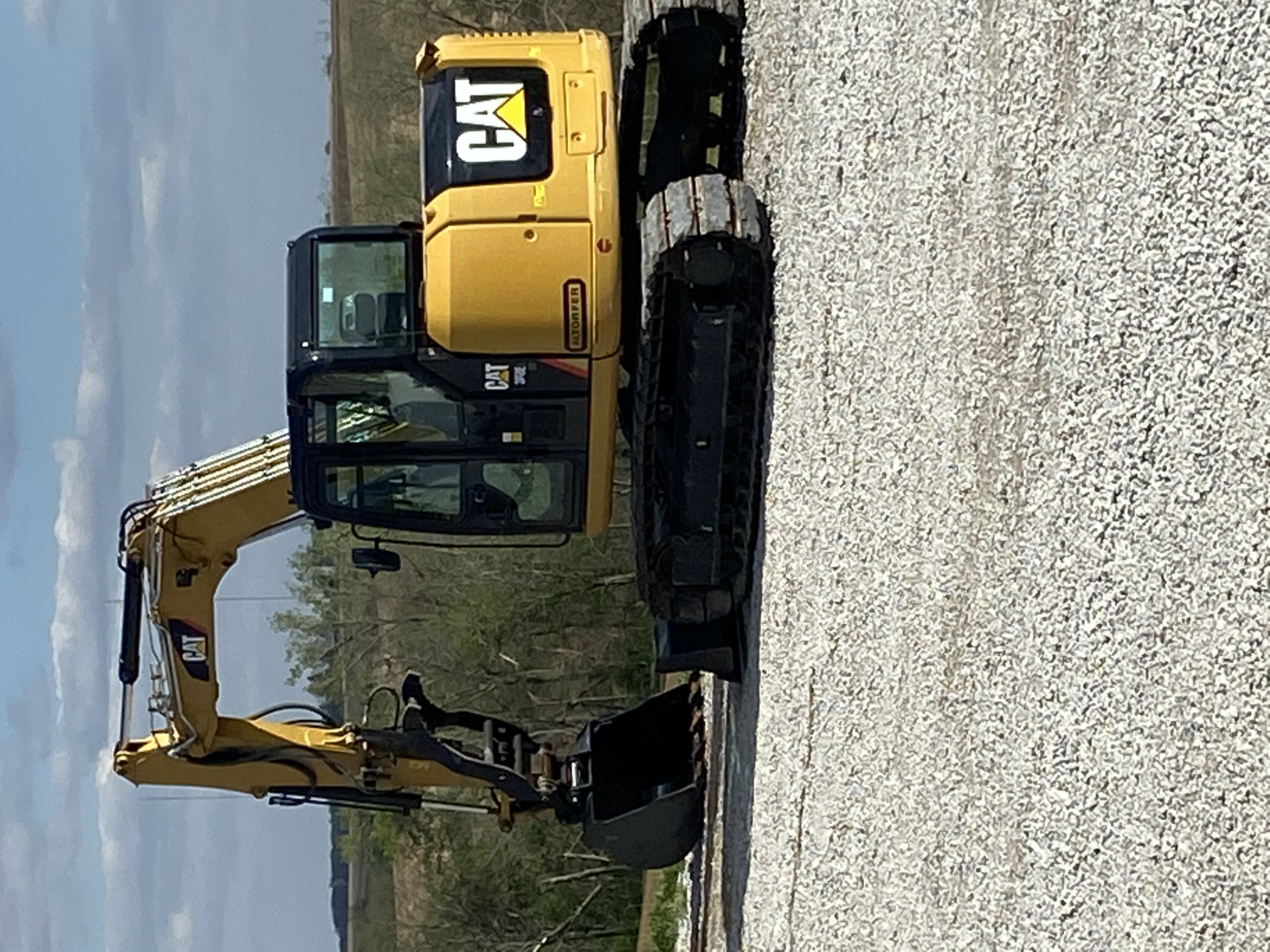
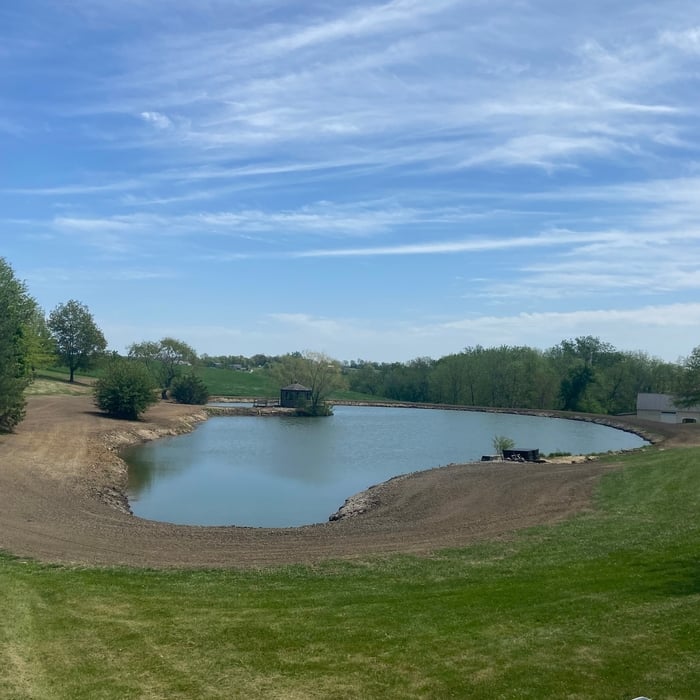
"Trey contacted me the same day that I placed my request He understood exactly what was needed and handled the entire project on time and on budget. We would highly recommend Sedenka Excavating and Habitat."
"I highly recommend Ground Line Company for any excavation or utility prep work. I’ve partnered with them on multiple jobs, and their attention to detail is top-tier. They are precise with their depths and layouts, which is critical for electrical inspections and code compliance."
Make General Tree Service, Inc., your one stop shop for all your tree trimming and tree removal needs. We are professional efficient and always get the job done right the first time. We are experts in our trade, and will stop at nothing to ensure 100% satisfaction. So stop shopping around, and give us a chance to earn your business. Call today for your free estimate!
Cedar Prairie Grading, LLC, is a locally-owned and operated business that prides itself on quality work at fair prices. We have been in the Cedar Rapids area for many years and we treat each customer as our neighbor. When you want a building pad prepared for your dream home, major excavation or grading, or any other earthwork project completed, call Cedar Prairie Grading, LLC. We have the equipment and knowledge to handle any job.
We pride our services on reliability, great communication, integrity, and quality work. We will do our best to keep you as educated as we can on your particular task or project. We look forward to earning your business!
WHITTERS EARTHMOVING LLC is dedicated to providing our customers with the best quality and craftsmanship. We are here to build relationships with our customers and communities and to provide our employees with a great place to work. We look forward to working with you!!!!!!
We pride ourselves on in the work we do for our customer\nClean Fence rows\nClear trees and shrubs on farms\nDo odd jobs with Excavator/Skid Loader\nBuild roadways\nDig footings\nDig basements\nHelped contractor with sports complex putting in drainage
Here at Custom Earth Works, we sustain our business on quality and integrity. We are experts in our trade and our commitment to quality from beginning to end of your project. We look forward to earning your business. Call us anytime with any questions you may have. Thanks for your time and have a great day.
At our company, we prioritize reliability, excellent communication, integrity, and delivering high-quality work. We possess expertise in our trade and are dedicated to keeping you well-informed about your specific task or project. We eagerly anticipate the opportunity to earn your business!
Yes. A metal detector is one of the quickest and easiest ways to find your septic tank. However, metal detectors can be too expensive (costing upward of $300 in some cases), and not everyone has a metal detector just lying around. If that’s the case for you, you can also take a long metal rod and poke it into the ground at regular intervals until you hit something—likely your septic tank lid.
Errors in site preparation can lead to structural failures or appear costly midway. Professionals ensure detailed, reliable home base development layouts.
Yes, professional installations include trenching or borehole drilling required for ground loops.
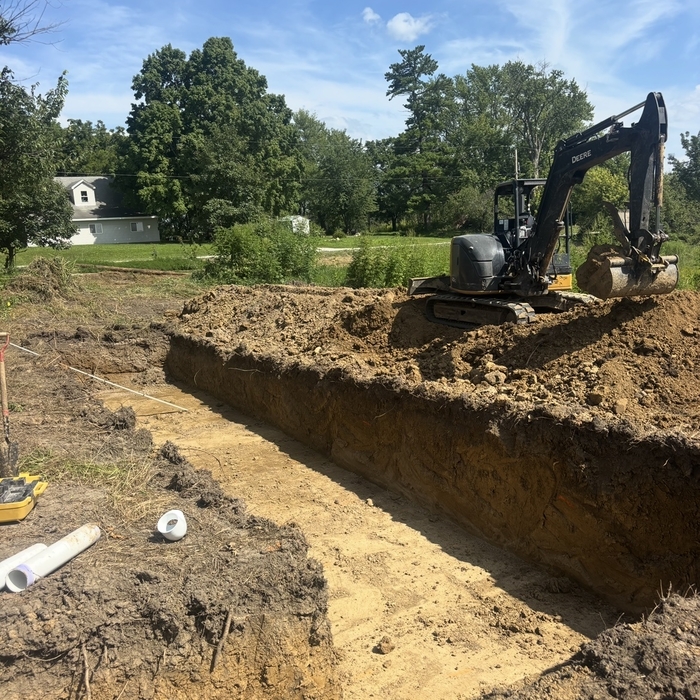
Trenches are typically 12 to 24 inches deep and 8 inches wide. However, the required depth depends on the specific project and local ordinances. For example, a French drain may need to be 18 inches deep, while a water pipe might require a depth of 24 inches and a drainage pipe 36 inches. Your city or county may have specific regulations, so it's wise to consult with an excavation professional to determine the correct depth for your project.
Because decomposed granite is a durable material, a crushed rock or gravel base is optional as long as the DG is properly installed and compacted. However, installing a base is a good idea because it will ensure proper drainage and stability and act as a weed suppressant (although you may still occasionally have to pull weeds). Installing an adequate base can also increase the durability of driveways and walkways. If you forego the paver base or gravel underneath, line the area with landscaping fabric to avoid weeds.
The Lone Tree, IA homeowners’ guide to excavation services
From average costs to expert advice, get all the answers you need to get your job done.
Excavation costs $1,500 to $6,300 for most residential projects—but it depends on factors like the size of the area. This guide will help you plan a budget.
You can't have an in-ground pool without digging into the ground. How much does pool excavation cost, and can you take it on yourself? Our guide explains.