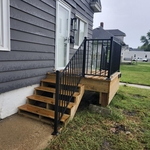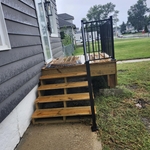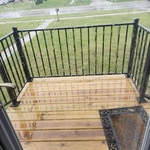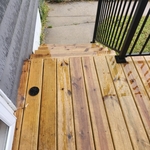








Top-rated deck cleaning pros.

Get matched with top deck cleaning pros in Hinton, IA

Enter your zip and get matched with up to 5 pros

Need a pro for your deck cleaning project in Hinton, IA?

Select your specific project to find the pro for you.

TRUSTED BY HINTON, IA HOMEOWNERS

  • Average homeowner rating star icon4.6
    Average homeowner rating
  • Verified reviews icon17
    Verified deck cleaning services reviews

Find Deck cleaning pros in Hinton

Wickstrom Lawn Care
5.0(
3
)
Deck, Fence, Patio or Porch - Clean and SealDeck, Fence, Patio or Porch - Clean and Seal - For Business

Serving Hinton, IA and surrounding areas

In business since 2024

Free estimates

Credit card accepted

Wickstrom Lawn Care is committed to excellence in every aspect of our business. We uphold a standard of integrity bound by fairness, honesty and personal responsibility. Our distinction is the quality of service we bring to our customers. Accurate knowledge of our trade combined with ability is what makes us true professionals. Above all, we are watchful of our customers interests, and make their concerns the basis of our business.

Response time2 days
Recommended by50%of homeowners
Showing 1-10 of 27
Deck Cleaning questions, answered by experts

The best direction for a gate to swing depends on its location and purpose, but swinging inward is the general rule. An inward swing is often considered safer, prevents the gate from opening into public spaces like a sidewalk, and may be required by local building codes.

There are exceptions and specific considerations. If your property is on a slope, an inward swing might not be possible. For a deck gate, it's safest to have it swing away from any steps. In a backyard, the direction can be a matter of preference, though an inward swing can be helpful when carrying heavy items like a wheelbarrow into a garden.

Regardless of direction, ensure the gate can open fully without hitting any objects or blocking spaces. While an inward swing is standard, a gate that can swing both in and out offers the most flexibility if your setup allows for it.

Pavers are a great decking option for pools. They’re customizable, come in a variety of shapes, sizes, colors, textures, materials, and price points, and they’re slip-resistant. Concrete pool decks, on the other hand, are harder to repair and replace if damaged and aren’t as slip-resistant as most paver materials. However, not all pavers are equal in terms of durability, maintenance, and performance. Pavers also have their own cons that may encourage homeowners to opt for stamped concrete instead, such as higher upfront costs.

Applying too much sealer to a deck might seem like extra protection, but it can cause more harm than good. Wood is a porous material with a limited capacity to absorb liquids. When you go overboard with sealer, the excess can't soak in and instead forms a film on the surface. This leftover layer is prone to peeling, cracking, and trapping moisture, ultimately defeating the purpose of sealing in the first place. 

Rotting wood, loose railings, or unstable stairs may indicate a need for expertise.

A deck that isn’t attached to a house is called a floating or freestanding deck. These standalone decks are built near ground level, so they usually don’t need deck stairs. Some don’t even require permits. Generally speaking, building a floating deck is faster and more DIY-friendly than constructing one that’s connected to your home.

The Hinton, IA homeowners’ guide to deck cleaning services

From average costs to expert advice, get all the answers you need to get your job done.