



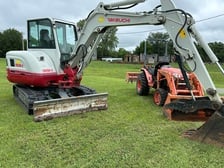
Top-rated excavation pros.

Get matched with top excavation pros in Fremont, IA

Enter your zip and get matched with up to 5 pros

Need a pro for your excavation project in Fremont, IA?

Select your specific project to find the pro for you.

Find Excavation pros in Fremont

VH Excavating LLC
3.3(
15
)

Serving Fremont, IA and surrounding areas

In business since 2009

Free estimates

Credit card accepted

"Quality, competence, and excellence. From the first day to the last, they gave 110% through every single facet of the project. They treated this project not only as a job, but as a way to help and contribute to a neighborhood in need of revitalization! They are top rate and unparalleled. No higher outcome could have been given. Highly recommend!"
Recommended by100%of homeowners
Grout Excavating
New to Angi

Serving Fremont, IA and surrounding areas

In business since 2016

Free estimates

Timothy is committed to excellence in every aspect of our business. We uphold a standard of integrity bound by fairness, honesty, and personal responsibility. Our distinction is the quality of service we bring to our customers. Accurate knowledge of our trade combined with ability is what makes us true professionals. Above all, we are watchful of our customers interests, and make their concerns the basis of our business.

Strohman Backhoeing
New to Angi

Serving Fremont, IA and surrounding areas

In business since 2003

Free estimates

Credit card accepted

We are dedicated to providing our clients with the very best in excavation and building site services. We specialize in residential and commercial services and take pride in the attention to detail put into each of the projects we're involved with. We're known for our quality work and the integrity of our business. We look forward to building long-term relationships with our clients, and guarantee your satisfaction.

Response time1 day
Showing 1-10 of 16
Excavating questions, answered by experts

Excavation is priced in cubic yards, so you’ll need to find the volume of the area in order to calculate costs. Multiply the length, width, and proposed depth of your excavation site, then convert it into yards to get the volume. Multiply this figure by the price per cubic yard.

Most homeowners can measure by hand to get a rough estimate, even if it’s tedious. You may want to pull out a tape measure or use a string to help mark the area.

Underground downspouts refer to the sections of downspout extensions that lead away from your home and gutter system. While they cost more than traditional extensions, they can provide several benefits, such as less frequent damage and no need to move them for lawn care tasks. Whether they're worth it or not depends on your budget at installation time and how much convenience they'll add to your situation.

Call 811 to locate and mark the gas lines at least three days before digging. In many areas, you can dig within 18 inches of the lines, though in some locations, the distance may be further. Check local regulations, as you may need a utility company representative onsite when digging. Document your calls to 811 and precautions taken to avoid gas lines. A homeowner can be held liable for hitting a gas line in some cases, but contacting the proper authorities and following all guidelines can offer protection.

In most areas, you will need a permit for excavation work, even for projects that only involve grading or yard leveling. Permit requirements depend on your local government and the scope of the project, but they are especially common for significant digging or work that could affect utilities or public property. These permits help protect the local topography and prevent drainage issues. An experienced excavation company will typically know whether permits are needed and can often handle the process of pulling and closing them for you. You can also verify permit requirements by contacting your local building department and describing your project.

Septic drain lines (or leach lines) are typically buried between 18 and 36 inches underground, and should be at least 6 inches below the surface. These pipes are perforated and surrounded by filtering materials like sand or gravel. Burying the lines at this depth helps minimize odors and allows bacteria and other biological processes in the soil to effectively treat the wastewater. Burying lines too close to the surface can cause issues unless the soil is very compact and stable.

The Fremont, IA homeowners’ guide to excavation services

From average costs to expert advice, get all the answers you need to get your job done.