




Top-rated stucco pros.

Get matched with top stucco pros in Dike, IA

Enter your zip and get matched with up to 5 pros

Find Stucco pros in Dike

Stucco questions, answered by experts

The curing time for stucco typically takes several weeks to fully complete. During the curing process, the stucco undergoes a chemical reaction and gradually hardens. It's important to note that curing is different from drying. While the surface of the stucco may dry relatively quickly within a few hours or days, the curing process continues beneath the surface, strengthening and solidifying the stucco. 

It's best to avoid excessive moisture exposure during the curing period, as it can impede the curing process. The exact curing time can vary based on factors such as temperature, humidity, and the specific stucco mixture used.

One of the most significant downsides to stucco is the installation cost, which is higher than that of many other siding options because getting it to look clean and professional is a labor-intensive process. Stucco can also absorb water, making it an unsuitable option for siding in areas that see excessive rainfall. Finally, stucco can crack and chip, especially in extreme weather, and repairs are not only challenging and require help from a professional who does stucco, but can get expensive.

Stucco will dry in two to three days, but you should wait one to two months to allow it to cure fully before you paint it. The curing process is slow, but leaving the material exposed to air and natural moisture will help it reach its maximum strength. If you live in a hot, arid climate, wait a month before painting. Wait two months before painting if you live in a more moderate or wet climate.

Masonry screws are the best option to be used on stucco. They’re thicker and made to penetrate harder surfaces like concrete and cinder blocks. Fluted masonry screws work the best because they create a stronger grasp thanks to the lines on their shafts. If you’re working on exterior stucco, use galvanized screws to prevent corrosion.

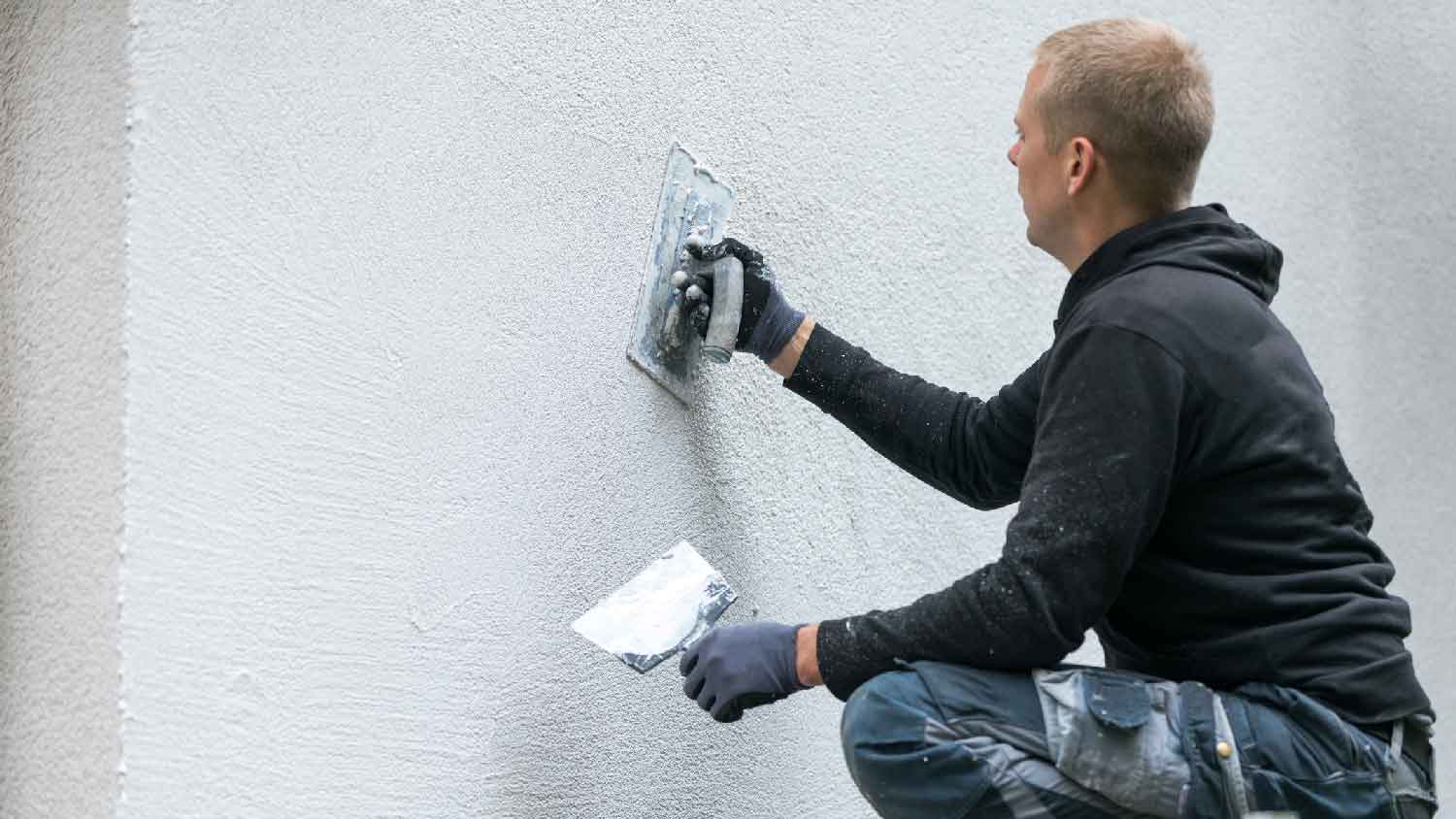
Stucco is very challenging to DIY, so it’s always best to leave the work to professional stucco contractors. The same recommendation applies to painting a stucco house, which should be left in the reliable hands of a professional exterior painter. Inexperienced DIYers can make several critical mistakes during stucco application, such as:

  • Failing to apply sufficiently thick layers for longevity and water resistance

  • Uneven application

  • Uneven texture across the exterior

  • Mixing the stucco improperly, leaving a weak structure

  • Failing to texture properly in between coats, leading to cracking and chipping

The Dike, IA homeowners’ guide to stucco services

From average costs to expert advice, get all the answers you need to get your job done.