Top-rated window tinters.

Get matched with top window tinters in Centerville, IA

Enter your zip and get matched with up to 5 pros

Need a pro for your window tinting project in Centerville, IA?

Select your specific project to find the pro for you.

Find Window tinters in Centerville

Avatar for Frontpoint
Frontpoint
4.7(
8,819
)

Serving Centerville, IA and surrounding areas

In business since 2007

Free estimates

Emergency services offered

"Sales process was good, courteous and helpful. Installation instructions were easy to follow. Did have a small issue with one sensor which was easily solved with a call. Control panel is easy to use and well constructed. Phone app is the best part. Not a big fan of a 2 year contract and the monthly rate feels a little high, but definitely a decent system. I had emailed them a question pertaining installing on double hung windows and never received a reply, but other than that their phone support prior to that was good."
Recommended by93%of homeowners
Dale's All Around Services
New to Angi

Serving Centerville, IA and surrounding areas

In business since 2000

Free estimates

We are a locally owned and operated company with over 20+ years of experience that values honesty and integrity and treats your home as if it were our own. We offer a variety of services including landscaping, tree services, and residential home updates that are customizable to each individual project. You will find us to be competitively priced, paying close attention to the details of each and every project that we are involved with. We look forward to building lasting relationships and guarantee your satisfaction!

Response time10 mins
Window Tinting questions, answered by experts

The average cost for home window tinting is around $600, with most homeowners paying between $150 and $1,600. Costs can also be calculated per square foot, typically ranging from $2 to $100, or per window at around $75 each. For example, tinting one or two windows might cost between $200 and $350, while a larger project of 13 to 15 windows could range from $4,124 to $4,747.

Several factors influence the total project cost, with the number and size of the windows being the most significant. Other key factors include the type, shade, and quality of the tint film, as well as labor costs. Additional treatments, such as low-emissivity (low-E) coatings, can also increase material costs.

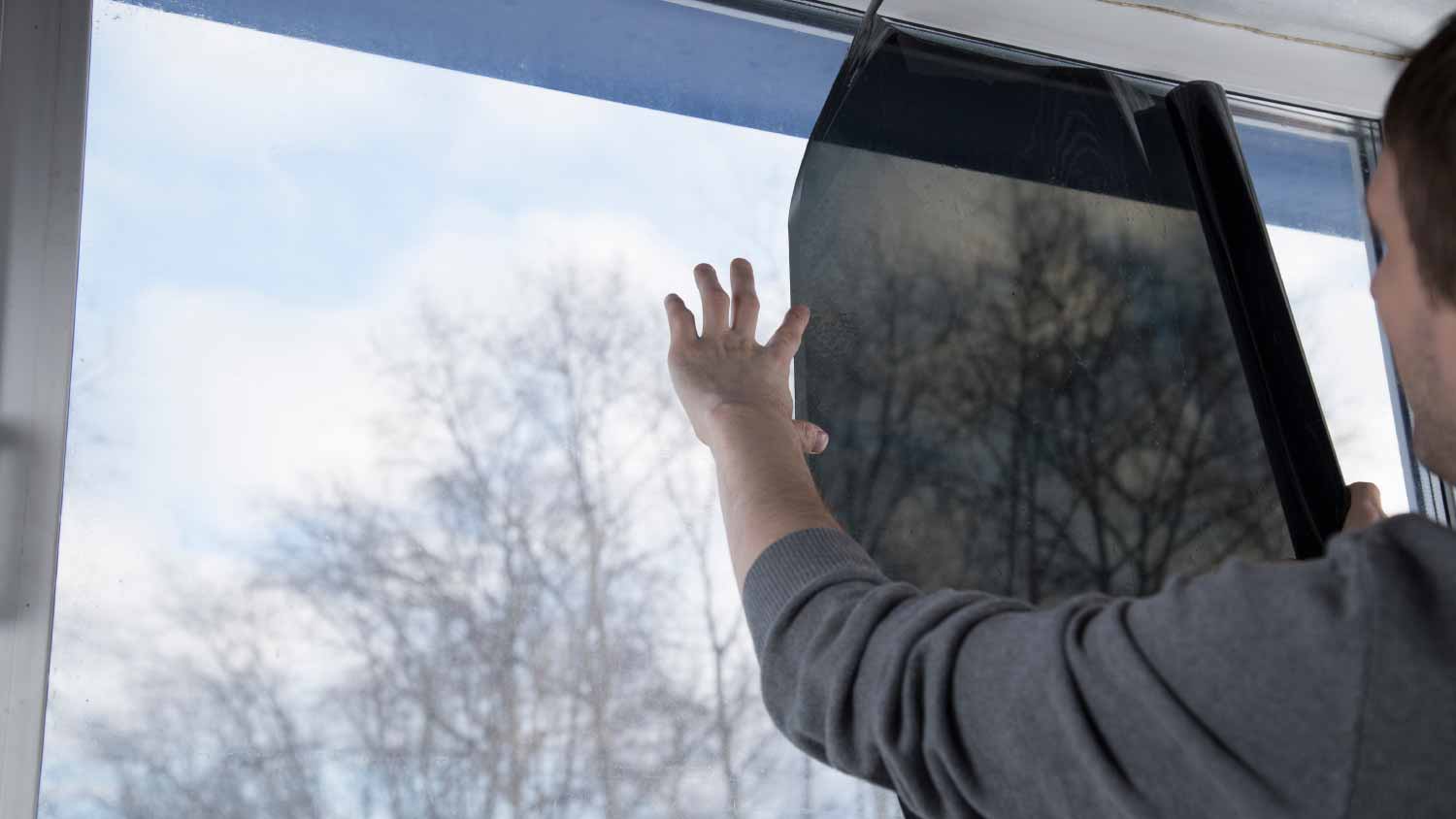
Window tinting offers several benefits, such as making your home more energy-efficient by blocking harsh sunlight, protecting furniture from fading, and increasing privacy. For this reason, many homeowners choose to tint only the windows in specific areas where direct sunlight and privacy are primary concerns.


You can easily and cheaply use tin foil or cardboard to black out your windows. Save a pretty penny by cutting either material to the size of your windows and taping it to the window. This is one of the easiest and most budget-friendly blackout solutions, but it definitely isn’t the most aesthetically friendly.  

The visibility through tinted house windows depends on the lighting. During the day, when it is brighter outside, privacy film prevents people from seeing into your home. However, this effect reverses at night. If you have lights on inside, it becomes brighter indoors than outdoors, allowing people to see inside. To optimize privacy, you can select from various shades of film, ranging from lighter to darker, which affects how much is visible from the outside.

Window security film has a few key benefits that make it an enticing home improvement:

  • It’s much more affordable than shatterproof windows or hurricane windows.

  • It improves your home’s energy efficiency and can save money on heating and cooling bills.

  • It makes it harder to break into your home.

  • It helps prevent dangerous shattered glass after an impact.

  • You can tint it to provide additional protection from the sunlight.

Cellular shades, also known as honeycomb shades, are the most energy-efficient and insulating window treatments. Their honeycomb structure is made of soft fabric that forms layered cell pockets. These pockets trap air, creating a thermal barrier that reduces heat loss in the winter and blocks heat gain in the summer. For even greater insulation, consider double- or triple-cell varieties. Side-tracked cellular shades, which seal the edges of the window frame, can further minimize air leaks and maximize energy efficiency.

The Centerville, IA homeowners’ guide to window tinting services

From average costs to expert advice, get all the answers you need to get your job done.