





Top-rated ceiling fan pros.

Get matched with top ceiling fan pros in Blakely, GA

Enter your zip and get matched with up to 5 pros

Need a pro for your ceiling fan service project in Blakely, GA?

Select your specific project to find the pro for you.

Find Ceiling fan pros in Blakely

Floors Sag or Shake
4.7(
129
)
Ceiling Fan - InstallCeiling Fan - Repair

Serving Blakely, GA and surrounding areas

In business since 1980

Free estimates

Credit card accepted

"Very well. The slight dip in the kitchen looks better and the doors trued up. The slight sag still in the kitchen floor is because of the sub floor plywood which I didn't want to get in to. They leveled the joist by shimming the tops of several cinder block posts and installing a pair permanent of steel posts under a section of joist the previous owner had cut in two."
Recommended by93%of homeowners

Avatar for American Home Shield – Home Warranty
American Home Shield – Home Warranty
3.5(
5,688
)
Ceiling Fan - InstallCeiling Fan - Repair

Serving Blakely, GA and surrounding areas

In business since 1971

Credit card accepted

"I love American Shield.  I love American Shield.  I love them. We have 2 homes; this home is 30 years old, our home in California is twenty years old and we have used them in both places.
A, number 1, plus, plus!"
Additional Photos
Additional Photos
Additional Photos
Additional Photos
Additional Photos

+2

Recommended by65%of homeowners
Ceiling Fans questions, answered by experts

The direction your ceiling fan spins helps create comfortable airflow in your home and can also help cut down on energy costs. 

During summer, your ceiling fan should spin counterclockwise. This will push cooler air downward in a column and help lower your room’s air temperature. In the winter, set your ceiling fan to spin clockwise and at the lowest speed setting. This will pull cool air upwards, displacing the warm air that pools towards the top of your ceiling and bringing it down towards the floor.

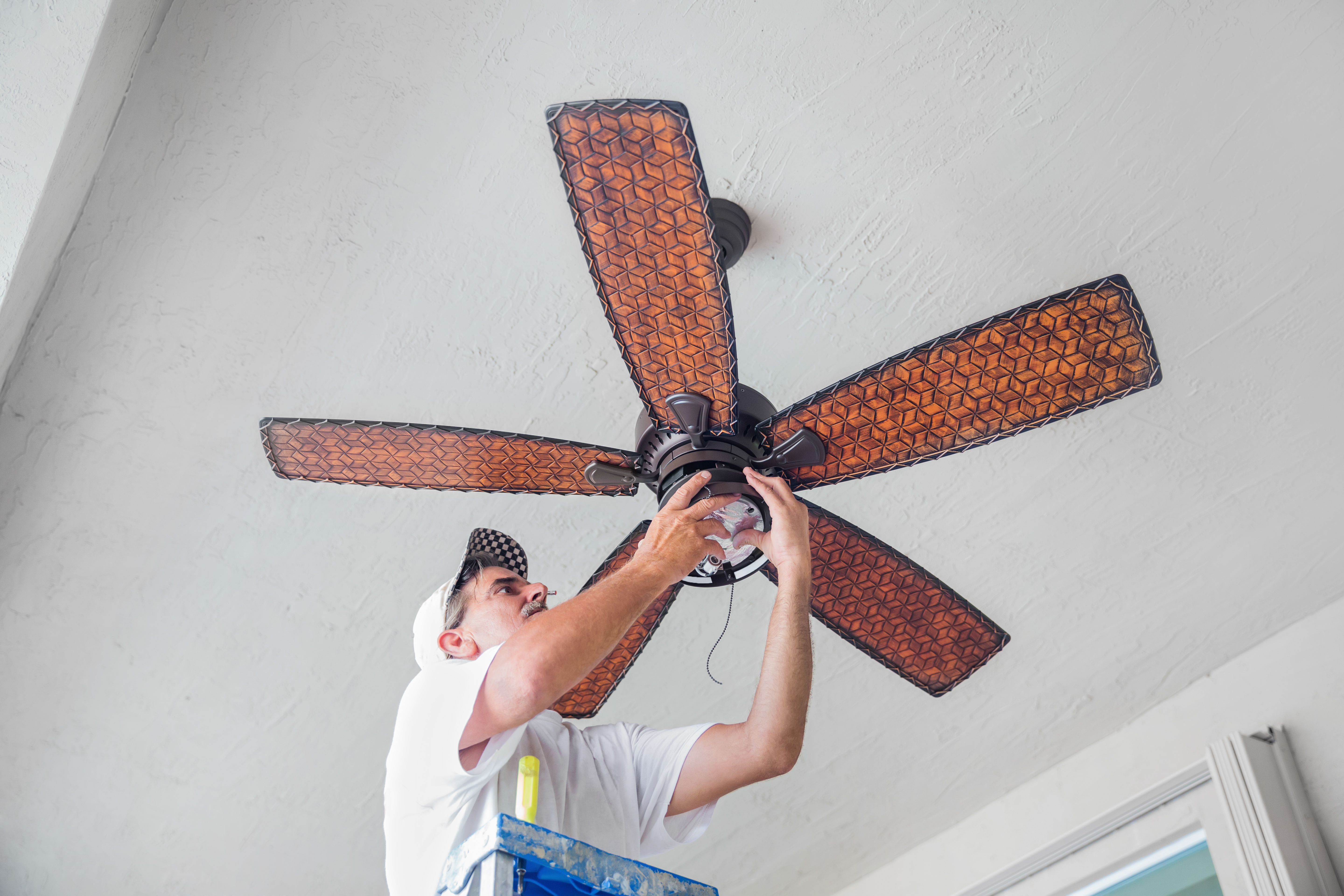
A typical fan installation takes between two and six hours. The exact timeframe can be influenced by factors such as the home's structure, existing electrical characteristics, ease of attic access, and whether complex wiring or additional attic ventilation work is required.

The square footage of your room will dictate the correct ceiling fan blade size. For example: 

  • Rooms smaller than 75 square feet require a fan that is 29 to 36 inches.

  • Rooms up to 175 square feet require 42- to 48-inch fans.

  • Rooms up to 350 square feet require 52- to 56-inch fans.

  • Expansive spaces over 350 square feet need a fan larger than 60 inches.

There are many types of ceiling fans available, each designed for different spaces and needs. Standard ceiling fans are the most common type and work well in most rooms. Low-profile ceiling fans are better suited for rooms with low ceilings. Smart ceiling fans can be controlled with a smartphone or voice commands. For larger spaces with ceilings between 10 and 25 feet high, large ceiling fans are ideal. Dual-motor fans have two motors to produce more airflow in multiple directions. You can also find energy-efficient or Energy-Star models that can be up to 60% more efficient, as well as fans with built-in lights or retractable blades.

The more surface area that a ceiling fan blade has, the more effective it will be at producing airflow. Therefore, a longer ceiling fan blade is the better option if you’re looking for more wind. However, a longer blade will consume more energy than a shorter blade.

The Blakely, GA homeowners’ guide to ceiling fan services

From average costs to expert advice, get all the answers you need to get your job done.