






Top-rated generator install pros.

Get matched with top generator install pros in Goshen, CT

Enter your zip and get matched with up to 5 pros

Need a pro for your generator install project in Goshen, CT?

Select your specific project to find the pro for you.

Find Generator install pros in Goshen

Avatar for Connoles Electric, LLC
Connoles Electric, LLC
4.8(
82
)
Generator - Install - For BusinessPortable Generator - Install

Serving Goshen, CT and surrounding areas

Approved

In business since 1984

Free estimates

Credit card accepted

"Ted and Robert arrived, got right t to it and within a few hours we had 2 ceiling fans installed, one which had no existing light so it was a more involved project. They were professional and stuck to their original quote! To say we are impressed is an understatement. We strongly recommend using Connole Electric."
1 neighbors recently requested a quote
Recommended by98%of homeowners

Avatar for MGT Electrical Services
MGT Electrical Services
5.0(
11
)
Fixed Generator - InstallFixed Generator - RepairGenerator - Repair - For Business+1 more

Serving Goshen, CT and surrounding areas

Approved

In business since 2021

Free estimates

Warranties offered

"They came out in the middle of a storm and promptly hooked the generator to my panel. While I thought I’d be running extension cords to my appliances it turned out that the whole house was up and running. I wish I had done this earlier. I would recommend MGT for any electrical needs. I will surely use them again."
15 neighbors recently requested a quote
Recommended by90%of homeowners

Avatar for Firemans Services LLC
Firemans Services LLC
5.0(
4
)
Portable Generator - Repair

Serving Goshen, CT and surrounding areas

Approved

Free estimates

Emergency services offered

Warranties offered

Firemans Services LLC is a trusted, locally owned electrical contracting company dedicated to delivering safe, reliable, and high-quality electrical solutions. We specialize in residential and light commercial work, including service upgrades, panel replacements, generator installations, and custom electrical projects.\n\nWith a strong commitment to craftsmanship and customer satisfaction, our team takes pride in doing the job right the first time—on schedule and within budget. Whether you need a full service upgrade, backup power solutions, or everyday electrical repairs, Firemans Services LLC is your dependable choice for professional service you can count on.

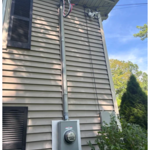
Meter
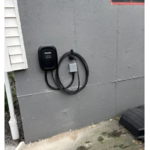
Tesla Charger
Avatar for Torrington Electric LLC
Torrington Electric LLC
5.0(
4
)
Fixed Generator - Install

Serving Goshen, CT and surrounding areas

Approved

Free estimates

Offers commercial services

We take great pride in our experience, expertise, quality, and customer service that we provide to meet the consumer’s needs. It is our mission to provide excellent workmanship and complete customer satisfaction from start to completion of a project. In order to understand the needs and expectations of our customers, we take great care to work and communicate with every customer in a professional manner. Our reputation is based on service, safety, and quality, regardless of how large or small the job.\n\n

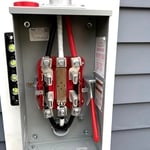
New Meter Socket
7 neighbors recently requested a quote
...
Showing 1-10 of 61
Generator Install questions, answered by experts

To determine the right size generator for your house, you should calculate the total wattage of the appliances and devices you want to power during an outage. List all essential items, note their start-up wattages, and add them together.

Here are some typical wattage requirements for common appliances:

  • Refrigerator: 600 watts

  • Large dehumidifier: 700 watts

  • Large window air conditioner: 1,400 watts

  • Water heater: 3,000 to 4,500 watts

  • Electric furnace: 5,000 to 25,000 watts

A 7,500-watt generator might be sufficient for essentials like a refrigerator, freezer, well pump, and lighting circuits. However, for high-demand items like a water heater or furnace, a whole-home generator is a better choice. A portable generator may be enough if you only need to power a few critical items.

While home square footage can offer a rough estimate, it is not always a reliable indicator. For reference, here are some typical generator sizes based on square footage:

  • 1,000 sq ft: 6–9 kW

  • 1,500 sq ft: 7–10 kW

  • 2,000 sq ft: 10–14 kW

  • 2,500 sq ft: 12–16 kW

  • 3,000 sq ft: 16–20 kW+

For the most accurate sizing, consult a professional who can calculate your home's peak and average power consumption and recommend the optimal generator.

In most cases, there are no tax credits available for home generators. However, that’s a general statement that applies to federal tax credits, so you might have access to state or local tax incentives. You can check the Database of State Incentives for Renewables & Efficiency (DSIRE) for more information about your area. If you hire a reliable home generator installer, they should also know if there are any state or local perks you can use to reduce your installation costs, including tax breaks and rebates.

Generally, you’ll want to keep between 60 and 70 feet between the generator and the transfer switch. There are a few reasons for this, including:

  • The distance reduces the noise coming from the generator into your home.

  • It increases efficiency because you won’t have a voltage drop from this short of a distance.

  • Prevents carbon monoxide poisoning: keep at least 15 feet between your generator and an open window. 

If you’re wondering if you can use your electric vehicle as a backup battery, it depends on whether your EV is compatible with bidirectional charging. This technology allows energy to flow both ways, enabling vehicle-to-home (V2H) backup power, vehicle-to-load (V2L) for appliances and camping, and vehicle-to-grid (V2G) to support the power grid. Compatible EVs convert stored DC energy into usable AC power, helping reduce energy costs and enhance grid stability while providing emergency backup power.

Here’s what you can run with different wattages and types of generators:

Portable generator:

  • 2,000 watts can handle a large appliance like a freezer or refrigerator, plus a few smaller items like phones or computer chargers. 

  • 4,000 watts will keep two large appliances operating and a few smaller devices.

  • 8,000 watts should power most essential appliances and other devices, including a sump pump, well pump, or your dishwasher.

Partial to whole-house generator:

  • 20,000 watts and above will make it seem like your home’s power is still on.

The Goshen, CT homeowners’ guide to generator installs

From average costs to expert advice, get all the answers you need to get your job done.