Here at Inline Construction, we are a locally owned and operated company that values honesty and integrity and treats your home as if it were our own. We offer a variety of quality home improvement services. You will find us to be competitively priced with close attention to the details of each and every project that we are involved with. We look forward to building lasting relationships and guarantee your satisfaction!
Pavers are a great decking option for pools. They’re customizable, come in a variety of shapes, sizes, colors, textures, materials, and price points, and they’re slip-resistant. Concrete pool decks, on the other hand, are harder to repair and replace if damaged and aren’t as slip-resistant as most paver materials. However, not all pavers are equal in terms of durability, maintenance, and performance. Pavers also have their own cons that may encourage homeowners to opt for stamped concrete instead, such as higher upfront costs.
Typically, most residential wooden decks are designed to support approximately 40 pounds per square foot, including the deck’s weight and any items placed on it. While this is fine for typical use, it is usually not enough to hold the weight of a hot tub filled with water and people. To safely support a hot tub, your wood deck will likely require reinforcement. Therefore, it’s best to have a contractor or a structural engineer assess it before hot tub installation.
An above-ground pool with a deck can increase your home's value by as much as 4% to 7%, but it depends on your local climate, potential buyers, and the size and condition of your pool. Some buyers see a pool as a liability instead of a luxury, especially if it's at the end of its life span. In general, it's best to add a pool and deck to your property if it will bring you enjoyment—not because it raises the value of your home.
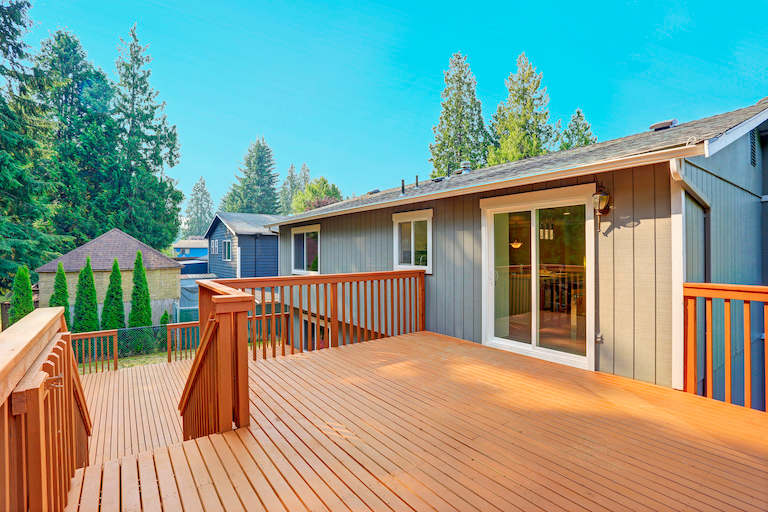
Most building codes require that railing spindles (also known as balusters) on decks or stairs be spaced no more than four inches apart. This safety standard is often called the '4-inch sphere rule,' which means a sphere with a 4-inch diameter should not be able to pass through the opening between balusters. This rule is in place to prevent small children and pets from slipping through the railing. For the same reason, the space between the bottom rail and the deck or floor surface should also be no more than four inches. As a general guideline, professionals often install three balusters per foot of railing. However, since specific requirements can vary by location, it is essential to check your local building codes to ensure compliance before starting your project.
Deck skirting shouldn’t touch the ground, especially if you have a wood deck, which is vulnerable to moisture. Ideally, you should leave at least 3/4 of an inch of space between the deck skirting and the ground for more ventilation. Pros also recommend that you incorporate about 1 square foot of space for ventilation for the underside of the deck to every 150 square feet of decking. Proper ventilation prevents mold growth and rot that can damage your deck.
The Cheyenne Wells, CO homeowners’ guide to deck cleaning services
From average costs to expert advice, get all the answers you need to get your job done.
Refinishing your deck is a great way to restore its appearance and fall in love with your outdoor space. Use this guide to learn how much it costs based on factors like size and type.
Learn how to clean a deck before staining to ensure long-lasting adhesion, weatherproofing, and optimum appearance of this coloring and protecting treatment.
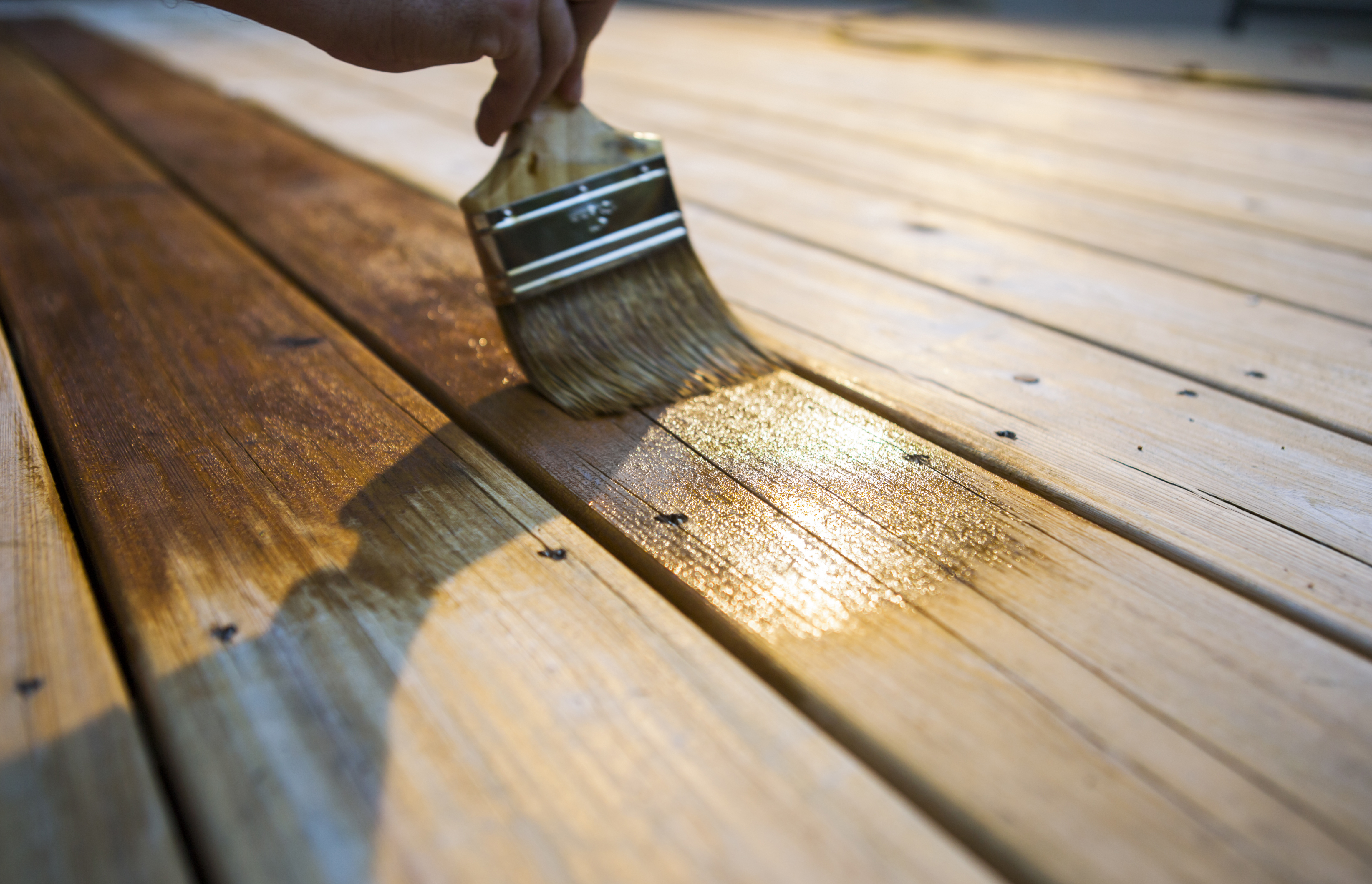
Deck maintenance is vital to protecting a wooden deck. Cleaning, staining and sealing a deck after pressure washing will add years to its lifespan. Protect a deck by following these deck maintenance tips for cedar and other types of wood materials.
Knowing how to clean and seal a deck can help extend its life and keep it looking like new. This DIY guide sheds light on the best way to clean a wood deck.