A & E Welding, Inc., is dedicated to providing our customers with the best quality and craftsmanship. We are here to build relationships with our customers and communities and to provide our employees with a great place to work.
\n
\nA & E Welding, Inc., is a leader in providing our customers with the highest quality products and craftsmanship in an honest, efficient, and professional way. Our pledge is to create successful relationships with our customers, employees and community by building trust and treating every project with the utmost integrity and exceeding expectations.
\n
\nWe look forward to working with you!
Cody Evert's Mobile Welding LLC is a family owned and operated business that has been in the welding industry for over 10 years. We are based in the central valley and offer our services to all surrounding Mountain areas 24/7 for all your welding needs day or night. Cody has been a welding instructor for the last two years and specializes in heavy equipment repair, fencing, and more. Other services such as aluminum, cast iron, mild steel and stainless steel and more are offered.
Wood, vinyl, chain link, and aluminum are common materials. Choose based on durability, maintenance needs, and aesthetics.
A horizontal fence is typically more expensive to build than a vertical fence, often costing between 10% and 20% more. The higher cost is due to the need for a higher grade of lumber and more posts to prevent the boards from sagging, which increases both material and labor expenses. Despite the higher price, horizontal fences tend to be more durable and offer a more distinct, modern look compared to the more common vertical picket style. However, they may not be the best option for privacy, as there can be slight gaps between the horizontal rails.
The ideal distance between fence posts depends on several factors, including the terrain, the purpose of the fence, and the material used. For different types of fences, here are some general guidelines:
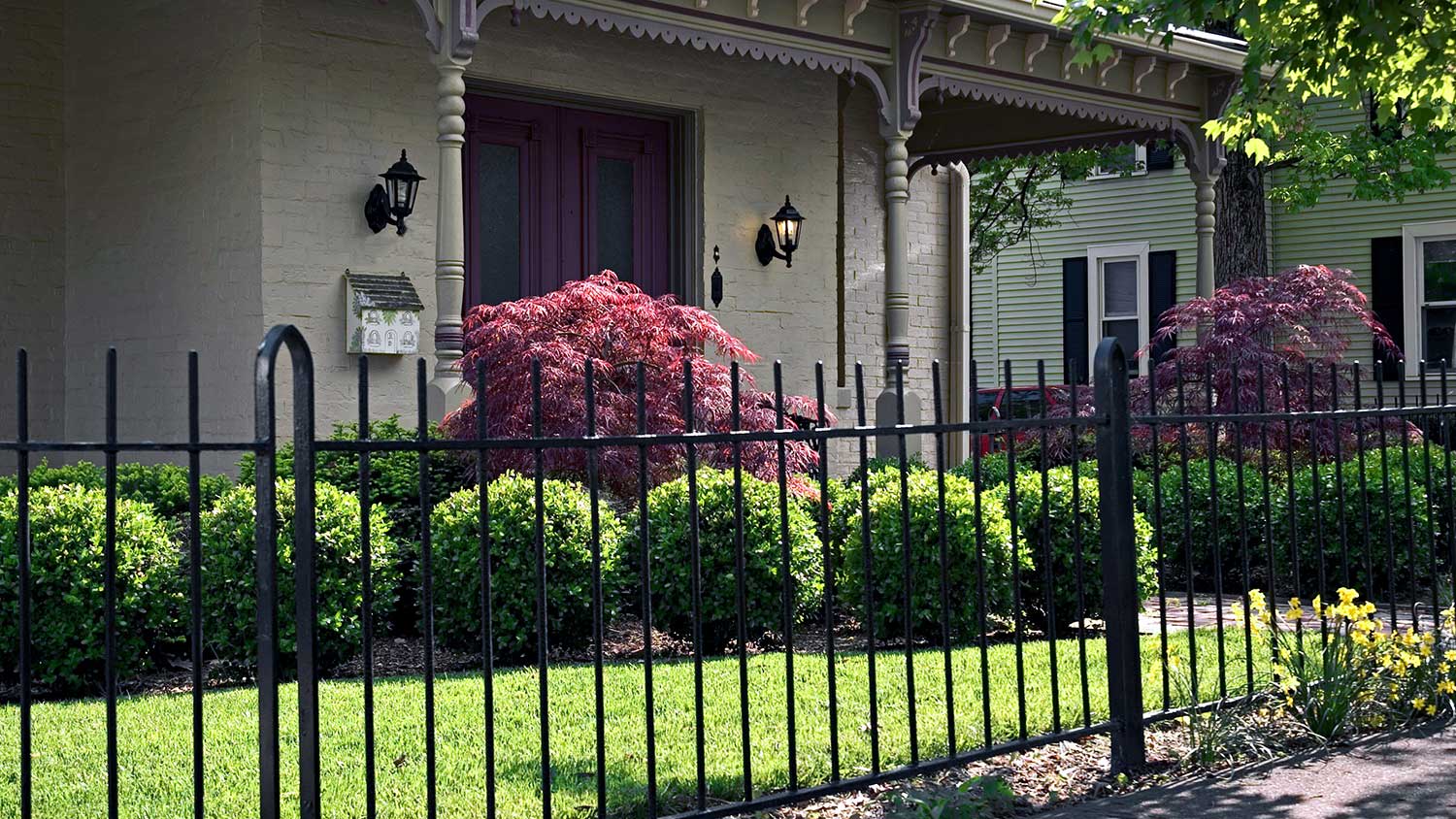
Wood and Metal Fences: Posts should be spaced between 5 and 8 feet apart.
Vinyl Fences: Spacing can be between 6 and 8 feet.
Chain-Link, Mesh, or Lattice Fences: Posts can be set anywhere from 4 to 25 feet apart, with 4-10 feet being common for chain-link.
Wire Fences: Spacing can be up to 12 feet apart.
Posts for a horizontal fence should be no more than 6 feet apart. Wood pickets are not as strong when mounted horizontally as when mounted vertically. As such, the fence panels on a horizontal fence can’t cover the same span between posts as a vertical fence can. If you install the posts further apart on a horizontal fence, the fence will lose stability, making the boards more likely to sag.
Whether metal fence posts need concrete depends on the environment and the ground they're placed on. For thick earth and areas without significant weather or high wind, you can get by without concrete, but in areas with weak dirt and strong seasonal weather, it's a good idea to install a concrete base on each individual post. This increases the cost but not as much as replacing or reinstalling the fence would.
The Bishop, CA homeowners’ guide to wrought iron services
From average costs to expert advice, get all the answers you need to get your job done.
Unsure who to hire to install a wrought iron fence? Compare fence contractors and ornamental iron pros, see how installation works, and choose confidently.