




Top-rated energy efficiency auditors.

Best energy efficiency auditors near Barling, AR

Enter your zip and get matched with up to 5 pros

Need a pro for your energy efficiency auditing project in Barling, AR?

Select your specific project to find the pro for you.

Top-Rated Energy efficiency auditors in Barling - Updated Nov 2026

Avatar for ADT Solar
ADT Solar
4.4(
111
)
Energy Audit - For BusinessHome Energy Audit

Serving Barling, AR and surrounding areas

In business since 2008

Free estimates

Warranties offered

"Rep. checked entire system. He found several wires not connected properly and fixed this. He also made recommendations regarding the attachment of the panels to the rood that would provide more stability and leakproofing. The representative appeared to know what he was doing - much better than others, including the representative who was engaged by the roofer (who replaced our rood due to hail damage) to disconnect/connect the panels."
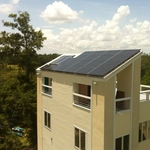
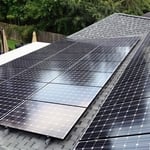
11 kW PV Installation
5 kW PV Installation
9.5 kW PV Installation
Recommended by89%of homeowners

Avatar for Harbour Home Inspections, LLC
Harbour Home Inspections, LLC
5.0(
1
)
Home Energy Audit

Serving Barling, AR and surrounding areas

In business since 2020

Free estimates

"They did a phenomenal job on our home inspection! He explained every detail of the report and was very thorough in his inspection. I would recommend them to all of my friends and family."
Asbestos Insulation
Water in return duct work.
Hallway Wall
Supply unhooked
Duct never terminated

+8

Response time3 hrs
Response rate94%
Recommended by100%of homeowners
Avatar for Natural State Contracting Group, Inc.
Natural State Contracting Group, Inc.
New to Angi
Home Energy Audit

Serving Barling, AR and surrounding areas

In business since 2003

We are a locally owned company providing quality service to homebuilders and homeowners in Northwest Arkansas. We pride ourselves on professional and neat installations with only qualified installers performing your work. We strive to meet the specific needs of each homeowner or builder by discussing your home's individual requirements prior to installation. Our work is never finished until you are completely satisfied and happy. \n \nWhether you need new construction installation, remodel or just adding extra insulation for comfort and energy efficiency, you can count on Don Foster's Insulation. Please call us today; we are looking forward to serving you.

Energy Efficiency Auditing FAQs, answered by experts

Dehumidifiers typically use 300 to 700 watts of electricity per hour, whereas portable dehumidifiers use about 40 watts per hour. The exact amount of electricity your dehumidifier will generate depends on its capacity and energy efficiency. Generally, higher-capacity dehumidifiers generate more electricity than lower-capacity units, but they also usually have better energy efficiency over the long run.

Window AC units use a fair amount of electricity, but significantly less than central AC systems. Because they are more energy-efficient for cooling individual rooms or small spaces, their usage is comparatively low. On average, a window AC unit consumes between 500 and 1,400 watts, while a central AC system uses over 3,500 watts—meaning a window unit uses about one-third of the energy. This typically translates to a monthly running cost of $15 to $40, although this can vary depending on external factors.

There are several signs that your house might have poor ventilation, including lingering odors, condensation on your windows, or mold and mildew. Your home may also feel stale and stuffy, or you might have trouble maintaining a comfortable temperature in your home. On top of that, you might develop allergy symptoms, such as sneezing, coughing, or headaches.

You can increase your home’s load factor by replacing fuse boxes with a circuit breaker, hiring a licensed electrician to upgrade your electrical panel, upgrading wiring, or installing subpanels. An electrical inspection by an expert can help determine the state of your current electrical systems and how they can be improved.

To determine the right size generator for your house, you should calculate the total wattage of the appliances and devices you want to power during an outage. List all essential items, note their start-up wattages, and add them together.

Here are some typical wattage requirements for common appliances:

  • Refrigerator: 600 watts

  • Large dehumidifier: 700 watts

  • Large window air conditioner: 1,400 watts

  • Water heater: 3,000 to 4,500 watts

  • Electric furnace: 5,000 to 25,000 watts

A 7,500-watt generator might be sufficient for essentials like a refrigerator, freezer, well pump, and lighting circuits. However, for high-demand items like a water heater or furnace, a whole-home generator is a better choice. A portable generator may be enough if you only need to power a few critical items.

While home square footage can offer a rough estimate, it is not always a reliable indicator. For reference, here are some typical generator sizes based on square footage:

  • 1,000 sq ft: 6–9 kW

  • 1,500 sq ft: 7–10 kW

  • 2,000 sq ft: 10–14 kW

  • 2,500 sq ft: 12–16 kW

  • 3,000 sq ft: 16–20 kW+

For the most accurate sizing, consult a professional who can calculate your home's peak and average power consumption and recommend the optimal generator.

The Barling, AR homeowners’ guide to energy efficiency auditing services

From average costs to expert advice, get all the answers you need to get your job done.