
•
Discover how much sump pump installation costs, including average prices, key cost factors, and tips to save on your basement waterproofing project.
Find a desirable drain location and keep going with the flow

Your sump pump drainage should direct water downhill and at least 10 to 20 feet away from your foundation to prevent recirculation back into your basement.
Directing discharge water into your home's septic system or sewer can overwhelm these systems and violates building codes, leading to backups and potential damage to your property.
Natural waterways like creeks and ponds offer excellent drainage options, and burying your discharge line underground protects it from damage while keeping your yard looking neat.
Hiring a local sump pump repair professional provides reliable guidance on proper discharge placement and ensures your system meets local codes while protecting your home from water damage.
You can lead a sump pump to water, but can you make it drain properly? If you’re curious where sump pump water goes, a good first thing to know would be “downhill.” Having a downward-sloped discharge line means that gravity can help your sump pump get rid of the water that threatens to flood your basement. We’ve got your all-encompassing sump pump drainage guide, complete with a list of do’s and don’ts, right here.
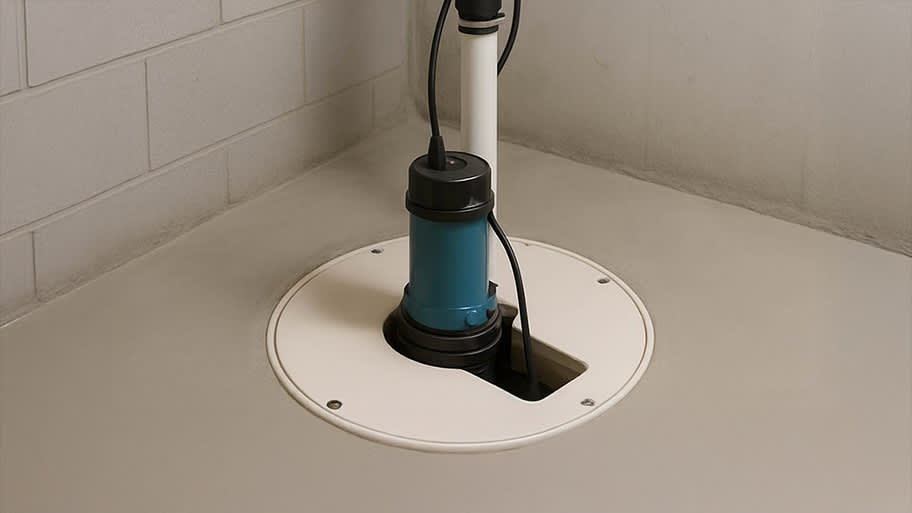
When you install a sump pump in your home, one of the decisions you’ll have to make is where to direct the sump pump drainage. In effect, what a sump pump does is take excess water from inside your house and pump it outside your house.
However, you can’t direct the discharge line to just any location outside your house. Here are some guidelines to follow, but you can always call a sump pump installer near you to make the process easier and ensure everything is installed to code.
| Sump Pump Drainage Do’s | Sump Pump Drainage Don’ts |
|---|---|
| Direct downhill | Direct uphill |
| Lead to storm drains | Lead to the bottom of a hill |
| Direct 10 to 20 feet away | Lead to sewers and septic tanks |
| Add a screen cover | Lead to streets and sidewalks |
| Lead to ponds and streams | Drain near property lines |

One of the simplest rules of thumb to follow for sump pump drainage is to look for areas with a natural downhill slope away from your home’s foundation. Let gravity do its thing.
Think about what happens if the sump pump water goes uphill. It will flow right back down the hill and back into your basement. Recirculating will simply make your sump pump work overtime and not actually rid your home of the excess rain or groundwater. Depending on the geography around your home, like if you live on very flat plains, you may not always be able to find a great downhill slope. Thankfully, you likely have other options on the table.
This will depend on what is available close to your home. If your neighborhood has storm drains nearby, you may be able to direct the sump pump drainage in their direction. Ideally, you can lead the discharge line directly to the storm drain, so the water can be taken away with the rest of the rainwater. The length and complexity of the discharge line will affect your total sump pump installation cost, but it can be a worthy investment to avoid future issues.
The ideal length of discharge piping is generally between 10 and 20 feet away from the foundation of the house. This is the distance needed to make sure the sump pump water gets far enough away not to recirculate back into your sump pump system.
If it’s shorter than 10 feet, you run the risk of pumping the same water over and over again, moving up the timeline for when to replace your sump pump. If it is much longer than 20 feet, then the sump pump motor has to work harder to push the water across that distance. That’s why 10 to 20 feet is the Goldilocks zone. There’s no need to absorb the cost of sump pump replacement prematurely or unnecessarily.
Other viable options for possible sump pump drainage include natural waterways in the area. These can be excellent options for homes in suburban or more rural areas with closer access to nature. Nearby creeks, rivers, and ponds can take on excess rainwater and groundwater from your sump pump, feeding back into the natural water cycle in your area. The water will flow downstream or get reabsorbed into the groundwater as it naturally would.
Remember that one of the key guiding principles for a sump pump system is that it should drain downhill. The land leading up to bodies of water like creeks and ponds has a natural downhill grade to it, allowing for a natural choice for sump pump drainage. This may call for covering a longer distance, though, so you may need to extend the drainage hose or invest in a more powerful sump pump motor.
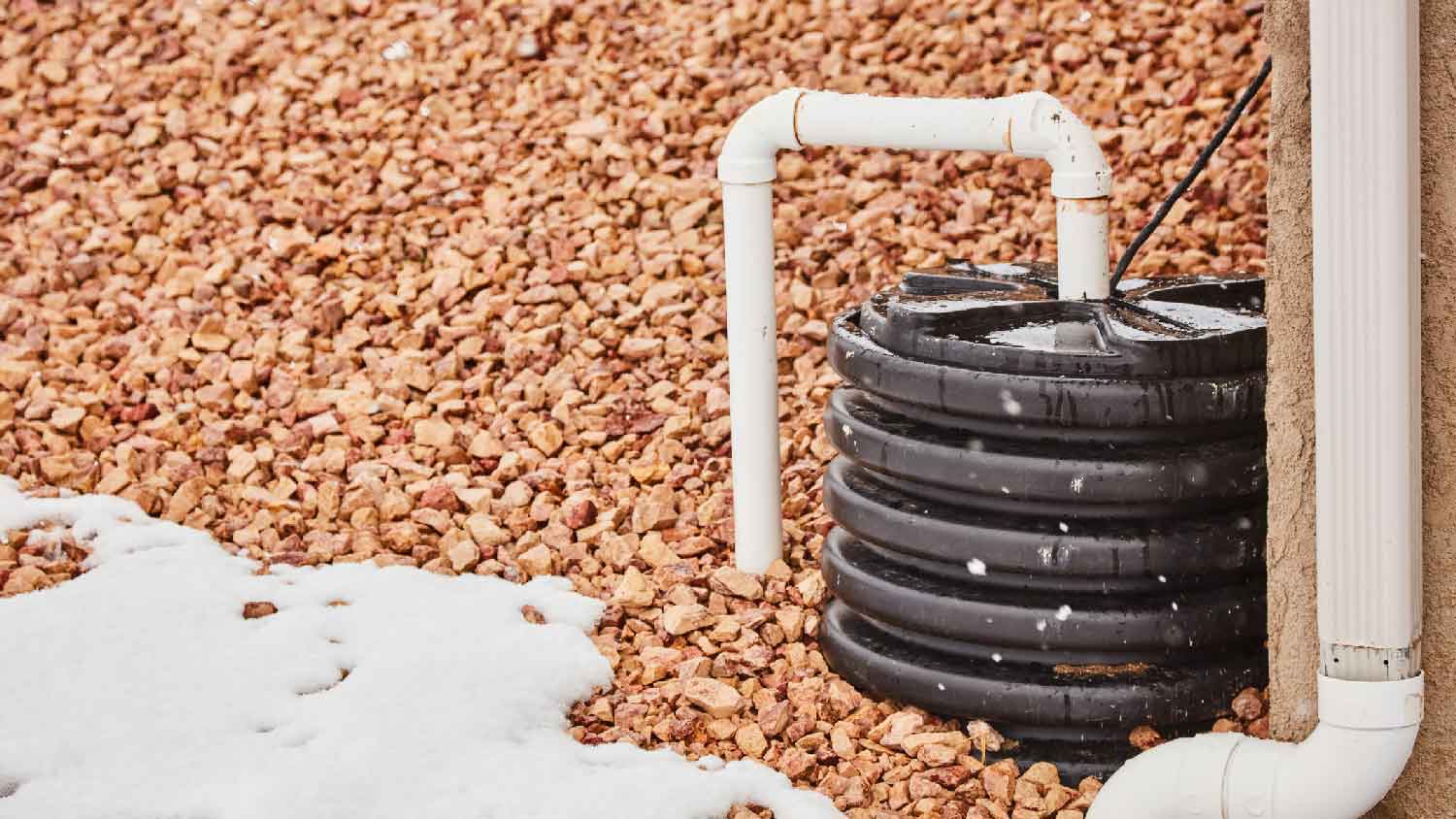
Where your sump pump water goes is one decision. It could be down the hill and onto your lawn, or it could be into a storm drain or a nearby creek. Another decision is whether your sump drainage line should be above or below ground. Just as keeping some sump pump backup options ready can offer peace of mind, there are advantages to burying your discharge line underground, too.
A discharge line that runs above ground may be clearly visible, for starters, affecting the aesthetics of the area around the house. When it runs along the top of the ground, the discharge line can get broken. You may accidentally run your lawnmower over it, for example. Exposed to the elements, it can suffer other types of damage, too. It can freeze in the winter and block water flow.
A buried line is less susceptible to these dangers but may be more difficult to check or maintain. Whether the line is above or below ground, be sure to install a screen at the exit to prevent leaves and debris from blocking the flow of water. The screen can stop animals from entering the discharge pipe, too.
You may be tempted to connect your sump pump system with your home’s existing sewer system. Resist the temptation: It is against building code for sump pump water to go into a home’s sewer. Water from the sewer enters a city’s wastewater management and treatment system. If too much rainwater is pumped into the sewer, it can overwhelm this process.
Similarly, you should never discharge sump pump water into your home’s septic system. This can overwhelm or damage your septic system, leading to what could be a big mess you’ll have to clean up. A septic system is not designed to handle that amount of water all at once.
No, you can’t drain your sump pump onto the sidewalk. If sump pump systems discharge their water onto sidewalks, streets, and other paved areas, they can quickly lead to neighborhood flooding. Generally, there are city codes and regulations that prohibit draining sump pump water onto paved surfaces. The possible exception would be if the drainage line feeds directly into an open storm drain, as described above.
Finished Basements Plus was wonderful from beginning to end! First, they came out quickly for an estimate. I had 4 estimates and theirs was by far the best. (2 of the estimates were more than $20K higher than for the exact same work). Beyond their fair pricing, the work was excellent. They...
 Finished Basements Plus Inc.
Amazing job. Efficient and quick without compromising quality. Basement feels brand new. Would use them again in a heartbeat.
 AffordaPro Restoration
Window Depot did an amazing job installing the windows in my basement! The process from start to finish was by far more than what I expected. I would highly recommend Window Depot if you want professionalism from the the consultation to the installation. Dont settle for mediocre when you can...
 Window Depot USA of Central Ohio
They cleaned my very dirty basement. They were prompts, quick, thorough and their price was fair.
 JDE House Cleaning LLC
I am very pleased with the services performed by OTS. Bless my late Mother, but she was a bit of a pack-rat. The basement of her home was crammed with 40+ years of "stuff," and the other companies I contacted were concerned with possible mold contamination of the items due to the musty smell...
The company was very easy to work with. My family is now able to enjoy a space that at one point, only collected junk!!!! I feel like i have a whole new addition to the house!!! Wonderful work Blurock on our basement, will recommend!
 BluRock Services, Inc.
Excellent work. Opted for the service contract which provides spring and fall checkups and deduction on maintenance charges which seems to be a good value. Initial dehumidifier for our large basement was undersized. They replaced unit after it failed with a larger unit and charged only for...
 Total Comfort Heating & Cooling Inc
We had water in our basement and Roto Rooter was original contact to evaluate the situation. We were informed that our sewer main was fractured and needed repair. We received their estimate and then looked for counter offers. Ohio Basement Authority came with the best quote for the work. Once...
 Ohio Basement Authority
Called Mark on a Thursday morning. Not really knowing if he could help me or not. I was having driveway, flooding issues due to a clogged channel drain and I was trying to figure out what direction to take. Heavy rains had come on Monday and again on Thursday leading to flooding in my garage...
 Mark Rodgers Construction
Due to major obstruction they could not unclog thd drain without tearing up the basement floor. <br /> <br />
 #1 Plumbing Repair LLC
From average costs to expert advice, get all the answers you need to get your job done.
Discover how much sump pump installation costs, including average prices, key cost factors, and tips to save on your basement waterproofing project.
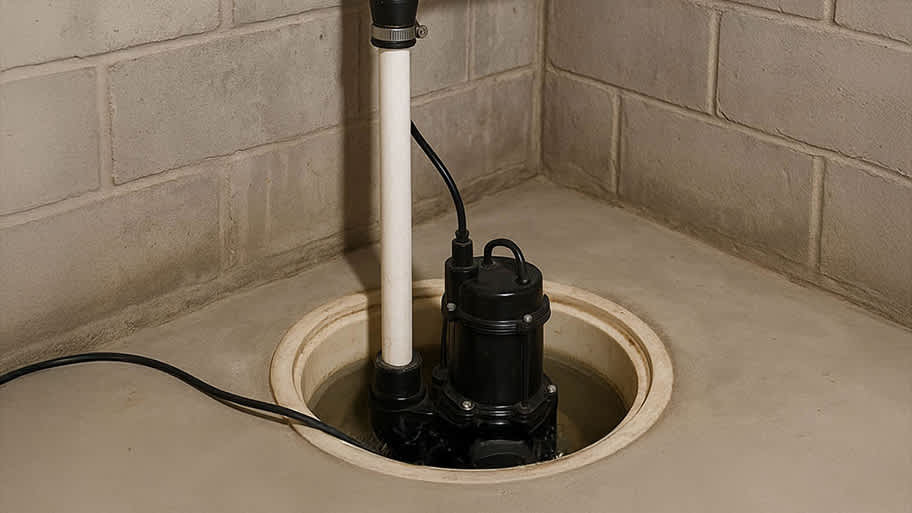
Sump pump replacement costs depend on the type of unit you have and the cost of labor, which varies by region. Read on to find out more about what to expect.
Sump pump battery backup costs depend on the type and the design of the system purchased. Follow this guide to learn how to budget for your backup battery.
A sump pump doesn’t remove water from your home on its own. Check out this diagram of a sump pump to see how it works with a sump pit, discharge pipe, and more.

Is it okay to dump water in a sump pump? Learn more about sump pumps, including how to test them, maintain them, and best practices for filling them with water.
Is water constantly running into your sump pit? We’ll break down 5 possible problems with your sump pump—and how to fix them.