
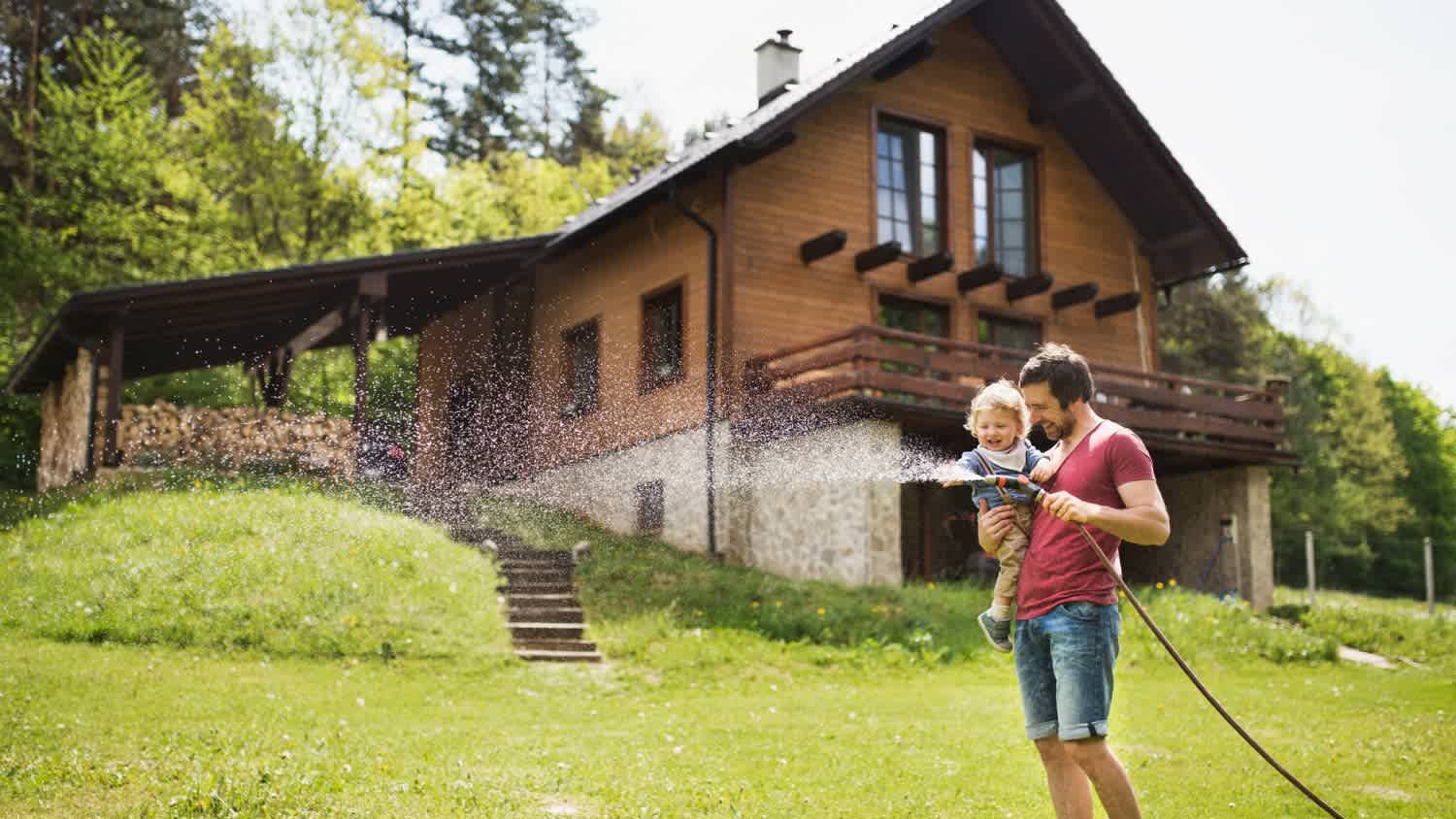
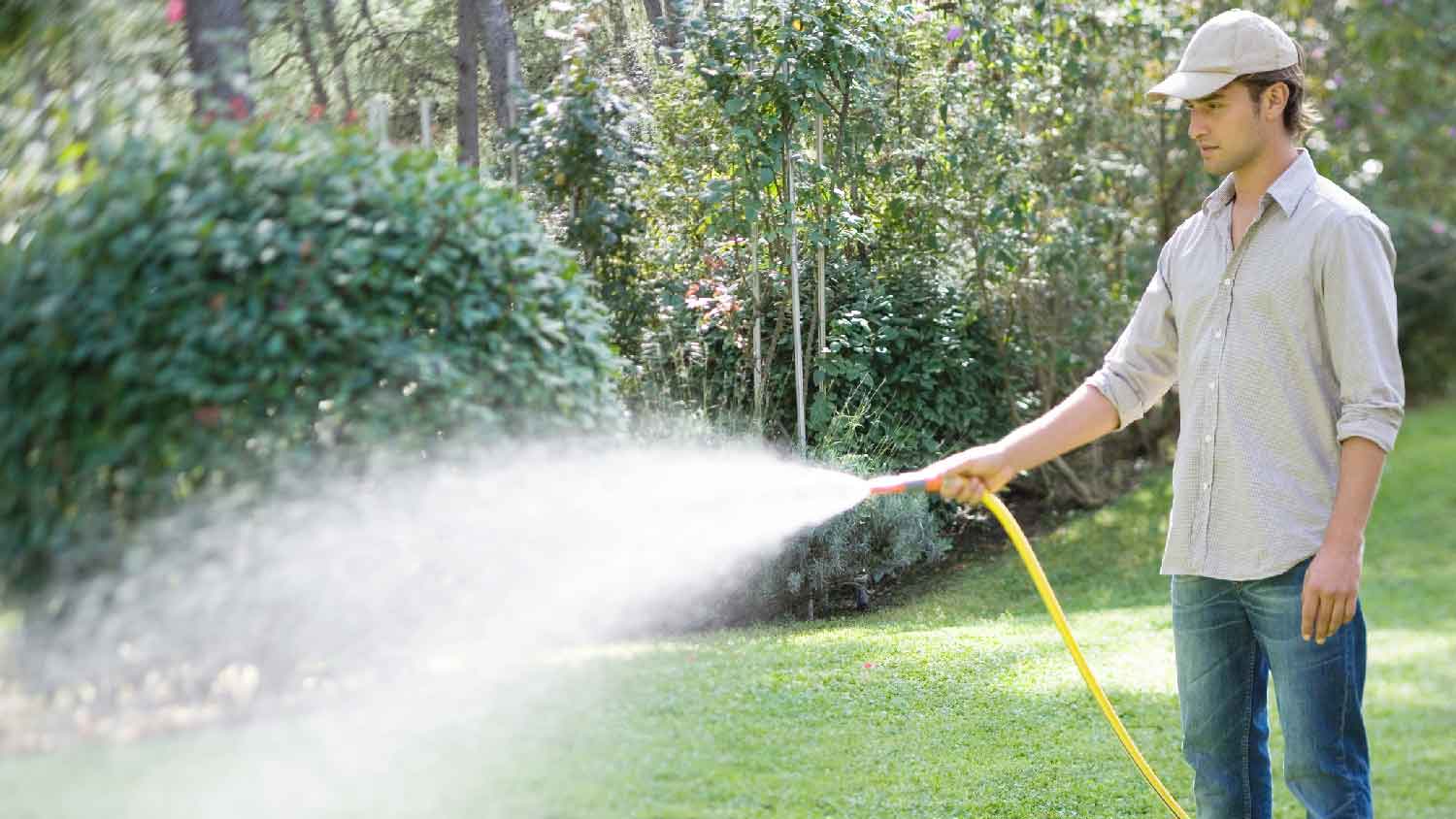
The best time to water your grass is early morning—but the late afternoon or early evening can work, too. Read on to learn why and get more watering tips.
Check the weather before you drag out the hose to avoid damaging your grass

Your lawn needs about half the water in winter compared to summer, and the proper watering time for grass depends on slower evaporation rates during cold months.
Avoid watering your lawn when temperatures drop below 40 degrees Fahrenheit, as freezing conditions prevent grass from absorbing water and can damage your irrigation system.
Water your lawn in the morning during winter to avoid overnight freezing, giving grass time to absorb moisture before temperatures drop after sunset.
Hiring a local lawn treatment professional provides reliable support for winter watering schedules and keeping your lawn healthy through cold weather challenges.
When temperatures drop during the winter months, you may feel concerned about your grass getting enough water. But what temperature is too cold to water the grass?
Luckily, there are some helpful guidelines to follow for winter watering. Most of the time, it’s safe to water when the temperature is above 40 degrees without damaging your grass or your hose. Whether you water your lawn yourself or with the help of a local lawn care professional, here’s what you need to know about cold temperatures and watering.
Watering properly in winter is good for your lawn. Since healthy roots will help your grass survive freezing temperatures, ensuring that roots are well watered before freezing temperatures hit helps keep your lawn from dying during a freezing event.
Since water loses heat more slowly than air, watering your grass one to two days before a freeze can keep the more delicate parts of the plant safe. Establishing a regular watering schedule where you water your lawn about half as much during winter as in summer will keep your grass alive and ready to sprout new blades when the weather warms up.
Follow these guidelines for keeping your lawn well-nourished despite chilly temperatures. For best results, consult a local lawn treatment professional before watering your lawn in the winter.
Your grass needs to be able to absorb the water you’re giving it, so make sure that air temperature is above 40 degrees before watering. Not only can ice damage your grass, but freezing temperatures can cause splitting and cracking in your hose if it’s full of water when the temperature drops. In addition to the current temperature, check how cold it’s forecasted to be over the next few days after you water. For example, if the temperature drops below freezing overnight and you water in the evening, the water won’t get to the roots of your grass before it freezes. You should avoid watering for 24 hours before a predicted freeze to keep your grass healthy.
Since temperatures at night might fall below freezing, while sunshine will warm things up during the day, watering in the morning can set you up for success during the winter. In addition to avoiding the lowest temperatures of the day, watering in the morning can help your grass stay healthy by creating less opportunity for mold and other pathogens to grow.
In summer, when water on your lawn evaporates more quickly, you might water your lawn for longer periods, allowing the grass to soak up as much as it can get from the sprinkler. In the winter, surface evaporation is slower, so watering for a shorter period avoids causing a swampy situation for your lawn. Watering for about half the time as you ordinarily would is usually sufficient.
Now that we know the best time and temperature to water the lawn in the winter, let’s review when to keep the hose in the garage.
We don’t recommend watering the grass if there is a layer of ice on the ground because your grass won’t absorb the water. In addition, ice will cause an influx of moisture when it melts, creating muddy, soggy conditions. Instead, wait for ice to melt before watering, and allow the ground to rebound from excess moisture. If you notice the grass is spongy or soggy, wait a few days to one week before returning to your regular watering schedule.

If your area experiences a snow storm, you can count that as precipitation. While snow doesn’t immediately lead to more water for your grass, it will melt and absorb into the soil, making its way to your grass’ roots. You likely don’t need to water for at least a week after snowy conditions or until your grass feels firm underfoot and not muddy.
Cody did a great job!
 Itzelpainting
Wonderful. I am going to have them remove and replace my driveway in the spring.
 All Star Paving and Sealing
We had a 20+ year old landscape lighting system that needed replacement. Midwest Lightscapes worked with us to design a much improved lighting system, lighting the exterior of the house and the back yard. Installation of the 45 light system took one and one-half days, and went very smoothly....
 Midwest Lightscapes
Did an amazing job transforming my yard. Also installed sod in places, would recommend to everyone.
 Cardinal Landscaping & Construction LLC
Always been satisfied with the service work and how they have taken care of my pool.
Bill Gerhardt sold the company to his employees at the end of 2019, apparently without a workable succession plan and without notifying prospective customers of this fact. Most aspects of the maintenance contract have not been fulfilled: no installation of anual plantings per contract, no...
They show up and they did take us on as a client which seems to be a problem with other lawn care providers. We have multiple properties and this one was located close to downtown and no one really wants to mess with it.
I was very happy with the service provided by AK Irrigation. They responded quickly to my email, and the woman I spoke with was polite and professional. I was able to get an appointment that same week. <br /> The technician (Tyler) arrived on time. He was very knowledgeable, and worked...
 AK Irrigation
The worker came out when he was supposed to come. He informed me he would honor the Angie's List deal, but would not do any more work for me since my son in law owns lawn care company as well, even though they do not do the same type of work. He said he did not feel comfortable giving me...
 Bello Giardino LLC
E & L Lawn Care was super. They were very responsive before and after service. They were efficient and were able to complete the job within 1 day. I have had concern about one section of sod - the owner was pro-active and did a visit to evaluate. I have no doubt they will stand behind...
 E&L lawn care
From average costs to expert advice, get all the answers you need to get your job done.
The best time to water your grass is early morning—but the late afternoon or early evening can work, too. Read on to learn why and get more watering tips.
Dealing with soggy sod? Here are ten telltale signs you’ve overwatered the lawn, plus what you can do about it.

How long to water your grass depends on the time of year and type of grass. Learn how long to water the grass and how often to do it with this guide.

Bermuda grass and Kentucky bluegrass thrive under different conditions. Find out more about Bermuda grass vs. Kentucky bluegrass.
Find out how often you should water your lawn season by season with our expert guide, whether you've got cool or warm season grass or a new or established lawn.
Are you excited for a lush lawn after planting new grass seed but unsure how much water they need? We'll show you how long to water grass after seeding.