

•
Find out the average thermostat installation cost, key price factors, and tips to save. Get transparent, expert-backed guidance for your project.
Study up on smart thermostats

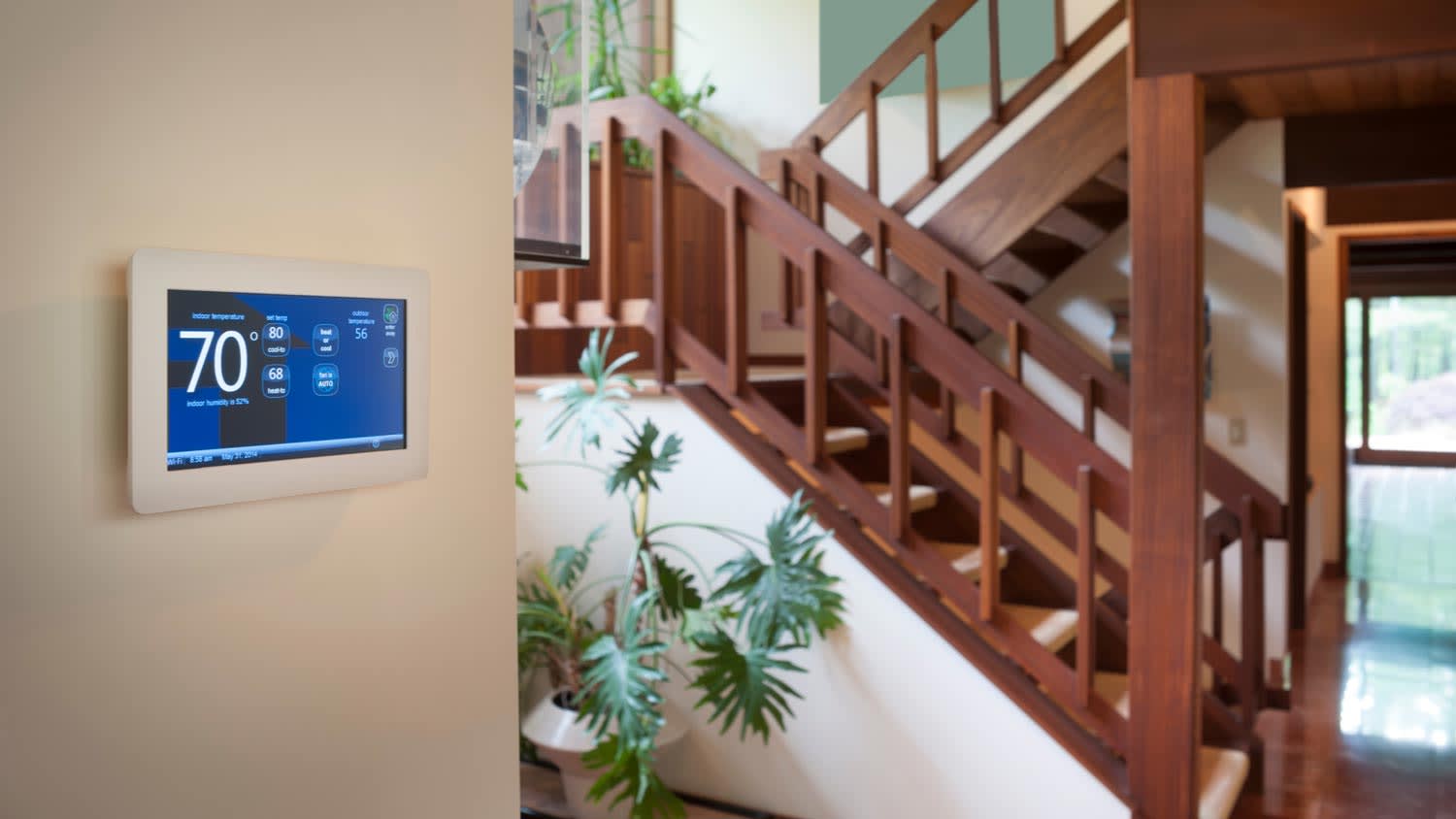
A smart thermostat connects to Wi-Fi so you can control your home's temperature from your smartphone, using sensors to adjust settings automatically.
Smart thermostats cost $130 to $300 on average, and you'll pay $120 to $200 for C-wire installation if your system needs it.
Strong Wi-Fi connection is essential for your smart thermostat to work properly, so check your signal strength before choosing this upgrade option.
Hiring a local thermostat installation professional handles the complex wiring and Wi-Fi setup, ensuring your smart thermostat works seamlessly with your HVAC system.
No one wants to sit sweating or shivering in their home, but fussing with an old thermostat that will undoubtedly crank up the HVAC system and your energy bills isn’t ideal, either. Enter the smart thermostat, which can help keep your home at a comfortable temperature year-round without costing a small fortune in energy bills. So what is a smart thermostat, how does it work, and is it time for you to upgrade? We can help answer that.
A smart thermostat is a type of thermostat that can connect to Wi-Fi so that you can control your thermostat from a separate device, like a smartphone or smart home hub. These systems also feature sensors that can detect energy usage and usage habits to tailor the heating and cooling settings to your liking without using more energy than needed.
Like any thermostat, a smart thermostat has a control panel with buttons so that you can set your temperature preferences. But unlike other types of thermostats, a smart thermostat also connects to Wi-Fi, allowing users to control the thermostat settings via phone or other smart device, like a smart home speaker. Alexa, crank up the heat!
Smart thermostats have a temperature sensor like other thermostats. However, smart thermostats also utilize the sensor to measure energy demand and automatically adjust the settings to save energy. A microcontroller within the device receives information from the sensors and the control panel or connected app and sends commands to the HVAC system through actuators. It’s like modern-day magic.
Smart thermostats are rising in popularity, but they aren’t the only option on the market. Programmable thermostats and non-programmable, or manual, thermostats can also help you control the temperature of your home. Programmable thermostats offer some of the functionality of a smart thermostat, such as setting specific temperatures for different times of the day or days of the week. Non-programmable thermostats allow you to change the temperature from the control panel as needed, but you can’t set the temperature to change in advance.
There are pros and cons to consider for each type of thermostat, so be sure to weigh these factors before deciding what thermostat to install in your home.

Smart thermostats have many benefits, especially if you’re looking to save energy or make heating and cooling your home more convenient.
Can be controlled by a phone or other smart home device
Saves energy
May have additional sensors to detect HVAC problems early
While smart thermostats can boost the efficiency of your HVAC system, there are some drawbacks to keep in mind before scheduling an installation appointment.
Cost more upfront
Can be more difficult to install
Require strong Wi-Fi connection
Programmable thermostats allow homeowners to change the temperature settings as needed or schedule temperature changes for the future from the thermostat’s control panel. Those aren’t the only benefits of programmable thermostats.
Easy to use
Good value, balancing cost and functionality
Can save energy when set to optimal temperatures in advance
Programmable thermostats are a good middle-ground between smart models and non-programmable models. They do have some drawbacks compared to the other two types of thermostats, though.
Can’t be controlled remotely
Require planning ahead for energy savings
Aren’t as long-lasting as non-programmable models
A manual thermostat may not be as technologically advanced as its programmable and smart counterparts, but there are still many benefits to installing this type of thermostat.
Long life span up to 35 years (compared to 10 years for programmable and smart thermostat life spans)
Simple controls
Easy to install the thermostat yourself
Non-programmable thermostats don’t feature many of the flashy features that more modern thermostat models offer, and that can limit how convenient they are for homes.
Limited functionality
Unable to set future temperature changes
Can’t control remotely

A smart thermostat costs $130 to $300 on average, but costs can potentially range from $175 to over $1,000. If you need to relocate a thermostat, install new wiring, or install multiple smart thermostats, expect to spend on the higher end of this range. Smart thermostats also require a common wire, or C-wire, so if your older thermostat isn’t a smart device, you may spend another $120 to $200 for the cost to install a C-wire.
Smart thermostats not only need to connect to your home’s electrical wiring to work properly, but they also need to sync with your Wi-Fi and connect to your smartphone app if you want to make the most of their functions. Because of the complexity of smart thermostat installation, it’s best to hire a local thermostat installer to help you with this home improvement project. Before you even purchase a smart thermostat, consult with a pro to find a thermostat that’s compatible with your HVAC system and fits your budget and heating and cooling preferences.
Still not sure if installing a smart thermostat is the right choice? If you agree with some of the statements below, it might be time for an upgrade.
Do you want to control your home’s temperature no matter where you’re at? Do you want your thermostat to adapt to your preferences? This convenient thermostat costs more upfront, but smart thermostats are worth the cost if you want advanced functionality.
Many models can detect issues in the HVAC system early, preventing costly repairs in the long run. Smart thermostats also use machine learning to adjust settings based on usage history. According to Energy Star, a smart thermostat can save you 8% on heating and cooling costs per year, which is enough to help make up for the higher upfront cost compared to programmable or non-programmable models.
Smart thermostats aren’t right for everyone since they cost more than other types of thermostats. While a non-programmable thermostat costs $15 to $50 and a programmable thermostat costs $20 to $150, smart thermostats average $130 to $300. If you have extra money in your home improvement budget, however, this is a worthwhile upgrade.
If you live somewhere with a spotty Wi-Fi connection, a smart thermostat may not be the right solution for you. To fully utilize all of the features of a smart thermostat, you’ll want to have strong Wi-Fi service and a smartphone or other Wi-Fi-enabled device to help control the thermostat. If you don’t have reliable Wi-Fi or a smart device, a non-programmable or programmable thermostat will be better suited for your home.
I have used Columbus Worthington Air for years and recommend them whenever I have a chance. The staff is quick, courteous, and well-trained.
 ARS Columbus Worthington Air
If you’re good people wanting to do business with good people, hire Matt. He is a consummate professional and utterly competent. He installed a water heater in my home at a price that beat competitors by hundreds of dollars with a promise to support the unit for its life (even after its 6 yr...
 Greene's Plumbing Services
Corey Carr was great. I had damage from a recent storm and needed to have my mast and other components replaced. The project entailed coordinating with AEP, and Corey helped make a stressful situation a lot less stressful. I really appreciated his dedication to service and the job very well done.
 Mr. Electric of Columbus
This service was great. My air conditioner went out during the heat spell that we had. My husband has health issues and they came out that night and at 9:30pm the air conditioner was fixed and running. We are sooo very thankful, this is the company I will be using from now on and would...
 Mr. Mechanical Ohio
Great company! Price was competitive, technician showed up on time and completed the job (exterior electric Radon fan replacement) quickly. Would hire them again.
 MaGen Property Inspections and Radon Mitigation
Raven and crew does absolutely fantastic job. They are very professional if any concerns were to occur with any of her work she always took responsibility and finished out with a great job. I have worked with her business for a year and have always been satisfied. Very trusted business and...
 Creations of Transformation LLC
I would recommend this company to anyone! He showed up on time, was friendly, completed a very difficult repair on our dryer vent cover, was responsive, and pricing was extremely fair and competitive. I would have him back to do any of our repairs or cleanings without hesitation!
 U.S.A. Dryer Vent, LLC
Ace Fireplace Services' chimney sweep service is truly exceptional. They used advanced technology to ensure a thorough cleaning process, and my chimney has never looked better. I highly recommend their services.
 Ace Fireplace Services
The technician was very professional and friendly. He answered all my questions and was very thorough. He left the fireplace area very clean . He inspected from the roof and advised me as to other work that might need to be done. There was no pressure there. I was very satisfied with the...
 Supreme brick & chimney
On time, clean and finished fast. Windows seem sturdy and the finish is good. Caulking was done with no smudges. Would recommend.
 Window Depot USA of Central Ohio
From average costs to expert advice, get all the answers you need to get your job done.
Find out the average thermostat installation cost, key price factors, and tips to save. Get transparent, expert-backed guidance for your project.

The cost to install a C-wire ranges based on materials and labor, but it only takes an hour or two. Here’s a guide on the project costs to expect.

Smart thermostats cost more than traditional thermostats, but are they worth it? Keep reading to find out how to make a smart thermostat worth your while.

Summer sun or winter snow, a thermostat keeps your home comfortable year-round. But how does a thermostat work? Read this guide to learn more.
Today’s smart thermostats need a C-wire for installation. So what if there is no C-wire for your thermostat? Find out next steps with this guide.

Not sure which kind of thermostat is best for your home? Here’s an overview of three types of thermostats so that you can choose the right one for you.