

•
Find out the average thermostat installation cost, key price factors, and tips to save. Get transparent, expert-backed guidance for your project.
Beat the heat and banish the chill with a trusty thermostat

Understanding thermostat meaning helps you see how this device uses sensors or bimetallic strips to detect your home temperature and signal heating or cooling systems.
Installing a thermostat costs $100 to $300, with smart models reaching over $1,000 for complex HVAC systems, so budgeting early helps you plan upgrades.
Cleaning your thermostat twice yearly with a dry cloth and soft brush keeps it working efficiently and prevents dust buildup that affects temperature readings.
Hiring a local thermostat installation professional takes the guesswork out of wiring and setup, ensuring your system works correctly and your home stays comfortable year-round.
When you want to warm up your home on the first chilly day of winter or start lowering the temperature when sweltering summer temperatures hit, the first thing you do is head to your thermostat. You may not think much about this device or how it works until it isn’t functioning properly. So, how does a thermostat work, and how do you know when it needs some TLC? Let’s explore your home thermostat from the inside out.
A thermostat is a device that connects to your home’s heating and cooling systems to control the set temperature in a room or throughout the home. You can find a thermostat for an entire HVAC system or on an individual unit, like a window air conditioner.
A thermostat has controls, ranging from simple buttons on a manual thermostat to app controls on your phone for smart thermostats, that allow you to adjust the temperature or program temperature changes for the future. The entire goal of the thermostat is to make your home have a comfortable room temperature, no matter the weather outside.
Depending on the type of thermostat, there are a few different ways it can detect a temperature and send signals to the heating or cooling system to kick on. Electronic thermostats use sensors to detect temperature. When the temperature in the room doesn’t match the temperature a user has set on the thermostat’s control buttons, the thermostat can signal to the heating or cooling unit to turn on and start dispersing warm or cool air.
Mechanical thermostats use bimetallic coils or strips, which expand or contract. These coils or strips connect to the thermostat’s circuit card, so as they expand or contract, they will switch the heating or cooling on through the circuit card.
There are two main types of thermostats: digital and mechanical. Digital thermostats include programmable thermostats and smart thermostats, both of which can help save energy costs compared to mechanical versions. However, mechanical models tend to be simpler to use and install and come at a lower upfront cost.
Digital thermostats, or electrical thermostats, include programmable and smart varieties. Both options can help reduce energy use by adjusting temperature settings, but smart thermostats offer greater energy savings. However, smart thermostats tend to be one of the more expensive thermostat options out there.
Programmable thermostats have controls that allow homeowners to set temperature changes for the future. For instance, if you know you prefer to sleep in a colder room, you can program the thermostat to lower the temperature every night starting at 9 p.m. That way, the room is just the right temperature when you’re ready for bed. You can also save energy with a programmable thermostat by adjusting the settings to change the temperature slightly over the course of each day rather than running full-blast every day.
Smart thermostats work by using sensors to detect air temperature and energy usage. They send signals to a microcontroller inside the system to adjust the temperature, for instance, to set the best AC temp for energy savings. These thermostats are unique in that they connect to smart home devices, like speakers and smartphones, so that you can control the thermostat with a few taps on your phone or via your voice. They can also “learn” your heating and cooling habits over time and adjust the temperature to suit your preferences.
Mechanical thermostats, or manual thermostats, may be considered more old-school, and they aren’t as flashy or functional as smart or even programmable thermostats. But where they lack in bells and whistles, mechanical thermostats shine when it comes to user-friendliness and longevity.
When it comes to thermostat life spans, manual models tend to last the longest—35 years on average. Smart and programmable thermostats last 10 years on average. Mechanical thermostats cost less than their electrical counterparts, as well.
One thing to note, of course, is that mechanical thermostats aren’t as accurate as digital versions. This can also mean that they use more energy to try to meet the set temperature. And as far as temperature settings go, mechanical thermostats offer minimal functionality. You can’t program them for future temperature changes. When you start feeling too warm or too cold, you’ll need to go to the thermostat and change the settings as needed.

Installing a thermostat costs $100 to $300, depending on the model. Smart thermostats are the most expensive option upfront, costing $130 to $300 on average. Some smart thermostats can cost over $1,000 if a pro is installing them in a larger home or more complex HVAC system. The trade-off is that smart thermostats can save you around 8% of heating and cooling costs per year, according to Energy Star.
Programmable thermostats cost $20 to $150, while manual thermostats are the least expensive option, costing $15 to $35.
Sometimes, installing or replacing a thermostat is easy for homeowners, especially if you opt for a battery-powered and wireless version. But this is a challenging home improvement project that is not as straightforward as it seems.
Smart thermostats need a common wire, or C-wire, to work properly, and some thermostats may need to be wired to your heating and cooling system in order to control the temperature. If installing a new thermostat of any kind will involve wires, you should hire a local thermostat installer to get this device up and running for you.
It’s best to leave any type of thermostat installation to the pros because mistakes can be costly. If the thermostat isn’t installed correctly, it can lead to high energy bills and quicker wear and tear of important HVAC components.

How do you know when it’s time to repair a thermostat or replace it with something new? With today’s smart thermostats, outdated technology can be a simple sign that it’s time to upgrade to a modern version. But with mechanical models that can last a few decades, it’s not as easy to tell when to replace it.
Some signs that it’s better to replace your thermostat include:
Your energy bills are high
Your heating or cooling system is running frequently
Your heating or cooling system isn’t running often enough
Temperatures fluctuate in a room or throughout the house
The thermostat is over 10 years old for digital models
The thermostat is over 30 years old for mechanical models
The thermostat won’t turn on, even with new batteries
To get the most out of your thermostat (and keep it running smoothly), a little maintenance goes a long way. First, cleaning the thermostat at least twice per year can keep it in good condition. To clean the thermostat, use a clean, dry cloth for the exterior. For the interior, you can use a small, soft brush or even compressed air to clear away dust and dirt that builds up. Change the thermostat batteries at least once per year. Batteries help ensure the thermostat stays on even if there’s a power disruption.
You should also hire an HVAC technician to perform a professional inspection at least once per year. The pros will take a look at the thermostat for any signs of trouble, like corroded or loose wires, and make repairs as needed.
If you’re good people wanting to do business with good people, hire Matt. He is a consummate professional and utterly competent. He installed a water heater in my home at a price that beat competitors by hundreds of dollars with a promise to support the unit for its life (even after its 6 yr...
 Greene's Plumbing Services
Corey Carr was great. I had damage from a recent storm and needed to have my mast and other components replaced. The project entailed coordinating with AEP, and Corey helped make a stressful situation a lot less stressful. I really appreciated his dedication to service and the job very well done.
 Mr. Electric of Columbus
This service was great. My air conditioner went out during the heat spell that we had. My husband has health issues and they came out that night and at 9:30pm the air conditioner was fixed and running. We are sooo very thankful, this is the company I will be using from now on and would...
 Mr. Mechanical Ohio
I normally do not leave reviews, but my experience with Worthington Air was extremely frustrating and disappointing. About 30 days ago, I had a consultation done for an HVAC replacement and was quoted approximately $15,079. Based on that quote, I applied for financing through their company...
 ARS Columbus Worthington Air
Great company! Price was competitive, technician showed up on time and completed the job (exterior electric Radon fan replacement) quickly. Would hire them again.
 MaGen Property Inspections and Radon Mitigation
Raven and crew does absolutely fantastic job. They are very professional if any concerns were to occur with any of her work she always took responsibility and finished out with a great job. I have worked with her business for a year and have always been satisfied. Very trusted business and...
 Creations of Transformation LLC
I would recommend this company to anyone! He showed up on time, was friendly, completed a very difficult repair on our dryer vent cover, was responsive, and pricing was extremely fair and competitive. I would have him back to do any of our repairs or cleanings without hesitation!
 U.S.A. Dryer Vent, LLC
Ace Fireplace Services' chimney sweep service is truly exceptional. They used advanced technology to ensure a thorough cleaning process, and my chimney has never looked better. I highly recommend their services.
 Ace Fireplace Services
The technician was very professional and friendly. He answered all my questions and was very thorough. He left the fireplace area very clean . He inspected from the roof and advised me as to other work that might need to be done. There was no pressure there. I was very satisfied with the...
 Supreme brick & chimney
On time, clean and finished fast. Windows seem sturdy and the finish is good. Caulking was done with no smudges. Would recommend.
 Window Depot USA of Central Ohio
From average costs to expert advice, get all the answers you need to get your job done.
Find out the average thermostat installation cost, key price factors, and tips to save. Get transparent, expert-backed guidance for your project.

What is a smart thermostat, and should you install one in your home? Find out whether this handy tech is right for your household with this guide.
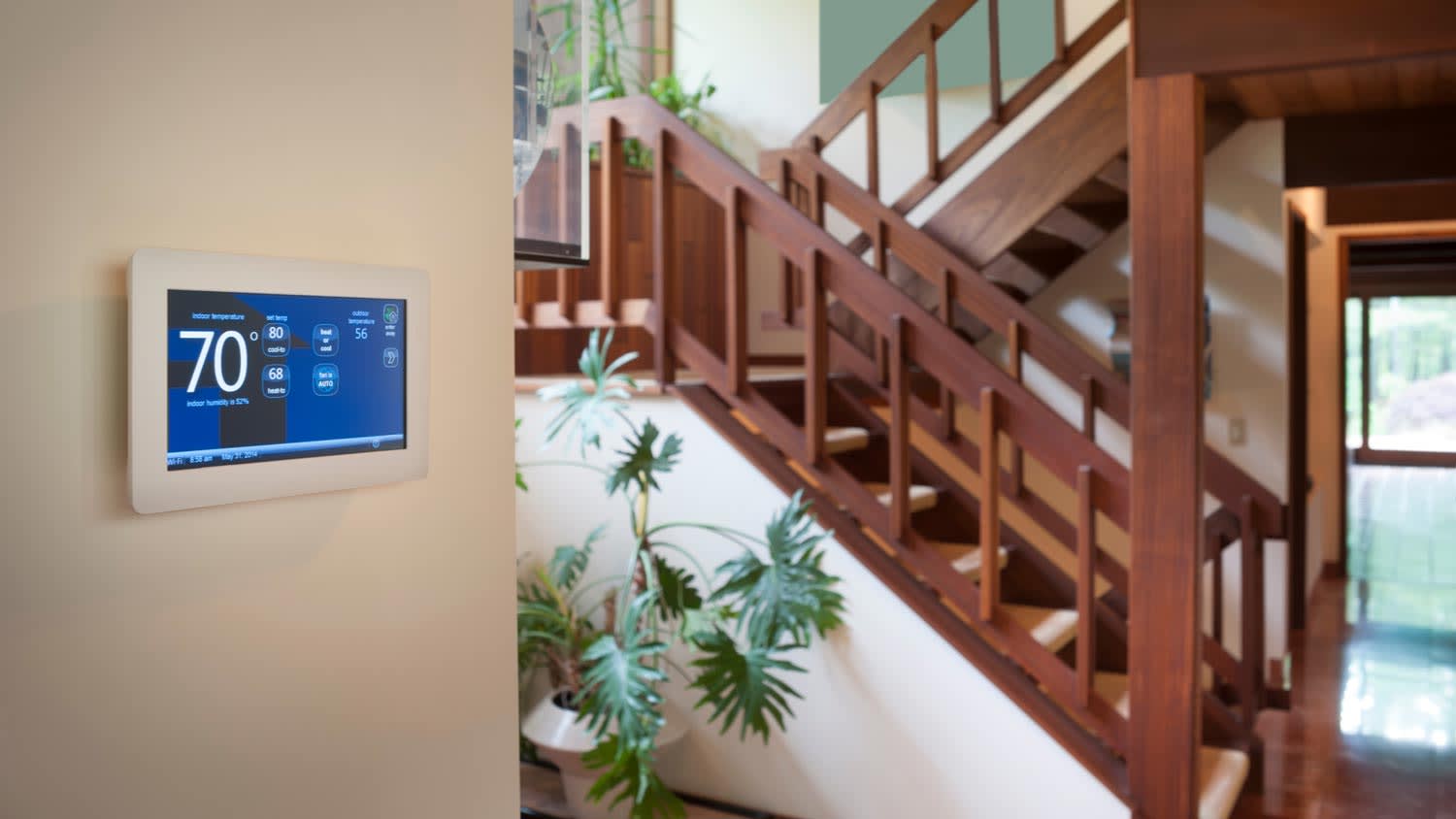
Today’s smart thermostats need a C-wire for installation. So what if there is no C-wire for your thermostat? Find out next steps with this guide.
Save on your heating costs while you’re away from home by learning the best temperature to set your thermostat when on vacation in the winter.
As you research your shower system options, you may find yourself wondering—what is a thermostatic shower? Find out everything you need to know.
Is your HVAC system running non-stop or failing to cool? Learn about thermostat installation or replacement costs, warning signs, and how to hire a local pro.