
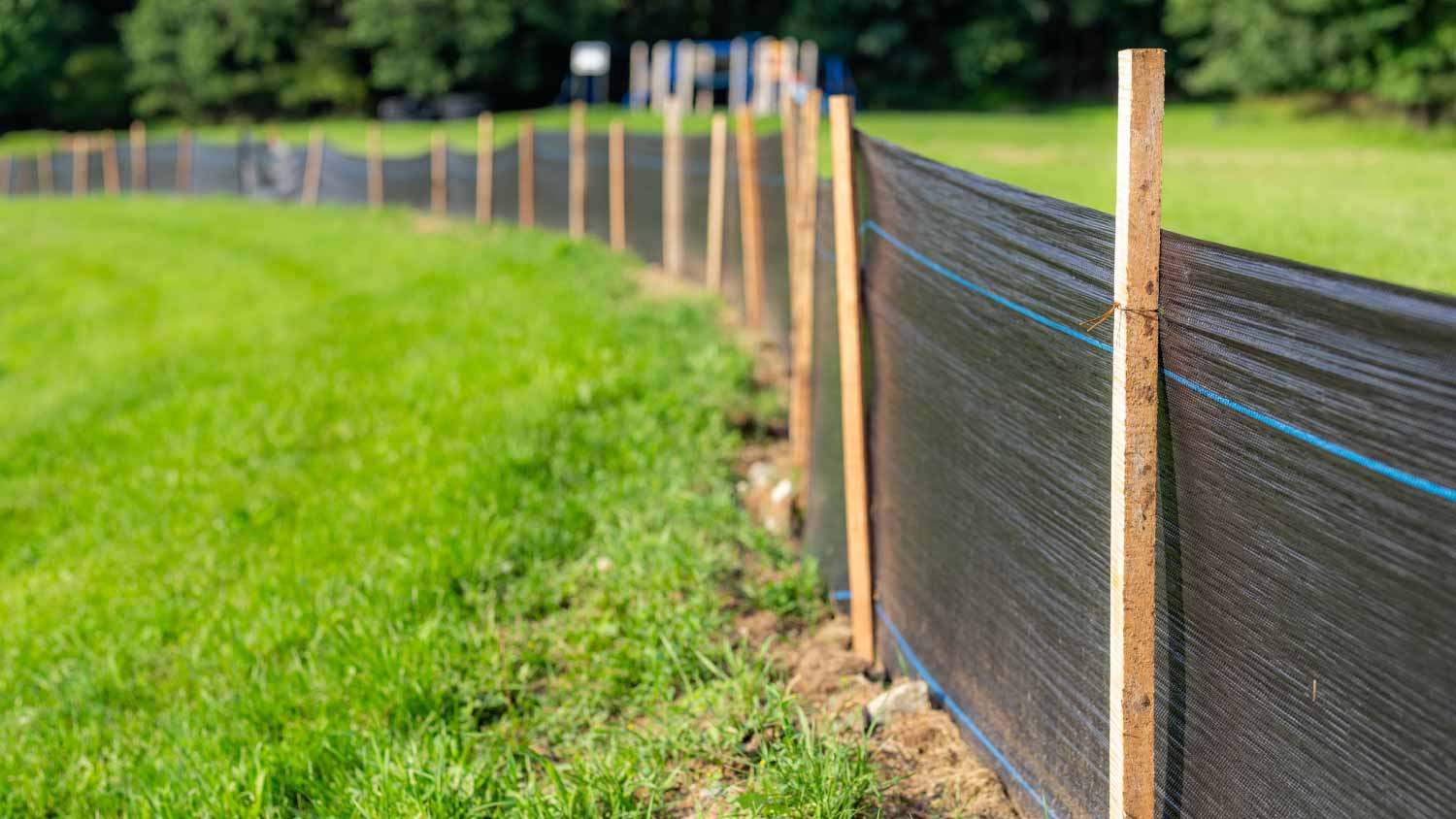
Silt fence installation costs vary depending on the size of the lot, the fencing type, and the installation technique. Use this guide to get the budget right.
This protective measure is essential for your construction site

A silt fence controls erosion at your construction site by allowing rainwater to flow through while trapping soil and preventing sediment from reaching streets or water supplies.
Expect to pay under $1,300 for a complete 300-foot silt fence kit, while individual 50-foot fabric rolls cost less than $15 and wooden stakes around $2 each.
Check your silt fence weekly and after heavy rainfall, removing sediment buildup over six inches and repairing torn fabric or unstable posts to maintain erosion control.
Hiring a local excavation company ensures proper trench digging and code-compliant silt fence installation, protecting you from environmental damage liability and costly fines.
You've probably seen silt fencing before when driving past construction sites. It consists of short fabric barriers, typically black or dark gray, that run along a site’s perimeter and slopes. Silt fences are crucial for new home builds and are often required by local building codes. Let’s break down what silt fences are for and how you might need to use them in your projects.
Silt fencing, or sediment fencing, is a temporary fence meant to control erosion at construction sites. Building a home or other structure involves a lot of digging and soil movement, and silt fences are designed to allow rainwater to flow through while preventing that soil from winding up in the street or local water supplies.
A silt fence consists of porous geotextile fabric stretched between wooden stakes, which hold the fabric in place. Occasionally, builders place wire mesh behind the fabric as a reinforcement. They’ll also dig trenches to bury these materials to a certain depth, providing stability for the fence.
Silt fence installation occurs at angles along slopes, at the bases of slopes, and around the perimeter of a work site as a final barrier.


How much you pay for a silt fence depends on the type of materials required by your local building codes and the length of the fence you need for your construction site. You may pay under $1,300 for a complete 300-foot silt fence kit, or you can find individual 50-foot rolls of geotextile fabric for less than $15 each. Basic wooden stakes tend to cost about $2 each.
Labor is another factor that will influence the cost. Hiring a pro to build a fence can cost $50 an hour in addition to materials, or it may be included in the cost of your larger project. Check with your contractor before construction begins.
Regardless of the prices you encounter, a silt fence is worth the cost. Failure to adhere to building codes could land you with a hefty fine.
If you're already well-versed in erosion control and landscaping, you can learn how to install a silt fence. Following all local regulations, look for a good set of instructions, and follow government-issued silt fence best practices. You may wish to hire a local excavator to dig your trenches, as this step is crucial and otherwise involves a lot of time and strenuous manual labor.
If you’re not experienced, this isn't the project to experiment with. Silt fence construction needs to follow specific guidelines. Otherwise, you could be held liable for environmental damage or messes caused by erosion from your site. Talk to your contractor or consult a fence installer near you to have a silt fence built properly at your construction site.
The maximum life span of an erosion control silt fence is about six months, but you should still check on it weekly and after every heavy rainfall to ensure it keeps its integrity. Each time you check your silt fence, take the following maintenance steps as needed:
Remove sediment buildup of more than six inches
Repair or replace torn, clogged, or loose fabric
Repair or replace unstable or broken posts
Stabilize any areas that aren't securely in the ground
Once construction is complete and permanent vegetation has been established on the slope, it’s safe to remove your silt fence and regrade the trench area.
A reliable team for moves across state. My switch to a new place needed careful lifting through tight hallways. The movers checked the doorway first, then carried heavier pieces with slow, controlled movements. Their patience helped prevent damage, and I?d choose them again.
We have used Window Warriors many times with no issues. They arrived on time and were very professional . We have pets and Window Warrior team treated them very well, well trusted team.
 Window Warrior of Columbus, Inc.
We have bought and sold numerous times over the past 50 years. Sherman Hall and Top Line are top notch. Thorough and detailed, he explains every possibility, probability, and eventuality. High class and pleasant. The best.
 Top Line Home Inspections, LLC
Our homes curb appeal skyrocketed thanks to Custom Paint Jobs LLC s exterior painting.
 Custom Paint Jobs, LLC
Window Depot did an amazing job on my deck. I wasnt sure what I wanted to do, but their composite decking was affordable and will last a long time. I am excited to have family over, and I am no longer embarrassed by my backyard. Jeff and the ground crew were polite, respectful, and caring for...
 Window Depot USA of Central Ohio
Storms Mobile Welding was great to work with. They were prompt, professional and did an overall excellent job on the project. I highly recommend.
Great job...edging and pre clean up went well with a great job with seal coat. Friendly, efficient and professional.
 All Star Paving and Sealing
Did an amazing job transforming my yard. Also installed sod in places, would recommend to everyone.
 Cardinal Landscaping & Construction LLC
We hired Andrew and the team from Midwest Lightscapes for a custom lighting design and installation on a Victorian Village home. The house had outdated low-voltage halogen outdoor lights and many of them were not working. Andrew designed and installed a new system including uplighting on the...
 Midwest Lightscapes
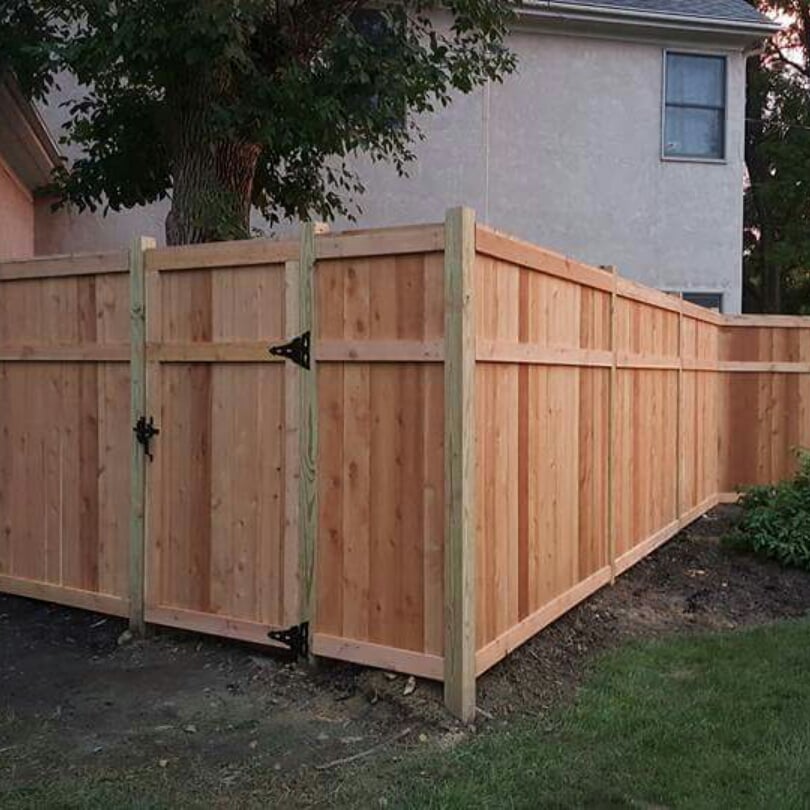
The work was completed in a day and a half. They cut small trees, pulled out an old swing set, pulled out railroad ties and left the place spotless when the job was complete. I am very happy with the fence and their efforts were above and beyond my expectations.
 Elite Fence
From average costs to expert advice, get all the answers you need to get your job done.
Silt fence installation costs vary depending on the size of the lot, the fencing type, and the installation technique. Use this guide to get the budget right.

A new fence adds privacy, improves safety, and even boosts curb appeal. But how much does fence installation cost? Find out in this guide.
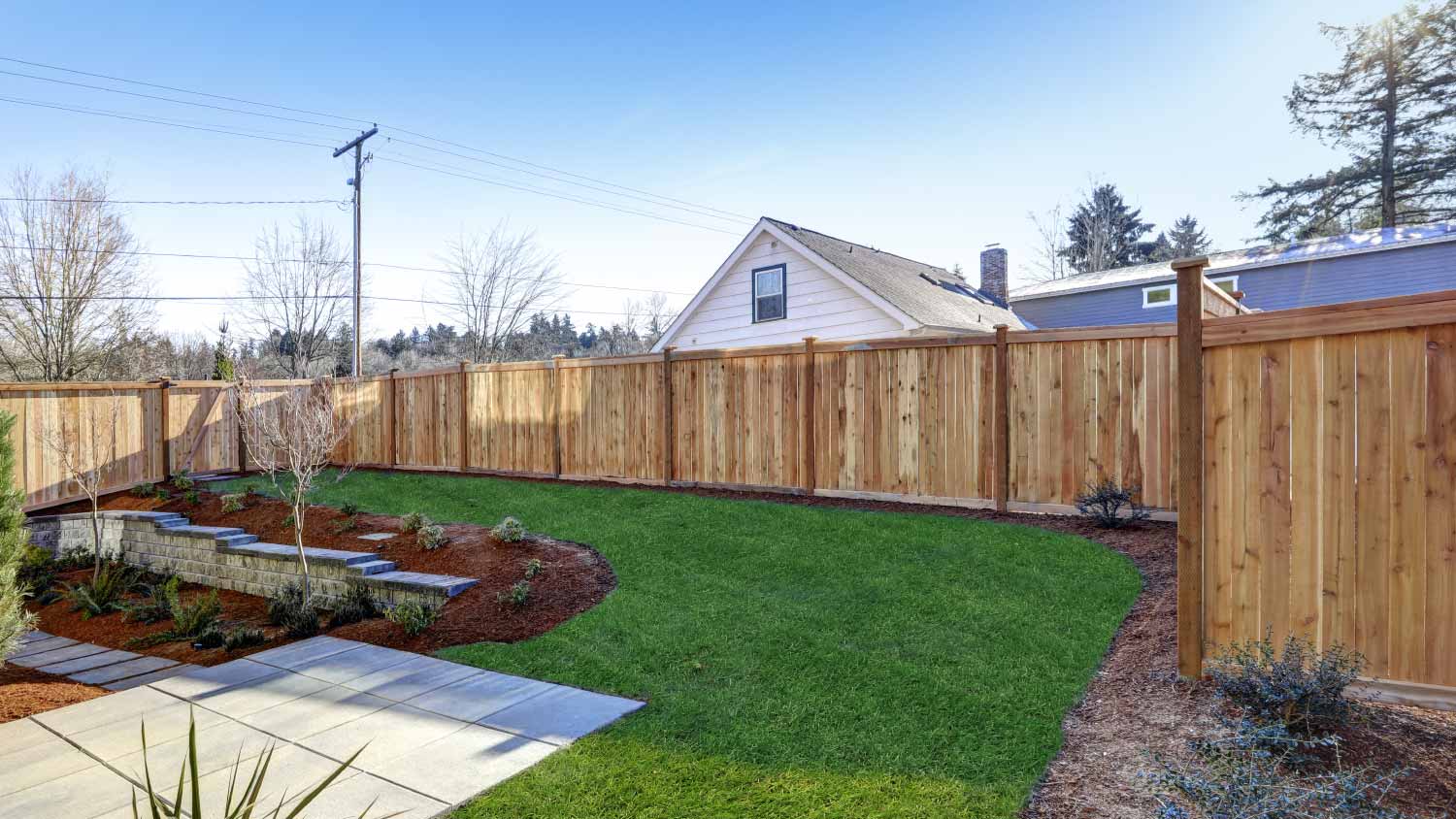
If you’re interested in soundproof fencing, you’re in the right place. Read on to learn how to bring more peace and privacy to your property.
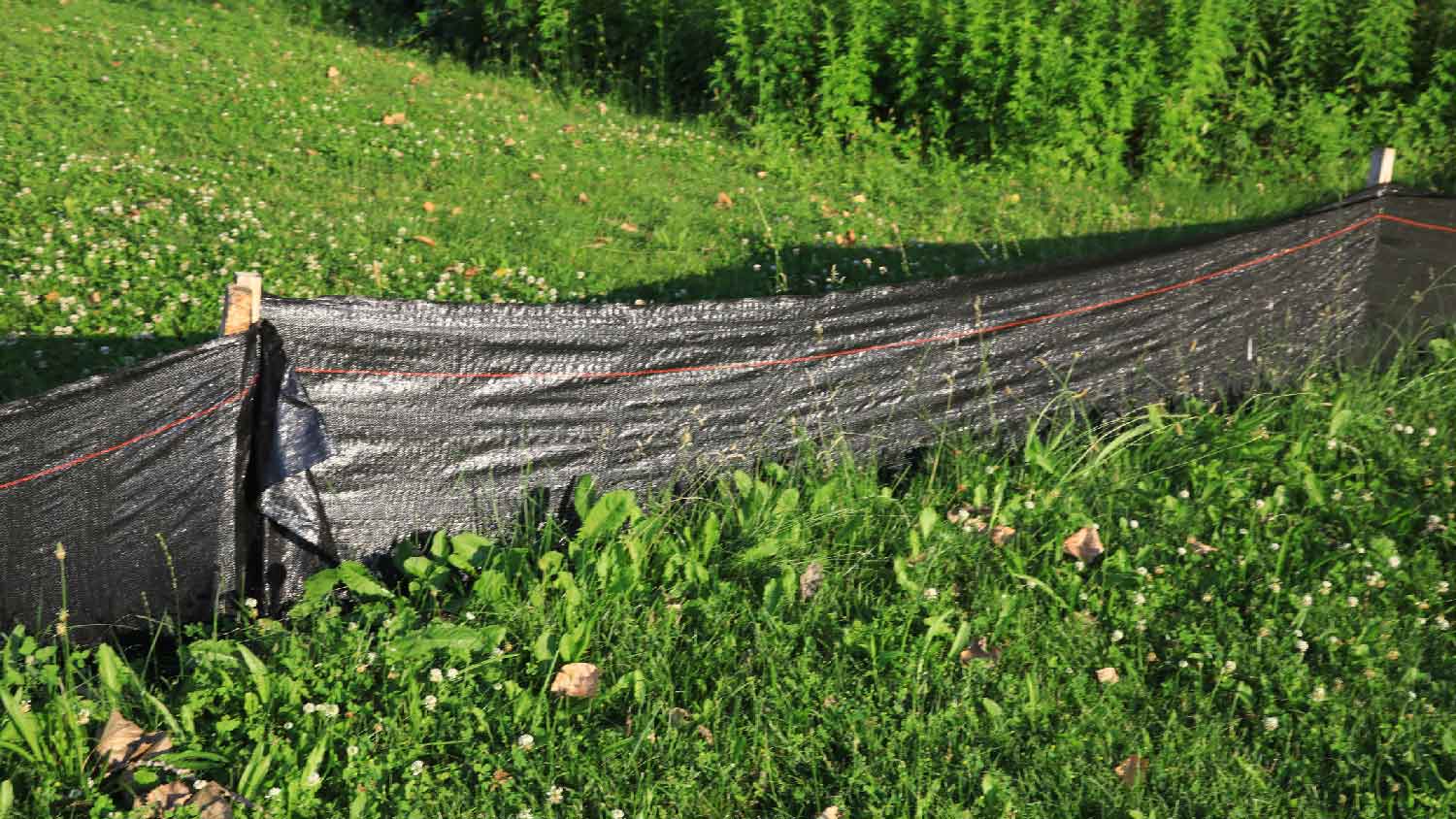
Find out how to install a silt fence to contain soil during your next outdoor project.

There are enough types of metal fencing out there to make your head spin, so how to tell which is the best metal fence type for your property? Keep reading to find out.

If you get hit with heavy snowfall each year, a snow fence may give you some relief. Learn about snow fences and how one can stop you from getting snowed in.