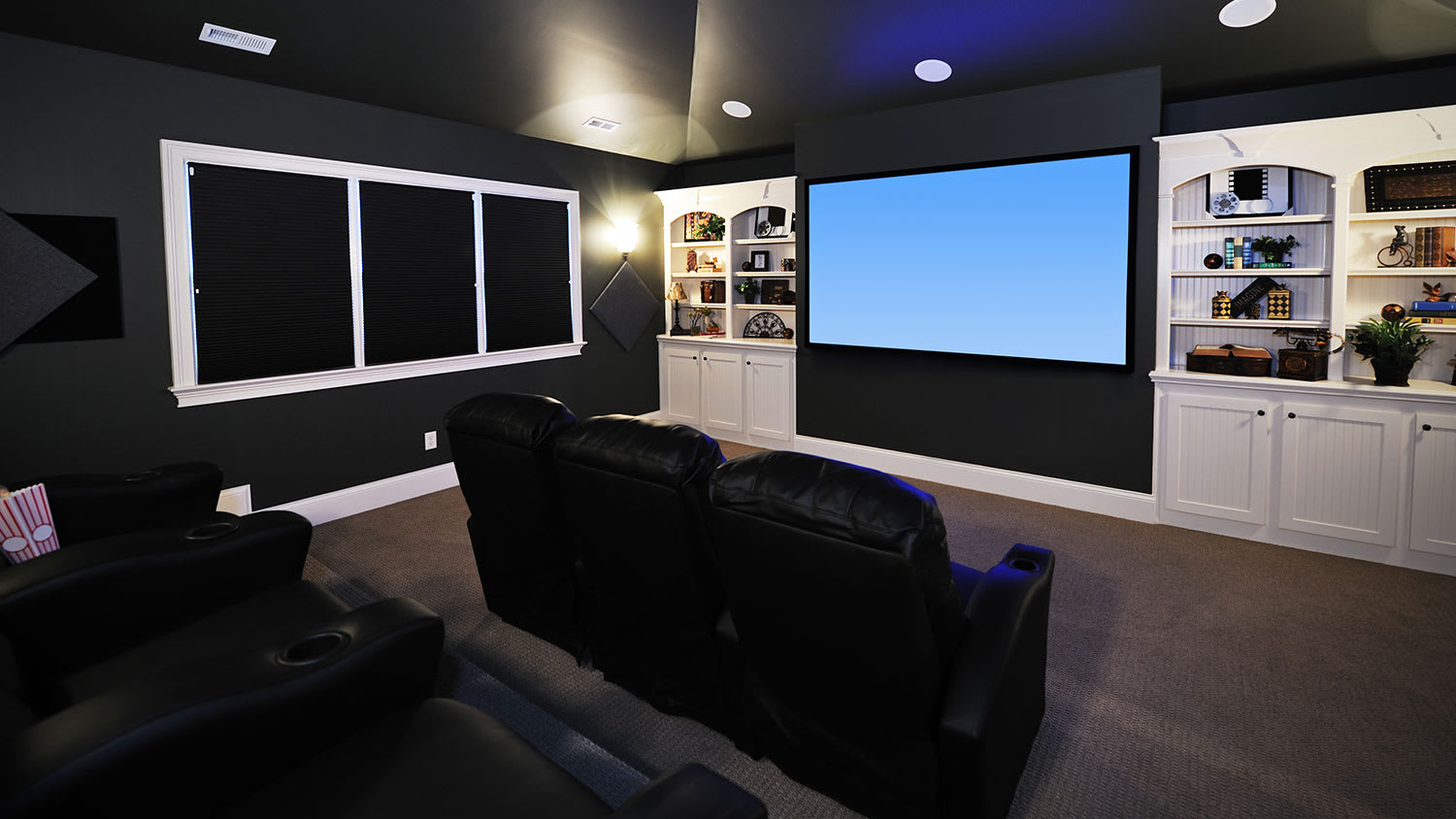
Whether you’re trying to keep noise in or out, soundproofing materials are the way to go. Use this guide to see how much it costs to soundproof a room.
Muffle outside noise with these DIY sound-stopping methods

Soundproofing a door requires sealing gaps around the frame, as hollow-core doors let noise pass through and proper weatherstripping blocks sound leaks.
Typical costs range from $1,000 to $2,600 to soundproof a room, with door-specific materials like weatherstripping, thresholds, and acoustic panels costing less.
You can reduce noise by adding mass-loaded vinyl or acoustic panels directly to your door, creating a thicker barrier that blocks sound effectively.
Hiring a local soundproofing professional provides reliable guidance on sealing gaps and installing materials correctly, ensuring your home stays quiet and comfortable.
Your neighbor got a pandemic puppy, and it’s cute but … it’s also noisy. With the added clamor of your daughter’s weekly flute lessons, you might be looking for a way to soundproof the interior doors of your home so you can focus and get some work done (or better yet, take a nap). Read on to learn just how easy it is to soundproof your doors and lock in the peace and quiet you crave.
Soundproofing your interior doors is something homeowners do for largely personal reasons. You might, for instance, want a space where your son can practice his guitar without disturbing your evening reading. Or, perhaps, you find that the neighbors stay up later to binge-watch TV and you’d like to create a space where you can sleep soundly without disturbance.
There are a number of reasons why you might wish to create quiet spaces in your home, but the most common one is to ensure your home is a tranquil, relaxing environment.
Because a door can take up nearly 20% of an 80-square-foot room’s wall, one with a hollow core will allow a high amount of sound to pass through from one room to the next. To reduce the overall sound leakage in your home, it makes sense to start with your doors and then, if you need more elaborate soundproofing options, to move on to adding a layer of drywall to your walls and sound-absorbing textiles, such as rugs, carpeting, and soundproof curtains. Keep in mind there is a difference between soundproofing and sound absorption and most of the below solutions may not be 100% soundproof.
There are different methods to soundproofing doors, each with its own cost range. Simply buying soundproof blankets, for instance, will set you back about $300 to $400 each; you would hang these blankets on the walls, doors, floors, or ceilings to minimize cacophony. Similarly, soundproof curtains exist, which can be hung on doors and windows to minimize noise and keep rooms quiet; these are $10 to $100 per panel. Both methods will help absorb sound when the doors are closed.
More permanent soundproofing materials range from installing thresholds, sealant, acoustic panels, or mass-loaded vinyl. The breakdown of the average costs of these materials is as follows:
Thresholds: $30–$100
Sealants: $40–$100
Acoustic panels: $100–$300 per door
If you need the most extreme option, you can replace your current interior door with a solid core door or a soundproof glass door. The costs to install a solid-core door ranges from $500 to $1,600, with costs to install a soundproof glass door running between $1,300 and $4,000.
In total, the cost to soundproof a room runs between $1,000 and $2,600.
There are many methods to soundproofing a door, from adding weatherstripping to installing a new threshold. For the best results, implement all of these methods.

Before heading out to the hardware store, measure the thickness of the door as well as the gap between the door frame and the top of the door.
Purchase weatherstripping in the right size, based on your measurements; the stripping should fit snugly but not hinder the door from opening and closing.
If there is any old weatherstripping, pop it off from the door using a putty knife.
Remove any old caulk with a utility knife or a caulk remover tool. If necessary, you may wish to apply a caulk remover substance first, such as that made by Goo-Gone.
Clean the door jamb with a damp cloth. Wipe it off with another dry cloth.
Measure the width of the door frame and the door jambs, and then cut the weatherstripping to fit. You should have three strips.
Peel away the adhesive backing and then apply the strips to the door frame, starting with the door jamb without hinges. Next, apply the stripping to the jamb with hinges. The narrow edge of the weatherstripping should be facing out, so the door can close properly.
Finish by applying weatherstripping to the top of the door frame. If the stripping prevents the door from closing properly, cut away any excess.
For extra insulation, install a door sweep after installing the weatherstripping.
Most door sweeps are installed on the door’s surface and face the interior.
Place the sweep on the floor, and measure and cut it to fit the door’s width.
Screw the sweep into place.

If you want to level up from weather stripping, you could install a door gasket, which is a permanent solution to filling in the gaps between the door and the door frame. But take note: Door gaskets are made from neoprene, and are more expensive than traditional weather stripping.
Measure the door as you would for weatherstripping. Purchase a gasket to fit, or look for adjustable models.
After removing the adhesive backing, stick the gasket on the bottom of the door frame, starting in the corner.
Cut the gasket, using a utility knife, when you’ve reached the top corner.
Follow the same method for the top of the door frame.
Nail the gasket in place with small tack nails, six inches apart. Most gaskets have pre-drilled holes for these nails.

Remove the screws holding the threshold in place.
If the threshold runs from one door jamb to the other, use a pry bar under one end to lift the threshold up while gently tapping the bar with a hammer; the threshold should come off.
If the door jambs don’t meet the threshold or the ground, cut through the threshold with a hacksaw and slide the pieces out, one at a time.
Clean any mess left from removing the old threshold.
Measure the size of the door gap for the new threshold.
Cut the threshold to fit using your hacksaw.
Slide the threshold into place between the door jambs.
Fasten the threshold into place using a drill and screws.
Open and close the door a few times to check the fit.

Measure the door, top to bottom and side to side.
Roll the vinyl or panels out on the floor, and mark them to match the size of the door.
Using a utility knife and a ruler to keep everything straight, cut the vinyl to fit the door.
With the help of a friend or family member (these panels are heavy!), check the fit of the panel against the door.
Remove the door by taking off the hinge pins, unscrewing the hinges from the jamb, and lifting the door out of the jamb.
Place the door on the floor (once again, a friend is helpful here).
Run a bead of caulk or construction adhesive on the door, around the perimeter of where the panels will sit.
Place the vinyl on the door, and let the caulk dry.
Rehang the door on its frame.
If you’re not concerned about the overall appearance of your door, you can purchase a soundproof (or acoustic) blanket to lay over your door. Many manufacturers sell a soundproofing blanket with their own installation kits, but here are the general steps:
Add small hooks or a curtain rod to your door frame.
Slide your soundproof banket onto the hooks.
A door sweep is a small piece of metal or plastic at the bottom of a door. These are typically installed as part of weather stripping to keep dirt, debris, and drafts from getting inside—but can also help with noise dampening. Most door sweeps are installed on the door’s surface and face the interior.
Remove your door from the hinges.
Measure and cut it to fit the door’s width.
Add some caulking to the bottom of the door and place the sweep on top.
Screw the sweep into place, making sure the screws are facing the interior of your house (if installing on an exterior door).
If you’ve tried some of the steps above and are still not happy with your soundproofing, you may want to look into higher-quality doors. Hollowcore doors will always let some noise through, regardless of all the modifications. The cost to install a new door averages around $1,100, but a specialty soundproof door could go much higher.
In addition to the tried-and-true methods above, these tips can help you create a cocoon of quiet.
After you’ve completed the above steps, check the door frame and trim for any holes where sound can leak in. Small cracks and holes can be filled in with new caulk, and old caulk that might be cracking can be fully replaced to better insulate your space.
Acoustic panels are used in recording studios to soundproof the space. Consider adding foam panels to reduce echo or fiberglass panels to block noise.
If you have thick, hollow core doors, adding a slim layer of plywood can create a thicker door, blocking more sound. Just be sure to cut the plywood to fit the door to prevent unsightly gaps between the plywood and the original surface.
You may also want to soundproof your windows to not only block noises from inside your house, but outside as well. The average cost to soundproof windows is around $900, depending on the number of windows you’d like to install.
The steps laid out in this guide can be handled by most people, even if you only have a little DIY experience. Most of the materials you’d purchase are designed to be easy to use and work with. As mentioned, though, when working with mass-loaded vinyl it’s helpful to have a friend or family member around.
You should hire a soundproofing professional if you decide to remove walls, floorboards, or any other part of your home’s structure or are considering soundproofing walls during a renovation. These kinds of projects might require permits and require an expert’s knowledge of electrical wiring and plumbing.
Terrible experience. Walls/trim/floors/cabinets/doors all have drip marks, overspray, etc. Tiling at the fireplace had to be redone by another vendor due to incorrect and shoddy install by Profect. Contractor had his children in our house while he was on site without prior authorization or...
 Profect painting & exteriors
Jason has helped me with multiple household projects, with the most recent being new door installation. He has always showed up on time and organized and has done an incredible job! Jason is very professional and he's now my go-to for anything around my house that needs to be fixed or...
 Huff Garage Rescue, LLC
Company came to look at my garage door that was off track. They also said I needed a brace on the other garage door. They put the door back on track, and I paid to install the brace. The technician told me I needed a new garage door opener, and it would cost $1000. Red flags went off in...
 Precision Overhead Garage Door Service
On Sunday 2/26 I requested quotes via Angi from 4 refrigerator repair businesses. Northwest Appliance responded to me Monday morning (2/27) and my refrigerator was repaired by noon the same day. Great communication, they did everything they said they would. The technician had the parts on...
Excellent customer service and knowledge. I was recommend to him from my neighbour. My front door and window came in great and were installed beautifully perfectly, I m very satisfied with their excellent work, so decided to order one more big bow window for my living room. I cant wait for...
 Window Depot USA of Central Ohio
Called ahead and worked quickly to install keyless locks on vintage wooden doors.
 Expert Lock and Key, LLC
Scott did not get appropriate access to the property prior to the scheduled inspection which required us to come back later in the day to complete it. He also, unprofessionally, knocked on a neighbor?s door in his attempts to reach someone with access. His overall report was fine though the...
 Security First Home Inspections
Door Depot was very responsive - they came out the day after my call to assess my needs, then returned at my convenience to complete the work. They arrived early, and the work was completed in a shorter period of time than estimated. Very pleased with the results. I would definitely use them...
 Door Depot LLC
Replace garage doors: Fast response, competitive estimate, timely work done well.
 Village Garage Door
Jeremiah did an awesome job cleaning 28 windows inside and out! He was fast, efficient and now I have a beautiful view again. This was a Groupon for $139 for 20 windows, but I had 28 windows/doors cleaned, so there was an extra $6 per window. Totally worth it.
 Complete Home Services
From average costs to expert advice, get all the answers you need to get your job done.
Whether you’re trying to keep noise in or out, soundproofing materials are the way to go. Use this guide to see how much it costs to soundproof a room.

Since your house will already be torn apart for a remodel, it’s a great time to add soundproofing to walls or other areas to improve noise reduction.
Figuring out how to make a garage door quieter can involve trial and error. Our seven tips provide the clues you need to quiet the grinding and squealing.

Warm summer breezes and crisp winter air may be nice outside, but not as much when they slip through your old front door and overload your HVAC system. Upgrade the entryway with these five tips to make your door more energy-efficient.

Dreaming up new home construction or an addition? Perusing through all the types of doors is a crucial step in the design process.
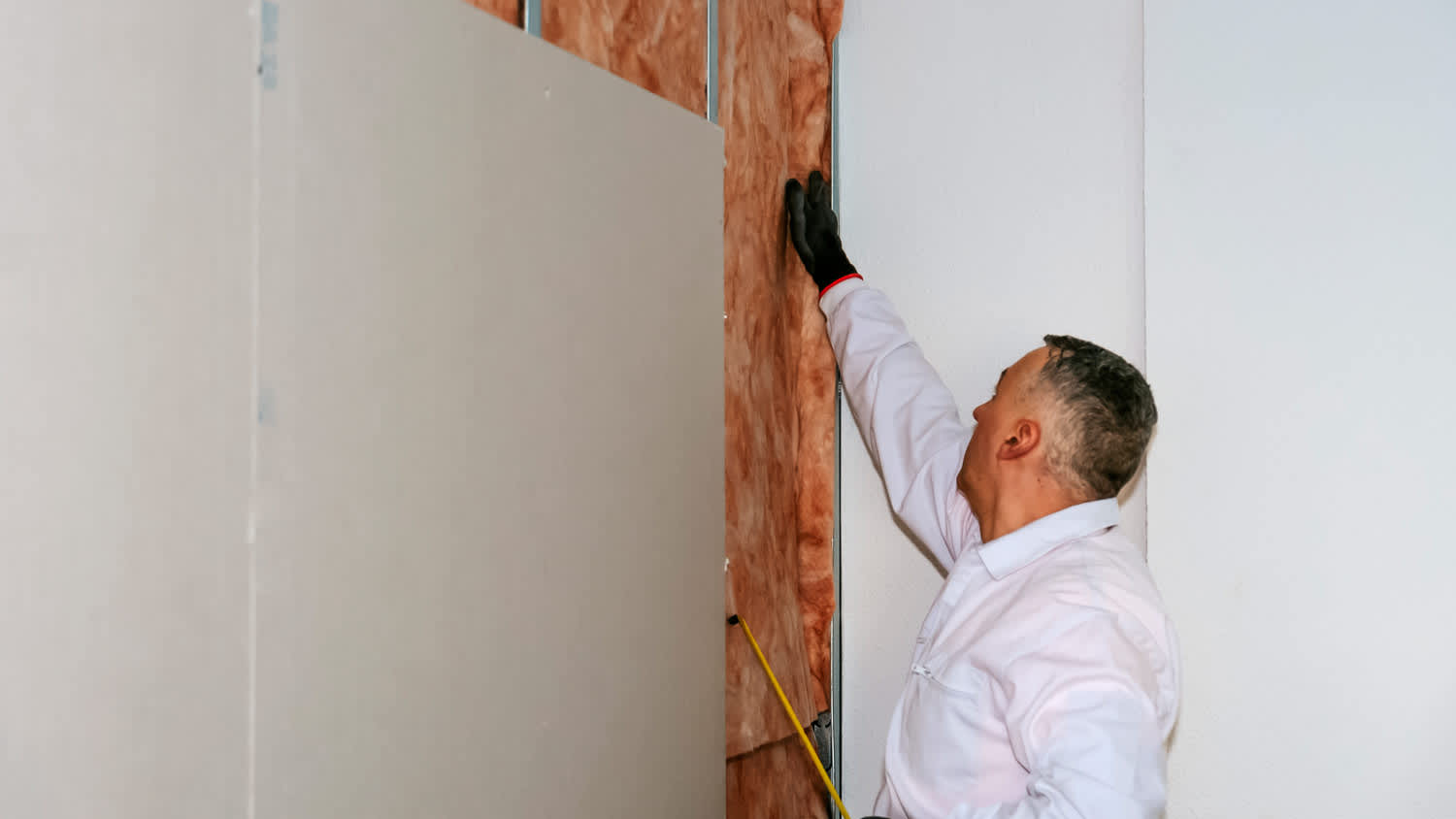
Who to hire to soundproof a house? Learn which pros to call, when to add an acoustical consultant, and how the process works so you can plan confidently.