


Gas furnace replacement costs depend on the type of furnace you want and installation fees. Our guide explains all the factors involved in a new furnace cost.
Heating and air conditioning service costs depend on your project and location. Check with a local pro for your specific job.

Your oil-to-gas conversion costs $3,800 to $13,000, with $8,500 for many homes, based on gas line needs.
Your savings and installation complexity depend on furnace efficiency rating and whether you choose natural gas or propane.
Your budget should include oil tank removal, disposal, permits, and chimney liner replacement for safe venting.
Hiring a local furnace tune up professional protects your home from carbon monoxide and confirms gas connections meet code.
It’s no secret that cranking up the heat on a traditional oil furnace is akin to cranking up your utility bill. You can set your sights on long-term energy savings by switching to a gas heating system. The cost to convert from an oil furnace to a gas furnace is $8,500 on average, but it can range from $3,800 for a simple swap to $13,000 for a high-efficiency furnace that requires gas line installation.
As the air gets colder, the warmth of your furnace makes your home inviting and comfortable. This guide helps plan out furnace installation costs so you can cozy up to a more comfortable budget.
How much does it cost to replace an oil furnace with natural gas? Several different factors impact the price—from the efficiency and quality of your furnace to the scale of your installation. Depending on your home, an HVAC tech may need to install gas lines, a propane tank, ductwork, or a chimney liner along with your furnace. Here are some costs to keep in mind.
| Installation Costs | Average Price Range |
|---|---|
| Furnace | $500–$6,500 |
| Gas line installation | $15–$25 per linear foot |
| Professional labor | $500–$5,000 |
| Propane tank installation | $600–$2,500 |
| Oil tank removal and disposal | $50–$600 |
| Permits | $50–$300 |
| Chimney liner installation | $500–$2,000 |
| Ductwork | $500–$1,500 |
For most homeowners, a new gas furnace costs $700 to $6,500 before labor. Choosing the right model is a balance of the up-front cost and the long-term savings you’ll get on your energy bill from increased efficiency. There are three types of furnaces to choose from:
| Type of Furnace | Average Cost |
|---|---|
| Single-stage | $500–$3,000 |
| Two-stage | $1,000–$3,500 |
| Modulating | $1,300–$6,500 |
Single-stage furnace: Single-stage furnaces cost $500–$3,000. This type of furnace doesn’t have nuanced controls, meaning it’s either on at full power or completely off, and it’s the least efficient option.
Two-stage furnace: Two-stage furnaces are moderately efficient and cost $1,000–$3,500. This type of furnace has a high blower for colder days and a low blower for warmer days.
Modulating furnace: Modulating furnaces are the most efficient and cost $1,300–$6,500. This type of furnace can continuously adjust the heat output and airflow to maintain a consistent temperature.
According to the U.S. Department of Energy, every furnace has an Annual Fuel Utilization Efficiency (AFUE) rating to help you understand how well it burns fuel. High-efficiency models (such as modulating furnaces) have the highest price tag and an AFUE rating of 96% or above. The lowest efficiency models (such as single-stage furnaces) have the lowest price tag and an AFUE rating between 80% and 89%.
A gas line installation costs $20 per linear foot on average. During your furnace installation, your contractor may need to install gas lines in your home. If your home isn’t connected to the municipal grid, they may need to extend the line from the street to your house.
Labor makes up 20% to 30% of the cost of replacing an oil furnace with a gas furnace. You can expect to spend anywhere from $500 to $5,000 on labor for a furnace installation. The overall cost depends on the extent of the job, but most contractors charge $50 to $100 per hour.
The cost to install a propane tank is $1,400 on average, but most homeowners spend between $600 and $2,500. While many furnaces are powered by natural gas that runs from the street into the home, it’s not always convenient or possible to connect to the municipal grid. In this case, you can power a gas furnace with propane, but you’ll need to install a propane tank. This is a common option for homes in rural or remote areas.
Expect costs to rise for an underground propane tank, which will require excavation.
When you replace your oil furnace with a gas furnace, you’ll need to remove and dispose of the old furnace and oil tank. These costs range from $50 and $600 and are usually included in your contractor’s estimate.
In most areas, you’ll need a permit to install a new gas furnace. Permits, which average $50 to $300, help ensure that the installation is up to code. This is crucial when dealing with gas lines and excavation because DIY installation can create a safety hazard.
Beyond gas line installation, your home may need a couple of modifications when you switch from oil to gas. Commonly, homeowners will replace chimney liners that are not compatible with natural gas or propane. You may also need to modify your ductwork during installation.
| Modification | Average Cost |
|---|---|
| Ductwork | $500–$1,500 |
| Chimney liner installation | $500–$2,000 |

When you’re talking about furnaces, it’s important to know the distinctions between an oil versus a gas furnace. An oil furnace relies on oil as the fuel source instead of natural gas or propane. Oil fuel is less flammable than natural gas, and you store it in a tank near your home. Overall, oil furnaces cost less but aren’t as energy efficient as a natural gas option. Oil furnaces also require more maintenance than gas furnaces, including regular cleanings.
The gas used in a natural gas furnace is composed of a mixture of methane, propane, butane, and other traces of gases. This mixture is piped into your house, and it requires a gas main located near your home.
While most areas have gas lines, you may need to call your local utility company to be sure one is available. If you’re not near a gas line, you might be able to convince the local gas company to install a gas main if you and enough neighbors in your area agree to use the service.
The fuel used in propane furnaces is propane, which is a by-product of either crude oil or natural gas. It comes in a liquid form, which you’ve most likely seen in large canisters on the outside of your local home improvement store. Propane gas furnaces are designed to convert the liquid form of propane into a gas that works similarly to natural gas.
Once the gas line or propane tank is connected to the furnace, your thermostat will signal to the burner to ignite the natural gas. This will warm the air that enters the furnace, which is sent to the ducts and pushed out into your home, where you and your family can enjoy the reprieve from a cold, winter day.

Before deciding whether switching from oil to gas heat is right, get your pen and paper out to start jotting down all the pros and cons that can impact your choice.
Gas furnaces are beneficial in many ways. Here are a few pros to choosing a gas furnace for your home:
Gas furnaces are more cost-effective: According to the Energy Information Administration (EIA), gas furnaces cost homeowners approximately $750 to keep warm. By comparison, heating oil costs an average of $1,700, and electricity costs around $1,250.
Some gas furnaces are highly efficient: Highly efficient gas furnaces use as much as 98% of the energy used to run the furnace.
Propane and natural gas reduce carbon dioxide emissions: The Clean Air Act lists propane and natural gas as cleaner fossil fuels than gasoline and diesel.
Installing a gas hookup adds versatility to other appliances: Once your home has a gas hookup, you can convert your other appliances (such as your oven, stove, washer, and dryer) to gas, which can save you even more in the long run.
Gas furnaces come with a few cons that might help you determine whether or not making the switch is right for you. These include the following:
There are high up-front costs: A gas furnace installation for an average 1,600-to-2,000-square-foot house costs between $3,800–$10,000.
Gas furnaces produce carbon monoxide: This invisible and odorless chemical is poisonous, so make sure you have a carbon monoxide detector installed. The best practice is to hire a local pro to tune up your furnace every year.
You might need to pay to have the old furnace removed: If you’re hoping to replace your old furnace, you’ll have to hire a local furnace pro to remove it, which costs $60–$500.
Switching to gas may require changes to your current furnace chimney and hookup: To factor in potential expenses like these, contact an HVAC professional to see what changes you’ll need to make.
You might need a building permit for installation: Building permits vary with location, but if you do need one, they cost between $400–$1,500 on average.
Gas furnaces have a shorter lifespan: Your gas furnace will last for around 15–20 years, whereas electric furnaces last for around 20–30 years.
Converting a large appliance from oil to gas requires hiring a local furnace pro, who has the tools, experience and training to properly conduct this project. Since it involves highly combustible fuels (which can also create carbon monoxide leaks if improperly installed), this is not a DIY project.
One of your first steps should be contacting local heating professionals to arrange for an estimate on your specific conversion. It’s important to trust a pro with this project, for reasons including:
Conversion requirements vary depending on the setup of your oil furnace, so you need a pro to understand what components and work will be required.
The pros adhere to local building codes and safety regulations when handling complicated steps, like properly removing an oil tank or installing a gas line.
Professionals can recommend what type of furnace and gas fuel to use based on your furnace type.
The pros can run tests on your new furnace to make sure everything is functioning properly and there aren’t gas or exhaust leaks.
Professionals will arrange for permits and inspections that are usually required for this kind of conversion.
Converting from an oil furnace to gas is not a DIY project. You need a pro for this one— however, you may be able to handle some minor steps on your own to save time or money.
Research whether you want a natural gas line (which must be supported by infrastructure in your area) or switch to propane, so you’re ready to talk to the pros when getting estimates.
Plan a pick-up for your old oil tank. Oil requires adherence to local and federal laws for disposal, so research the proper disposal methods in your area.
Clear all objects away from your indoor furnace components and make sure everything is easy to access.
If they won’t be removed, cap remaining fuel lines yourself.
So, is it worth spending a few thousand dollars to switch from oil to gas heat? When considering gas furnace savings, you could pay yourself back in just a few years. Compared to oil-burning furnaces, your gas furnace will save you around $950 annually, and compared to electric furnaces, you will save about $500 annually.
At the end of the day, your decision depends on your own personal situation, how complicated making the switch is for your particular home, and how long you plan on staying at your current house.
Ask your furnace pro about local and state rebates, which are often available when converting away from oil furnaces.
Be prepared with averages of your home’s square footage and, if you can, the state of insulation throughout your home.
If you are getting a propane tank, decide whether you want an above-ground or below-ground tank.
Ahead of the conversion, turn off your old furnace and disconnect the line if possible.
Home is the most important place on earth, which is why Angi has helped more than 150 million homeowners transform their houses into homes they adore. To help homeowners with their next project, Angi provides readers with the most accurate cost data and upholds strict editorial standards. We extensively research project costs to develop the pricing data you see, so you can make the best decisions for you and your home. We rely on reputable sources, including the U.S. Bureau of Labor Statistics, academic journals, market studies, and interviews with industry experts—all to ensure our prices reflect real-world projects.
Want to help us improve our cost data? Send us a recent project quote to [email protected]. Quotes and personal information will not be shared publicly.
I have used Columbus Worthington Air for years and recommend them whenever I have a chance. The staff is quick, courteous, and well-trained.
 ARS Columbus Worthington Air
If you’re good people wanting to do business with good people, hire Matt. He is a consummate professional and utterly competent. He installed a water heater in my home at a price that beat competitors by hundreds of dollars with a promise to support the unit for its life (even after its 6 yr...
 Greene's Plumbing Services
Corey Carr was great. I had damage from a recent storm and needed to have my mast and other components replaced. The project entailed coordinating with AEP, and Corey helped make a stressful situation a lot less stressful. I really appreciated his dedication to service and the job very well done.
 Mr. Electric of Columbus
This service was great. My air conditioner went out during the heat spell that we had. My husband has health issues and they came out that night and at 9:30pm the air conditioner was fixed and running. We are sooo very thankful, this is the company I will be using from now on and would...
 Mr. Mechanical Ohio
Great company! Price was competitive, technician showed up on time and completed the job (exterior electric Radon fan replacement) quickly. Would hire them again.
 MaGen Property Inspections and Radon Mitigation
Raven and crew does absolutely fantastic job. They are very professional if any concerns were to occur with any of her work she always took responsibility and finished out with a great job. I have worked with her business for a year and have always been satisfied. Very trusted business and...
 Creations of Transformation LLC
I would recommend this company to anyone! He showed up on time, was friendly, completed a very difficult repair on our dryer vent cover, was responsive, and pricing was extremely fair and competitive. I would have him back to do any of our repairs or cleanings without hesitation!
 U.S.A. Dryer Vent, LLC
Ace Fireplace Services' chimney sweep service is truly exceptional. They used advanced technology to ensure a thorough cleaning process, and my chimney has never looked better. I highly recommend their services.
 Ace Fireplace Services
The technician was very professional and friendly. He answered all my questions and was very thorough. He left the fireplace area very clean . He inspected from the roof and advised me as to other work that might need to be done. There was no pressure there. I was very satisfied with the...
 Supreme brick & chimney
On time, clean and finished fast. Windows seem sturdy and the finish is good. Caulking was done with no smudges. Would recommend.
 Window Depot USA of Central Ohio
From average costs to expert advice, get all the answers you need to get your job done.
Gas furnace replacement costs depend on the type of furnace you want and installation fees. Our guide explains all the factors involved in a new furnace cost.

Want a safer, cleaner alternative to your traditional fireplace? Use this guide to determine the cost to convert a fireplace to gas in your home.

Gravity furnace replacement cost can be high if there is asbestos present. Use this cost guide to help you decide if you should repair or replace it.
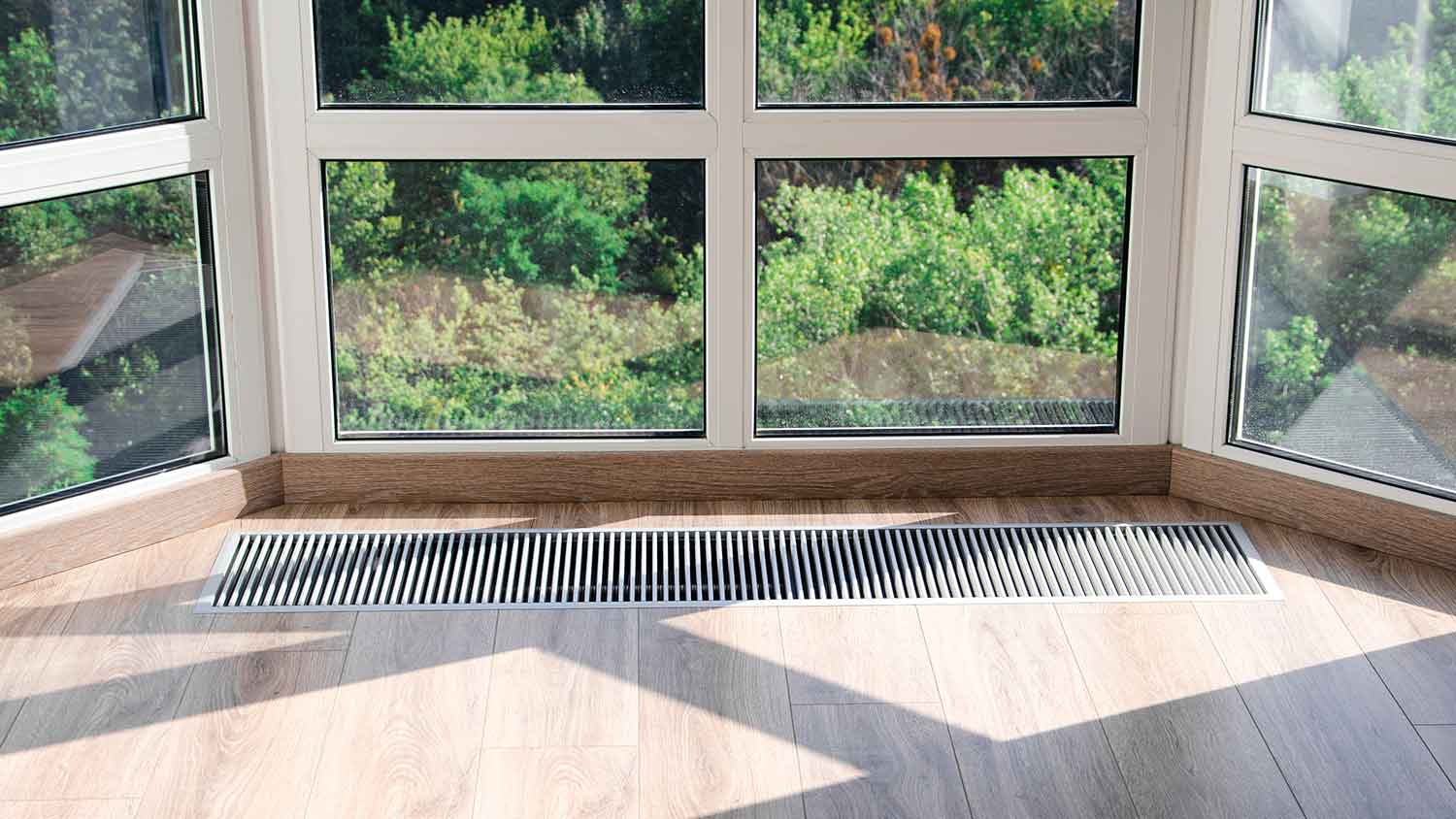
It’s normal if your furnace smells like gas when you first turn it on for the cold season. But if there’s a leak or malfunctioning part, that smell of rotten eggs could mean danger.

Need to purchase a new gas furnace but aren’t sure which type is right for your home and needs? Taking a little bit of time to research furnaces to see which option is right for you can save you money over time. Here’s a look at five furnace types.
A question most homeowners have is, “can you convert a gas dryer to an electric one?” It’s possible, but our guide explains why that might not be the best option.