

The cost of a radon mitigation system in Seattle, WA, depends mostly on the type of system being installed. Use this guide to learn about your options.
Biohazard remediation costs depend on your project and location. Check with a local pro for your specific job.

Professional radon testing in Seattle, WA, costs $421 on average for most local homeowners scheduling this service.
The total price of your testing project depends heavily on the test type and your home size.
Common additional expenses include purchasing reusable digital monitors, which typically range from $115 to $280 locally.
Hiring a radon testing pro in Seattle, WA to do testing keeps you and your household safe from radon.
This article was created using automation technology and produced in accordance with our AI policy, which includes editorial quality standards.
Radon testing in Seattle, WA, costs $421 on average, with prices ranging from $100 to $1,200. Your total price depends on the size of your home and whether you choose a short-term or long-term testing method. Before scheduling your radon test, understanding these costs helps you budget effectively and keep your indoor air safe.
When you hire a local radon testing professional in Seattle, WA, your final bill will depend on several property-specific details. The type of test you select, the size of your home, and the equipment used all play a role in determining your total expenses in this market.
The specific testing method you choose is one of the primary drivers of your overall price. Active digital monitors provide continuous data, while passive charcoal kits offer a quick snapshot of your home's safety. In Seattle, WA, where rainy, overcast weather keeps windows closed for months, choosing a highly accurate professional test provides peace of mind. A basic DIY short-term kit runs between $15 and $45 per kit, while a comprehensive professional test ranges from $170 to $780 per project. Homeowners find that their overall project averages around $421 when hiring an expert. If you are also scheduling indoor air quality testing, you can combine these services for better efficiency.
| Test Type | Description | Local Average Cost | National Average Cost |
|---|---|---|---|
| DIY short-term | Charcoal or liquid scintillation kits are used for 2–7 days | $15–$45 | $10–$40 |
| DIY long-term | Alpha track or electret kits used for 90+ days | $30–$70 | $25–$60 |
| DIY digital | Electronic monitors for ongoing readings | $115–$280 | $100–$250 |
| Professional | A certified pro uses an active or passive device | $170–$780 | $150–$700 |
The square footage and layout of your property directly impact how many testing devices are required. Larger properties with multiple levels or sprawling foundations need additional kits to ensure accurate readings across every zone. Testing a sprawling multi-level home in Seattle, WA, is especially important because the region's mild, wet winters trap soil gases indoors. Testing a small home costs $170 to $335 per test, whereas a large home requiring multiple kits ranges from $560 to $780 per test. Depending on the footprint of your property, your total expenses fall between $100 and $1,200. Homeowners evaluate these expenses alongside standard home inspection costs when purchasing a new property.
| Home Size/Type | Description | Local Average Cost | National Average Cost |
|---|---|---|---|
| Small home (1,200 sq. ft.) | Single kit, single level | $170–$335 | $150–$300 |
| Medium home (2,500 sq. ft.) | Two kits or multi-level testing | $335–$560 | $300–$500 |
| Large home (4,000+ sq. ft.) | Multiple kits, multi-unit or multi-level | $560–$780 | $500–$700 |
How often you monitor your home's radon levels dictates your long-term testing budget. While a single test provides immediate data, experts recommend retesting every few years or after major structural changes. Because the climate in Seattle, WA, includes heavy seasonal rainfall that shifts soil conditions, periodic retesting ensures your living spaces remain safe from gas intrusion. If a previous test led to the installation of a remediation system, you need to verify its ongoing performance. Factoring in your future radon mitigation cost helps you decide whether investing in a reusable digital monitor makes more financial sense than paying for repeated one-time professional visits.
The quality and technology of the testing equipment you select influence your upfront expenses. Disposable kits are inexpensive, while electronic monitors require a higher initial investment but offer continuous tracking. Tracking fluctuations in Seattle, WA, is highly effective with digital monitors, as the transition from dry, sunny summers to drizzly winters causes variations in indoor gas levels. A basic charcoal canister costs $15 to $35 per kit, making it an affordable short-term option. In contrast, a reusable digital monitor ranges from $115 to $280 per device and requires occasional calibration fees. Many homeowners upgrade their testing materials while conducting an annual HVAC inspection to ensure comprehensive air quality management.
| Material/Kit Type | Description | Local Average Cost | National Average Cost |
|---|---|---|---|
| Charcoal canister | Disposable, short-term DIY kit | $15–$35 | $10–$30 |
| Alpha track detector | Long-term DIY kit, measures over months | $30–$70 | $25–$60 |
| Digital monitor | Electronic, reusable, needs calibration | $115–$280 | $100–$250 |
| Pro-grade equipment | Used by certified testers, higher accuracy | Included in service | Included in service |
Hiring a certified professional involves labor fees that cover equipment setup, sample collection, and detailed laboratory analysis. These experts ensure the testing devices are placed in optimal locations to prevent skewed results. Navigating basements and foundations in Seattle, WA, is challenging due to the damp environment, which justifies the cost of hiring an experienced technician. Most companies charge a flat one-time rate for the complete service, though some bill an hourly fee for complex layouts or remote properties. If your technician discovers elevated moisture levels during the setup process, they recommend crawl space encapsulation to help seal out both water and harmful soil gases.
Gratuity is not expected or required when hiring environmental testing professionals. These technicians are compensated fully through their standard service rates. However, if a technician in Seattle, WA, goes out of their way to expedite your lab results during a particularly stormy, overcast week, a small tip is a nice gesture. Leaving a positive online review or referring the company to your neighbors is also a highly appreciated way to thank them for their hard work.
Hiring a professional for your project in Seattle, WA, ensures accurate results and peace of mind. Most local experts charge a flat fee for the entire service, but for complex layouts, you might pay $30 to $75 per hour for labor. Keep in mind that services and materials in Seattle, WA, are subject to a 10.55% sales tax, which will slightly increase your final bill. Investing in a pro guarantees your home is safe from harmful soil gases.
Hiring a radon testing professional in Seattle, WA guarantees accurate results and protects your family's health, saving you the stress of testing it yourself.
Experts possess highly calibrated continuous monitors that detect the smallest fluctuations in gas levels.
They pinpoint the exact entry points of hazardous gas inside your basement or crawl space.
Certified contractors provide the official documentation required for local real estate transactions.
They recommend the exact mitigation system necessary to keep your indoor air clean and safe.
Home is the most important place on earth, which is why Angi has helped more than 150 million homeowners transform their houses into homes they adore. To help homeowners with their next project, Angi provides readers with the most accurate cost data and upholds strict editorial standards. We’ve surveyed thousands of real Angi customers about their project costs to develop the pricing data you see, so you can make the best decisions for you and your home. We pair this data with research from reputable sources, including the U.S. Bureau of Labor Statistics, academic journals, market studies, and interviews with industry experts—all to ensure our prices reflect real-world projects.
Want to help us improve our cost data? Send us a recent project quote to [email protected]. Quotes and personal information will not be shared publicly.
I used All About Abatement several years ago and was pleased with their work and so I tracked them down for a new project. David is great to work with. The work was timely, efficient, professional and effective. I would recommend them to anyone needing remediation work.
They arrived the next day and were immediately able to diagnose and start remediation on the damage. Hopefully won't ever need their help again, but I know who to call or refer if I do
 Premier Water Removal
Fast and thorough inspection and estimate. Careful work removing asbestos. Very confident.
They were chill, upfront about everything, helped us to insert the problem, remedy it, and prevent it from happening again.
 Thermotech Heating & Cooling
David said you and Renew Restoration as one of the best vendors I’ve ever worked with in town. David is an expert in air quality and VOCs. When I bought a new house, I brought in David to do the air quality testing. David is professional, prompt, and affordable. He will give advice, and he...
I will surely recommend Diversified! I was concerned that our home had a mold issue and the related health issues it brings. Ray carried out a free inspection for us as early as he could. Then he walked me through the mold removal plan step by step. I really appreciated the knowledge that he...
 Diversified Crawlspace Servs
David, the owner of Renew Restoration, was the second vendor that called me after I put in my request on home advisor. He was prompt with his phone call. Immediately, when he spoke to me about his business and how he had volunteered some time for businesses that had been affected by...
 TOTALLYSAFE AIR LLC
After visiting my home, they kept promising to send me an estimate for mold remediation, but never did. I called several times to follow-up and was promised a response, but I never got the estimate.
These guys did an amazing job. Manny explained the process thoroughly and walked me through the work to be done. The crew cleaned up my messy attic and remediated the mold and then patiently waited until the electrical work was completed before finishing the job. Very good work and I would...
 Crawls & Attics Total Energy Solutions, LLC
Nothing but good things to say about Bruce and Simonne. I bought my house two years ago and the seller had just planted some bamboo as a privacy hedge. I was naive and figured it couldn't be a big deal but two years later, it was taking over one side of the house and was spreading fast. I...
From average costs to expert advice, get all the answers you need to get your job done.
The cost of a radon mitigation system in Seattle, WA, depends mostly on the type of system being installed. Use this guide to learn about your options.

Find out the average indoor air quality testing cost in Seattle, WA. Learn what you can expect to pay for local air quality assessments and breathe easier.

Find out what impacts radon testing costs, including average prices for DIY kits and professional services, so you can protect your home and budget confidently.
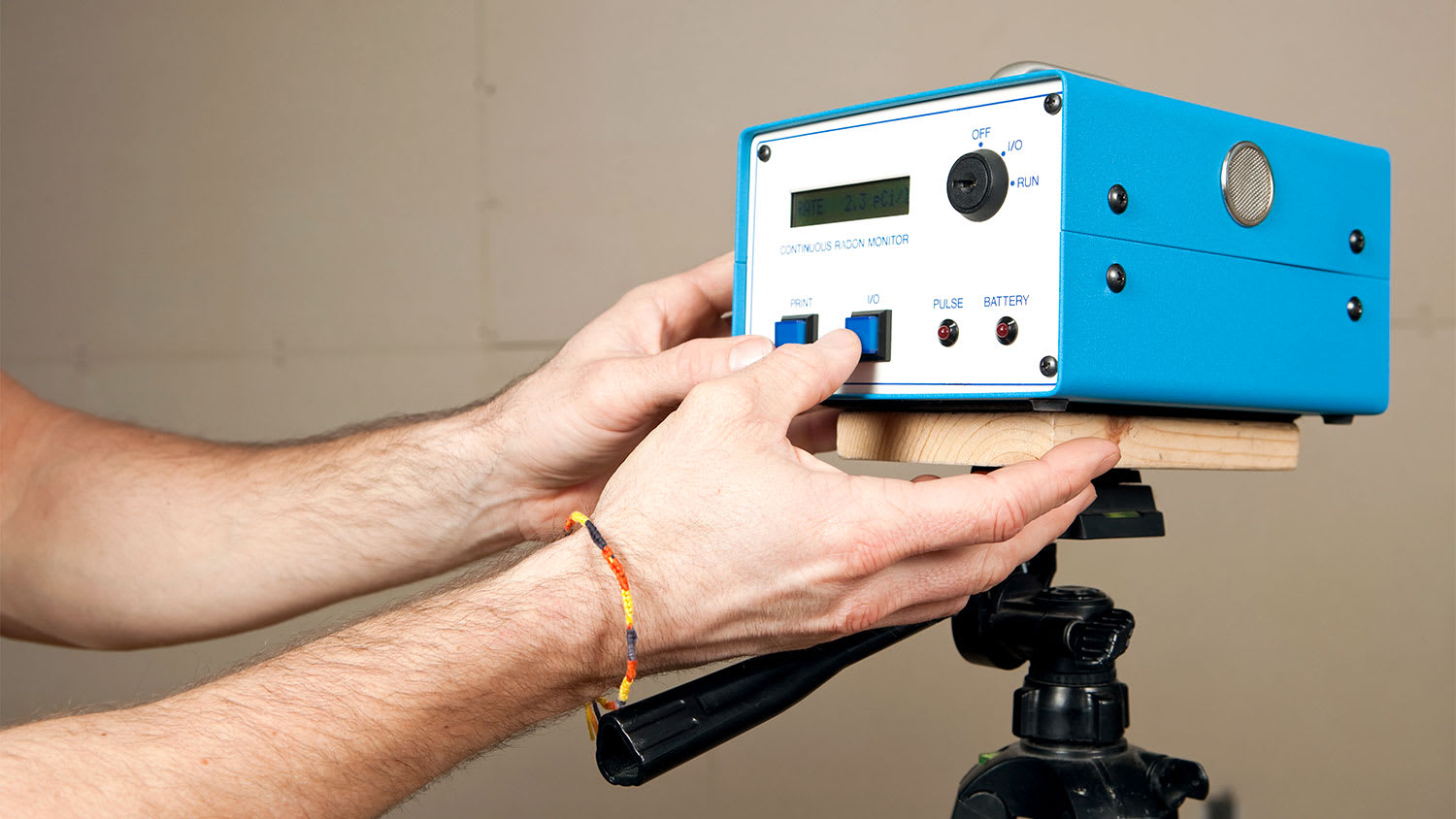
Learn how to hire a qualified radon testing pro for your home. Find certified professionals, understand costs, and get expert tips to protect your family.
Knowing how to test for radon will keep your home free and safe from this odorless gas—you just have to decide whether to do it yourself or hire a pro.

Radon is a gas that you can't see or smell and is harmful to your health. If your home has radon, you need to know who installs radon mitigation systems.