

The cost of a radon mitigation system in New York, NY, depends mostly on the type of system being installed. Use this guide to learn about your options.
Biohazard remediation costs depend on your project and location. Check with a local pro for your specific job.

Professional radon testing in New York, NY, costs $640 on average, depending heavily on your home's overall size.
The specific type of test you choose and the total square footage strongly determine your final project price.
Purchasing a reusable digital monitor costs $115 to $285 locally, which significantly increases your initial upfront equipment costs.
Hiring a local New York, NY radon testing pro to do testing keeps you and your household safe from radon.
This article was created using automation technology and produced in accordance with our AI policy, which includes editorial quality standards.
Radon testing in New York, NY, costs $640 on average, and ranges from $156 to $1,124. Your total price for radon testing depends on the type of test you choose and local labor rates. Before scheduling an inspection, understanding the cost helps you plan a project that fits your budget and keeps your home safe.
When hiring a radon remediation professional in New York City, NY, several variables influence your final bill. The size of your property, the testing method used, and the complexity of the equipment all play a direct role in determining the total price for this service.
The specific testing method you select dictates a significant portion of your total expenses. Active digital monitors require more advanced technology than passive charcoal kits, driving up the initial purchase price. In New York City, NY, where cold, snowy winters force residents to keep windows tightly sealed, choosing an accurate test type is crucial for detecting trapped gases. While the overall project averages $640, opting for a DIY short-term kit runs $15 to $50. For more comprehensive results, professional testing costs $170 to $790. Homeowners bundle this service with general air quality testing to ensure a completely safe indoor environment.
| Test Type | Description | Local Average Cost | National Average Cost |
|---|---|---|---|
| DIY short-term | Charcoal or liquid scintillation kits are used for 2–7 days | $15–$50 | $10–$40 |
| DIY long-term | Alpha track or electret kits used for 90+ days | $30–$70 | $25–$60 |
| DIY digital | Electronic monitors for ongoing readings | $115–$285 | $100–$250 |
| Professional | A certified pro uses an active or passive device | $170–$790 | $150–$700 |
The square footage and layout of your property directly impact the amount of equipment and time required to complete the assessment. Larger properties need multiple detectors placed across different zones to capture an accurate reading. Testing a sprawling multi-level home in New York City, NY, requires more extensive setup than a compact single-story residence. Most homeowners spend between $156 and $1,124 overall, heavily dependent on the home's footprint. A small home of 1,200 square feet costs $170 to $340 to test. Conversely, a large home exceeding 4,000 square feet requires an investment of $565 to $790. Scheduling an HVAC inspection at the same time ensures all ventilation systems operate correctly across the entire floor plan.
| Home Size/Type | Description | Local Average Cost | National Average Cost |
|---|---|---|---|
| Small home (1,200 sq. ft.) | Single kit, single level | $170–$340 | $150–$300 |
| Medium home (2,500 sq. ft.) | Two kits or multi-level testing | $340–$565 | $300–$500 |
| Large home (4,000+ sq. ft.) | Multiple kits, multi-unit or multi-level | $565–$790 | $500–$700 |
How often you conduct these assessments determines your long-term financial commitment. Regular monitoring ensures continuous safety, especially after making structural changes to the property. The four distinct seasons in New York City, NY, cause indoor air pressure to fluctuate, making periodic retesting a smart strategy. Conducting a test every two to five years is standard practice. If a previous test reveals high levels, factoring in the radon mitigation cost becomes necessary to resolve the issue permanently.
The physical components and technology used to measure gas levels alter the final price tag. Advanced electronic devices carry a higher upfront price than basic disposable kits. Humid summers in New York City, NY, require durable testing materials that resist moisture interference. A basic charcoal canister costs $15 to $35 for a single use. Investing in a reusable digital monitor runs $115 to $285, though it requires occasional calibration. Upgrading your materials provides peace of mind, much like investing in a thorough mold inspection for damp basements.
| Material/Kit Type | Description | Local Average Cost | National Average Cost |
|---|---|---|---|
| Charcoal canister | Disposable, short-term DIY kit | $15–$35 | $10–$30 |
| Alpha track detector | Long-term DIY kit, measures over months | $30–$70 | $25–$60 |
| Digital monitor | Electronic, reusable, needs calibration | $115–$285 | $100–$250 |
| Pro-grade equipment | Used by certified testers, higher accuracy | Included in service | Included in service |
Hiring a certified specialist involves paying for their expertise, travel time, and the detailed analysis of the collected samples. Professionals ensure precise placement and accurate interpretation of the data. Navigating traffic and parking in New York City, NY, prompts technicians to charge a flat service rate rather than an hourly fee. The extreme winter weather also increases demand for indoor testing, which drives up labor rates during peak snowy months. Technicians handle everything from setup to the final lab report. Homeowners budgeting for this service also research asbestos testing costs when renovating older properties.
Gratuity is not a standard expectation for environmental testing professionals. Technicians quote a fully inclusive rate for their services. While the cost of living in New York City, NY, is high, you do not need to add a tip on top of the final invoice. Leaving a positive review or referring the company to neighbors serves as the best way to show appreciation for excellent service.
Choosing between a store-bought kit and a certified technician changes both the price and the reliability of the results. In New York City, NY, the cold, windy climate makes professional placement beneficial to avoid drafts that skew the readings. Taking the DIY route costs $15 to $115, making it a budget-friendly starting point. Hiring a professional costs $170 to $790, which includes the equipment, labor, and a certified report required for real estate transactions.
| Method | Local Total Cost Range | National Total Cost Range |
|---|---|---|
| DIY | $15–$115 | $10–$100 |
| Professional | $170–$790 | $150–$700 |
Hiring a certified specialist in New York, NY, ensures precise placement and accurate interpretation of your indoor air quality data. Local professionals typically charge a flat rate for their services, with total project expenses ranging from $170 to $790 per test. Some technicians may instead bill between $30 to $75 per hour for setup and analysis. When budgeting for your project in New York, NY, remember to factor in the local 8.88% sales tax applied to testing materials.
Hiring a radon testing professional in New York, NY ensures your home stays safe while delivering excellent value and saving you time.
Experts utilize specialized equipment, such as continuous radon monitors, to detect fluctuating gas levels accurately.
A local New York, NY inspector understands regional soil compositions, ensuring a comprehensive property evaluation.
Professionals pinpoint exact entry points in your foundation, preventing future exposure risks.
They deliver the certified, detailed reports required for real estate transactions and mitigation planning.
Home is the most important place on earth, which is why Angi has helped more than 150 million homeowners transform their houses into homes they adore. To help homeowners with their next project, Angi provides readers with the most accurate cost data and upholds strict editorial standards. We’ve surveyed thousands of real Angi customers about their project costs to develop the pricing data you see, so you can make the best decisions for you and your home. We pair this data with research from reputable sources, including the U.S. Bureau of Labor Statistics, academic journals, market studies, and interviews with industry experts—all to ensure our prices reflect real-world projects.
Want to help us improve our cost data? Send us a recent project quote to [email protected]. Quotes and personal information will not be shared publicly.
Called The Best Air Quality & Restoration for mold remediation. They did a surface-level cleanup and claimed everything was fine. Within weeks the smell and spots came back. When I contacted them they became defensive and stopped responding. Waste of money.
Hired Inspectry for my condo in the city. Ehab was diligent, thorough, and took the time to explain everything. He even found some defects that would have otherwise gone unnoticed. Would absolutely use them again and highly recommend.
 Inspectry Home Inspections LLC
We discovered mold in our basement and were stressed about the potential health risks. Madison Ave Construction responded quickly, explained everything clearly, and started remediation the next day. They sealed off the area, removed the mold safely, and treated the space thoroughly. Their...
 Wyn Living Collective
They completed the mold remediation ahead of schedule, and we haven’t had any issues since. Great experience.
 Jersey star roofing, and chimney
We hired The Abatement Group for a mold remediation job that also has insurance involved. Lisa and her team were communicative, honest, experienced, reliable, prompt and cost effective. Since then we have recommended her to many people and clients who need mold remediation and she has...
Liquid Tech solved an extraordinarily difficult residential gas problem for us. They designed the solution and handled every aspect of the job with professionalism. They were prepared for the ConEd inspection, very detailed, and knew their stuff. Very rare to find specialists around like this...
 Liquid Tech Plumbing & Heating, Inc.
Let this be the last review you read! You are undoubtably looking for immediate support right now and need a company who will be able to respond promptly and professionally, take action immediately, and execute at the highest level -- that is Restoration 360. I was days away from having my...
 Restoration 360 LLC
Let this be the last review you read! You are undoubtably looking for immediate support right now and need a company who will be able to respond promptly and professionally, take action immediately, and execute at the highest level -- that is Restoration 360. I was days away from having my...
 Restoration 360
This project was chaos from the start due to some unknowns about the floor glue. We reworked the contract multiple times to consider this contingency, but in the end, I realize I did not understand the various exceptions. In either case, more trouble ensued when I was assured...
 The Abatement Group
We have several repairs and overall cleaning of our roof and chimney. Thankfully we hired the Atlas company who was capable of doing each thing our home needed without having to hire multiple Pros. The reason I am leaving a review is because they communicated timely, price was fair, and they...
 Atlas Paving & Masonry
From average costs to expert advice, get all the answers you need to get your job done.
The cost of a radon mitigation system in New York, NY, depends mostly on the type of system being installed. Use this guide to learn about your options.

Find out the average indoor air quality testing cost in New York, NY. Learn what you can expect to pay for local inspections to keep your home safe.

Find out what impacts radon testing costs, including average prices for DIY kits and professional services, so you can protect your home and budget confidently.
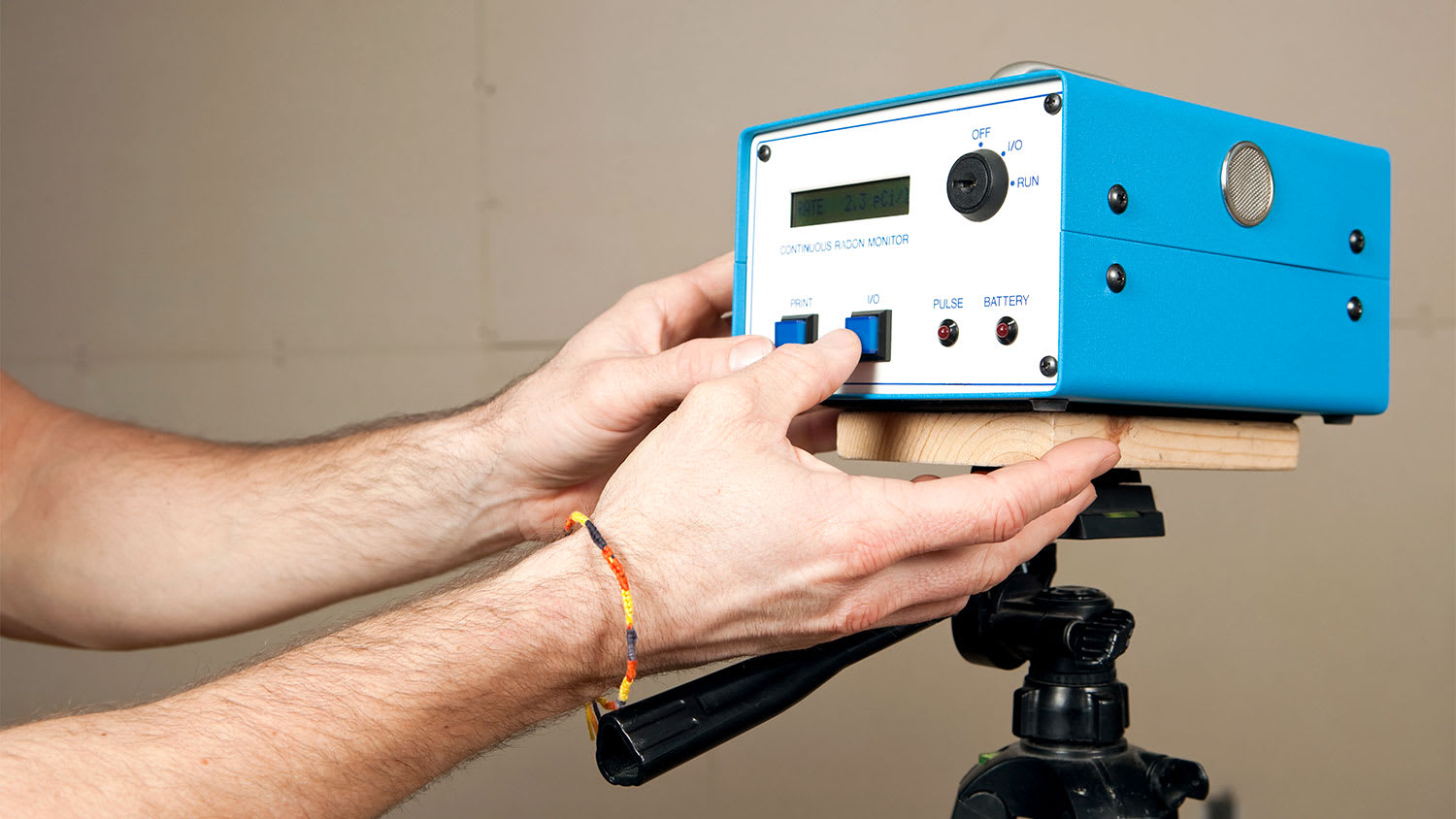
Learn how to hire a qualified radon testing pro for your home. Find certified professionals, understand costs, and get expert tips to protect your family.
Knowing how to test for radon will keep your home free and safe from this odorless gas—you just have to decide whether to do it yourself or hire a pro.

Radon is a gas that you can't see or smell and is harmful to your health. If your home has radon, you need to know who installs radon mitigation systems.