
Want to add value and living space to your home? Use this guide to figure out the cost to convert your garage into living space to see if it’s worth it.
Garages can be a swanky spot to call home

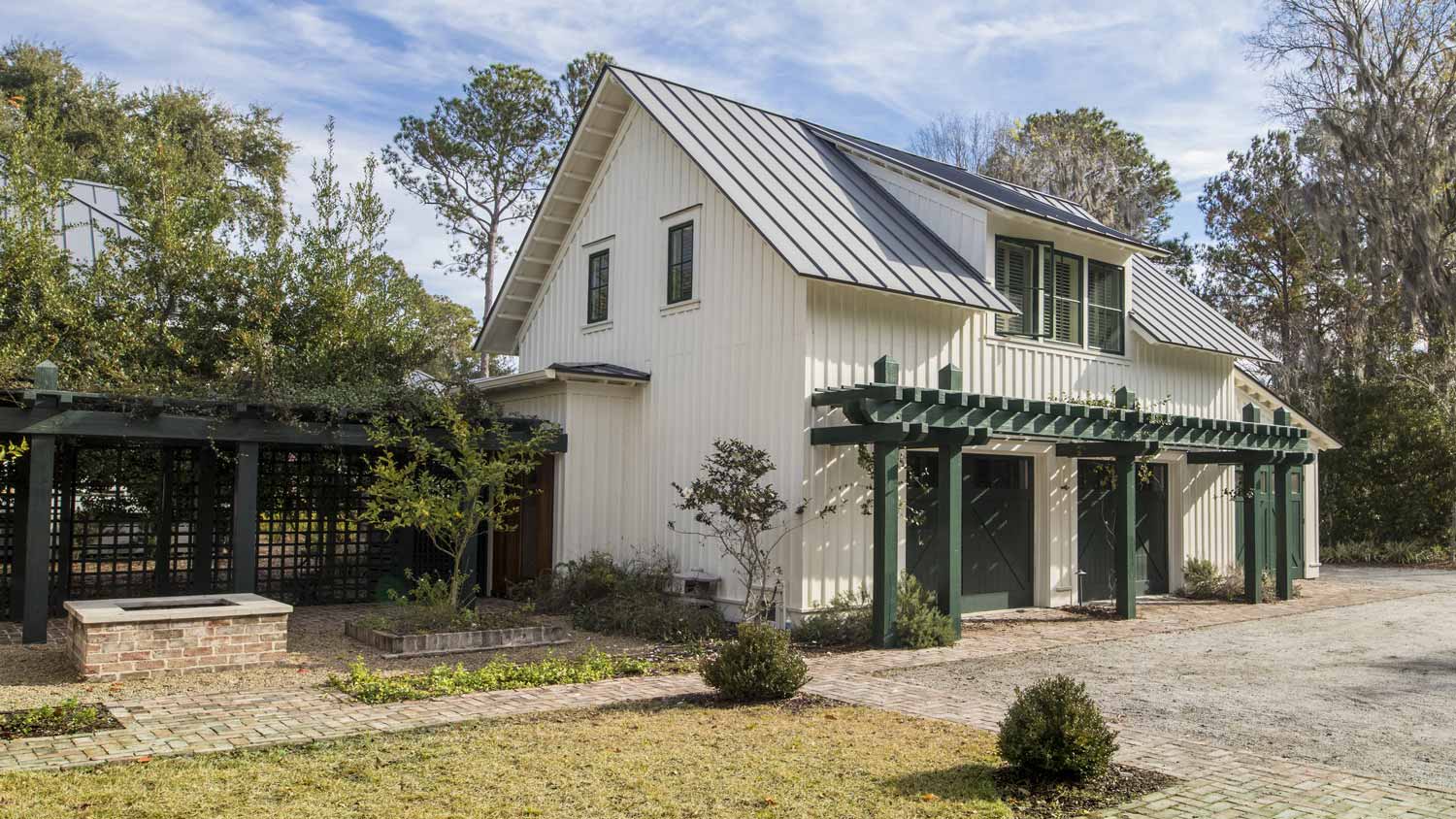
An attached garage counts as living space in your home when it meets strict standards, including finished walls and floors, proper ceiling height, and year-round accessibility.
Converting your garage to living space costs $16,180 to $16,400 on average, and the final price depends on plumbing, electrical work, and your chosen finishes.
Before starting your garage conversion, check with your municipality about permits, as you'll need them for new plumbing and electrical work to avoid issues later.
Hiring a local garage remodeling professional helps you plan the space and coordinate permits, plumbing, and electrical work for a smooth conversion that meets all requirements.
If you've ever wondered whether a garage is considered living space, You're not alone. After all, your garage may have a decent amount of square footage, which is appealing if you ever plan to sell your home. The simple answer is that an attached garage may be considered living space and can increase the livable square footage of your home—but only under certain conditions.
If you put a couch or bed in a room, does that turn it into a living space? Not quite. To qualify as a living space, a part of your home must meet strict standards. The walls and floors must be finished, and the ceiling must be a certain height.
Appropriate wall and floor finishings must be long-lasting or permanent. Examples of appropriate wall finishings include gypsum, wood panels, or plasterboards. Examples of proper finishings for flooring include concrete, hardwood, carpeting, or vinyl.
At least half of the room must have a ceiling height of at least 7 feet and a height of no less than 5 feet in sloping areas for the room to count as living space. There can be areas with a ceiling height under 5 feet, but those areas won't count toward the livable space.
Another important consideration for living space is usability. To count as living space, an area must be usable at all times of the year. If you live in an area that gets very cold in the winter, the room must be heated and enclosed.
Things get a little trickier when you try to count a garage as living space for an appraisal or when listing your home.
The garage needs to meet all the requirements for living space described in the preceding section, and it must be accessible from the rest of your home.
Simply put, a finished room in a detached garage doesn't count as living space. However, a finished room in an attached garage, that you can access directly from your home, does.
There are more cases when a garage doesn't count as living space than when it does count. For example, you can't consider a garage in the livable square footage of your home if any of the following apply:
Less than half of the area has a ceiling height of over 7 feet.
The garage is unheated.
To get into the garage, you need to exit your home.
To get into the finished area of the garage, you need to first go into the unfinished area of the garage, then go up the steps to get to the finished part (when the garage is otherwise attached to your home).
The floor and walls of the garage aren't finished to the same degree as the floors and walls in the rest of your home.

If you're feeling a little cramped in your home, turning the garage from a space where you store your vehicles to a usable, livable area can make sense. There are a few steps to follow when converting your garage.
First, check with your municipality to determine what permits you'll need. Permitting rules vary by area, but you can expect to need them if you're installing new plumbing at electricity at the minimum. Redoing your garage without the proper permits can come back to bite you when you want to sell your home. It can also get you in trouble when work is taking place.
Next, consider how you'll use the space. Do you want to keep part of the garage as a garage and remodel a space in the back or upstairs? Or, would you rather turn the garage entirely into livable space? If that's the case, you may want to convert the garage door to an entry door along with finishing the walls and floors.
It's a good idea to work with a local garage remodeler on the project. They can help you plan out the space and arrange for the work to be done. If you also need plumbing and electrical work, the remodeler can subcontract that out for you and take care of permits.
Company came to look at my garage door that was off track. They also said I needed a brace on the other garage door. They put the door back on track, and I paid to install the brace. The technician told me I needed a new garage door opener, and it would cost $1000. Red flags went off in...
 Precision Overhead Garage Door Service
I highly recommend KTM construction! I will look no where else for anything that needs to be done, in or out side of our property. The level of craftsmanship is 5 star service across the board! The level of detail, knowledge and professionalism is 5 star service across the board! Ken is a...
 KTM Construction, LLC
Replace garage doors: Fast response, competitive estimate, timely work done well.
 Village Garage Door
Called Mark on a Thursday morning. Not really knowing if he could help me or not. I was having driveway, flooding issues due to a clogged channel drain and I was trying to figure out what direction to take. Heavy rains had come on Monday and again on Thursday leading to flooding in my garage...
 Mark Rodgers Construction
Not well. I originally emailed Garage Gurus on 8/6, again on 8/9, and again on 8/11. In the meantime I left two voice messages with their answering service; both times I was told that an estimator would "get right back" to me. Not even the courtesy of a reply of any kind. Extremely...
This company is amazing! My garage door broke this afternoon and was stuck in the open position. I couldn't leave with the door open so I called Sanford and Sons because the company was recommended by the manufacture of my garage door motor. Nancy answered the company phone and problem...
The workers parked large trucks and trailers in the street that, on many occasions, over several months time precluded me from being able to get my car out of my garage. Additionally, it made for difficult movement of traffic on the street. Frequent request to the workers and to the property...
We had two outdoor fixtures swapped for motion sensing fixtures and a GFCI outlet added to the outside of the garage for the bird bath heater. <br /> He arrived at the agreed upon time and I was surprised and impressed at how quickly everything was completed. <br /> I would definitely...
 Powers Electric LLC
I received a glowing recommendation of RoofWise from my accountant & contacted them regarding a stubborn leak I've battled where the family room addition meets the original house. I also asked for a recommendation regarding ongoing garage leaks. Following a detailed inspection Roofwise...
 RoofWise Roofing Inc
Met with and received a detailed estimate from the owner who also answered all the questions I had about the work. Work was delayed by unusually rainy weather, but I did receive periodic scheduling updates by email. When the weather broke, the painting was completed in an extremely...
 Fresh Touch Custom Painting Inc.
From average costs to expert advice, get all the answers you need to get your job done.
Want to add value and living space to your home? Use this guide to figure out the cost to convert your garage into living space to see if it’s worth it.
How much does it cost to insulate a garage? Discover insulation options, prices, and expected and unexpected circumstances that affect the project cost.

Need a little extra room at home? Here's everything you need to know about converting a garage into a living space.

Converting your garage into a room gives your family room to grow while upping the value of your home. For the best garage conversion tips, follow this guide.

Thinking about repurposing your garage? Use these garage conversion ideas to transform your area and get the most use and added home value possible.
If you’re looking for small garage ideas to turn your garage into a space-savvy room, consider these tips to improve your small garage space.