

Take several factors into consideration when upgrading your HVAC system. Our guide will help you choose the right HVAC upgrade.
HVAC efficiency isn’t what it used to be—and that’s a good thing

Understanding the SEER requirements for a 3200 sq ft home in New Hanover County NC helps you choose efficient cooling that meets 2024 regional minimums.
Expect to pay $350 to $1,500 more for each SEER rating increase when upgrading your HVAC system, but higher efficiency reduces your monthly utility bills.
New 2024 HVAC systems use SEER2 testing standards that reflect real-world conditions, so your system performs as rated once installed in your home.
Hiring a local HVAC company provides expert guidance on selecting the right system for your home and ensures installation meets all current efficiency standards.
When looking for a new HVAC system, you’ll need to be able to tell your SEER from your EER. In 2023, HVAC efficiency standards underwent some major changes—which happens every few years as the U.S. Department of Energy (DOE) requires manufacturers to step up their HVAC game. While the changes won’t really affect homeowners who aren’t looking to replace their system, there are a couple of things you need to know for 2024.
Since 1992, the DOE has regulated HVAC equipment with minimum efficiency requirements. This pushes manufacturers to make the most energy-efficient products possible, and homeowners can enjoy HVAC tax credits by upgrading their systems. Overall, it’s better for the environment and your utility bills.
Certain metrics measure HVAC efficiency. Most homeowners are familiar with minimum SEER ratings, but there are a handful of different metrics depending on the type of HVAC system:
Seasonal energy efficiency ratio (SEER): What does SEER mean in practice? This metric measures how efficiently your AC unit or heat pump cools your home. The higher the rating, the better the efficiency.
Energy Efficiency Ratio (EER): Similar to SEER, EER measures the cooling capacity of your AC or heat pump. Specifically, it weighs the cooling output (BTU) against the energy input (watts).
Heating seasonal performance factor (HSPF): This factor measures how much energy your heat pump uses to heat your home.
Annualized fuel utilization efficiency (AFUE): Furnaces are rated by how much heat they produce per dollar of fuel.
You may notice these ratings called SEER2, EER2, or HSPF2. This refers to the 2024 HVAC efficiency standards and reflects the most current testing conditions. Remember that different regions have different standards even though the DOE regulates efficiency on a national level. Understanding your local requirements is the best way to reduce HVAC energy costs and overall energy usage.
A new HVAC system must meet the requirements below to be sold or installed in the United States.
Efficiency ratings are regional, so the new HVAC regulations for 2024 depend on where you live. New air conditioners in Northern regions must have a minimum SEER rating of 14. In Southern regions, the minimum SEER rating is 15 for most units.
Nationwide, new air-source heat pumps are subject to a minimum 8.8 HSPF, while new furnaces must have at least an 81% AFUE. The DOE also introduced new testing conditions, so you’ll notice a lower minimum number for SEER2, EER2, and HSPF2 compared to the equivalent SEER, EER, and HSPF.
On January 1, 2023, SEER ratings for Northern states increased from 13 SEER to 14 SEER for split-system ACs or single-package ACs. Southern and Southwest regions increased SEER minimums based on the unit size. Meanwhile, split-system heat pumps have a new nationwide minimum of 15 SEER. These minimums are still in effect for 2024.
| Type of System | 2024 Minimum SEER Rating (Northern Regions) | 2024 Minimum SEER Rating (Southeast and Southwest Regions) |
|---|---|---|
| AC (<45,000 BTU/hr) | 14 SEER (13.4 SEER2) | 15 SEER (14.3 SEER2) |
| AC (>45,000 BTU/hr) | 14 SEER (13.4 SEER2) | 14.5 SEER (13.8 SEER2) |
| Split-System Heat Pump | 15 SEER (14.3 SEER2) | 15 SEER (14.3 SEER2) |
| Single-Package Heat Pump | No Change | No Change |
In addition to a SEER rating, heat pumps also have an HSPF rating. This measures their heating efficiency. You can reduce the cost of ductless heating and cooling systems by having high SEER and HSPF ratings.
| Type of Heat Pump | 2024 Minimum HSPF Rating (Northern Regions) | 2024 Minimum HSPF Rating (Southeast and Southwest Regions) |
|---|---|---|
| Split-System Heat Pump | 8.8 HSPF (7.5 HSPF2) | 8.8 HSPF (7.5 HSPF2) |
| Single-Package Heat Pump | No Change | No Change |

If you use a furnace for your home’s heat, pay attention to the AFUE. The minimum AFUE does not vary by region. For Northern, Southeast, and Southwest regions, the 2013 minimum AFUE rating is 81%.
Each region has different rules for whether or not homeowners can buy or install older systems that don’t meet the HVAC efficiency standards. For example, an HVAC tech in Ohio can buy and install a less efficient AC if it was compliant when manufactured. Meanwhile, in Florida, you can only buy and install an AC that meets 2024 requirements, even if it met efficiency standards when it was manufactured. Here’s an overview:
Northern Regions: Non-compliant air conditioners and heat pumps can be sold and installed if manufactured before January 1, 2023.
Southern Regions: Non-compliant air conditioners cannot be sold or installed regardless of the manufacture date. However, you can buy or install non-compliant heat pumps if manufactured before January 1, 2023.
Southwest Regions: Non-compliant air conditioners cannot be sold or installed regardless of the manufacture date. However, you can buy or install a non-compliant heat pump if manufactured before January 1, 2023.
Test ratings changed in 2023 and are still active for 2024, with new testing conditions, data values, and metrics to more accurately determine how an installed HVAC system performs. Instead of SEER, EER, and HSPF, the new values will be SEER2, EER2, and HSPF2.
The increased testing involves increasing the unit’s external static pressure from 0.1 inches of water to 0.5 inches of water, which is more reflective of a real-life scenario with your new unit. The reason behind these HVAC regulatory changes is that the 2015 SEER testing isn’t an accurate representation of how external static pressure and the ductwork in your home affect an HVAC product.
These new requirements mean that the manufacturers of HVAC systems must redesign any appliances that don’t meet these more rigorous requirements.
You’ll see changes to regional standards for HVAC systems through new efficiency standards and an upgrade to older metric systems.
Below is a comparison of SEER, EER, and HSPF ratings to SEER2, EER2, and HSPF2 ratings:
Southeast Regions: New SEER2 of 14.3 (or 15.0 SEER) for split system ACs less than 45K Btu/h, and 13.8 SEER2 (14.5 SEER) for split system ACs greater than 45K Btu/h
Southwest Regions: New SEER2 of 14.3 (15 SEER) and 11.7 EER2 (12.2 EER) for split systems less than 45K Btu/h, and 13.8 SEER2 (14.5 SEER) and 11.2 EERs (11.7 EER) for split systems greater than 45K Btu/h
Northern Regions: New SEER2 rating of 13.4 SEER2 (or 15.0 SEER) for all split AC systems
New efficiency standards for heat pump systems will also increase to 14.3 SEER2, which is equivalent to 15.0 SEER and 7.5 HSPF2, or 8.8 HSPF. Keep in mind that heat pumps that were built before 2023 are still eligible for installation in 2024.
While packaged systems aren’t seeing an increase in efficiency requirements, they will need to pass the new SEER2 and HSPF2 testing protocols, which include a 13.4 SEER2 rating and 6.7 HSPF2, or 14.0 SEER and 8.0 HSPF, respectively.
When purchasing a new air conditioner, heat pump, or packaged system, keeping these updated efficiency standards in mind is essential. Higher-performing units can be more costly than older units or units with lower SEER, EER, or HSPF ratings; for each increase in SEER rating, expect to pay anywhere from $350 to $1,500 more.
But remember, the improved performance and monetary benefits of choosing a high-efficiency heating or cooling system may save you money in the long run. The Office of Energy Efficiency and Renewable Energy states that heating and cooling account for 55% of the energy used in residential homes. So, maximizing efficiency is a good way to keep money in your pocket at the end of each month.
If your HVAC unit is due for an upgrade, consider installing a high-efficiency HVAC system or adding an ERV system to improve HVAC performance. A local HVAC service can help you choose the best option for your home.
Allie Ogletree contributed to this piece.
I recently had Mosby Electric perform an electrical installation on 8-14-2026, and I couldn’t be more satisfied with the service. From the moment I called, their team demonstrated fast arrival and professionalism. The electricians were highly knowledgeable, completing the installation...
 Mosby Electric
I had FabClean 614 clean my apartment, and she did an outstanding job. She was so professional and efficient. My apartment looks absolutely spotless every surface, every corner, all cleaned to perfection. Definitely highly recommend FabClean 614 if you're looking for top-notch cleaning...
 Fab Clean 614
It went so well! They were prompt and efficient! They were patient with last minute changes and the work was worth the money
 Security Doors and Shutters
Supreme Brick & Chimney is one of the best service providers I’ve interacted with. Extremely efficient, knowledgeable, and thorough. They took the time to walk me through their detailed full-service inspection and were extremely professional. Not to mention their turnaround time was...
 Supreme brick & chimney
They were great! They were thorough and efficient and paid attention to the details. Definitely recommend. I'm definitely going back!
 FIFI'S EARTH FRIENDLY CLEANING
Custom Paint Jobs LLC is reliable, efficient, and their work speaks volumes. Highly recommended!
 Custom Paint Jobs, LLC
Very professional and efficient with work. Answered each question I had with great knowledge and an informative response. Will be working with them again.
 KW Handy
The techs on my project, Shawn and Cliff, were great. They were prompt, courteous, and efficient. I am very happy with the results and would definitely contact Mr. Electric for any future electrical projects.
 Mr. Electric of Columbus
Excellent choices and quality of materials. Workmen were very efficient and took their work very seriously. Pride of workmanship and cleaned up beautifully at end of job. Would recommend this company highly.
 Window Depot USA of Central Ohio
I can see why this company has such high ratings. Their team of 5 guys came today to trim a couple of large trees in my yard. They were professional, polite, efficient and asked me for input through the whole two and a half hour project. They did an exceptional job of clean up. The estimate...
From average costs to expert advice, get all the answers you need to get your job done.
Take several factors into consideration when upgrading your HVAC system. Our guide will help you choose the right HVAC upgrade.
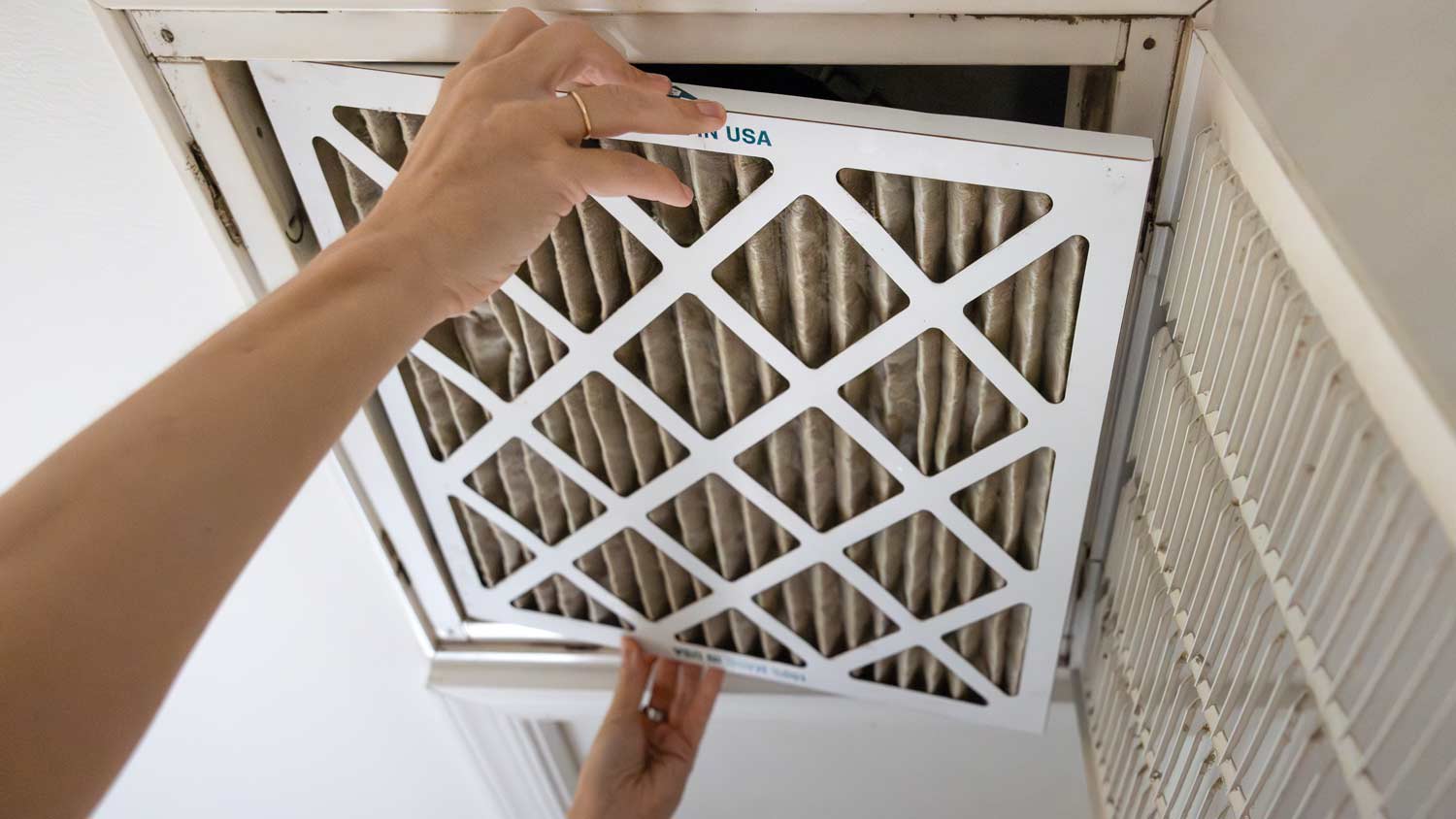
Learn what factors affect how often to change air filters in HVAC systems and why this task is important to keep your system running.

Not sure what to expect during an HVAC service call? Use this guide to get a sense of the process from start to finish, including when to schedule maintenance.

A new HVAC system can increase your home’s value and decrease future energy bills, which are benefits that attract potential buyers.

Find out how your HVAC system affects your home's resale value and what you can do with your system to boost your property price.

Dirty filters can make a furnace and AC work harder, increasing your bills. Here’s how often to change your HVAC filters to keep the system running efficiently.