

•
Discover the true ductless heat pump cost for your home. Learn about installation, factors affecting price, and ways to save in this comprehensive cost guide.
Heating and air conditioning service costs depend on your project and location. Check with a local pro for your specific job.

Professional ductless HVAC system installation costs between $4,350 and $12,250, with most homeowners paying around $7,500 for your project.
The mounting type you choose and the number of temperature zones your home needs will determine your final installation total.
You should account for the cost of old system removal and refrigerant line extensions when you create your budget.
Hiring a local air conditioner installing professional ensures the refrigerant handling and electrical connections are done safely and protects your manufacturer warranty.
In 2026, the national average cost to install a ductless HVAC system is $7,500, with most projects falling between $4,350 and $12,250. Your final price depends on the unit's size, type, efficiency rating, and the number of temperature zones you need.

Ductless HVAC systems require indoor units mounted in each room being heated or cooled, and the price you pay per unit depends primarily on the mounting type and shape, with average prices between $400 and $5,000. Smart thermostat features such as remote temperature control and timers add to the unit cost.
Here is a breakdown of average ductless HVAC unit prices by mounting type in 2026:
| Type of Ductless HVAC | Average Price Range in 2026 |
|---|---|
| Wall Mounted | $400–$1,500 |
| Floor Mounted | $1,500–$4,000 |
| Ceiling Suspended | $700–$2,000 |
| Recessed Ceiling Cassette | $1,000–$5,000 |
| Vertical Air Handler | $500–$2,000 |

Wall-mounted units that sit below the ceiling are the most economical and budget-friendly option, with the cost of a single-zone unit ranging from $400 to $1,500.
Floor-mounted units cost about $1,500 to $4,000 and are more challenging to source than wall-mounted ones. While these still require mounting to the wall, the position is closer to the floor. This is an ideal choice if you have sloped ceilings or high windows.
Ceiling-suspended units provide better airflow throughout a large space, and you can expect to pay between $700 and $2,000. If you don't want a unit to take up space on your walls, opt for ceiling-suspended options.
Recessed, concealed units installed into the ceiling are more subtle and cost between $1,000 and $5,000. However, you'll need a bigger budget as labor costs will be significantly higher because of the tricky installation process.
This multifaceted, portable unit costs between $500 and $2,000 and can be installed in a cabinet, so there are no unsightly boxes on the walls, ceilings, or floors. It also allows you to direct the airflow up or downwards.
Ductless HVAC systems consist of an outdoor unit that connects to a chosen number of indoor evaporative units. However, when it comes to cost, there are more factors than the number of zones in which you opt to have the system heating or cooling. Consider the following when budgeting for mini-split costs.
A single-zone mini-split, which includes the outdoor unit, an indoor cassette, and the associated refrigerant lines and electrical wiring, costs $700 to $4,300 excluding installation, with a standard 12,000 BTU unit running around $3,000.
Larger homes with multiple rooms require a multi-zone system, adding $1,000 or more per zone for equipment, along with a more powerful outdoor unit. Homes needing more than five indoor cassettes require two outdoor units, and equipment costs alone can run over $10,000.
Unit size plays a major role in total cost, as shown in the following table:
| Unit Size (BTUs Needed) | Average Cost in 2026 |
|---|---|
| 6,000 | $450–$1,600 |
| 9,000 | $600–$2,300 |
| 12,000 | $700–$3,200 |
| 18,000 | $1,000–$4,200 |
| 24,000 | $1,100–$5,200 |
| 30,000 | $1,600–$5,700 |
| 36,000 | $1,800–$7,300 |
| 42,000 | $3,000–$8,000 |
One of the key advantages of a mini-split AC vs. central air is the ability to create independent temperature control zones, and the number of zones ranges in price from $2,400 to $17,000. Being able to heat or cool different rooms at different temperatures reduces utility bills.
The following costs show the differences between the number of zones:
| Number of Zones | Average Installation Cost in 2026 |
|---|---|
| 1 | $2,400–$5,500 |
| 2 | $3,100–$7,800 |
| 3 | $3,800–$10,100 |
| 4 | $4,500–$12,400 |
| 5 | $5,200–$14,700 |
| 6 | $5,900–$17,000 |
Upgrading to a more energy-efficient mini-split adds $2,000 or more to your upfront cost, but the long-term savings on energy bills can make it worthwhile. A higher HSPF (Heating Seasonal Performance Factor) rating signals better heating efficiency, while a higher SEER rating indicates a more efficient cooling system.
A standard mini-split ductless system consists of three main components: the outdoor compressor unit, a single inside air outlet, and a remote control, making it well-suited for open-plan spaces or homes with just a few rooms and keeping costs lower than a multi-split setup. A multi-split system, which functions like a heat pump, adds multiple inside air outlets along with more piping, wiring, and potentially a more powerful outdoor compressor to serve larger homes with rooms that need independent temperature control.
An outdoor condenser unit costs $750 to $5,500, with the final price driven by the number of zones it needs to serve. Single-zone condensers require 5,000 to 42,000 BTU, while five-zone units need a BTU range of 35,000 to 78,000. When getting quotes from multiple AC installers, confirm whether the condenser installation is included in the total project price or billed as a separate fee.
Professional installation of a ductless HVAC system costs $500 to $5,000, with ease of access, system size, and installation complexity all influencing where your project lands in that range.
Where you live has a meaningful impact on your total installation cost, with homeowners on the West Coast paying more (potentially double the national average of $7,500) because of demand and labor rates. Higher local labor rates and stricter building codes both push prices up.

Beyond the unit and installation, several additional costs can affect your total mini-split budget.
If you live somewhere with harsh winters, a standard heat pump may not be enough, since conventional types of heat pumps on mini-split systems cannot operate below 25 degrees Fahrenheit. Upgrading to a hyper-heat pump keeps your home warm in temperatures as low as 13 degrees below zero, making it a smart investment for cold climates.
Budget an average of $5 per foot of refrigerant line when estimating this expense. Refrigerant lines carry heat between the outdoor unit and the interior cassette, and in larger homes, the added distance means paying more for material and labor.
An HVAC service maintenance contract costs $150 to $500 per year and covers cleaning all components and checking for parts that need repair or replacement. With appropriate maintenance, your ductless HVAC system can last 20 years or more.
If you are replacing an existing HVAC system, budget $50 to $200 for removal, though some professionals include this in their overall quote. Attempting to remove the old system yourself risks structural damage and exposes you to hazardous electrical wiring and refrigerant handling.
Many new ductless systems offer smart and WiFi-compatible features, and depending on the model and available rebates, you may not pay extra, but add-on features typically cost $50 to $425.
Add-ons include options like:
Bluetooth control
Automatic sleep mode
Remote controller with temperature sensors for each zone
Motion sensor installation for each room
Automatic timers
Automatic preference memorization
Self-cleaning with quick-dry and sterilization modes
Continuously logging your energy use
Installing a ductless heating and cooling system is a complex project. The time required for a DIY installation, along with the cost of purchasing necessary tools, can quickly add up, especially if mistakes occur. Hiring a local air conditioner installer ensures that the sizing of your units, refrigerant handling, and all electrical connections are in good working order.
Even if you’re installing a smaller ductless system, professional installation has clear advantages over attempting to do it yourself.
HVAC pros perform load calculations to ensure your ductless unit is the proper size for your space, which allows for both efficiency and comfort.
Professional installers have the necessary equipment to handle hazardous items, such as refrigerant lines and electrical wiring, safely and properly.
Tasks that take a DIYer several days to research and complete can be finished by a pro in a shorter time period.
An HVAC installer near you understands your local building codes and permit requirements, helping you avoid fines or failed inspections in the future.
Many manufacturers require professional installation to keep warranties valid, so hiring a pro protects your investment.
Some preparation and maintenance tasks can be handled by homeowners, even if a professional completes the full installation of the heating and cooling system. You can:
Measure rooms and ceiling heights
Research system types and efficiency ratings
Clear indoor and outdoor installation areas
Repair and prepare walls for mounting units
Clean filters and maintain outdoor units once installed
There are many ways to make savvy savings when purchasing and installing a ductless HVAC.
Get quotes from multiple reputable contractors.
Investigate whether your local or state government is offering tax incentives for installing energy-efficient systems. Check with your local utility company to see if they offer rebates.
Make sure you get the right size system. Go too small, and your overworked system won’t work efficiently, your bills will go up, and it could break down sooner. If your system is too large, you might pay for extra zones unnecessarily.
Check whether the manufacturer offers off-season discounts (usually in the summer and winter).
Know your project budget, including installation costs and potential add-ons.
Be prepared to discuss room measurements, the number of zones, and the placement of your indoor and outdoor units.
Share any deadlines or seasonal concerns that may impact installation timelines.
Consider whether you want add-ons like a smart thermostat, electrical upgrades, or maintenance plans.
Point out accessibility limitations, electrical capacity, or any known safety hazards that could affect installation.
Home is the most important place on earth, which is why Angi has helped more than 150 million homeowners transform their houses into homes they adore. To help homeowners with their next project, Angi provides readers with the most accurate cost data and upholds strict editorial standards. We extensively research project costs to develop the pricing data you see, so you can make the best decisions for you and your home. We rely on reputable sources, including the U.S. Bureau of Labor Statistics, academic journals, market studies, and interviews with industry experts—all to ensure our prices reflect real-world projects.
Want to help us improve our cost data? Send us a recent project quote to [email protected]. Quotes and personal information will not be shared publicly.
I have used Columbus Worthington Air for years and recommend them whenever I have a chance. The staff is quick, courteous, and well-trained.
 ARS Columbus Worthington Air
If you’re good people wanting to do business with good people, hire Matt. He is a consummate professional and utterly competent. He installed a water heater in my home at a price that beat competitors by hundreds of dollars with a promise to support the unit for its life (even after its 6 yr...
 Greene's Plumbing Services
Corey Carr was great. I had damage from a recent storm and needed to have my mast and other components replaced. The project entailed coordinating with AEP, and Corey helped make a stressful situation a lot less stressful. I really appreciated his dedication to service and the job very well done.
 Mr. Electric of Columbus
This service was great. My air conditioner went out during the heat spell that we had. My husband has health issues and they came out that night and at 9:30pm the air conditioner was fixed and running. We are sooo very thankful, this is the company I will be using from now on and would...
 Mr. Mechanical Ohio
Great company! Price was competitive, technician showed up on time and completed the job (exterior electric Radon fan replacement) quickly. Would hire them again.
 MaGen Property Inspections and Radon Mitigation
Raven and crew does absolutely fantastic job. They are very professional if any concerns were to occur with any of her work she always took responsibility and finished out with a great job. I have worked with her business for a year and have always been satisfied. Very trusted business and...
 Creations of Transformation LLC
I would recommend this company to anyone! He showed up on time, was friendly, completed a very difficult repair on our dryer vent cover, was responsive, and pricing was extremely fair and competitive. I would have him back to do any of our repairs or cleanings without hesitation!
 U.S.A. Dryer Vent, LLC
Ace Fireplace Services' chimney sweep service is truly exceptional. They used advanced technology to ensure a thorough cleaning process, and my chimney has never looked better. I highly recommend their services.
 Ace Fireplace Services
The technician was very professional and friendly. He answered all my questions and was very thorough. He left the fireplace area very clean . He inspected from the roof and advised me as to other work that might need to be done. There was no pressure there. I was very satisfied with the...
 Supreme brick & chimney
On time, clean and finished fast. Windows seem sturdy and the finish is good. Caulking was done with no smudges. Would recommend.
 Window Depot USA of Central Ohio
From average costs to expert advice, get all the answers you need to get your job done.
Discover the true ductless heat pump cost for your home. Learn about installation, factors affecting price, and ways to save in this comprehensive cost guide.

Discover the factors affecting HVAC zoning system cost, energy savings, DIY options, and expert insights. Get informed about your home’s heating and cooling.
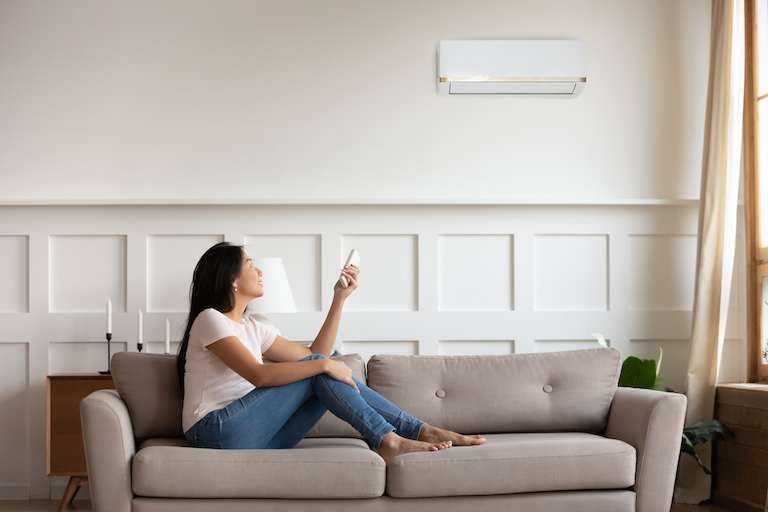
When your window AC isn’t cutting it, but central AC is too expensive, installing a new ductless mini-split AC may be the cooling solution you’re looking for. Find out what a mini-split costs and how to hire the right pros to get the job done.

Wondering what is a ductless heat pump and if it's right for you? Learn why these units are popular for homeowners seeking unobtrusive temperature solutions.
Thinking about a ductless mini-split heating installation? Learn about zoning options, costs to expect, and how to hire the right local HVAC pro.

Not sure if a ducted or ductless heat pump is right for you? Use this in-depth guide to learn about the differences and the pros and cons of each.