
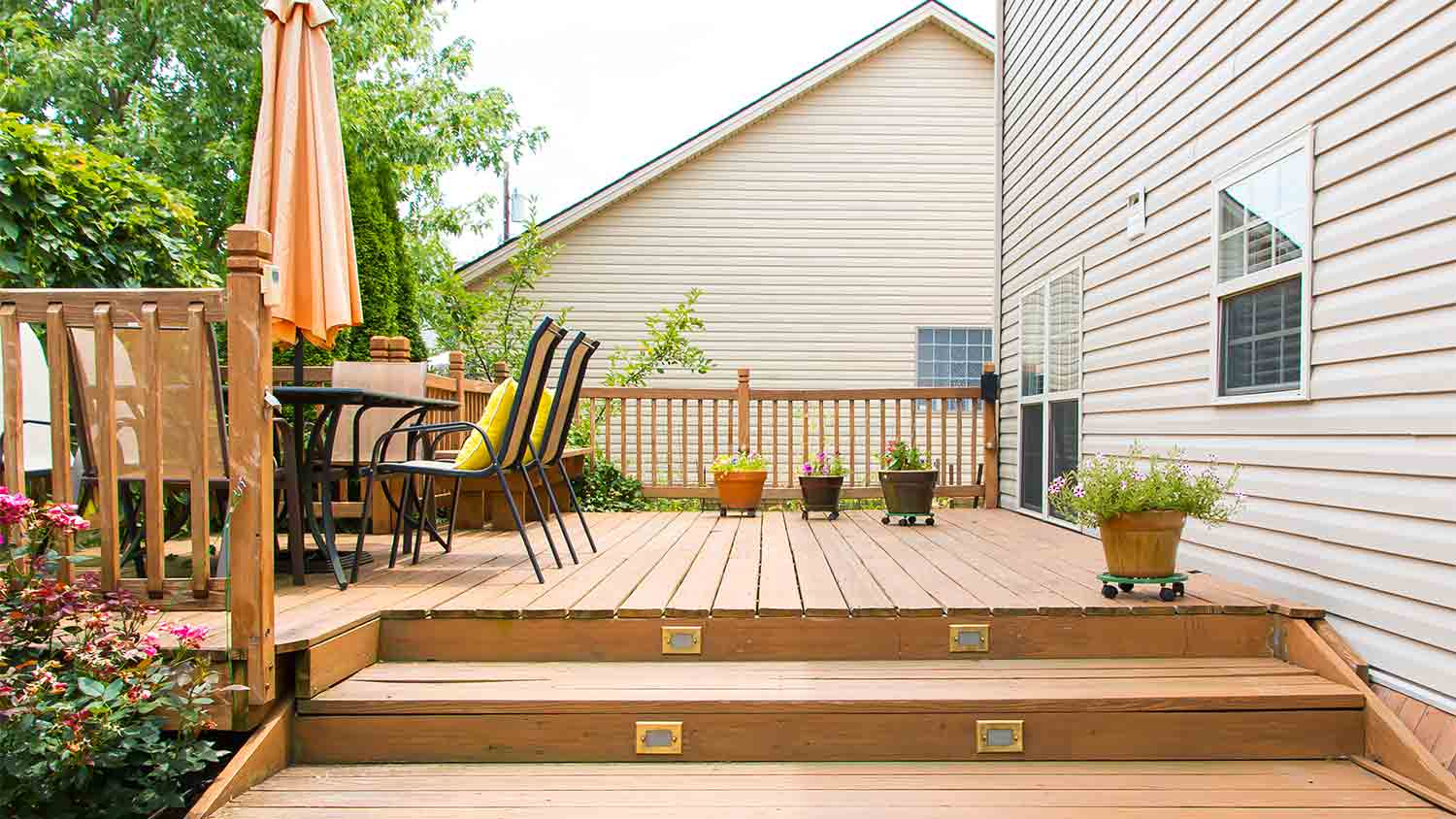
Looking to update your yard with a new outdoor entertaining area? Learn how much a pressure-treated wood deck costs and how to estimate your total.
It’s not always about smoothing out the slopes when it comes to deck-leveling

Building a pallet deck on uneven ground requires checking your slope carefully, as posts sinking below the frost line can compromise your deck's stability.
Professional deck repairs cost upward of $2,000, but addressing uneven joists or sinking posts early helps you avoid higher costs and structural problems.
You can level deck joists by adding shims to low spots or installing sister joists alongside sagging ones for better support and stability.
Hiring a local deck repair professional provides reliable help with post depth issues and joist leveling, keeping your deck safe and structurally sound.
Creating your dream backyard by adding a deck extends your functional living space and offers a perfect spot for al fresco dining. However, you may have to learn how to level a deck if it has too much of a slope.
Attached decks usually slope gently away from the home to avoid rainwater pooling around your house and its foundations. But, if a deck is old, the construction wasn’t top-notch, or there’s some damage, your deck may tilt in a more troublesome way. Determining why your deck is uneven lets you decide if you can make a quick DIY fix or if you’re going to call in the pros. Read on to figure out what the problem might be and how to square a deck.
Working on a deck isn't without its hazards. Be on the lookout for poison oak, ivy, and other poisonous plants as you build, and be sure to take proper safety precautions to decrease your risk of splinters, overexertion, and chemical exposure from paint and sealants while working.

Your deck doesn’t have to be perfectly level. In fact, adding a gentle slope may help increase your deck’s life span. A sloped deck allows water and debris to flow off the edge, decreasing the risk of pooling water, which can lead to moisture problems and rot. A deck slope also diverts water away from your home’s foundation.
However, the deck shouldn’t be so sloped that it's difficult to walk on. Experts recommend building a deck with a gentle 1% to 2% gradient (between 1/8- and 1/4-inch per foot) away from your home. With professional installation, you’ll hardly notice the slope (but you’ll still get all the benefits).
A deck that hasn’t been squared can cause gaps and create long-term structural issues. If you’re building from scratch or starting over, make sure you know how to properly square a deck. A deck that isn’t square will change the entire build. You or your deck pro should adjust the deck boards to accommodate less-than-perfect angles, with each board needing to be longer or shorter than originally planned.
Contractors generally recommend a rule based on the Pythagorean theorem—following a 3-4-5 formula. Here’s how it works:
Fasten a rim joint into one end of the ledger.
Measure 3 feet from that corner and mark the measurement on the ledger.
Measure 4 feet down the rim from the same corner, and mark that measurement as well.
Measure between the two marks; you should have a measurement of 5 feet.
If you don’t have a perfect 5-foot measurement, adjust the rim joist until you do. This step will help you achieve those ideal 90-degree angles.
To square a floating deck, attach the rim joists that are perpendicular to the deck beams. Measure your diagonals from inside corner to inside corner. Once the measurements are equal, attach the other two rim joists. Then, you can use the 3-4-5 method to ensure you have square corners. If the corners are off, simply detach one rim joist and move it until you’ve met the formula.
The 3-4-5 formula works for smaller decks, and you can size it up to accommodate larger plans by using either a 6-8-10 or 9-12-15 model. In addition, note that this formula only applies to standard square or rectangular decks; any styles that involve elaborate shapes will need special measurements and likely professional help.
If you're tripping over boards or there is unsightly sagging or major sloping, you might be able to make repairs to get things even (and, in some cases, structurally sound) again. Below are some common issues with decks that can lead to unbalanced levels.

When the deck’s supporting posts aren’t deep enough into the ground (below the frost line), they can start to lift, causing your deck to slope. You're more likely to see this problem during the winter when the ground continually freezes and thaws, pushing the posts further out of the ground.
It’s not just uneasy on the eye, either. This shifting can compromise your deck’s structural integrity and could potentially be unsafe. Chopping the posts to bring the deck level again isn’t ideal because the problem will continue to happen whenever a new freeze arrives. Instead, removing the posts (while supporting the deck with a jack) and digging and filling deeper holes below the frost line is the better and safer long-term fix.
Your deck might look wonky if the joists were not adequately leveled at the time of framing and squaring, or they may have become weak over time. You might be able to remove the deck boards over the problem area and plane down or replace problematic joists. Adding a sister joist alongside the original one resolves individual joist sagging issues.
Sometimes adding shims (small, wedge-shaped pieces of wood) to low joists helps, although it’s a tricky process, and if you don't add the shims in the correct position, the boards will continue to be uneven and may move when you stand on them.

It’s not uncommon for individual boards to cup or warp over time, especially in high-rainfall areas.
Replacing problem deck boards (or sometimes flipping them over) and making sure they’re attached to the joists using appropriate fasteners in the right pattern usually helps prevent this from reoccurring anytime soon.
If you or the contractor didn't square the deck frame properly at the time of construction, gaping and movement could occur, leading to an uneven appearance.
Trying to re-square a deck that’s already constructed is a time-consuming and tricky task. You’ll have to remove all the deck boards, at least partially detach the joists from the beams, and then go back in and accurately line everything up. It’s the sort of job you might want to hand over to the pros unless you’ve got plenty of time and confidence in your carpentry skills.
Whether you opt to try leveling your deck yourself or call in a professional deck repair contractor near you depends on your DIY skill levels and the job.
The last thing you want to do is make your deck even more lopsided or damage the existing structure. That’s why we recommend hiring a professional deck repair service to evaluate the situation and execute a solution.
The average cost to repair a deck is $1,890, but to fix an uneven deck, you don’t usually have to replace all the deck boards or railings, so it’s typically less than this (even if you get some professional help). You can save at least 50% by putting in the labor yourself.
Gemma Johnstone contributed to this piece.
Supreme Brick & Chimney did a great job with a cleaning and inspection of the fireplace! He was efficient, on time, and very pleasant. The space was kept very clean, and the fireplace was spotless when he was done. He also performed a thorough inspection, and did a great job talking us...
 Supreme brick & chimney
Koby & team weâ re great! Moved our two bedroom apartment in about 4 hours, and weâ re super friendly, quick, and careful with are things.
 All My Sons Moving & Storage
We had our houses windows and back door replace this summer by Window Depot USA of Central. He gave us grate advise and saved my family lots money. The team did a fantastic job with installation. If you need help, they sure get job done right!
 Window Depot USA of Central Ohio
Wonderful. I am going to have them remove and replace my driveway in the spring.
 All Star Paving and Sealing
We were having 2”x 2” tile installed . There was a small installation error and the new additional replacement tile was from a different lot and the colors didn’t match. Joe assured us that he would rectify everything , which he did without hesitation. We decided to go with the 18” x 36” tile...
 CarifaTile
Did an amazing job transforming my yard. Also installed sod in places, would recommend to everyone.
 Cardinal Landscaping & Construction LLC
Ed did a great job in installing stone to the outside of our house at a fair price
 Ochoa Stoneworks
All around they have done a really great job. <br /> I have used JL Landscapes for the past 8 years. I own and operate my own commercial/residential real estate company where we own, operate, and maintain our own properties. JL Landscapes has been our exclusive landscaper for both our...
 J.L. Landscapes
Outstanding experience! I needed my yard/garden/patio prepared for a party the coming weekend. I contacted Rick and he was able to schedule service that same week. He and his crew did a wonderful job removing the fall foliage, weeding, trimming back plants and hedges, even cleaning up the...
 Distinct Designs Residential Enhancements
We first had Mark fix the back patio and liked his work so much we had him make a brick patio on the side of the house. When we decided to change our concrete walkway to brick, we wanted Mark to do the job because his prices were fair and he did such good work on t he other two projects.
 Mark Monnette Masonry
From average costs to expert advice, get all the answers you need to get your job done.
Looking to update your yard with a new outdoor entertaining area? Learn how much a pressure-treated wood deck costs and how to estimate your total.
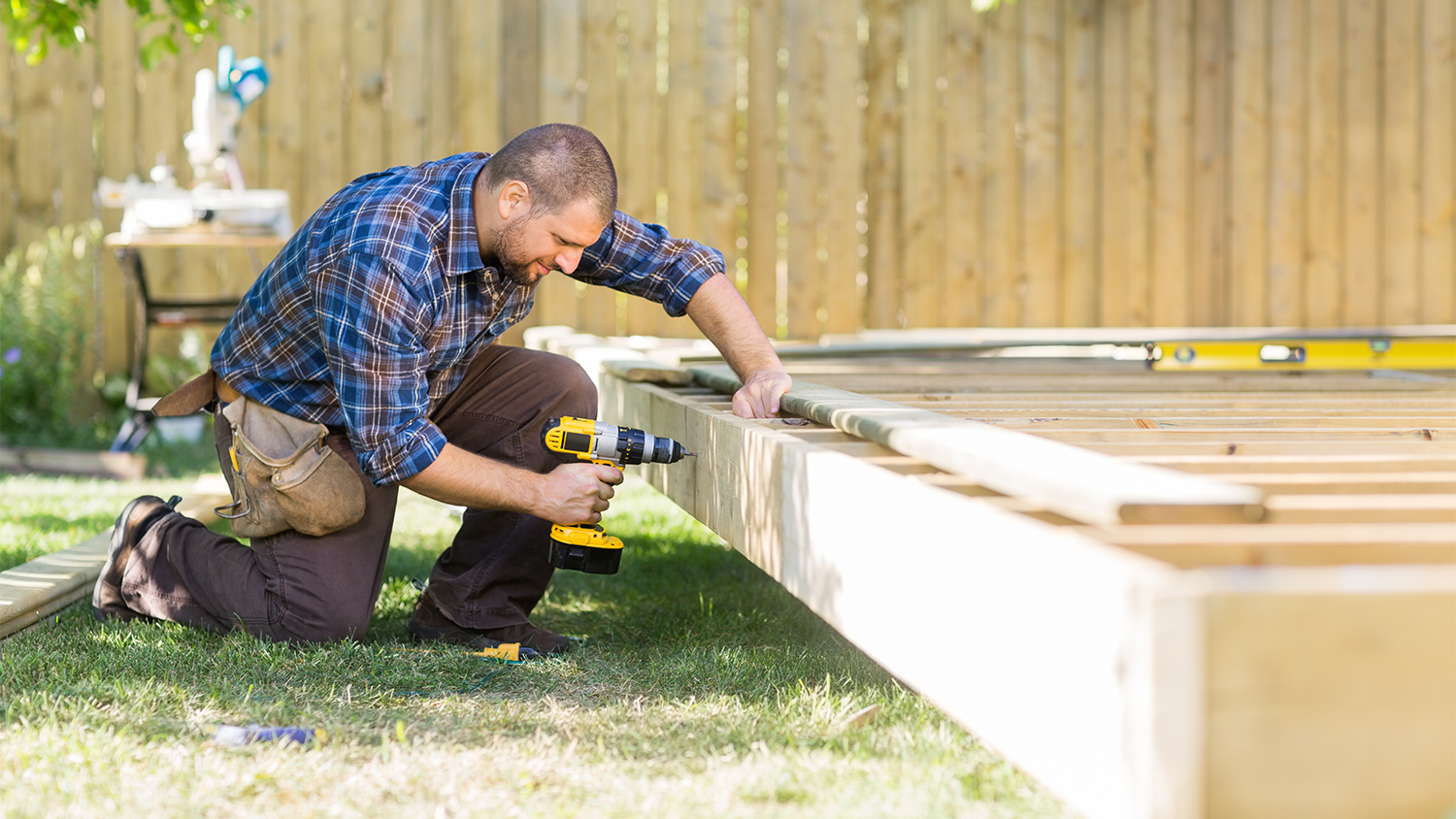
Discover floating deck cost estimates, including average prices, installation factors, and ways to save. Learn what impacts your floating deck cost.
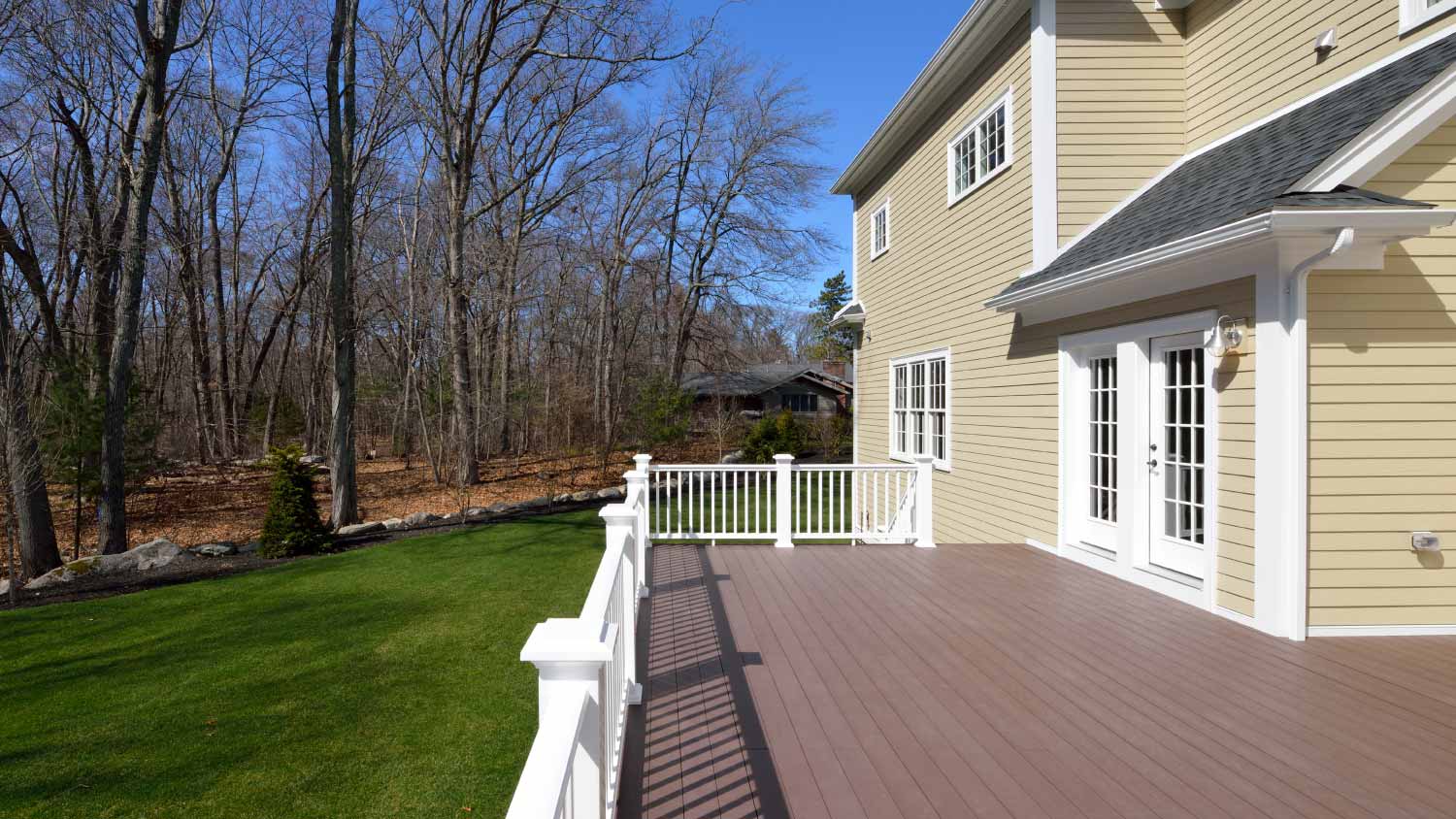
Vinyl is a durable and relatively inexpensive choice of decking material. Your vinyl deck cost will depend on labor, the deck size, and more.

A deck step down is required to make your deck compliant with safety and building codes. Learn more about the minimum step down to a deck.

You can DIY a floating deck with the right layout, materials, and installation method. Here’s everything you need to know about how to build a floating deck.
Learn how to install composite decking with some power tools and basic DIY carpentry skills. Find steps, tips, and more in this guide.