
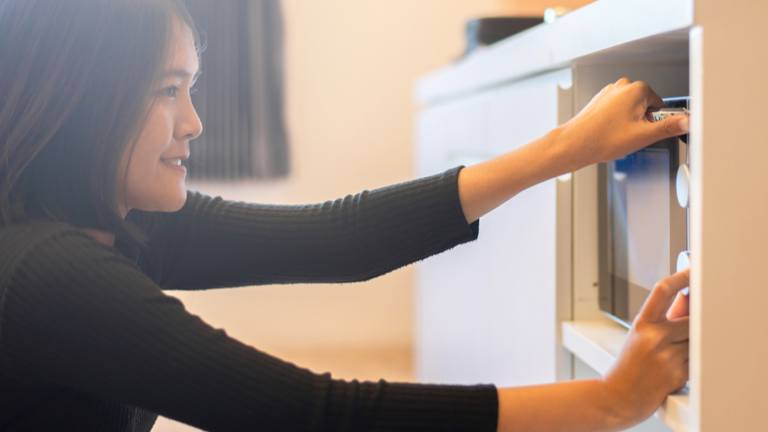
Microwave replacements are relatively affordable compared to other appliances. Use this guide to learn how much they cost based on factors like type and labor.
This project only takes 120 minutes—and they won't feel like microwave minutes

The microwave is a cornerstone appliance in most kitchens—but if counter space is limited, its bulky nature can make it difficult to find the perfect spot. Many homeowners decide to install theirs over the stove, either bolted directly into the cabinets or the wall above the oven.
Hiring a handyperson or professional installer might make sense, but going the DIY route will save you cash. In this how-to guide, we'll walk through how to install a microwave over the stove, plus some DIY tips for over-the-range installation. Keep in mind that these instructions reflect a kitchen with the correct hook ups already installed. That means your range has the correct ventilation and electrical components. If your range is missing that, you’ll need to call in an electrician to install the correct venting.
First, measure the area and ensure the new microwave you purchase is going to fit your stove dimensions. Microwave sizes tend to be standard; most over-the-oven-range models measure 30-by-17-by-15 inches. Select one that fits your budget and space.
Appliances are not a one-size-fits-all solution. Whether you’re replacing an existing appliance or installing a new one in an updated room or home, it’s extremely important to properly measure the space it’s going to live—and to consider factors like doors, drawers, etc.

Next, you’ll need to remove anything inside the cabinets that your microwave will sit under. This will make it easier to work through the installation and keep items from getting in the way (or getting damaged).
If you're redesigning your entire kitchen, many new cabinet designs recommend or come with a microwave. You might actually choose an over the range microwave instead of a range hood for these reasons.
Once your microwave is chosen and in a box in your kitchen, here’s how to install it:
Use your stud finder to locate the wall studs behind your oven range. Use a pencil to mark these locations so you know where to drill later.
Your microwave should come with a paper template that either sticks to the wall (with removable adhesives) or one that can be taped up using painter's tape. Align the spots on your mounting bracket to the studs in the wall and press it to the wall.
Use your power drill to put starter holes in place where the wall mounting bracket will come in contact with the studs. This is best done using auger bits, which typically come with a power drill kit when you buy it.
Choose an auger bit that's slightly smaller than the screws that come with your microwave. This way, you won't drill a hole so big that the screw fits loosely in the hole. If you aren't sure, use a chart online to measure the screws your kit comes with.
Many over-the-range microwaves secure the top part of the microwave to a cabinet located above or to the side. This is where the cords and vent will run after installation.
Depending on your mounting situation, stick your paper template where it'll fit best in your kitchen. Clear out cabinets if needed to make space.
This step might not be needed depending on the model of microwave you choose. But most over-the-range microwaves, especially bigger ones, need a vent opening to channel exhaust either outside of your home or back into the room but away from the appliance. Without a vent, your microwave will be prone to overheating and may wear out faster.
Cut the vent opening (this should be pre-measured for you on the sticky template in your cabinet) using either a jigsaw or reciprocal saw.
Line your mounting bracket up against the pilot holes you drilled into the marked stud points along the wall. Install your microwave's mounting bracket and drill them into the wall.

If you're installing a heavy microwave or have to use a ladder to hoist it over the oven, ask for help from a friend or family member before starting this step. Have someone support the bottom while you latch the backside over the mount and secure it into place.
Also, be sure the microwave's door is shut so it doesn't swing open during installation. Placing a piece of tape over the handle will ensure it doesn't open accidentally.
Once in place, screw in the bolts or hook the microwave onto the frame to secure it against the wall. If you're using bolts, be sure they are fastened all the way against the wall. Before removing your hands, be sure everything is lined up and in place. You can also drill a wood block at the bottom of the cabinet for the microwave to drill into in order to reduce stain on your cabinet overall, but keep in mind this will slightly lower the placement of your microwave.
In some cases, you can make a connection with the vent to your ductwork if it's installed above the oven already. It'll take some extra work, but make your life simple once you're done.
For this step you'll need caulk, tin snips, a power drill, metal screws, and a dust mask for safety. Mark the area you need to cut into, lining up your vent to get accurate dimensions. Cut a starter hole in the ductwork with a power drill to allow your tin snips to get in there. Fasten the vent to the ductwork using a power drill, then apply caulk around the edges to seal off the edges.
Reconnect the fan to your vent and run it through the cabinet if you had to dismantle it to connect to the ductwork.
Final step! With the microwave secured to the wall or cabinets and adequate ventilation set up, plug in the power cord and test your microwave.
Assuming you have a friend or family member that can help you install the microwave safely, this is a DIY project that's worth tackling on your own if you feel comfortable doing it. Microwave installation costs as much as $185 to have a professional do it. You may be able to save by hiring a local handyperson to tackle the job, but it'll still likely cost at least $100 for labor. If you change your mind and decide to forgo the microwave, installing a range hood costs about $750 on average.
Generally speaking, installing an appliance costs $120 to $170. So any time you can DIY install a new appliance in your kitchen or elsewhere in the house, you'll save a good chunk of cash.
According to Angi data, the most common service request for an appliance installation is split between a dishwasher and a microwave or oven, both at 17% of customers. Other common appliances homeowners request help installing include washers, dryers, and a refrigerator or freezer.
Positive experience. As previously stated, the replacement/repair could not be completed (no fault of the plumbing tech) b/c misinformation was rec?d by property management maintenance. Thanks to the plumbing tech for your efforts. Appreciate you!
 The Waterworks
Carpet repair done well. Scheduling was easy. Showed up on time.
 BR Flooring Installation
As usual with ECO, tech Jordan was outstanding, very professional, very knowledgeable, and very thorough with repairs made to tankless water heaters. Very highly recommend ECO!!!
 Eco Plumbers, Electricians, and HVAC Technicians
I would recommend this company to anyone! He showed up on time, was friendly, completed a very difficult repair on our dryer vent cover, was responsive, and pricing was extremely fair and competitive. I would have him back to do any of our repairs or cleanings without hesitation!
 U.S.A. Dryer Vent, LLC
Everything from initial contact to completion was absolutely top notch. We contacted the business during off hours to leave a message, and the owner still reached out to feel out the issue within minutes. We were scheduled and repaired within 48 hours. I cannot say enough about the...
 Supreme brick & chimney
Ace Fireplace Services came to the rescue for my chimney repair. They were quick to pinpoint the issue and worked their magic to fix it. My chimney is now in excellent shape, and I'm a satisfied customer.
 Ace Fireplace Services
On Sunday 2/26 I requested quotes via Angi from 4 refrigerator repair businesses. Northwest Appliance responded to me Monday morning (2/27) and my refrigerator was repaired by noon the same day. Great communication, they did everything they said they would. The technician had the parts on...
Excellent! We were very satisfied with the service provided and the entire experience from start to finish. Very friendly and professional staff. I was able to instantly get in contact with them for a quote and the response time and overall communication remained quick and easy throughout the...
 Prime Cleaning Service
Description says they handle window repair including rotten hardwood - they called me back right away but didnâ t leave a voicemail. I followed up 3 days later and they said they donâ t do that kind of work.
 Window-Gurus
I needed reliable, affordable help the day of with moving a couple of appliances and misc items. It was a relief to hear back from Tanzillo almost instantly that morning so I could stop looking and move on to plan and prepare. Every part of the move was friendly and professional. Next time I...
 Tanzillo Concrete & Landscape
From average costs to expert advice, get all the answers you need to get your job done.
Microwave replacements are relatively affordable compared to other appliances. Use this guide to learn how much they cost based on factors like type and labor.
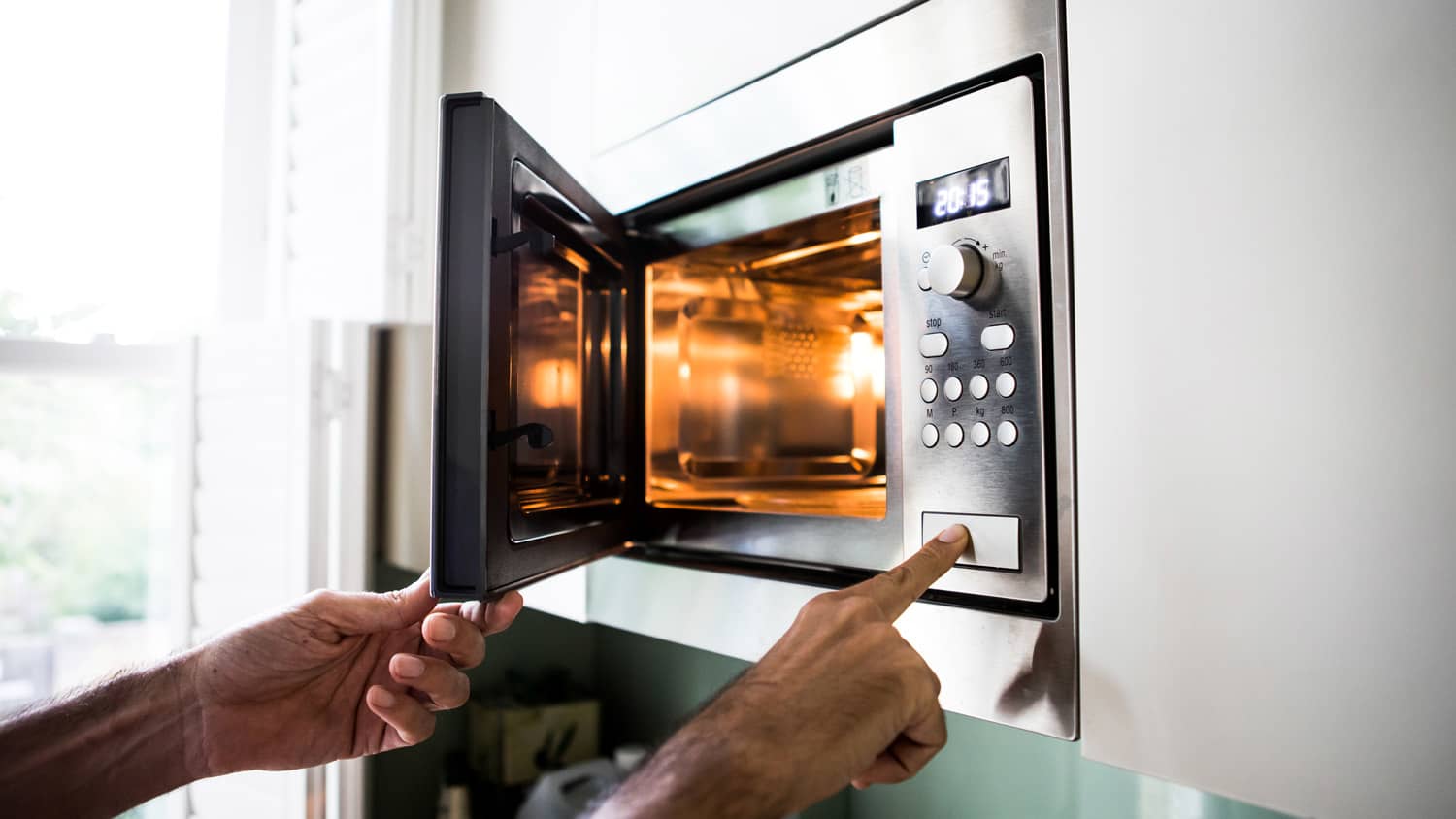
Microwaves come in many styles with a range of functions, like smartphone control and child locks. Here’s a guide to all the factors that impact the cost of a new microwave, whether you’re looking for a countertop, built-in, or over-the-range model.
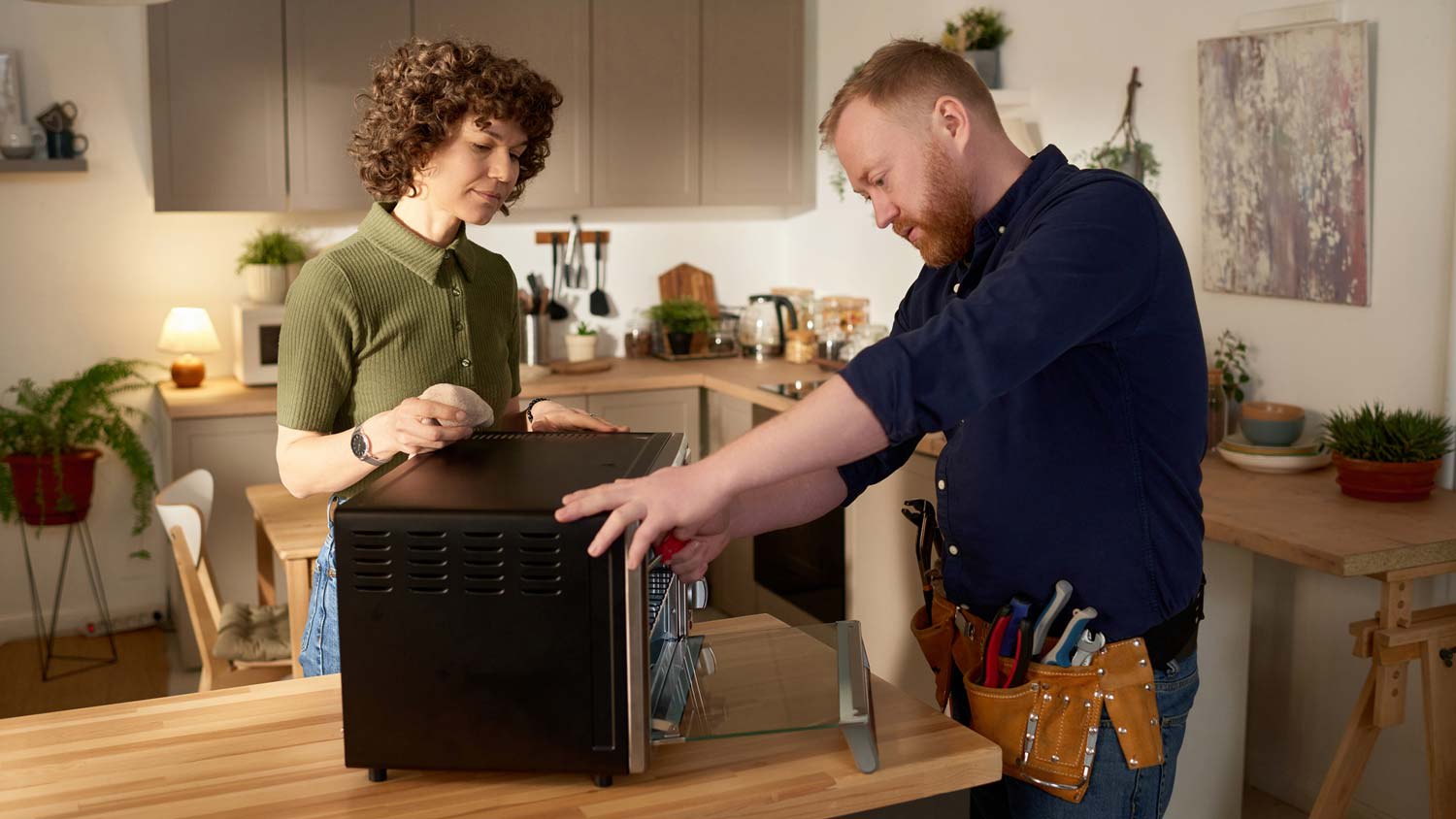
Get transparent microwave repair cost info for 2026. Learn what impacts price, compare repair vs. replacement, and find ways to save on your microwave repair.
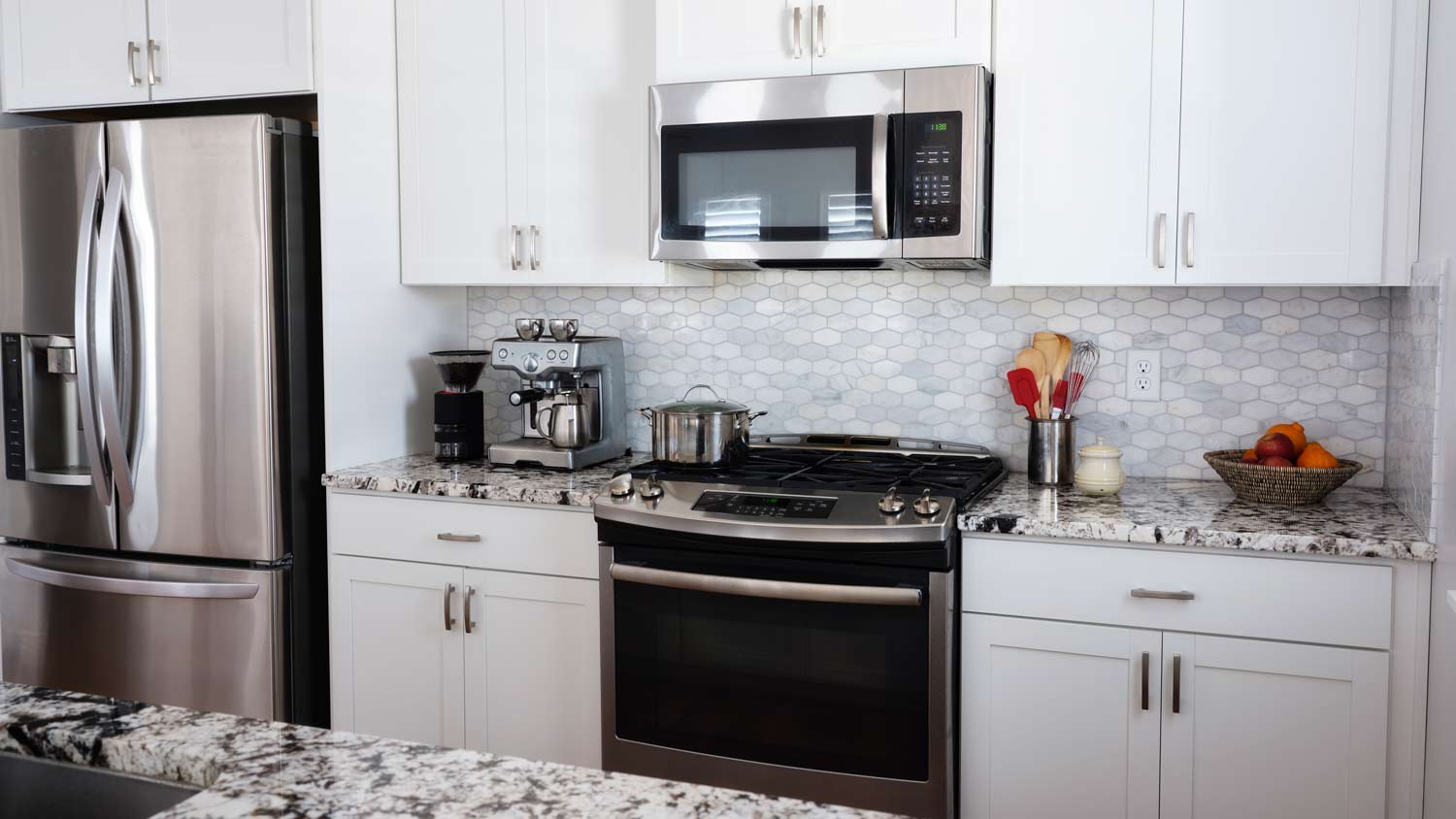
Before buying a microwave, you need to make sure it’ll fit in your space. So, how do you measure the height of an over-the-range microwave? Let’s take a look.
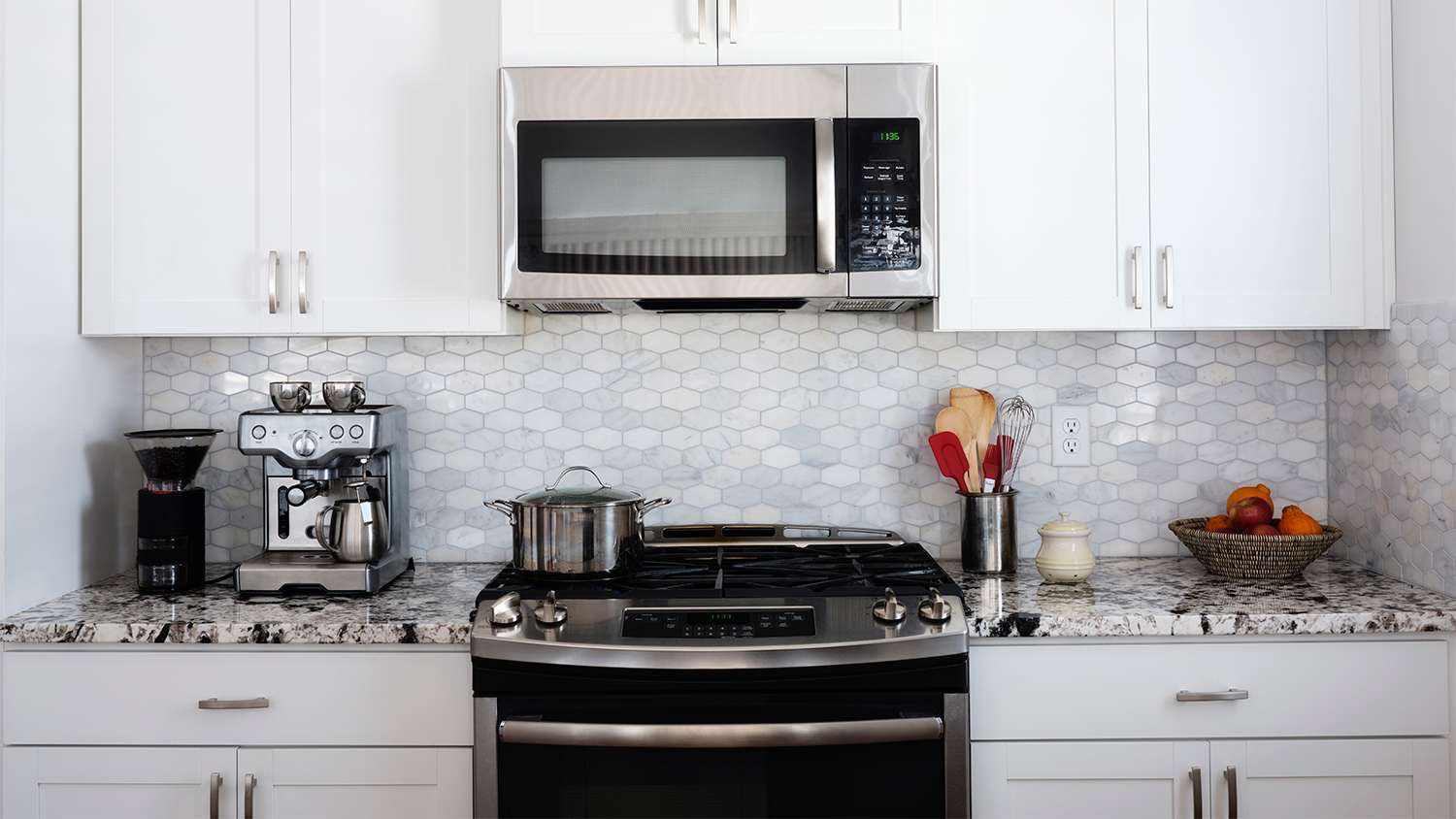
Thinking about installing a microwave above your oven range? You'll be zapping meals in no time after reading our handy DIY tips for microwave installation.

Swapping a range hood for an over-the-range microwave can be a difficult choice. Read to learn the difference between microwaves and range hoods as a ventilation system, so you can decide which method is best for your kitchen.