
Find out the average pipe insulation cost, including material and labor prices, plus tips to save money on your project.
When it comes to asbestos, you don't want to shake things up

If you are a homeowner with asbestos pipe insulation in your house, you have three options: leave it alone, remove it, or encapsulate it. Leaving it alone is really only a choice if the material is in good condition. If there is damage, then removal or encapsulation is the way to go. While you will need to hire a pro to do the work, knowing how to encapsulate asbestos pipe insulation can help you understand what is involved in the process.

Before taking steps to encapsulate asbestos pipe insulation, you need to identify it and determine if it is damaged. Asbestos pipe insulation looks like gray-white corrugated paper, wrapped around the pipes in your home. (You may also spot asbestos wire while inspecting the walls of an old home.) The only way to determine for sure that the insulation contains asbestos is to have it tested by a local professional asbestos abatement company.
Once you have determined that the material contains asbestos, evaluate its condition. If the insulation is intact, your best option is to leave it alone. Asbestos only causes problems when disturbed.
If there are signs of damage, such as crumbling or flaking material, you will need to decide whether to remove or encapsulate the insulation. Encapsulating, or sealing, the material may be appropriate if only a small area is affected or you are not planning on a major remodel. An asbestos professional can give you guidance on next steps and your best course of action.
If your home was built before the 1980s, your pipe insulation may contain asbestos. Before you start investigating, make sure you're wearing a dust mask and safety goggles to err on the side of caution.
Search for asbestos insulation by inspecting older pipes in your home, looking for a white or gray material that may be flaky or dusty. In some cases, the insulation looks paper-like or has a rough, cement-like coating. Look for insulation that resembles corrugated cardboard or has a cloth-like covering.
Insulation that's brittle or crumbles easily are common asbestos signs. If you're unsure about the material or you see that it is deteriorating, avoid touching it. Disturbing any type of asbestos can increase the risk of inhaling the harmful fibers.

Encapsulation is an alternative to asbestos removal. This process uses a sealant to bind asbestos fibers so they cannot be released into the air. This method is only suitable in some situations and must always be performed by a professional.

You do not want to inhale asbestos or spread its fibers around your home. To prevent that from happening, you and any professionals who work with the material should wear the right protective gear.
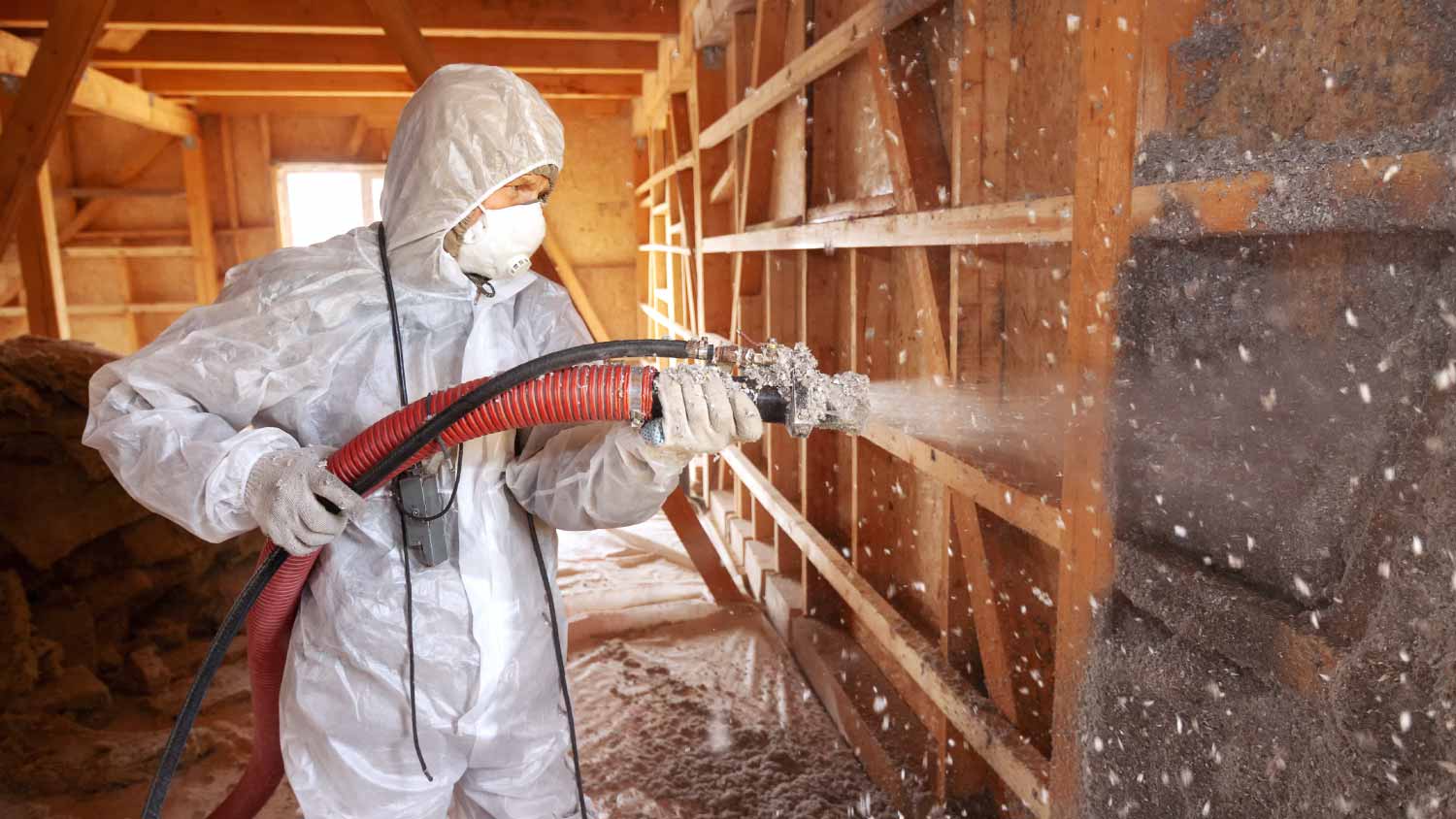
To avoid breathing in asbestos fibers, wear a respirator that is equipped with an asbestos-rated HEPA filter. To keep the fibers from getting on your body or clothes, wear a disposable hazmat suit, booties, and gloves. Remove the suit, gloves, and booties before exiting the work area and discard in a garbage bag.
Repair damaged areas of insulation before you encapsulate them. Fill the five-gallon bucket with water, then dip a roll of pipe repair wrap into the bucket. Completely saturate the wrap, then wring it out to remove excess water. Wrap the repair wrap around the damaged sections, cutting the material with the scissors once you have fully covered a section.
Encapsulate the pipe insulation once you have repaired the damaged areas. Cut the lagging into three-foot lengths to make it easier to work with. You can either dip the lagging into a bucket of water, then wrap it around the pipe insulation, or wrap the pipe with the dry lagging, then spray with water to activate it. When wrapping the pipes, make sure there is an overlap of at least three, but not more than six, inches with each strip. Let the lagging dry for up to 48 hours.
Painting the lagging with a sealant paint adds an extra layer of protection. Once the lagging is fully dried, apply the sealant paint over the material using a paint brush.
Allow the sealant to dry for up to 16 hours to ensure the first layer has fully adhered to the asbestos insulation. This creates a stable base for the next coat. Keep the room well-ventilated as it dries and avoid disturbing the encapsulated area to prevent any potential fiber release.
After the first coat has dried completely, apply a second coat of sealant to reinforce the seal. This will reduce the risk of fiber release and add extra durability. Follow the same steps used for the first application and keep the area ventilated while it dries.
Encapsulating asbestos pipe insulation is definitely a project to leave to the professionals. Depending on where you live, you may be required to hire a professional asbestos abatement company and report any encapsulation or removal projects to the local health department.
Beyond any legal requirements, the risk of handling asbestos yourself is just too great. Exposure to the material can lead to scarring of the lungs or cancer of the mesothelium, a thin tissue that lines many of your internal organs.
One of my old tall evergreen trees was suddenly leaning toward the busy street in front of my house. I submitted a request for an emergency tree inspection, and Alejandro, owner of Cajete Tree Service, contacted me immediately and arrived to look at it just 20 minutes later. We agreed the...
 Cajete Tree Service LLC
Terrible experience. Walls/trim/floors/cabinets/doors all have drip marks, overspray, etc. Tiling at the fireplace had to be redone by another vendor due to incorrect and shoddy install by Profect. Contractor had his children in our house while he was on site without prior authorization or...
 Profect painting & exteriors
Lyle did a great job removing asbestos shingles from our front porch roof. They worked together with our roofer to make sure that the new roof was able to be installed on the same day that Lyle removed the asbestos shingles.
 Lyle Environmental
Involved an extensive bathroom remodel, including removing tub & installing walk in shower, new drywall, custome tile work to ceiling, plumbing, etc. Overall, job was done on time and on budget. Nick & his team were very professional and had high attention to detail. Quality was great. Highly...
 Stamos Flooring and Remodeling LLC
A team of 2 spent 5 hours, cleaning top to bottom (removed all light fixture and cleaned.... impressive!!!)
 Luzia's Cleaning
Great Job!!! Martin called me after I requested a estimate on Home Advisor. He was very professional and actually went the same day and looked at the tree I needed removed gave us a estimate and I felt it was very aggressive so I did not even call for any other bids. I asked him how soon he...
 Reyes Tree Service LLC - Home Facebook
Mike and his crew did a great job working through a very challenging task. The job required a full demolition of our ceiling, removing the blown in insulation and removing all the material from the site daily. It involved multiple inspections from the city and many challenges to get the...
 Rising Height Unlimited
Removed various items (furniture, lamps, other junk) from my home. They were on time, personable, professional, etc. I can't say enough positive things about this company. <br />
The task proved more difficult than anticipated. When they arrived the first day, they had no tools with them at all, and had to make a run to purchase appropriate tools. It was quickly determined that the paper had to be steamed off, and neither the workers, nor the company itself, had...
 ABS Interiors of Mid-Ohio LLC
We needed them to do extra work to remove existing wallpaper, and provide full primer and painting/trim work around existing furniture etc, during a move-in period. They did everything top-notch with minimal mess. They were always extremely on time, and very professional. They also cleaned...
From average costs to expert advice, get all the answers you need to get your job done.
Find out the average pipe insulation cost, including material and labor prices, plus tips to save money on your project.
Asbestos removal costs vary based on where it’s located, the size of the job, and if there is any underlying damage. Learn what has the biggest effect on the cost.

If you are wondering what asbestos pipe insulation looks like, you need to watch for a light gray wrap that resembles corrugated cardboard or paper.
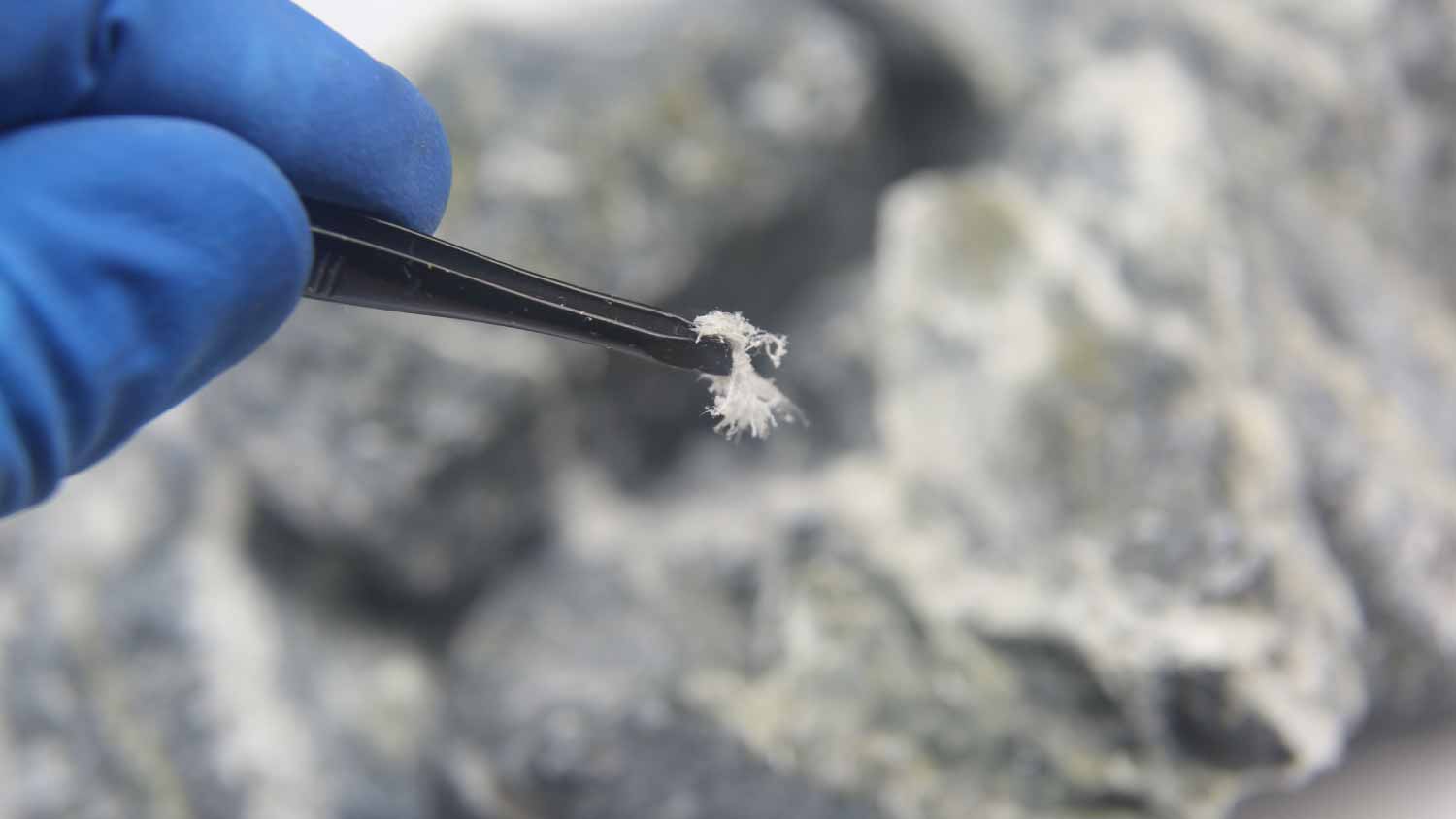
Asbestos-containing insulation is banned or restricted in many countries, but it's still found in some homes. Use this guide to identify if you have the hazardous material in your home.
Asbestos insulation can vary in appearance depending on the type.Knowing what asbestos insulation looks like can keep you and your family safe.

If you need to cover asbestos tiles, you must do it safely. Learn why hiring a professional to carry out both inspection and work is the only recommended option.