
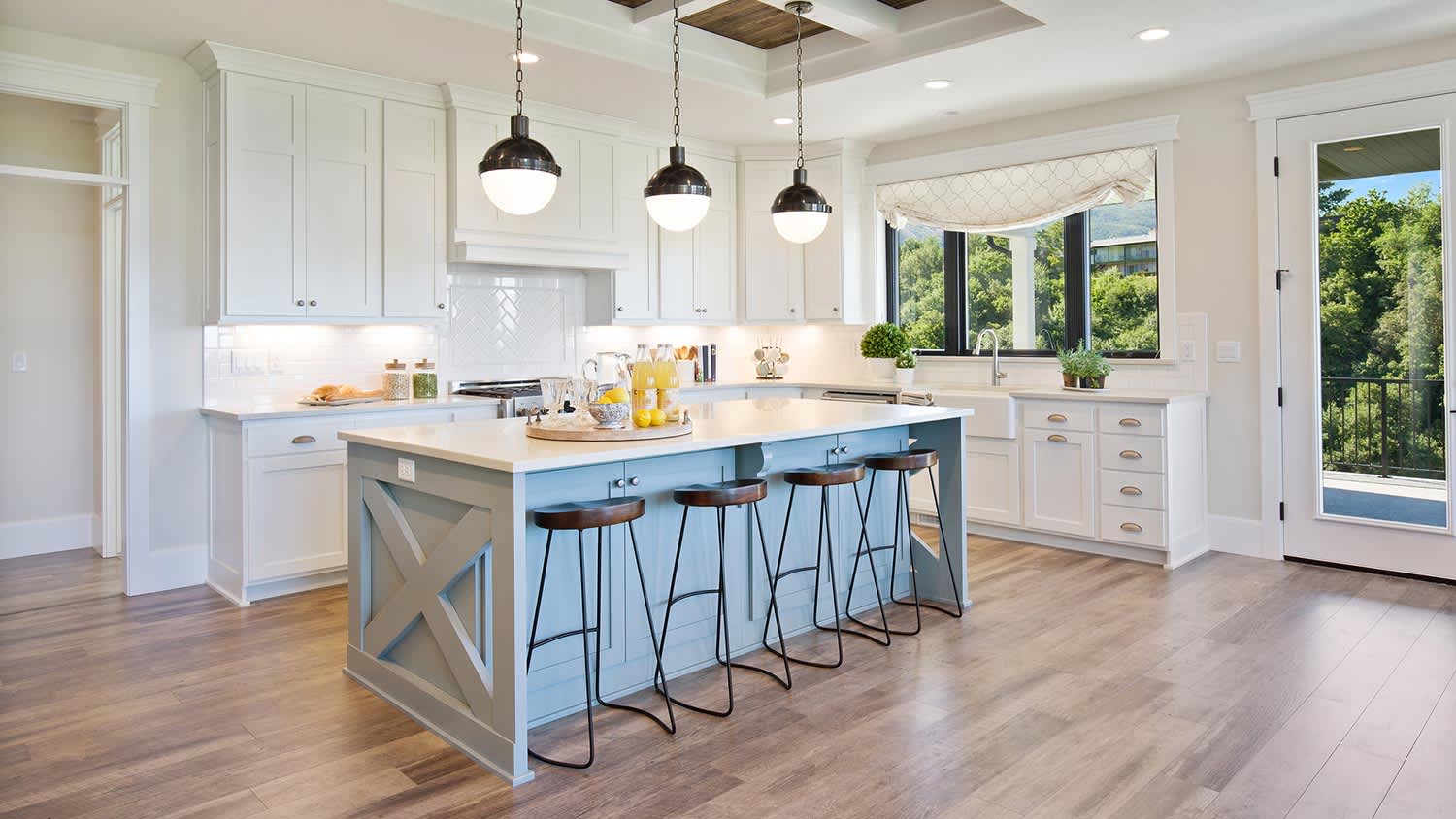
Kitchen islands are multipurpose workhorses in your kitchen. When looking to add one to your home, you should consider its size, materials, and its primary use in your home. Learn about the price of kitchen islands and their different features.
Build a custom kitchen island to elevate your kitchen

Kitchen islands add something special to your home—from additional storage, extra counter space, and a spot to serve meals. Luckily, if your kitchen lacks this feature, you can learn how to build a kitchen island if you have the skills, tools, and experience necessary. Our guide will show you the ins and outs of how to make a custom kitchen island.
Before starting this project, you’ll need to gather tools, supplies, and materials. First, you’ll want to determine which type of kitchen island fits your space—that will help you decide what kinds of cabinets, finishes, and paneling you ultimately buy. Here’s how to prepare for your kitchen island project:
You’ll want to consider what type of island best suits your kitchen and specific needs, like a floating kitchen island, L-shaped, or U-shaped. Design considerations include:
Prep space
Storage space
Extra room for seating
Decorative shelving
Cabinet doors vs. drawers
Adding appliances
Materials budget
Grab a measuring tape and measure at least 42 inches from your kitchen countertop to where you want to place the island. This measurement will give you enough room to walk around your kitchen freely. Once you determine how much room you have, you can decide what cabinets will best fit the allotted space.
You can choose from various base cabinets and wall cabinets—with multiple styles of doors, drawers, and pull-out shelves. Many of these kitchen cabinets are pre-made and in stock at most big box hardware stores. Some even come equipped with side panels and are pre-painted. Ultimately, it comes down to your aesthetic, budget, and the store’s stock availability.
Take a measuring tape and measure your kitchen’s total area from end to end, using length and width measurements. Next, place the measuring tape on the floor and measure from the base of the cabinets to determine the amount of available floor space. As a good rule of thumb, the island’s total area should only take up 10% of the kitchen. So, for example, if your entire kitchen measures 130 square feet, your island should be a maximum of 13 square feet.
Give yourself at least 42 inches between the countertops and the island. If you plan to add a breakfast bar overhang, allow at least 44 inches of space. Take painter’s tape, and tape the outline of your kitchen island on the floor.

This step is only necessary if you purchased unassembled cabinets. However, many big-box hardware stores sell pre-assembled cabinet bases. Afterward, you’ll want to place the cabinets in the taped area and lay them out where you want them to go.
Start by cutting two-by-fours into five pieces with a table saw—these should match your cabinets' length and width measurements. Next, lay out all the pieces, ensuring they sit flush. Assemble the base frame using wood glue, wood screws, and a nail gun. When finished, place the cabinets on top of the base frame and nail them into the base.
Measure your cabinets' length, width, and back height. Cut a piece of plywood with a table saw and attach it to the back of the cabinets with adhesive glue. Clamp the plywood to the back of the cabinets and use wood screws to fasten it. Optionally, add shiplap, beadboard, wainscoting, or a geometric pattern to the back of the plywood base for a decorative effect. Next, glue and drill your side panels with an electric brad nailer.
To ensure the cabinets stay together properly, drill a pilot hole through the cabinet box face frame with a countersink drill bit. Use a 2½-inch wood screw and screwdriver and put the nail from one cabinet to another, holding them together.
Next, cut the wood trim with a table saw to the height of your base frame and your chosen width. Glue and nail in the trim with a nail gun. At this point, you can also miter the edges of the baseboard molding and add it to the bottom of the cabinet base at the toe kick with a nail gun and 1-inch nail gun brad nails. Put the clamps on the back of the frame and allow it to dry for at least 24 hours. You can fill in nail holes with a wood filler and caulk during the waiting period.

You don’t need to pre-order a countertop. Instead, you can wait to see your kitchen island’s total measurements before contacting a local kitchen countertop installer. If you’re handy and installing the countertop yourself, use glue and screw in the countertop—use clamps to secure the countertop to dry correctly for 24 hours. To ensure the countertop has extra support, you can add additional framing to the cabinet backing—around six inches of extra framing will stick out from the island—with two-by-four pieces of wood and a nail gun.
You’ll typically want to paint your entire kitchen island once the countertop is installed. Grab your painter’s tape and place it around the island area you’ll be painting. However, some pros like to pre-paint the cabinets, trim, and molding before starting this project to ensure everything is neat and dry. Pick an on-trend paint color for your kitchen island, like off-white, beige, or blue.
Once the cabinets are fully dry, use a level to draw holes where you plan to install the kitchen cabinet hardware. Then, attach your chosen cabinet hardware by drilling holes and screwing in the handles with a screwdriver.
If you’re handy and have carpentry skills, you can tackle this DIY project for around $500 to $1,500, including the cost of materials. Otherwise, you can expect to pay between $3,000 and $5,000—the price of a typical kitchen island cost. Since this feature is a major functional focal point of your kitchen, it’s best to hire a local kitchen remodeler to build your kitchen island. A remodeling pro will have the skills, tools, and expertise necessary to complete this project safely and efficiently.
Also, custom kitchen islands are usually factored into the total kitchen remodel cost when renovating your kitchen. On average, you can expect a kitchen remodel to run between $14,000 and $40,000. So, building a kitchen island is a considerable saving to the full-renovation alternative.
I had FabClean 614 clean my apartment, and she did an outstanding job. She was so professional and efficient. My apartment looks absolutely spotless every surface, every corner, all cleaned to perfection. Definitely highly recommend FabClean 614 if you're looking for top-notch cleaning...
 Fab Clean 614
Cole has been handling plumbing and general contracting for our four properties over the past three years, and he’s always done a great job. Most recently, he installed a sink and countertop in our retail store where none existed before, and it turned out exactly how we needed. He’s...
 ANB Renovations LLC
D1 Roofing delivers outstanding service from beginning to end, backed by a strong warranty and expert teams. I highly recommend them for their excellence in meeting and surpassing expectations with unmatched communication. Choosing D1 Roofing was flawless decision
 Division 1 Roofing LLC
This company is my go to resource for all my post renovation clean ups. They get the place spotless! All we have to do after is stage the place and sell, sell, sell! They are super professional and have some amazing scent that is left in every property. I highly recommend!
 The Royal Sanitation Group
I had Ace Fireplace Services install custom chimney caps for my home, and the results are stunning. They fit like a glove and have added a touch of sophistication to my chimney. I can't recommend their services enough.
 Ace Fireplace Services
Supreme Brick & Chimney did an excellent job restoring the brick and mortar joints on my home. Their team was professional, knowledgeable, and completed the work on time. I highly recommend them and will hire them again in the future! Thanks!
 Supreme brick & chimney
I recently hired Custom Paint Jobs LLC to repaint my home, and I couldnt be happier with the results. Their attention to detail and professionalism were outstanding. Highly recommended
 Custom Paint Jobs, LLC
Window Depot did an amazing job on my deck. I wasnt sure what I wanted to do, but their composite decking was affordable and will last a long time. I am excited to have family over, and I am no longer embarrassed by my backyard. Jeff and the ground crew were polite, respectful, and caring for...
 Window Depot USA of Central Ohio
If I could give 10 stars for Kitchen Tune Up, I would. I cannot say enough good things about my experience with Kitchen Tune Up and the entire team involved in the process of my kitchen project. They went above and beyond as far as service and quality with my cabinets, paint, countertops, and...
Great job...edging and pre clean up went well with a great job with seal coat. Friendly, efficient and professional.
 All Star Paving and Sealing
From average costs to expert advice, get all the answers you need to get your job done.
Kitchen islands are multipurpose workhorses in your kitchen. When looking to add one to your home, you should consider its size, materials, and its primary use in your home. Learn about the price of kitchen islands and their different features.

Looking to install a kitchen island but don’t know who to hire? We’ve got you covered. Follow our homeowners’ guide for how to hire a kitchen island contractor.

Is your kitchen island lacking? These creative ideas on how to extend a kitchen island will give you all the inspiration you need.
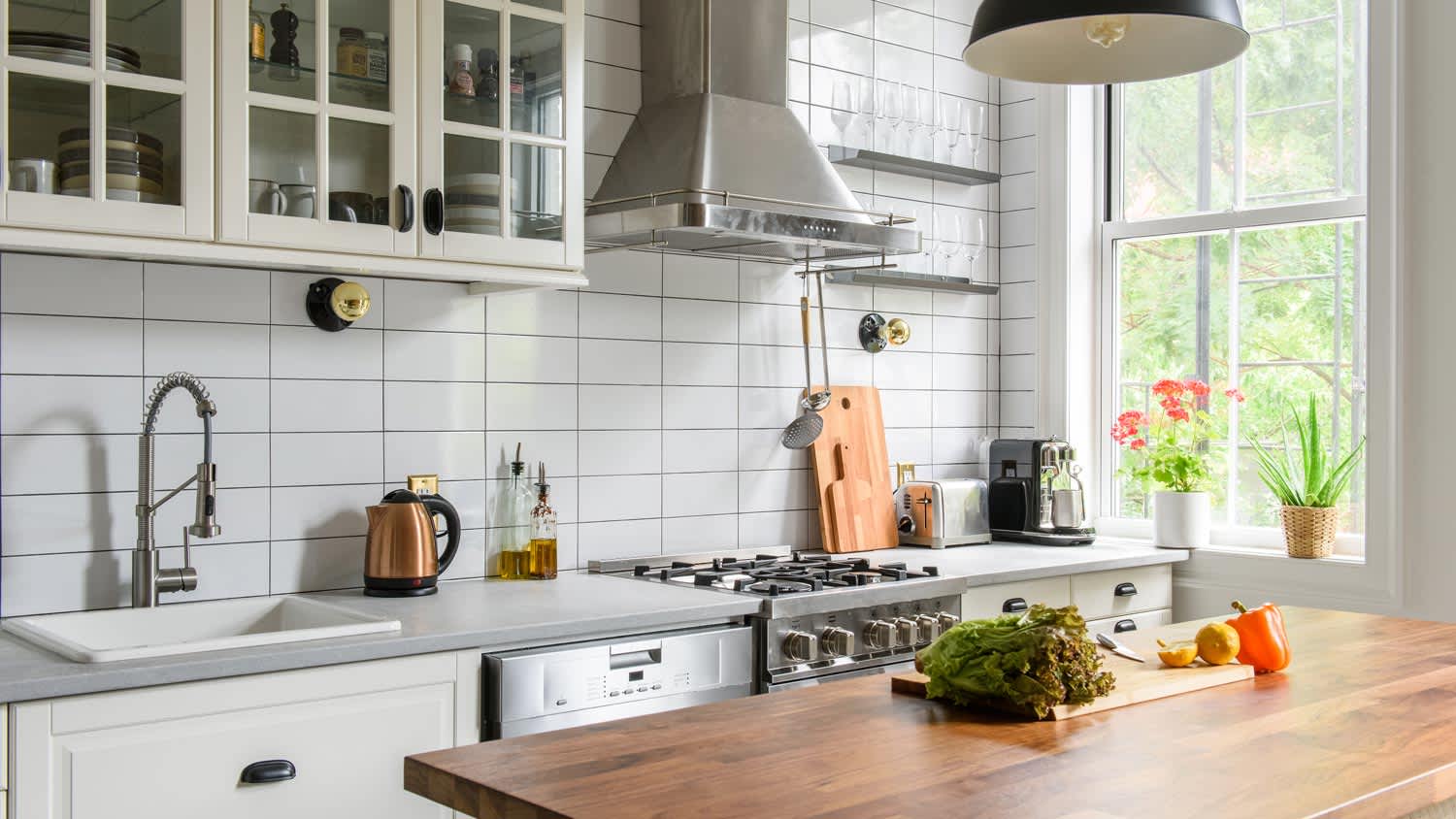
Floating kitchen islands provide plenty of style and function for your home. Read this floating kitchen island guide to learn the pros and cons of having one in your home, and how to measure it correctly so that it fits your space.
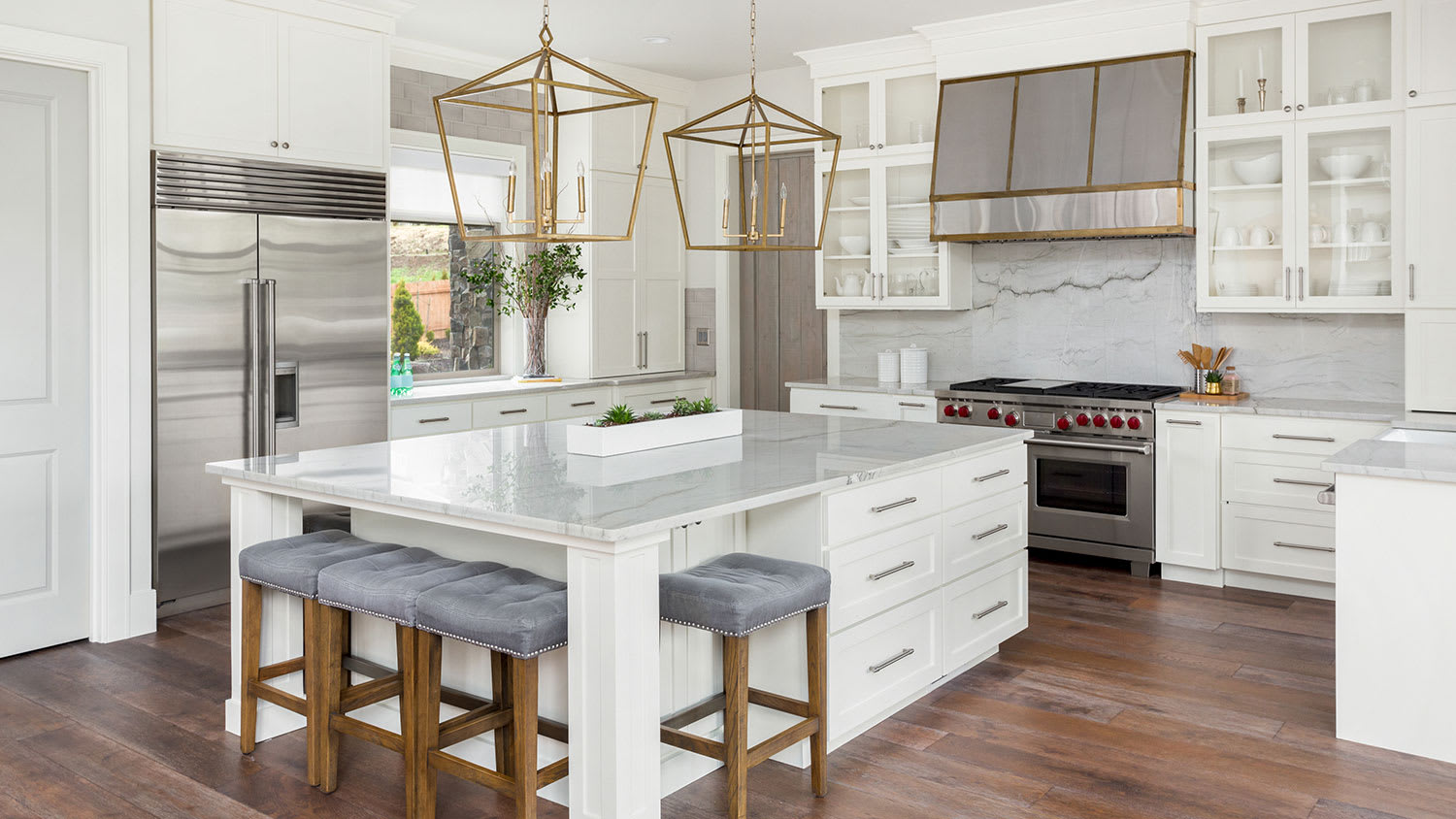
Check out 8 modern kitchen island ideas to elevate the look of your prep work space with dazzling colors, high-end materials, and seating plans.
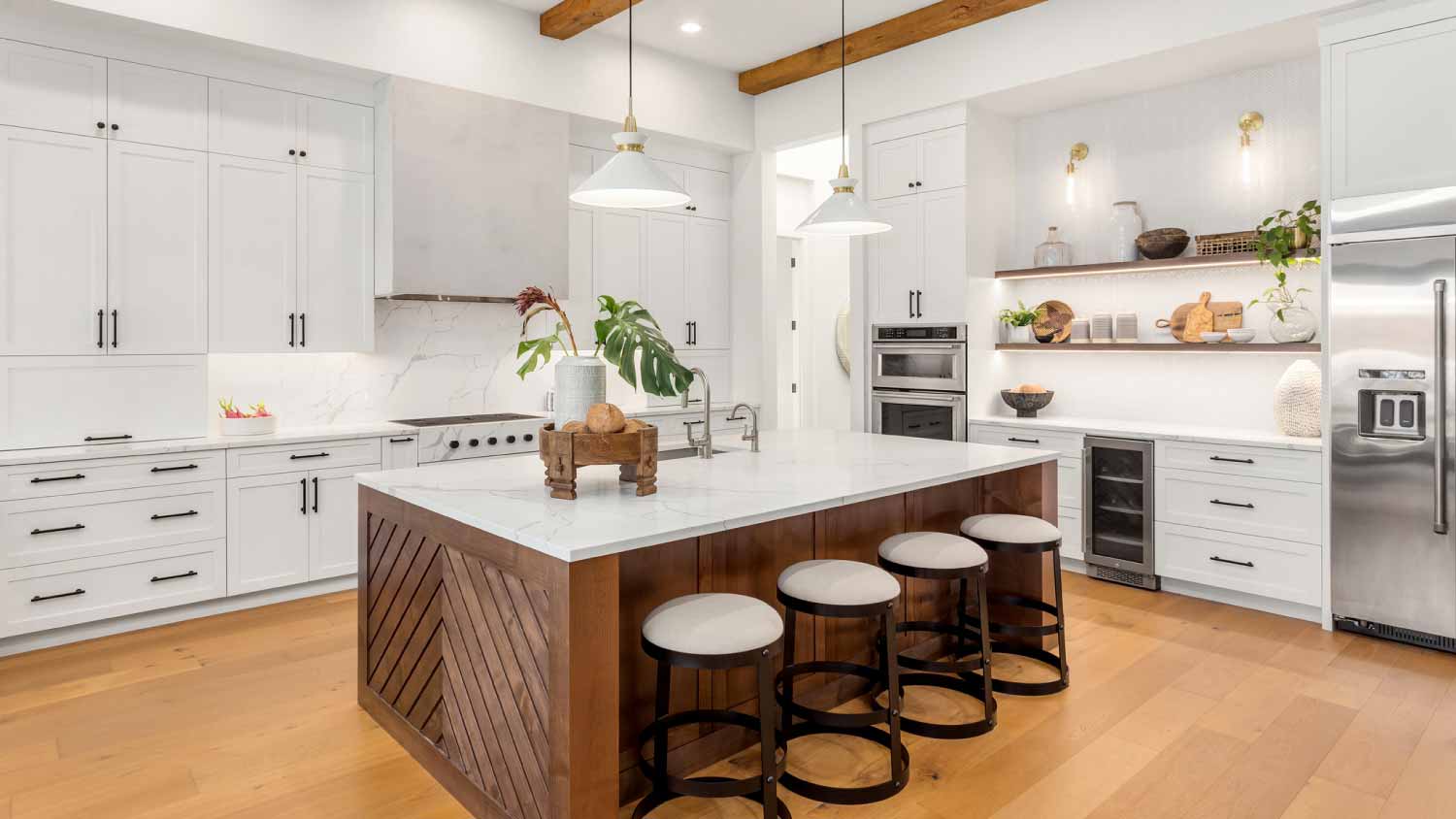
When it comes to kitchen islands, you can make a statement with the right execution. Use these 40 kitchen island ideas to inspire your project.