
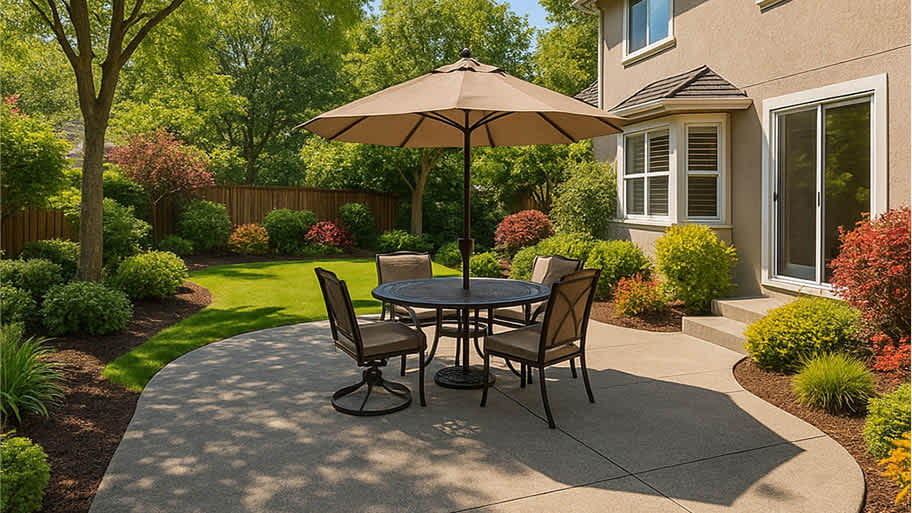
A concrete patio adds valuable outdoor living space to your home. Learn how much a concrete patio costs and which factors affect the project price.
How thick your concrete patio should be will be determined by its size and use

Your concrete patio slab thickness depends on your intended use, with standard residential patios requiring 4 inches to meet building codes and handle everyday entertaining.
Expect to pay $8 to $12 per square foot for professional concrete patio installation, with a standard 200-square-foot patio costing around $1,600 to $2,400.
Your soil quality affects your patio's stability, and areas with expansive clay soil need reinforcement with rebar or a 5-inch slab to resist cracking from moisture changes.
Hiring a local concrete patio company keeps your project on track with proper base preparation, reinforcement placement, and pouring techniques for a durable, long-lasting patio.
Before you break ground on your new backyard patio, make sure you know how thick a concrete patio should be. Getting it wrong can be disastrous and cost you much more money down the road. This guide will help you figure out how thick your concrete patio should be for longevity and durability.
Your concrete slab thickness is determined by the weight you anticipate your patio will have to withstand and how many square feet you want your patio to be. Most concrete patio professionals suggest a thickness of 4 inches. This also complies with most building codes.
Many contractors will automatically assume a concrete slab thickness of 4 inches, which is standard. Some contractors might ask for specific details about the patio use and advise accordingly. It’s best to have a clear vision in your head for your patio before you contact a concrete patio company near you.

There are two primary factors to consider when deciding how thick your patio should be: the weight it will need to hold and your soil quality.
Most homeowners use patios just for entertaining, so they bear minimal weight. Four inches is plenty thick for standard patio use—it’s the same as the recommended concrete driveway thickness, which is meant to support vehicles.
If you want your patio to withstand heavy vehicle use—like if you bring heavy machinery into your yard and need to drive over it—or if you plan on installing a full kitchen or hot tub on your patio, you can either reinforce the concrete with rebar or opt for a 5-inch thick patio.
Since your concrete patio relies on the soil below it for support, you should always consider your soil quality when deciding on patio thickness. If you live in an area with highly expansive clay soil, the soil below the patio will shift due to moisture changes, even if you underlay the concrete with gravel, which can promote cracking.
In that case, you might want to consider reinforcement with rebar or upgrading to 5 inches of thickness.
There are different types of concrete, each with its own properties and strength. You measure concrete strength by its pounds per square inch (psi) rating. The higher the rating, the stronger the concrete. A concrete mix or Portland cement will suffice if you don't intend to put anything heavy on your patio. For convenience, buying all-purpose, premixed cement with a psi between 2,500 and 4,000 will ensure your ratio mix is correct and will save time.
Concrete with a higher psi will resist more upward and downward forces, meaning it stands up better to loads on top of it—from cars, kitchens, or hot tubs—as well as soil movement. You could potentially get away with a thinner slab at 3 inches thick with a higher psi, but your local building code may prevent you from going thinner than 4 inches. Below are some common use cases for different types of concrete, but keep in mind that your patio will still likely need to be at least 4 inches thick.
3,000 psi: Used in residential applications, such as driveways and patios
3,500 psi: Used for foundation fittings, slabs, or driveways/parking areas for heavy vehicles like an RV
4,000 psi: Used where heavy equipment is secured to the slab, such as car lifts, factories, and warehouses
20,000 psi: Contains fibers that make it 10 times stronger than traditional concrete—often used in infrastructure projects, such as roads and bridges
Here are some general tips to ensure you get the right concrete patio thickness.
Use rebar or welded wire reinforcement (WWR) for a 4-inch concrete slab to safeguard against cracking and breaking. WWR is easier to use than rebar, as it comes in sheets, and a contractor who installs concrete patios can cut it to size to fit your patio.
It’s possible to pour your concrete patio directly on the soil, but it’s usually best to lay down a base layer underneath to help with drainage.
Compacted gravel, sand, and fine rocks—about 3 inches thick over a 3/4-inch rock layer with good draining qualities—provide a good base for a concrete patio. The base will allow runoff to drain away from the concrete, preventing soil expansion and cracking in areas with expansive soil. It also prevents accelerated concrete damage from constant exposure to water.

Not only does cracked concrete look unappealing, but it can also lead to ongoing and worsening damage if runoff soaks through the crack and into expansive soil below. There are several ways to prevent concrete cracks in your patio.
Ensure your concrete has the right mix. Concrete that’s too wet or too dry will be significantly weaker and may experience concrete segregation, which reduces the integrity of your patio.
Ensure the concrete is protected during the curing period. Concrete needs to remain moist but not wet while it cures. Cover it and prevent foot traffic for 24 hours. You can also spray after curing to keep the concrete moist.
Insert control joints after the concrete pour. Control joints offer the concrete a convenient place to crack during the curing process when the material loses water and shrinks. The cracks will be hidden from view.
Ensure the base is strong, even, and compacted. Movement of the base after pouring can create weaknesses in the concrete.
Use rebar or wire mesh as a reinforcement. Reinforcing concrete is a great way to add strength and longevity to your patio, so it’s often worth the added investment.
Use a curing compound. Curing compounds can help slow down the curing process to yield the strongest concrete possible.
Pour the concrete in dry, mild/warm weather, ideally early in the morning. Avoid pouring when there’s rain in the forecast, and try to avoid extremely high and low temperatures.
Pouring the wrong patio thickness increases the risk of cracking, even if the patio is not exposed to vehicle traffic or heavy loads from outdoor kitchens or hot tubs. Thinner concrete patios are more likely to crack from soil movement and weight placed over them.
There’s virtually no risk if you pour a slab that’s too thick, but if you pour a slab that’s too thin for the application, you’ll end up with a visually unappealing patio if and when the slab sustains damage. You’ll also be faced with the following repair costs sooner and more often:
Mudjacking for sunken portions of concrete: $3 to $25 per square foot
Filling and sealing minor cracks: $0.10 to $0.15 per linear foot
Resurfacing: $3 to $5 per square foot
Supreme Brick & Chimney did a great job with a cleaning and inspection of the fireplace! He was efficient, on time, and very pleasant. The space was kept very clean, and the fireplace was spotless when he was done. He also performed a thorough inspection, and did a great job talking us...
 Supreme brick & chimney
Koby & team weâ re great! Moved our two bedroom apartment in about 4 hours, and weâ re super friendly, quick, and careful with are things.
 All My Sons Moving & Storage
We had our houses windows and back door replace this summer by Window Depot USA of Central. He gave us grate advise and saved my family lots money. The team did a fantastic job with installation. If you need help, they sure get job done right!
 Window Depot USA of Central Ohio
Wonderful. I am going to have them remove and replace my driveway in the spring.
 All Star Paving and Sealing
We were having 2”x 2” tile installed . There was a small installation error and the new additional replacement tile was from a different lot and the colors didn’t match. Joe assured us that he would rectify everything , which he did without hesitation. We decided to go with the 18” x 36” tile...
 CarifaTile
Did an amazing job transforming my yard. Also installed sod in places, would recommend to everyone.
 Cardinal Landscaping & Construction LLC
Ed did a great job in installing stone to the outside of our house at a fair price
 Ochoa Stoneworks
All around they have done a really great job. <br /> I have used JL Landscapes for the past 8 years. I own and operate my own commercial/residential real estate company where we own, operate, and maintain our own properties. JL Landscapes has been our exclusive landscaper for both our...
 J.L. Landscapes
Outstanding experience! I needed my yard/garden/patio prepared for a party the coming weekend. I contacted Rick and he was able to schedule service that same week. He and his crew did a wonderful job removing the fall foliage, weeding, trimming back plants and hedges, even cleaning up the...
 Distinct Designs Residential Enhancements
We first had Mark fix the back patio and liked his work so much we had him make a brick patio on the side of the house. When we decided to change our concrete walkway to brick, we wanted Mark to do the job because his prices were fair and he did such good work on t he other two projects.
 Mark Monnette Masonry
From average costs to expert advice, get all the answers you need to get your job done.
A concrete patio adds valuable outdoor living space to your home. Learn how much a concrete patio costs and which factors affect the project price.
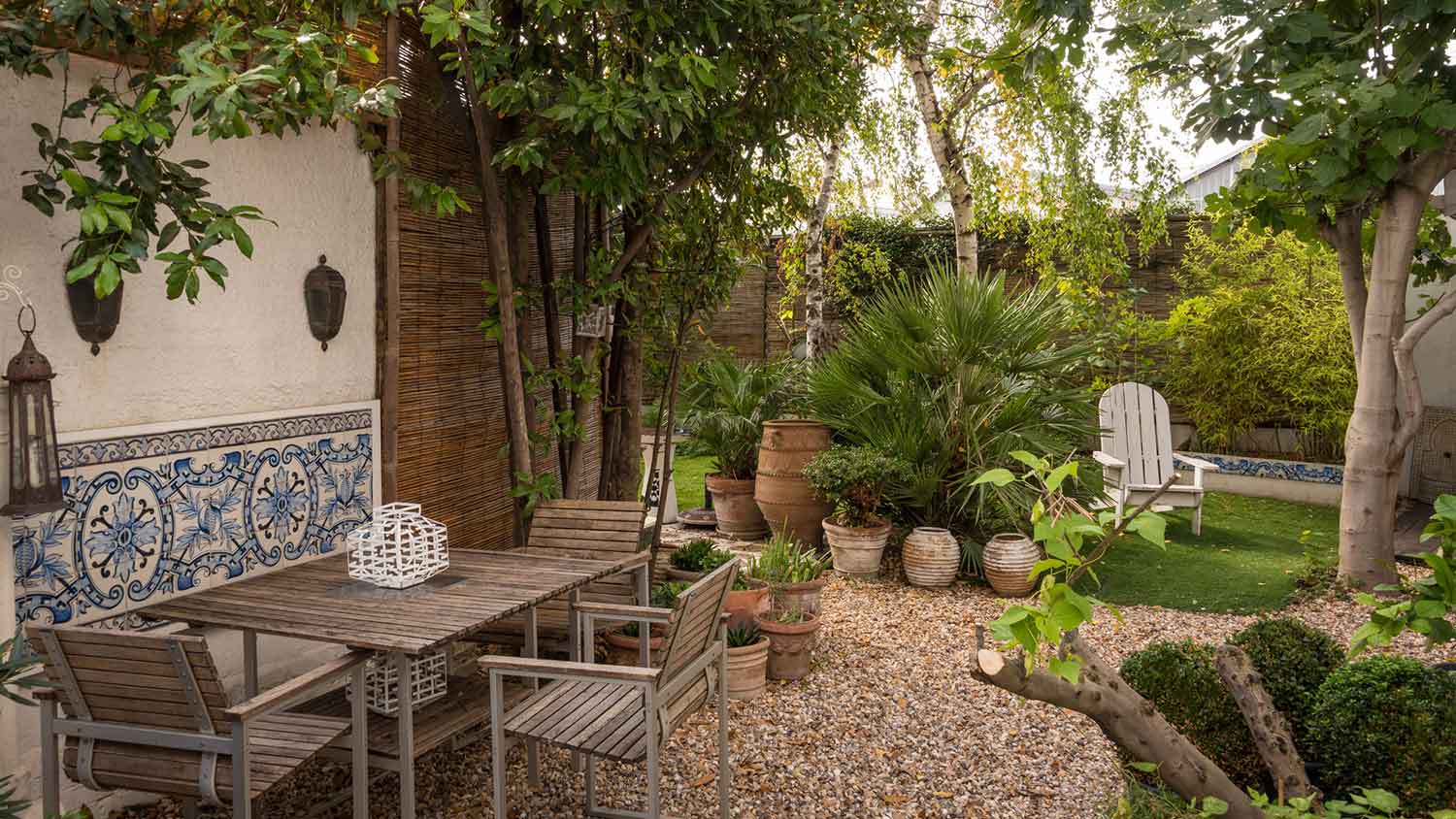
Looking to build an outdoor entertainment space? Use this patio cost guide to get an idea of how much your exterior project will come out to.
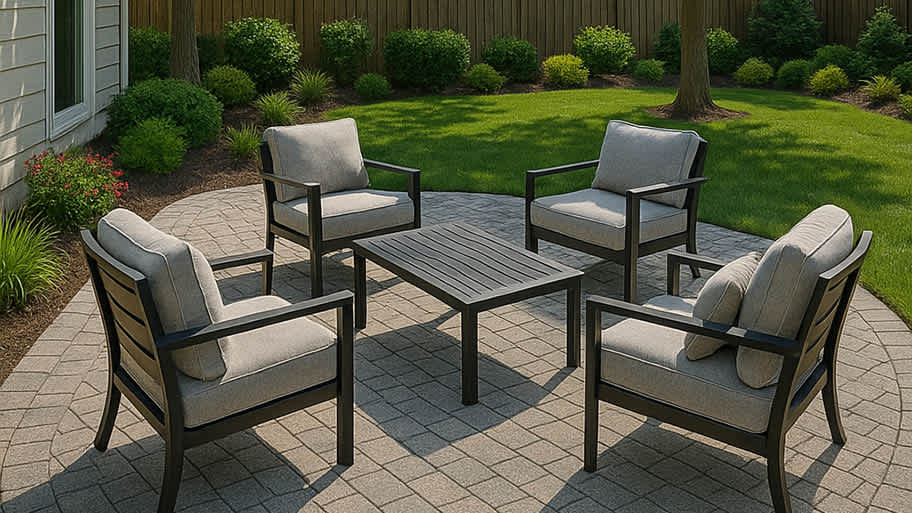
Looking to elevate your backyard aesthetic with a patio? Use this paver patio cost guide to help you estimate your total project cost before you get started.
Learn about how thick a concrete driveway should be and what factors affect the thickness before pouring concrete to ensure safety and durability.
How thick a foundation should be depends on a few factors. Learn about minimum thicknesses for different foundation types and soils in this guide.
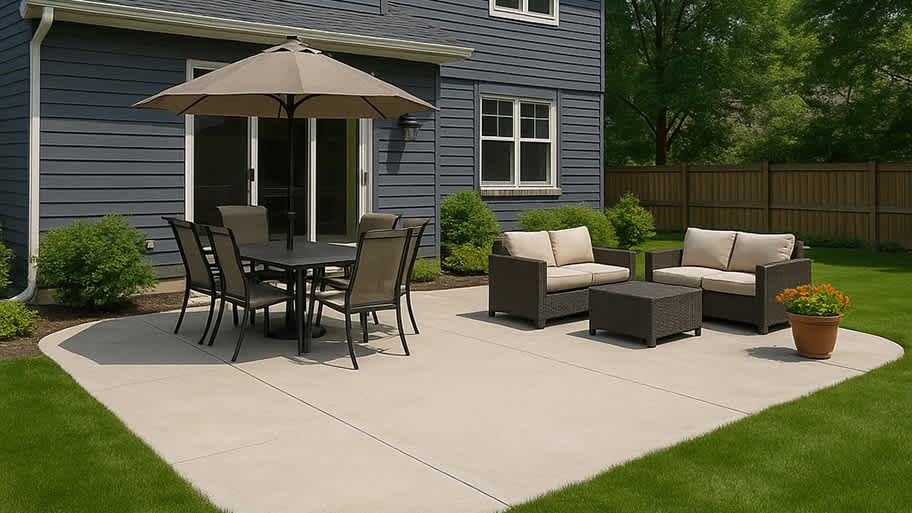
Dreaming of a new outdoor entertaining space? Learn how a concrete patio can increase home value and pay for itself if you’re thinking of selling soon.