

•
Discover the cost to install a ceiling fan, including labor, materials, and tips to save. Learn what impacts your price and how to budget for your project.
Crank the fan for energy savings, but you'll need a subtle touch to conserve your money

Ceiling fan energy efficiency improves when you raise your thermostat by 4 degrees while running the fan, letting air circulation replace some cooling power.
Repairing a ceiling fan costs around $139 on average, and keeping your fans operational helps you maximize energy savings throughout the year.
You save the most energy when you turn ceiling fans off while away from home and run them only in occupied rooms.
Hiring a local ceiling fan professional ensures proper installation height and Energy Star certification, helping your home stay comfortable while reducing energy costs.
It’s the age-old question: do ceiling fans save energy? The news is in, and when used appropriately, ceiling fans actually can help save on energy costs. If your head’s spinning just trying to figure out how to recruit your fan to save money, here’s what you need to know.
Ceiling fans use electricity to generate air. While they don’t cool the room by changing the temperature of the air, they promote circulation, cooling your skin through a wind-chill effect.
Leaving a ceiling fan running while you’re gone for an extended period of time will only waste electricity. However, the says airing out your home helps to limit humidity and prevent mold. To save money, you’ll need to operate your fan strategically.
In the summer, your fans should be set counterclockwise to conserve energy. Ceiling fans also work to lower energy usage in the winter, too. Your fan’s spinning motion helps push hot air that has risen back down toward the ground. With all of that warm air in motion, your heating system won’t have to work so hard to keep your home warm.
To save energy, keep your ceiling fans on the lowest settings, and switch your fan to a clockwise rotation come winter.

Air conditioning is a major consumer of electricity in the US—much more than a simple ceiling fan. Using these two units simultaneously can have a noticeable impact on your electric bills.
According to the US Energy Information Administration, AC units account for an average of 12% of all home energy consumption. The cost to run an AC unit falls around $0.36 per hour of operation. Ceiling fans, however, cost roughly a penny per hour of operation. With these little details in mind, the trick to saving money is using your ceiling fans more than your central air.
To make the most of your ceiling fan and central air, here are some ceiling fan hacks you can try:
Do Raise Your Thermostat Settings: If you use a ceiling fan and air conditioning unit simultaneously, you can raise your thermostat setting by 4 degrees F without a change in comfort.
Do run fans when occupying a room: Turn fans on only when you are home and using the room.
Do reverse ceiling fan rotation in the winter: Switching the direction of the fan for the season to a clockwise rotation helps push warm air downward, so you’ll save money by dropping your thermostat to find your ideal room temperature.
Do select the right mounting system: Make sure your ceiling fan height is at least eight feet off the ground, as fans work best when blades are a foot from the ceiling and seven to nine feet from the floor.
Do install Energy Star ceiling fans: Energy Star states that energy star-certified fans circulate air with 60% more efficiency than non-certified models on average.
Do choose a larger fan: If possible, opt for a larger ceiling fan, as they move more air and cool at a lower speed setting than smaller fans.
Do repair your ceiling fans: The cost to repair a ceiling fan falls around $139 on average, but it is worth it to have operational fans in your home for safety and optimum efficiency.
Do clean dusty fans before use: If it’s been a while since you’ve used your fan, be sure to clean ceiling fans first to avoid a dust storm above your head.
While ceiling fans can help keep your home cool by circulating air, there are some things to avoid when trying to cut back your energy bills:
Don’t run your ceiling fan all day: Turn your fans off when away from home and on when you return. For homeowners with smart home automation, set a time for your fans to turn on automatically.
Don’t keep the fan on without the AC: Running only your fan on is a surefire way to increase the temperature in your house because fans, like other appliances, generate small amounts of heat.
Don’t leave your fans on high in cool weather: Your fans need to be on a low setting to pull any cold air up and push warm air back down.
Don’t choose the wrong fan size: Install a fan that’s suited to the size of the room and centrally located to maximize savings. For example, a standard 36-inch fan extends approximately six feet from its center and may not suit a large room.
Great company! Price was competitive, technician showed up on time and completed the job (exterior electric Radon fan replacement) quickly. Would hire them again.
 MaGen Property Inspections and Radon Mitigation
Best decision was going with PatchMaster. Greg was wonderful / responsive & Dave did wonderful work. Got me on the schedule quick, matched my popcorn ceiling perfectly, finished the job quick, and was so kind & reasonably priced. Will absolutely be hiring again
 PatchMaster
Jeff was a consummate professional. Responsive, courteous, and focused on meeting our needs. I had a small project of installing and replacing two ceiling light fixtures. He responded to my Home Advisory inquiry within 24 hours and in a span of two weeks our light fixtures were installed. ...
Involved an extensive bathroom remodel, including removing tub & installing walk in shower, new drywall, custome tile work to ceiling, plumbing, etc. Overall, job was done on time and on budget. Nick & his team were very professional and had high attention to detail. Quality was great. Highly...
 Stamos Flooring and Remodeling LLC
Mike and his crew did a great job working through a very challenging task. The job required a full demolition of our ceiling, removing the blown in insulation and removing all the material from the site daily. It involved multiple inspections from the city and many challenges to get the...
 Rising Height Unlimited
Awesome company. Had a jacuzzi tub taken out and replaced with huge walk in shower with partial glass enclosure. Onyx to the ceiling with a decorative border, moved plumbing and installed hand held shower, new ceiling, flooring, and paint. Replaced window with glass block. Everything was done...
 Columbus Bath Design
There isn't much I can add that hasn't already been said about Rhino Painting. Outstanding service and communication from the first phone call through the end of the project, we could not be happier with this company. They painted our kitchen, living room, ceiling, starirwell and wood work,...
 Rhino Painting & Color Consulting LLC
Charlie recommended a separate fan with new lighting to clear steam from the room better. Several weeks ago I contacted Charlie via email to ask about pricing and scheduling, after one follow up he did reply with cost and said it would be about two weeks before he could do the work. I replied...
 Settle Muter Electric
Scott was awesome! This job was not an easy one, especially the relocation of the cable in the Great Room. I had called several other companies on Angie's list only to be turned away due to the tight timeline I was under or the anticipated difficulty of the work. <br /> Scott was realistic...
 SIGNAL DIRECT SYSTEMS
After struggling throgh attempts to fix a persistently leaky skylight, I called Bob at Skylights Plus to check it out. Given the fact that previous attempts to repair the flashing/roofing around the skylight didn't work, he recommended a full replacement. <br /> Even though the weather...
From average costs to expert advice, get all the answers you need to get your job done.
Discover the cost to install a ceiling fan, including labor, materials, and tips to save. Learn what impacts your price and how to budget for your project.
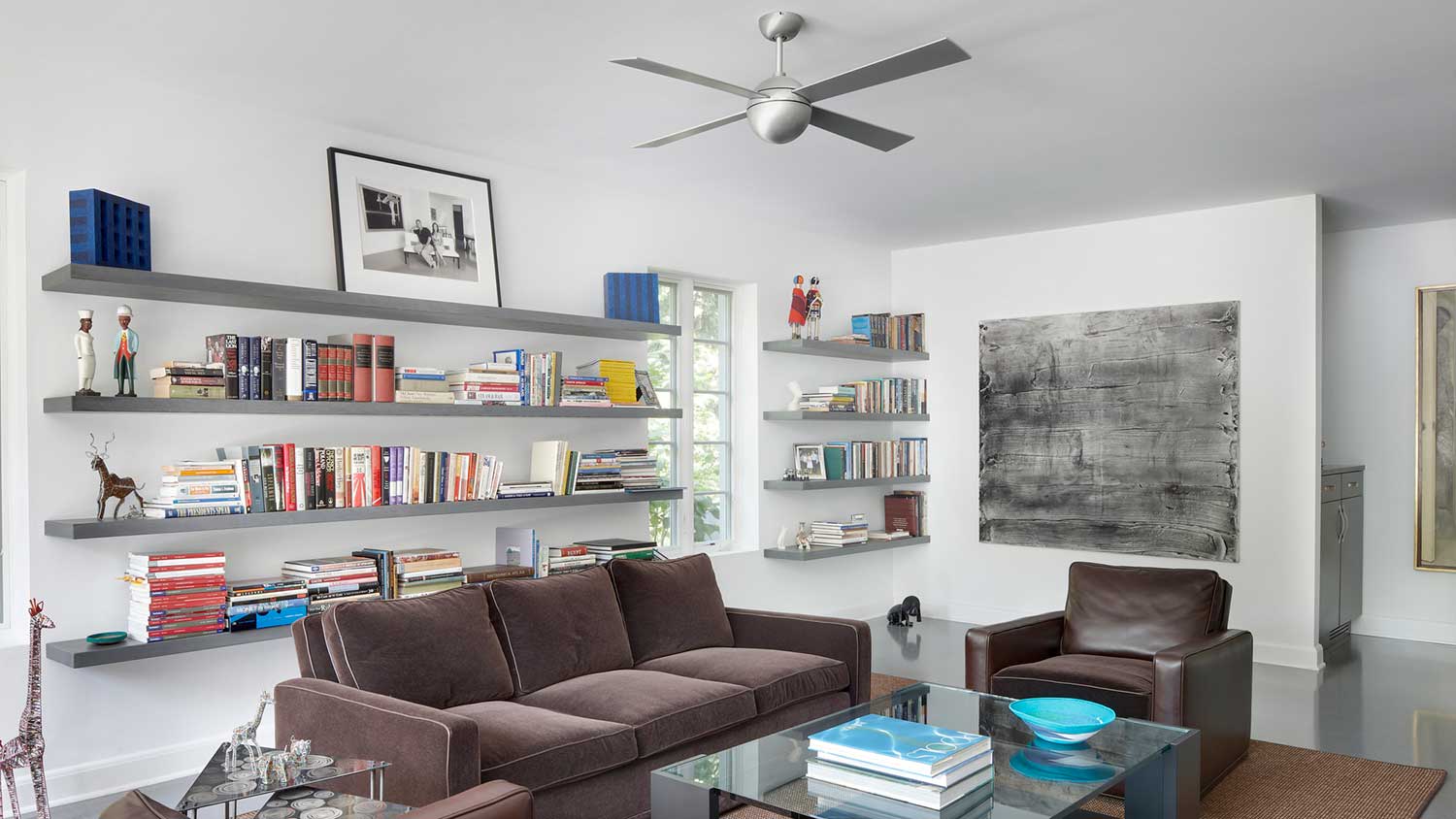
If your ceiling fan stops working due to a bad motor or broken pull chain, here’s what you can expect to pay to get it fixed.

How do ceiling fans work? Find out how fans cool your home, and learn pros, cons, and cooling hacks before you buy your next fan.

What could be better than saving money while protecting Mother Earth? Unfortunately, if you fall for these top energy-saving myths, you might do neither. Read on to learn more.

Did you know your ceiling fan can spin in two different directions? This quick-reference guide shows you why and how to change your ceiling fan direction.

Ceiling fans cool down your home while stylishly accenting your space. With a variety of types of ceiling fan on the market to choose from, you can’t go wrong.