

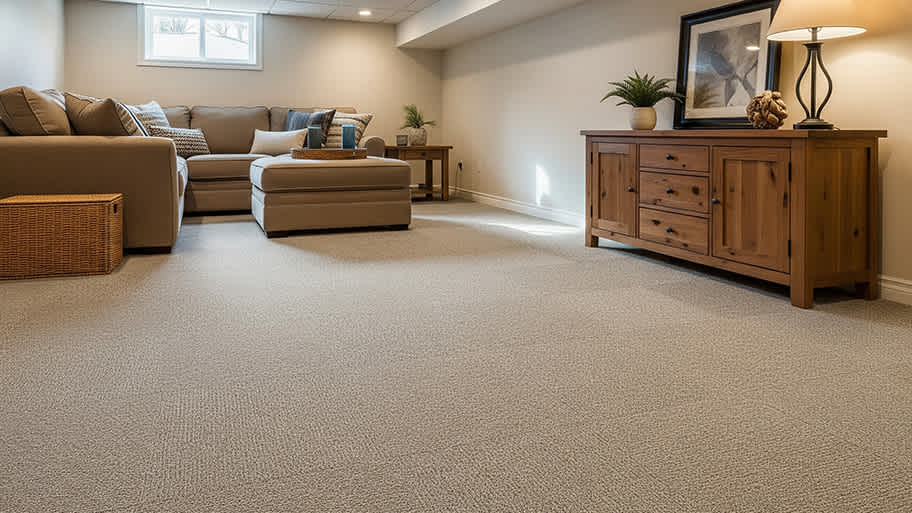
Not only are carpet tiles easier to install than carpet, but they’re often more affordable. So, how much does carpet tile installation cost? Let’s take a look.
From solid to soft in just one weekend

This project requires a lot of experience, so we don’t recommend DIYing it. Hire a pro with the special skills and tools necessary to complete the job safely.
Concrete has a lot going for it—it's durable, versatile, and just plain useful. But let's face it, unfinished concrete can be cold, hard, and not too pleasing to the eye. If you're remodeling a room with a concrete floor, laying carpet on top can completely transform the space with softness, warmth, and color. It's possible to do this project as a DIY, but you'll need specialized skills and tools, plus some extensive prep to pull it off. Follow this guide to learn how to install carpet on concrete without the help of a professional.
Complex, high-risk projects demand more than typical DIY projects. They require time, specialized tools, and trained expertise to make sure the job is done safely and correctly. We made it easy for you to find a local pro—with our skilled network, you'll get the job done without the stress of doing it yourself or significant safety risks.
Before you buy carpet, measure the length and width of your room to determine its square footage. Add 20% to your total to account for installation errors. Bring your measurements and a rough sketch of your room layout to a carpet dealer. They’ll help you choose the right carpeting and underlayment, plus assist you with renting tools you may not own, such as a knee kicker.
You can add additional layers beneath your carpeting for protection on a concrete floor:
A synthetic carpet pad or similar underlayment adds cushion and insulation to make your carpet softer and more forgiving on a hard, cold concrete surface.
Vapor barrier carpet padding stops moisture from absorbing into your carpet from below, which causes mold. The barrier is a thin plastic sheet or dimpled polyethylene pad.
At least 24 hours before installation, unroll and loosely spread your carpet in the room to air out. This will reduce the intensity of chemical fumes during installation.

Concrete is porous and can be penetrated by moisture, especially in basements. A week or more before installation, take the following steps to waterproof your floor, and prepare the surface for carpet:
Run a dehumidifier to remove existing moisture from the room.
Use caulk to seal any windows or exterior doors.
Use a hammer to pull up any nails or screws lodged in the concrete surface.
Fill in any cracks or holes in the surface with a cement-based waterproof filler.
Use a concrete leveling compound and trowel to flatten any low spots in the slab.
Sand and smooth the entire concrete surface.
Thoroughly vacuum and clean your floor with a bleach solution to kill mold or bacteria, then rinse with clean water.

Clear the room of all furniture and décor. Remove any doors from their hinges and store them safely in another location. If you have baseboards that your carpet won't fit underneath, remove them as well. Follow the steps above to prep your concrete surface for the carpet.

Install concrete tack strips around the room’s perimeter, cutting them with tin snips if needed. Position the strips about a half inch from the wall with the tacks angled toward the wall. Using liquid nail glue and galvanized concrete nails, hammer nails into the strips every 6 to 8 inches. Butt the strips against one another all around the room except in doorways.

Lay your vapor barrier over the concrete, overlapping adjacent edges for full coverage. If using a dimpled polyethylene pad, point the dimples down. Tape the seams to make one smooth surface.

Technically, you don’t have to have carpet padding, but it helps protect your carpet from wear and tear, adds insulation, and blocks sound. Lay carpet padding out from wall to wall and use a utility knife to cut it to size. Have the strips butt against each other and duct tape the seams between them. Your padding should lie completely flat with no bulges or bumps. With your floor fully covered, apply underlayment adhesive around the perimeter to hold the carpet padding in place.

Lay out your carpeting and use your utility knife to cut it from the back. It should roughly fit the room with about 6 inches of extra material left at each edge. Be sure to roll out each piece in the same direction for a consistent texture throughout the room.

Starting in a corner, put your carpet in place. Leave 3 to 4 inches of excess up against the wall, then completely cover the floor and tack strips. Line up edges of adjacent sections tightly and place seam tape, adhesive side up, under each. Use a seaming iron to melt the adhesive and join the sections, pressing them down as they cool, then sealing them with a carpet roller.

Starting in the far corner of the room and working along the wall, attach the carpeting to your tack strips with a knee kicker. To do this, place the kicker a few inches from the wall, then hit the flat, cushioned end with your knee to stretch the carpet tight and secure it to the tack strips. Move along the wall and hit the kicker once every foot.

Use your hands to stretch and pull the carpet from the first wall to the opposite wall and hook it onto the tack strip there. Like the first wall, use the knee kicker to pull the carpet into place. Then, stretch and secure the carpet along the remaining walls. Continue until the carpet is smooth and flat.
You can also use a power stretcher for this step, but they are costly to rent and unwieldy enough that inexperienced users risk damaging their carpeting. Only use one if you have prior experience.

With your carpet stretched and secured, you'll be left with excess around the edges. To cut the excess, use a metal straight edge and cut from the back with your utility knife until the remaining carpet fits tightly against the walls. Tuck the edges into the gap between the tack strips and the wall. You'll want the edges fully concealed when the baseboards are in place.

Attach your baseboards, trim, and doors. Cover the edge of your carpeting at any doorway with metal door jambs. Thoroughly vacuum the carpet after installation to remove stray carpet fibers and other debris.
If you have the specialized skills and tools required to install carpeting, doing so on concrete is possible. If not, tools and supplies cost about $800, not including the carpet itself. Carpeting is the main expense at $1 to $20 per square foot, which adds up in large rooms like basements. Compared to the average $1,760 cost of carpet installation by a pro, you won’t save much.
Concrete is an unforgiving surface that needs extensive prep work before installing flooring on top. Mistakes during prep can cause moisture problems that are very costly to repair, especially when factoring in the time commitment and expense of the initial carpet installation. Hire a carpet installer near you to ensure the job is done right and to adhere to your carpet’s warranty.
This company does it right. Firstly, I want to say that Landan was a joy to work with. He was so kind, transparent, and had everything under control. His entire team showed up ready to work and they were all very respectful of the fact that we were in an office space. A little backstory – we...
 Krumlauf Floors
Terrible experience. Walls/trim/floors/cabinets/doors all have drip marks, overspray, etc. Tiling at the fireplace had to be redone by another vendor due to incorrect and shoddy install by Profect. Contractor had his children in our house while he was on site without prior authorization or...
 Profect painting & exteriors
**Would rate a 0 if i could** NEVER USE THIS COMPANY!!!!! They shattered my tv console and dresser, lost a mirror, and never finished the move. The broken furniture cost me over $600 to replace. They left me with 6+ hours of personal labor moving my 1BR apartment, when I was quoted a FULL...
 All My Sons Moving & Storage
Finished Basements Plus was wonderful from beginning to end! First, they came out quickly for an estimate. I had 4 estimates and theirs was by far the best. (2 of the estimates were more than $20K higher than for the exact same work). Beyond their fair pricing, the work was excellent. They...
 Finished Basements Plus Inc.
AFS was excellent from start to finish. Jess, the sales associate, was fantastic...very knowledgeable and very professional. The installation crew was excellent. I couldn't be more pleased with the process. Best of all, my new floor looks fantastic!
 America's Floor Source
It was wonderful working with Yordy and his team. They were very professional and are experts in what they do. They have completed the work on time, with better quality and with in fairly reasonable price. We just started with backsplash work , but liking his work, we went on to provide...
 Flooring Solutions
We were having 2”x 2” tile installed . There was a small installation error and the new additional replacement tile was from a different lot and the colors didn’t match. Joe assured us that he would rectify everything , which he did without hesitation. We decided to go with the 18” x 36” tile...
 CarifaTile
We hired Jim to replace our hardwood floors with new hardwood. He and his helper Jerry did a fantastic job. Their work ethic is impeccable!! We would highly recommend McColl Floors!
Description says they handle window repair including rotten hardwood - they called me back right away but didnâ t leave a voicemail. I followed up 3 days later and they said they donâ t do that kind of work.
 Window-Gurus
Chaz, the owner, was very responsive and he communicated with us throughout the entire process. The overall cost was in the middle compared to the three estimates we received. The installation crew was very professional. Chaz was considerate enough to send a crew back to our home to repair...
 Unique Hardwood Floor LLC
From average costs to expert advice, get all the answers you need to get your job done.
Not only are carpet tiles easier to install than carpet, but they’re often more affordable. So, how much does carpet tile installation cost? Let’s take a look.

Discover the cost to install indoor-outdoor carpet. Learn about average prices, key cost factors, and tips to save on your next flooring project.
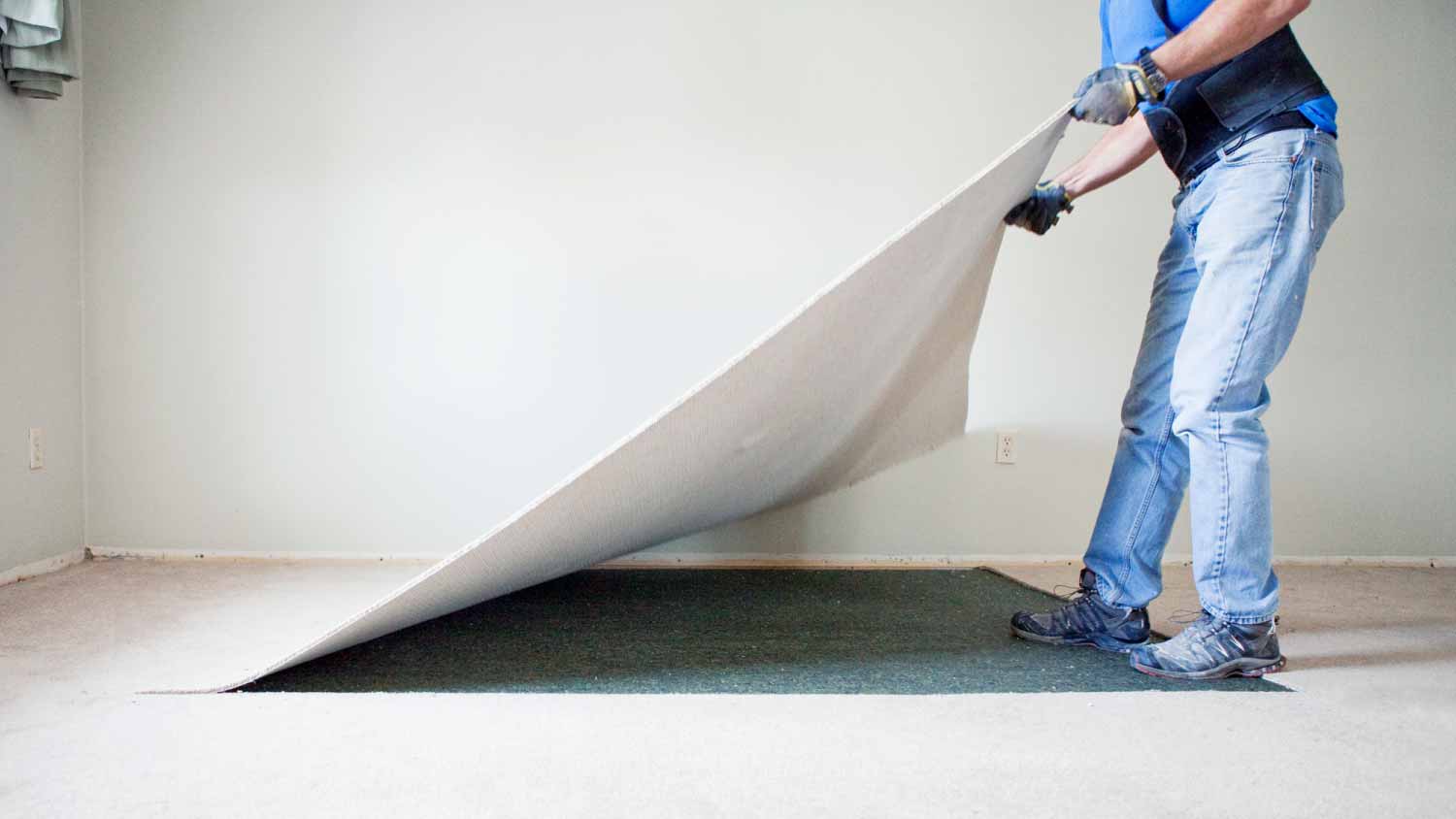
The average range to remove carpet costs $120 to $720. Contractors base carpet removal costs on square footage, home location, and installation type.
You are excited to get new carpet in your home, but now you are wondering how long it will take to install. Read this guide to find out.
From understanding services to comparing quotes, discover how to hire a trusted carpet installer with our guide.
Is new carpeting on your to-do list? Use this checklist for your carpet installation project to ensure the job gets done right.