
Don’t let sinking concrete capsize your budget. Learn about concrete leveling costs and the available methods to plan ahead for your project.
Water resistance and ease of application make this mixture a popular option


For those seeking an easy-to-apply DIY hard floor solution, self-leveling concrete could be the perfect option. This blended concrete product is easy to make and dries in just a few hours, giving you a subfloor or standalone option that looks good and holds up to heavy traffic.
But if you’re not a concrete mixing pro (and hey, who among us is these days?), you might be wondering how to mix and use these products. In this how-to guide, you’ll learn how to use self-leveling concrete in five simple steps.
Will your floors benefit from adding self-leveling concrete, or is another solution, such as bringing in a concrete repair specialist, the better choice?
Self-leveling concrete (sometimes called self-leveling underlayment or ‘SLU’) is particularly effective for cracked, split, or very uneven floors. It works best as a subfloor for tile and carpet or can be used as a standalone surface indoors. Those with radiant heat subflooring could also be prompted to use self-leveling concrete to cover up their heating element.
When installing the overlay over cracked concrete, it’s best to ensure that the cracks are not continuing to shift. If the crack is wide enough to fit a credit card or a quarter, pay close attention to the packaging for pretreating these cracks to minimize the likelihood of them reoccurring.
“If your surface is a wooden subfloor, give it the “bounce test” prior to installing the overlay,” said Matt DiBara, Angi Expert Review Board member and owner of DiBara Masonry. “Walk along the surface of the floor and gently bounce up and down. If you feel shifting or soft areas, you may need to consult a pro to stabilize the floor prior to installing the self-leveling underlayment.”
On the other hand, outdoor surfaces aren’t the best option for self-leveling concrete. This is because the substance is a combination of concrete and polymer, which spreads easier than regular concrete but isn’t as strong and won’t set on uneven surfaces.
Preparation is the key to a successful DIY self-leveling concrete job, especially if you’re laying it over existing concrete. Poor prep leads to a weak bond between the new and old concrete, which means a greater likelihood of chips and cracks later.
Be sure to:
Screw down any loose flooring
Clear away any obvious debris
Dam up any gaps on the perimeter that lead to pipes, vents, or doors
Apply painter’s tape to protect pipes or other fixtures
Vacuum the floor (do this last)
As part of your prep, grab a few extra bags of self-leveling concrete at the store (or order extra). A standard size bag will cover 50 square feet at 1/8 inch thickness. Even a slightly greater thickness could necessitate several more bags of product. Popular brands of self-leveling concrete include Akona, Sikafloor, Henry, and LevelQuik.
The application of primer is vastly important for a smooth, strong surface. Before proceeding, be sure to read the manufacturer’s instructions for the specific self-leveling concrete product you purchase. Along with this guide, follow any additional instructions listed.
Most primers are a water-based acrylic substance. They help retain moisture and ensure the self-leveling concrete cures properly once applied. Pay particularly close attention to the required amount of dry time before adding concrete. Plus, some products may recommend using only one brand or type of concrete with their primer.

After waiting the appropriate amount of time, it’s time to lay down your self-leveling concrete. (PS: Having a friend or family member mix a fresh batch while you apply can be incredibly helpful.)
Be sure to:
Add the correct amount of water to your concrete per the package instructions (too much or too little will result in lumps and inconsistencies)
Start at the far side of the room and work your way toward the exit
Pour heavy and allow the mixture to flow
Use your squeegee trowel or leveling compound rake to fix any inconsistencies
Mix and pour with a sense of urgency to allow for uniform drying
If you’ve got a large area to cover, it might be worth investing in a mixing barrel with latches. It will keep the self-leveling concrete from drying out as you apply it—and could keep you and the friend or family member helping out from exchanging anxiety-induced barbs as you rush to lay down the product.
Some SLU products are made with rapid-dry features and can dry in less than an hour. Others might take up to six. Once it’s dry, look for small bubbles, pinholes, or inconsistencies. You should be able to scrape these away if they’re right at the surface.
Finally, clean any tools you used during this process immediately. If you let them dry, the compound will never come off. Enjoy your new floors as-is, or proceed into the next part of your DIY floor installation if these are just your subfloors.
I highly recommend KTM construction! I will look no where else for anything that needs to be done, in or out side of our property. The level of craftsmanship is 5 star service across the board! The level of detail, knowledge and professionalism is 5 star service across the board! Ken is a...
 KTM Construction, LLC
We recently had our office sidewalk repaired and CT Concrete did an "Outstanding" job. They were quick, friendly and the job is "flawless". I would highly recommend CT Concrete for any of your concrete/sidewalk needs.
My painting job was a tricky one, with 18' walls and large ducts to work around near the top, in a downtown condo with its associated parking and unloading challenges. Brad and his crew did a great job in a short amount of time. My walls look great, with even paint and clean lines,...
Very pleased with the service and level of professionalism. Courteous and very unobtrusive in performing service. Unlike several other companies, Bradford Xteriors was willing to perform work on a three story home with a clay tile roof. <br />
 Bradford Xteriors
A team of 3 technicians arrived on time, on the day of installation. They took the time to cover all the flooring from the bottom level to the 3rd floor, where the new install was. The team worked all day and completed the job by 5:00. They had all the necessary paperwork, including...
 CARE Heating & Cooling Inc
Mark did an excellent job. He was professional, hard working and detail oriented. The work required a lot of expertise as it is an old building with uneven floors and odd shapes. He removed all the old floor trim, leveled the floor and installed new trim. I felt very confident in his...
Americoat did an amazing job with the tear out of the sidewalk and kept the area very clean. The concrete team showed up right on time and pour the sidewalk. The drive was sealed a few days later and looks great. <br />
 AmeriCoat Asphalt & Concrete
All around they have done a really great job. <br /> I have used JL Landscapes for the past 8 years. I own and operate my own commercial/residential real estate company where we own, operate, and maintain our own properties. JL Landscapes has been our exclusive landscaper for both our...
 J.L. Landscapes
We had a great experience with Mark Rodgers Construction. We were in the process of seeking out estimates for possible foundation work for our front porch. Mark came out himself to provide the estimate. Turned out that the company deals mainly with concrete, so we wouldn't be getting an...
 Mark Rodgers Construction
We first had Mark fix the back patio and liked his work so much we had him make a brick patio on the side of the house. When we decided to change our concrete walkway to brick, we wanted Mark to do the job because his prices were fair and he did such good work on t he other two projects.
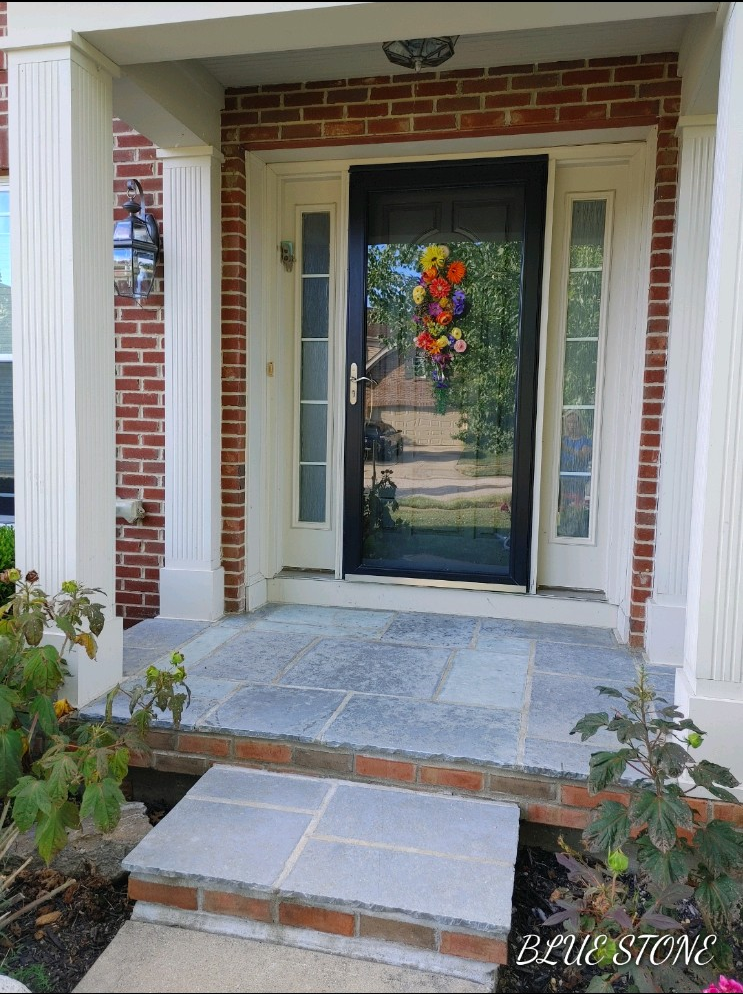 Mark Monnette Masonry
From average costs to expert advice, get all the answers you need to get your job done.
Don’t let sinking concrete capsize your budget. Learn about concrete leveling costs and the available methods to plan ahead for your project.

Strong floor joists are the key to a structurally safe home. The cost of floor joist repair will often come down to what is causing the problem.

Discover vinyl flooring installation costs, including average prices, key cost factors, and tips to save on your new floors.
Before you can apply mortar, lay tile, and finish with grout, you need a flat, even surface to work with. Learn how to level a floor for tile with this guide.
A bumpy, uneven lawn can create a safety hazard, impede water drainage, make mowing difficult, and more. Learn how to level a lawn and when to call a pro.

Use this informative guide to compare all of your home gym flooring ideas. This includes features for eight standard types of gym flooring options.