
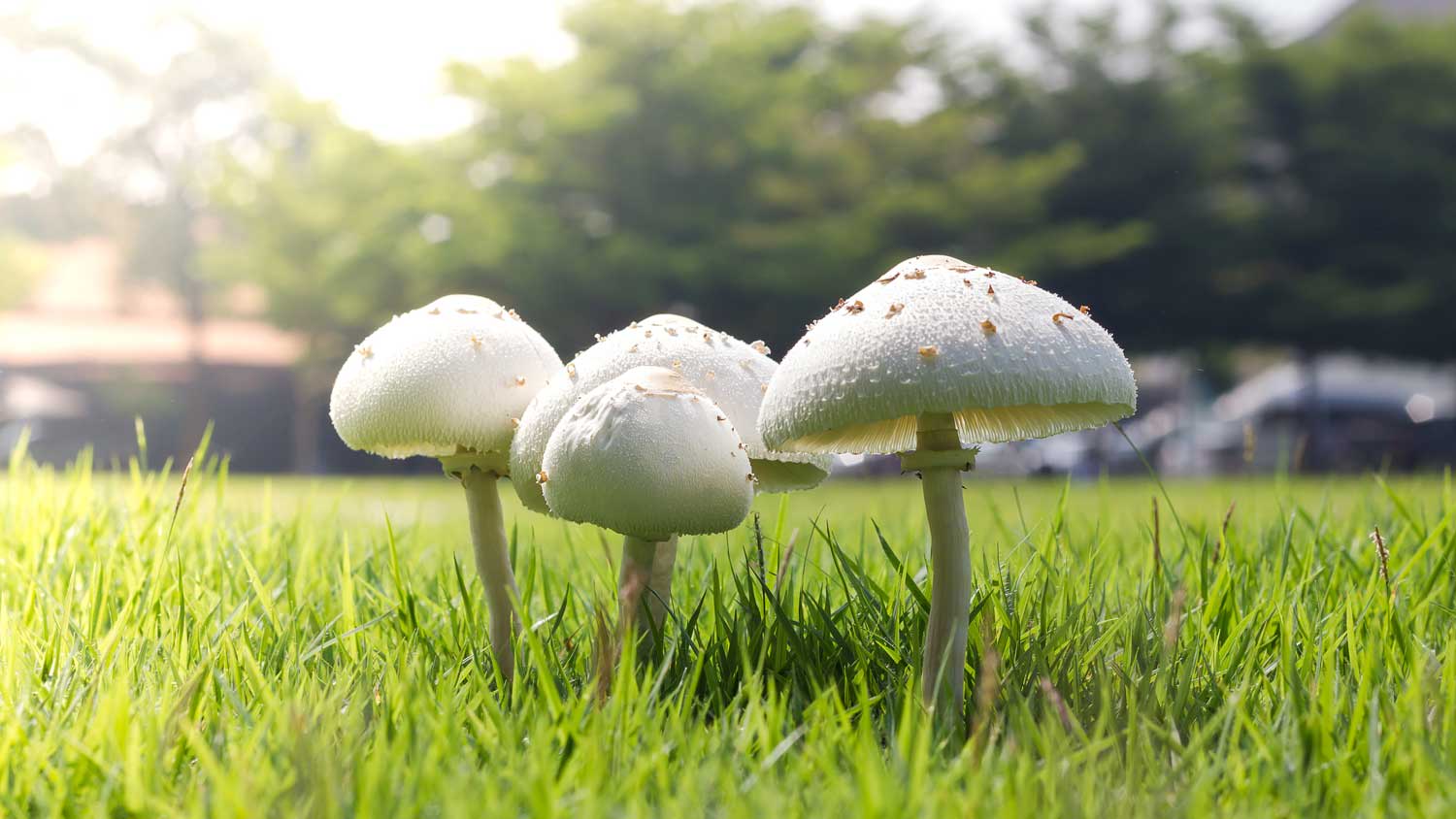
Mushrooms will grow anywhere there is enough moisture and nutrients in the soil. Here’s everything you need to know about why mushrooms grow in your grass.
Because your yard is for the fam—not for mushrooms
 - Derek Rose.png?impolicy=thumbnail)
Mushrooms growing in your yard thrive on damp, shaded spots with decaying organic matter like pet waste, brush piles, or old tree stumps.
Compacted soil creates poor drainage in your lawn, trapping moisture near the surface and encouraging mushroom growth where water can't flow away properly.
You can remove mushrooms by digging them out with gloves, drying the area by pruning shade trees, or applying baking soda to raise soil pH.
Hiring a local lawn treatment professional provides reliable help with fungicide application and lawn aeration, keeping mushrooms from returning while protecting your family and pets.
Mushrooms might be delicious on the grill, but those aren’t the ones growing on your lawn. (Seriously, please don’t eat mushrooms from your lawn.) If you have toadstools sprouting in your yard or at the base of your trees, you’re probably eager to get rid of them.
Here’s how to rid your space of these likely poisonous fungi and how to stop them from returning once and for all.
If you have a colony growing on a stump or brush piles, it’s important to get rid of it ASAP, as mushrooms can be toxic to people and pets. Whether you are looking for natural ways to get rid of mushrooms or prefer something stronger, there’s a remedy to match.
Here are some ways to say “see ya” to those pesky shrooms.
Dig out any visible mushrooms in the ground. Wear gloves to bag up the debris. You might have to remove some soil to get rid of the mushrooms. Be careful to contain the area as much as you can—you don’t want to spread the spores.
Mushrooms thrive in damp, shaded areas, so you can kill mushrooms by drying them out. Keep in mind that this method can kill grass as well since you can’t water as often or mow to encourage strong roots.
Here’s how:
Prune the branches on the tree or bush that’s giving them shade.
Improve the drainage in that area and stop watering that part of your yard.
Clean up the damp leaves and debris.
Don’t mow the area until the mushrooms are gone. Mowing can spread the spores far and wide.
Baking soda can be a treatment for controlling mushrooms. Sprinkle it right on the ground or mix with water and spray it in the area. Baking soda helps raise the pH level of the soil, something mushrooms don’t like. But don’t expect immediate results, and you might need to treat the area with baking soda a few times for it to work.
You’ll also want to consider that baking soda can harm and even kill grass before going with this mushroom-eradicating method.
Hydrated lime will also raise the pH level of the ground and help kill mushrooms. Pick up a bag at hardware stores and sprinkle or spray it on the area as directed on the package. Make sure to protect yourself with gloves and goggles when you work, and keep kids and pets out of the treated area for a few days.
If baking soda or lime didn’t do the trick, take things up a notch with a spray of vinegar. But don’t just use whatever you have in the kitchen; ask for weed-killing vinegar at your local hardware store.
Protect yourself with long pants and sleeves and eye protection when using vinegar or any weed killer. Also, know that this can kill your grass and any plants in the area.
You can find a mushroom fungicide that you spray on with a hose, or powders you sprinkle on the area. Fungicides are meant to kill the mushroom at the root rather than the ones that have already popped their caps out of the ground.
Make sure to follow the instructions on the label and wear protective gloves. Keep children and pets away from the treated area. Contact a lawn treatment company in your area for help if you need it.
All types of yard mushrooms love damp, shaded spots with decaying organic matter to feed off. An ideal spot for them is that soggy pile of brush and leaves back by the shed.
Here are the most common reasons mushrooms grow in yards:
Excess shade in your yard: Mushrooms thrive in dark, moist areas.
Compacted soil: Compacted soil doesn’t drain well, which creates the perfect conditions for moisture-loving mushrooms.
Pet waste: If you leave pet waste in your yard too long, mushrooms can grow.
Tree stumps: If you have spots in your yard where a tree once stood (whether there’s a stump or not), the dead roots may encourage mushroom growth.
Now that you know how to get rid of mushroom clusters in your yard, let’s focus on prevention. The following tips will help prevent wild mushrooms from coming back.
Rake leaves: Bag leaves up after raking and compost them rather than leaving a pile in your yard.
Scoop pet waste: Mushrooms thrive on pet waste, so get out there with the pooper scooper regularly.
Get rid of tree stumps: Hire a local tree removal company to remove old tree stumps to discourage mushroom growth.
Fix clogged gutters: Gutter issues can cause flooding in your yard, and mushrooms thrive in moist soil.
Aerate your lawn: When you create proper drainage, water can’t sit on top of your grass and encourage mushroom growth. If you need help, call a local lawn aeration company.
Prune large trees and bushes: Mushrooms love dark places, so trim your trees and let the sunlight into your yard.
If you need help maintaining your lawn, hire a local lawn care service to discourage mushroom growth by trimming grass and raking leaves. You can also ask them to remove mushrooms if they pop up.
The fungi kingdom produces some of the planet's most widespread organisms, so it’s no surprise to see a few shrooms in your yard. Here are the mushroom species you’re most likely to encounter on your property.
These white fungi have a quintessential mushroom shape: a bell-like cap with a round stem. They pop up in mid-summer, usually following an area’s rainy season, and last through early fall. While meadow mushrooms are edible, be careful before digging in because many toxic mushrooms look very similar.
You’ve likely come across these small brown mushrooms before, as they’re one of the most common varieties in North America, particularly in the damp Pacific Northwest. They can be toxic—but not deadly—if ingested in large doses, so most parents and pet owners will want to remove them.
Puffball mushrooms come in all shapes and sizes. Some are less than a half-inch in diameter and look like golf balls hiding in your yard, while others can reach 25 inches in diameter. Aside from their globular form, puffballs are easy to spot because they commonly grow in clusters.
If you see tan umbrella-shaped mushrooms growing in a circle, there’s a good chance they’re fairy rings. Expect to see them spring up in grassy areas from May to September. Keep in mind that fairy ring mushrooms become larger every year if you let them stick around. Like meadow mushrooms, this species has many non-edible lookalikes, so don’t judge them as safe based only on the circle pattern.
It would be nice if “stinkhorn” was a misnomer, but unfortunately, these mushrooms emit an odor widely described as smelling like decaying flesh. The long, cylindrical fungi come in various colors, including white, tan, and orange.
This distinctive mushroom is common throughout North America and Europe. Their ruffled caps lead to other popular names, like “shaggy mane” and “shaggy ink cap” mushrooms.
There are a few Conocybe species likely to appear in your yard, namely the milky conecap and the common conecap. The former are usually white in color, while the latter are brown. These mushrooms have a hood-shaped cap and long, thin stems.
Candace Nelson contributed to this article.
They did an excellent job! Super fast, helpful, and made the process so easy. Great job!
 1-800-GOT-JUNK?
1 tree was cut down and 5 others including a large willow tree were trimmed. The Grant Tree Service men were professional and cleaned up afterwards. The cost of the 6 trees were affordable. I am very happy with the results. I would hire them again.
 Grants Tree Service
Thank you very much for his professionalism and getting the job done the right way the first time. Great job!
 Alex & Alex
Great job! Friendly, timely and thorough.
 Eco Plumbers, Electricians, and HVAC Technicians
Seth was very professional, prompt in responding to queries about the work required , gave sincere advice as to what would be best for tree trimming and did the job timely.
It was a difficult job and Robert and his son worked diligently to get it done.
Window Depot did an amazing job on my deck. I wasnt sure what I wanted to do, but their composite decking was affordable and will last a long time. I am excited to have family over, and I am no longer embarrassed by my backyard. Jeff and the ground crew were polite, respectful, and caring for...
 Window Depot USA of Central Ohio
He did the work in a timely manner and I would use him again!!
 Quantum Waterworks Waterline & Drain Cleaning Services, LLC
Cameron and his crew did an excellent job. On time, professional and courteous. My driveway looks awesome!!
 All Star Paving and Sealing
The guys did an outstanding job and we had a great experience with CarifaTile. I appreciated that Joe reviewed the quotes with me and set expectations prior to the install. The crews showed up as scheduled and always left the areas clean upon leaving the house. We will definitely use...
 CarifaTile
From average costs to expert advice, get all the answers you need to get your job done.
Mushrooms will grow anywhere there is enough moisture and nutrients in the soil. Here’s everything you need to know about why mushrooms grow in your grass.
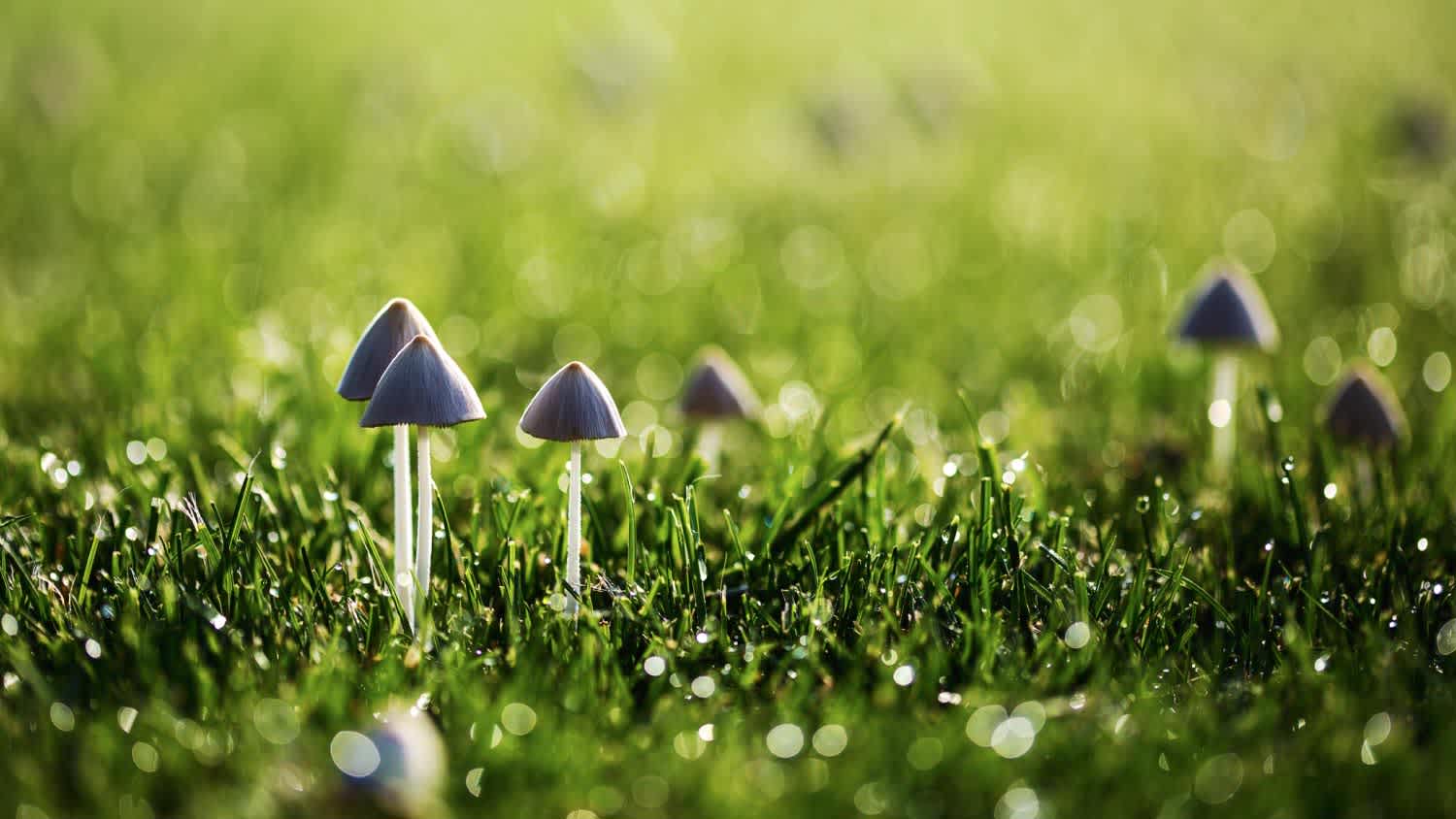
You can find dozens of different mushrooms in your yard, but they’re not all safe to let grow. Learn more about identifying common yard mushrooms.
If your yard is filled with holes, we can teach you how to get rid of gophers and keep them away from your property so you can restore your landscape.
Foxtail grass is a nuisance in yards and pastures, and is dangerous to animals. There are several ways to get rid of foxtail weeds without killing your grass.

Falling asleep to the purring of your favorite feline is great, but the dream quickly turns to a nightmare when you feel those biting fleas. So how do you get rid of those dreadful cat fleas for good?
Discover the top six most effective tips and tricks of how to get rid of stickers in your yard and keep them from coming back.