
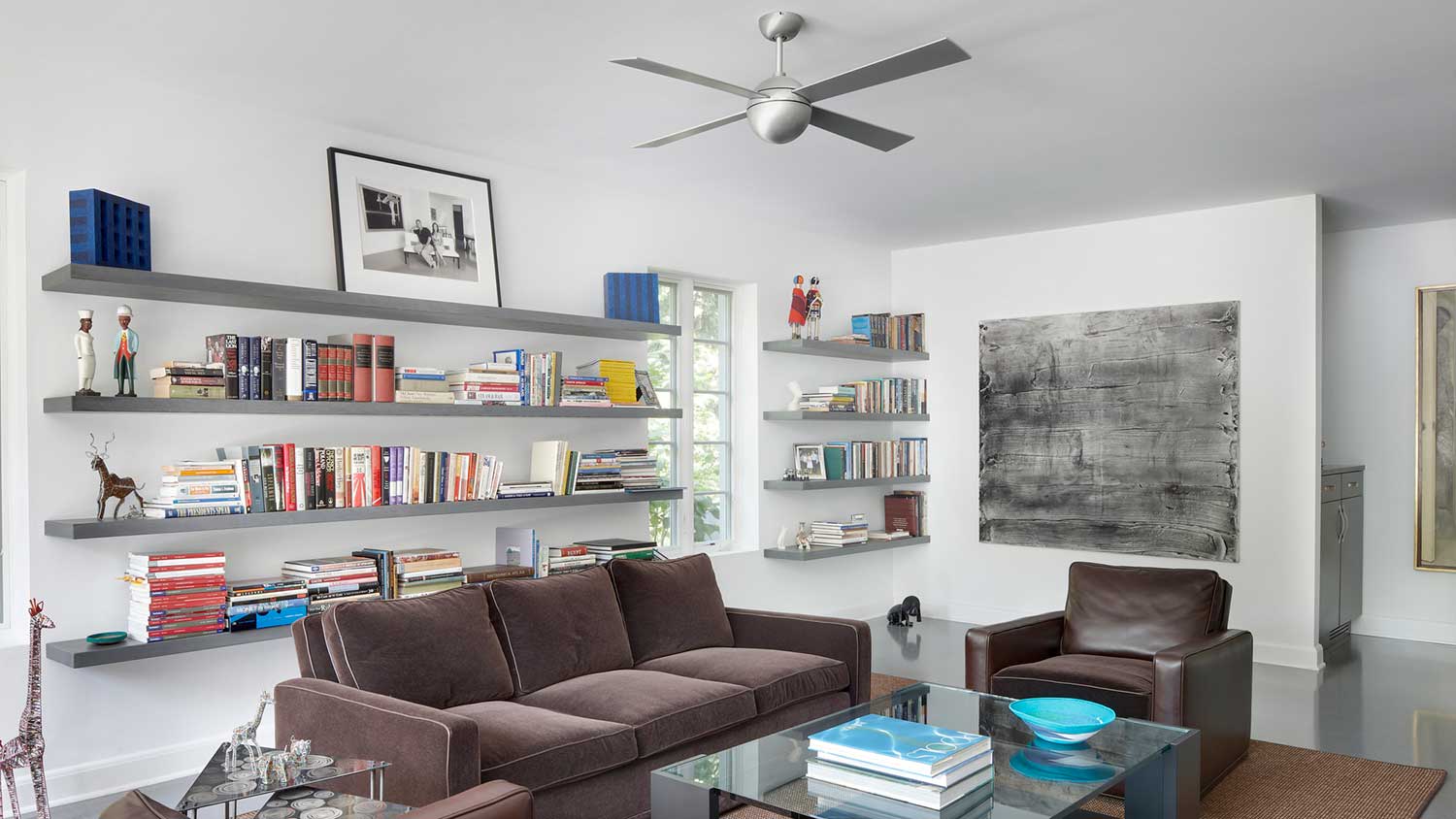
If your ceiling fan stops working due to a bad motor or broken pull chain, here’s what you can expect to pay to get it fixed.
Keep your ceiling fan moving with the right amount of blades

Choosing between a 3 blade and a 5 blade ceiling fan depends on your style preference, as both move air effectively.
Expect to pay $145 to $355 for professional ceiling fan installation, with the number of blades having minimal impact on cost.
Your best choice depends on blade pitch, motor speed, blade size, and whether you prioritize modern aesthetics or maximum air circulation.
Hiring a local ceiling fan installation professional keeps wiring safe and ensures your fan is balanced and mounted securely for smooth operation.
Installing a new ceiling fan can help you achieve optimal comfort and style in your living space. However, choosing between three blades or five in your next fan can make you wonder what’s the difference? The good news is that the answer lies largely in your personal preferences and style. Use this guide to figure out the differences and determine whether a three-blade or five-blade ceiling fan is best for you.

Choosing between a three-blade and five-blade ceiling fan largely comes down to personal preference. The shape, material, speed, and pitch of the blades will have much more of an impact than the number of blades. However, there are some differences between three-blade and five-blade fans when it comes to energy efficiency, airflow, appearance, pitch, and speed.
| Energy Efficiency | Uses less power and is more efficient | Uses more power and is less efficient |
| Airflow | Pushes less air because it has less blade surface area | Pushes more air because it has more blade surface area |
| Appearance | More modern | More traditional |
Energy-efficient appliances benefit your wallet and the environment. When a fan has fewer parts it uses less energy to rotate, which means it’s using less electricity. Less electricity use will cause your energy bills to drop along with your environmental impact.
Since a three-blade ceiling fan has fewer parts than a five-blade, they take the cake for energy efficiency. Some three-blade fans even use as little power as simple household tasks like charging your phone.
The shape and size of your fan’s blades have a large impact on the volume of air it can push. Five-blade fans can often push more air than a three-blade fan due to the fact that they have a larger total surface area of blades. The larger the surface area of the blades, the more sweeping area the fan has.
However, if a three-blade fan had larger blades than a five-blade fan, it would be able to move more air. Choosing the size that’s best for your space depends on the size of the room and the amount of airflow you’re looking for.
When it comes to aesthetics, three-blade ceiling fans are often the choice for newer homes. They offer a more sleek, modern look than five-blade fans.
When choosing a fan, you typically have the option between wood, stainless steel, extruded aluminum, or high-end plastic. The materials you choose for the fan can have a large impact on its appearance. For example, a sleek wooden five-blade fan can give more modern appeal than a traditional plastic three-blade fan. The blade material that’s best for your home depends on the elements and aesthetic of the room.
The blade pitch, also known as the blade tilt, refers to the angle of the blade position. The pitch has a large impact on how much air is circulated by the fan. The bigger the degree of angle, the larger the surface area of the blade, which means more airflow. A 12 to 15-degree pitch is the optimal choice for a ceiling fan.
While five-blade fans can produce more airflow for the most part, a three-blade fan that has a steeper pitch will produce more air than a flatter-pitched five-blade fan.
The speed that your ceiling fan can reach will also determine how much air it can move. At the same speed, a five-blade ceiling fan can move more air than a three-blade ceiling fan. However, as the number of blades increases, more drag will be put on the motor causing it to move air slower.
Choosing between a three-blade and five-blade ceiling fan will depend largely on your personal taste. Three-blade ceiling fans are often favored for a more modern, aesthetically pleasing look, while a five-blade fan offers more classic appeal.
When choosing between a three-blade and a five-blade with the same shape, material, pitch, and speed, a five-blade ceiling fan is the way to go if you’re looking for more airflow. In a five-blade fan, the distance between the blades is smaller and offers a more consistent wind production.
Installing a ceiling fan costs an average of $250, with a price range of $145 to $355. The actual price depends on factors like the type of fan and any accessibility issues for the laborers. The price also rises significantly if the job requires new wiring. The fan itself is a primary cost factor here, coming in at anywhere from $50 to $1,400. Adding lights increases the fixture cost by about $150, as does integrating a remote control. The most budget-friendly option is to install a simple fan with pre-existing wiring.
This is potentially a DIY-friendly project, though it depends on the specifics of the job and your overall experience level. If you’re swapping out an old fan with a similar model that attaches in the same way, you can easily do it yourself. Just make sure to have a sturdy ladder and an extra set of hands for balance.
However, things get more dicey with jobs that require new wiring or the installation of complex fan designs. In these cases, contact a local ceiling fan installer. These pros can easily handle complex jobs. If they run into an electrical issue, they can outsource the job to an electrician. Handling any of this on your own is potentially dangerous. The only downside here is the cost of labor, which adds $50 to $200.
Great company! Price was competitive, technician showed up on time and completed the job (exterior electric Radon fan replacement) quickly. Would hire them again.
 MaGen Property Inspections and Radon Mitigation
Best decision was going with PatchMaster. Greg was wonderful / responsive & Dave did wonderful work. Got me on the schedule quick, matched my popcorn ceiling perfectly, finished the job quick, and was so kind & reasonably priced. Will absolutely be hiring again
 PatchMaster
Jeff was a consummate professional. Responsive, courteous, and focused on meeting our needs. I had a small project of installing and replacing two ceiling light fixtures. He responded to my Home Advisory inquiry within 24 hours and in a span of two weeks our light fixtures were installed. ...
Involved an extensive bathroom remodel, including removing tub & installing walk in shower, new drywall, custome tile work to ceiling, plumbing, etc. Overall, job was done on time and on budget. Nick & his team were very professional and had high attention to detail. Quality was great. Highly...
 Stamos Flooring and Remodeling LLC
Mike and his crew did a great job working through a very challenging task. The job required a full demolition of our ceiling, removing the blown in insulation and removing all the material from the site daily. It involved multiple inspections from the city and many challenges to get the...
 Rising Height Unlimited
Awesome company. Had a jacuzzi tub taken out and replaced with huge walk in shower with partial glass enclosure. Onyx to the ceiling with a decorative border, moved plumbing and installed hand held shower, new ceiling, flooring, and paint. Replaced window with glass block. Everything was done...
 Columbus Bath Design
There isn't much I can add that hasn't already been said about Rhino Painting. Outstanding service and communication from the first phone call through the end of the project, we could not be happier with this company. They painted our kitchen, living room, ceiling, starirwell and wood work,...
 Rhino Painting & Color Consulting LLC
Charlie recommended a separate fan with new lighting to clear steam from the room better. Several weeks ago I contacted Charlie via email to ask about pricing and scheduling, after one follow up he did reply with cost and said it would be about two weeks before he could do the work. I replied...
 Settle Muter Electric
Scott was awesome! This job was not an easy one, especially the relocation of the cable in the Great Room. I had called several other companies on Angie's list only to be turned away due to the tight timeline I was under or the anticipated difficulty of the work. <br /> Scott was realistic...
 SIGNAL DIRECT SYSTEMS
After struggling throgh attempts to fix a persistently leaky skylight, I called Bob at Skylights Plus to check it out. Given the fact that previous attempts to repair the flashing/roofing around the skylight didn't work, he recommended a full replacement. <br /> Even though the weather...
From average costs to expert advice, get all the answers you need to get your job done.
If your ceiling fan stops working due to a bad motor or broken pull chain, here’s what you can expect to pay to get it fixed.

Discover the cost to install a ceiling fan, including labor, materials, and tips to save. Learn what impacts your price and how to budget for your project.
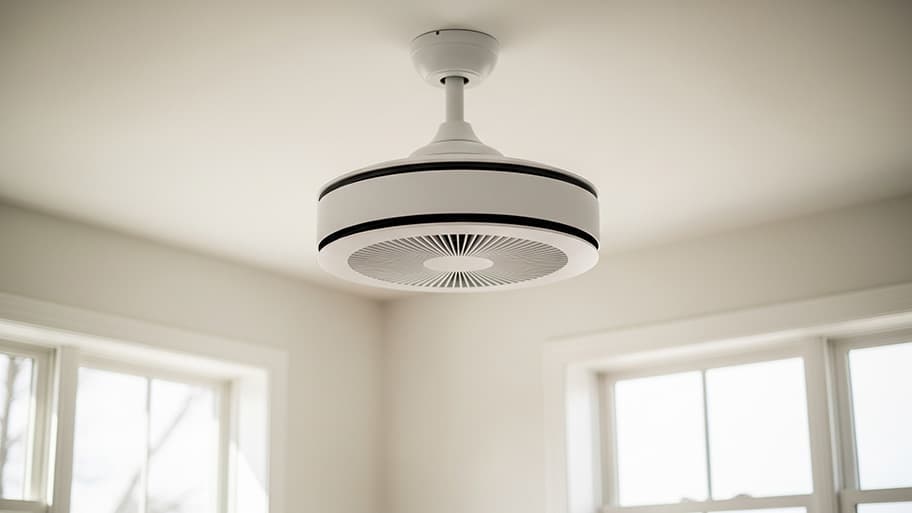
Are traditional ceiling fans slowly becoming a thing of the past? The famously quiet and efficient bladeless fans are now appearing right above our heads.

Ceiling fans cool down your home while stylishly accenting your space. With a variety of types of ceiling fan on the market to choose from, you can’t go wrong.

Did you know your ceiling fan can spin in two different directions? This quick-reference guide shows you why and how to change your ceiling fan direction.
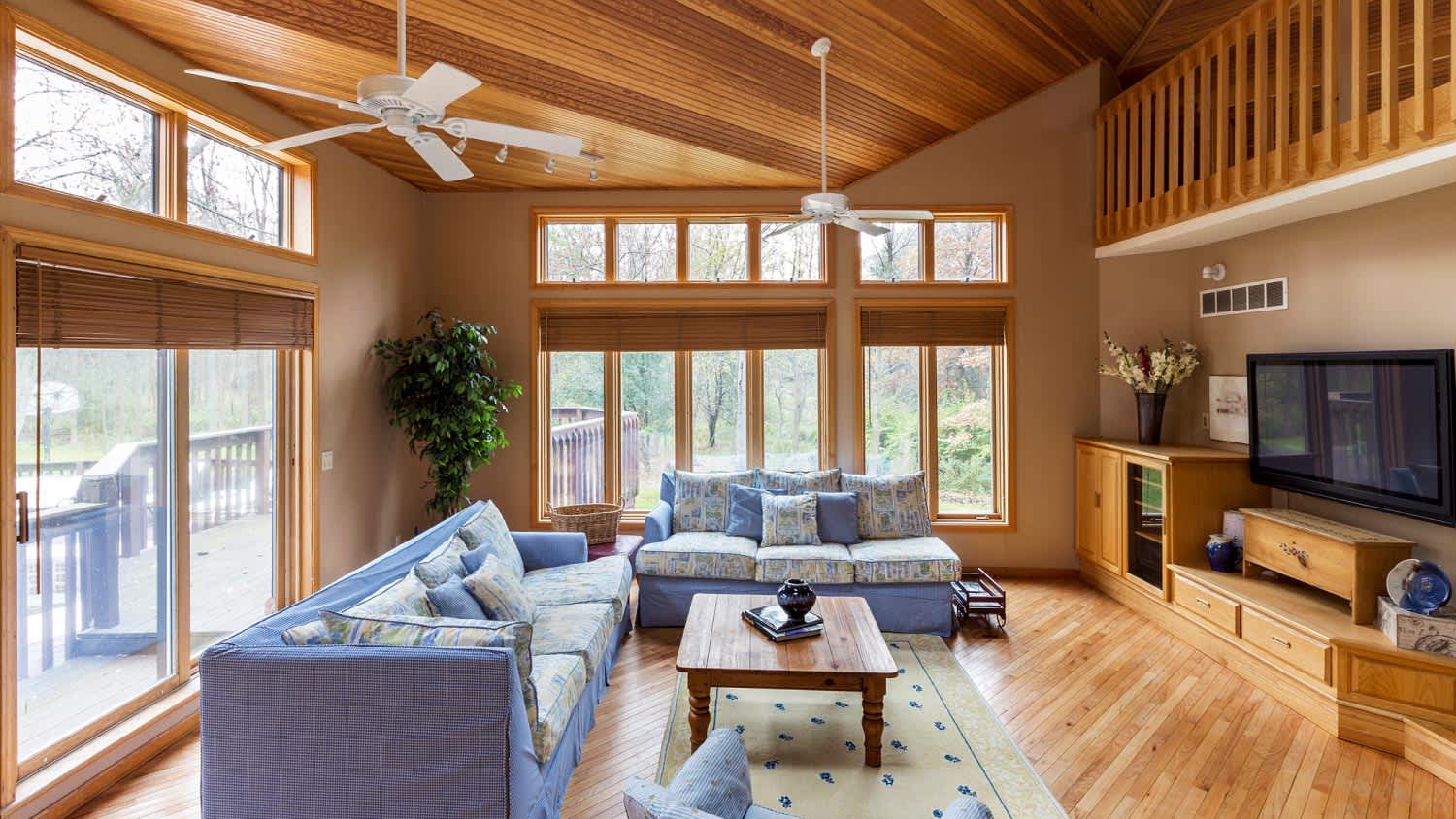
With the right size, ceiling fans are an energy-efficient way to cool a room. Use this ceiling fan size guide to find the perfect model for your space.