
•
Find out the average concrete delivery cost in Minneapolis, MN. Learn what you can expect to pay for local concrete delivery and plan your next project.
Concrete driveway service costs depend on your project and location. Check with a local pro for your specific job.

Homeowners spend between $4 and $9 per square foot for a new concrete slab in Minneapolis, MN.
Materials influence costs, with fiber mesh costing the most and standard concrete costing the least.
Hiring a Minneapolis concrete pro provides reliable help with patio installations and saves you on effort.
Concrete slab costs in Minneapolis, MN, fall around $5,659 on average but range from $3,773 to $7,546, depending on your materials, labor rates, and the scope. The city’s cost of living is 5% above the national average, so anticipate spending slightly more overall.
When planning your budget for a concrete slab in Minneapolis, MN, the size, type of project, and materials are some of the biggest cost factors to keep in mind.
On average, a new concrete slab will cost between $4 and $8 per square foot or $115 per cubic yard. You could pay as little as $4 per square foot for thin slabs used in a concrete walkway or sidewalk. On the other hand, you might pay up to $18 per square foot for a thicker and more complicated home foundation.
The cost will be determined by the mixture’s design and the slab’s size and thickness. Other factors—such as subbase preparation, forms, finishing, reinforcements, and the local price of concrete—can also affect concrete slab costs.
| Concrete Slab Size | Square Feet | Average Cost |
|---|---|---|
| 10x10 | 100 | $600 |
| 20x20 | 400 | $2,400 |
| 30x30 | 900 | $5,400 |
Pre-cast concrete slabs often cost between $5 and $15 per square foot for standard applications, though specialized designs might cost at least $30 per square foot. These require minimal on-site labor, but delivery and installation equipment can add to your total bill.
Pre-cast components are often more affordable for designs with a high level of precision or repetition, like home foundations or sidewalk squares. Otherwise, a standard slab of concrete poured on-site might be more affordable; these cost between $4 and $12 per square foot.
Professionals use a few types of concrete for residential slab construction, and they vary slightly in price per square foot. The type of concrete that’s best for your project will depend on the load the slab needs to support, as well as soil conditions and climate in your area. Minneapolis, MN, benefits from high-strength concrete, which can handle the city's freeze-thaw cycles with fewer chances of cracking.
Speak with a concrete professional near you to determine which type is best, and then use the table below to get an estimate for your total.
| Type of Concrete | Average Cost per Sq. Ft. |
|---|---|
| Standard | $6 |
| Rebar reinforced | $7 |
| High-strength | $8 |
| Fiber mesh | $10 |
What type of concrete slab you need depends on how you’ll be using it—for example, as a foundation for your home, to support an RV, to define a backyard patio, or to build concrete steps.
Keep in mind that prices will vary even within these categories. The cost of a concrete patio, for example, will total between $2 and $16 per square foot, depending on the type of finish. If you need additional drainage below your concrete, be sure to calculate the cost of adding sand or gravel under the slab.
Here's the average concrete slab cost by type of project:
| Project Type | Concrete Slab Size (Sq. Ft.) | Average Cost |
|---|---|---|
| Shed foundation | 80 | $480 |
| Parking pad | 200 | $1,200 |
| Patio | 450 | $2,700 |
| Garage floor | 350 | $2,100 |
| Driveway (1-car) | 240 | $1,440 |
| Driveway (2-car) | 500 | $3,000 |
| RV pad | 640 | $3,840 |
| Mobile home foundation | 1,620 | $22,680 |
| Home foundation | 2,050 | $36,900 |
The thickness of your concrete slab will affect pricing. Thicker slabs use more concrete per square foot, requiring more materials and labor to pour. How you intend to use the slab will determine the ideal thickness, which you can then use to estimate your total project cost.
| Project | Average Thickness (In.) | Average Cost per Sq. Ft. |
|---|---|---|
| Patio | 4–6 | $6–$9 |
| Walkway | 4 | $6 |
| Sidewalk | 4–6 | $6–$9 |
| Driveway | 4–8 | $6–$12 |
| Foundation | 8–10 | $12–$18 |
Labor costs between $2 and $3 per square foot to pour a concrete slab, which includes the price of building or setting concrete forms, delivering and mixing concrete, and pouring the slab. On average, labor makes up between one-third and one-half of the total cost of your concrete slab project.
Concrete grade indicates the minimum compressive strength that a concrete mix (made from cement, sand, water, and aggregates) is expected to achieve after 28 days of curing. It determines the concrete’s load-bearing capacity and durability.
Higher grade numbers signify more durable concrete, which comes at a higher cost. In Minneapolis, MN, aim for concrete with a pounds per square inch (psi) of 3,500 to 4,500 for driveways and other high-traffic areas and 3,000 psi for light-traffic areas.
It's important not to confuse this with site grading, which refers to preparing the ground to ensure a stable, well-draining foundation before installing a concrete slab. Site grading costs can increase if the land has a slope, trees, large rocks, or other obstructions. The grading process involves excavation, leveling, and then adding and compacting a subbase, such as sand or gravel.
The concrete slab’s finish—or the surface treatment you choose—also influences pricing. Standard finishes (such as broom and smooth trowel) cost less than decorative finishes (such as stamped, stained, or polished concrete). Here’s how some types of concrete slab finishes affect the cost, noting that prices also vary based on project size, location, and installer rates:
| Concrete Slab Finish | Average Cost Range (per Sq. Ft.) |
|---|---|
| Broom finish | $1–$3 (or included in base price) |
| Smooth trowel finish | $1–$3 (or included in base price) |
| Exposed aggregate | $7–$15 |
| Stamped concrete | $10–$18 |
| Stained concrete | $8–$15 |
| Polished concrete | $3–$12 |
Locations that are difficult to access, like build sites with steep slopes or numerous trees, can drive up your concrete slab costs. Using a concrete mixer is the most cost-effective way to deliver and pour concrete for your home. If that’s not an option, professionals must move and pour the concrete manually, which will significantly increase labor costs.
Most concrete slabs benefit from reinforcement to prevent cracking and improve structural performance—something alternative concrete materials like asphalt don’t use for structural strength. There are two primary types of reinforcement: fiber mesh and rebar reinforcement. While options help strengthen concrete slabs, rebar-reinforced concrete is best in the city’s notorious freeze-thaw cycles for its tensile-strengthening properties.
Fiber mesh involves mixing synthetic fibers into the concrete to help control surface cracking and shrinkage.
Rebar reinforcement—the standard option for structural slabs—uses steel bars placed in a grid pattern within the slab to provide strength and resist cracking.
Here’s how the option you choose will affect your pricing:
| Concrete Reinforcement Type | Added Cost per Sq. Ft. |
|---|---|
| Fiber mesh | $2–$3 |
| Rebar | $0.50–$1 |
If your previous concrete slab is on the cusp between repair and replacement, consider the cost of concrete repairs overall. Filling minor cracks and resealing concrete costs as little as $0.21 per linear foot, while full concrete resurfacing costs $3 to $5 per square foot. Both repairs are more affordable than the $6 or more per square foot you’d pay to pour a new slab — not including the added cost of demolishing and hauling away the old one.
On the other hand, if you’re dealing with serious damage—such as unlevel concrete, sinking, or structural issues—concrete replacement might be a better long-term option.
Concrete pros in Minneapolis, MN, charge between $40 and $160 per hour to pour a concrete slab. Your pro will handle setting, delivering, mixing, and pouring the concrete. Labor typically makes up one-third to one-half of the overall cost. For the most professional services, ensure that your pro has a residential building license through the Minnesota Department of Labor and Industry (DLI) to pour concrete in Minneapolis and is bonded and insured.
Contractors for concrete projects also help you acquire a permit, if necessary. Small structures in Minneapolis may not require a permit, but larger construction projects typically require one. Minneapolis building permit fees depend on the construction value.
The minimum fee starts at $84.20 and increases by the valuation. For example, a project estimated between the $2,001 to $25,000 range has a fee of $104.20 for the first $2,000, plus $20.60 per $1,000 up to $25,000.
Yes, pouring a concrete slab has a return on investment (ROI) ranging from 50% to 90% and can increase your home value significantly. Just how much of an increase you could see depends on the project type.
Pouring a concrete patio has a high home value increase, adding anywhere from $1,725 to $3,100 to the value of a home. Meanwhile, pouring a concrete driveway increases your home value anywhere from $3,000 to $10,000.
Professionally-poured concrete slabs in Minneapolis, MN, can especially increase a home’s value for driveways and walkways by making it easier and safer to exit and enter your home in extreme winter conditions.
To help homeowners plan their next project, Angi provides readers with carefully researched cost data and upholds strict editorial standards. We start with national average project costs, which we collect by analyzing competitor information, retailer material costs, and input from professional contractors. We then apply local price index data to calculate location-specific estimates that reflect what homeowners typically pay in their local area. To do that, we use data from the U.S. Bureau of Economic Analysis (BEA), including its Regional Price Parities (RPPs), which measure price differences across cities. This helps us account for differences in labor, materials, and overall cost of living, so estimates in higher- or lower-cost areas better reflect real-world local pricing.
Every estimate undergoes a thorough editorial review to verify accuracy, consistency, and alignment with observed market conditions.
Want to help us improve our cost data? Send us a recent project quote to [email protected]. Quotes and personal information will not be shared publicly.
I removed a large shrub next to our home entrance. We hired Aiden to install a stamped patio. He did a great job, very profesional and responsive. I would recommend CB Concrete for any driveway, step or patio projects you have.
 C.B. Concrete and Masonry, LLC
I had new front steps and a patio by my back yard installed by Riteway Concrete. Mike was very punctual on work days and answered all my questions and is clearly very capable in concrete work. We made several adjustments in the initial plan which made for beautiful finished surfaces and...
 Riteway Concrete, Inc.
I hired them upon recommendation from a landscaper that did work for me to remove and replace the concrete front walkway from the sidewalk to the front steps of my house and also to replace the front steps and front stoop. What was there was very old and looked it. They were very efficient,...
 Divine Designs General Contracting
My problem is not listed on this website. I chose concrete because I had a problem with my driveway. Troy Holliday called me on a Sunday because I had what looked like a small sinkhole in my asphalt driveway. He came over within 30 minutes. A few days later Troy and his crew repaired the...
 Holliday Construction, Inc.
It was a problem finding companies that do alley driveways but they have the smaller dozer and roller that fits in the alleys. This was also two alley driveways as my neighbor's and mine are one big piece. We confirmed the job one evening and the next morning they were here. The job was...
 Big Dog Blacktop
Great work at affordable pricing! Highly recommend! The concrete looks amazing!
 Twin Cities Concrete Works
So impressed with them - my request for a quote wasn’t in but an hour and I already had a response….very professional and competitive price. Had snow the first week and they had it all taken care of quickly and well. I would definitely recommend Cured Concrete to others!
 Cured Concrete Solutions LLC
I changed how I wanted driveway finished three times and Troy was accommodating each time until I finally made up my mind what I wanted to do. The work was second to none. Thank you Troy great job, Avery
I highly recommend Crosstown Concrete. The customer service and communication were amazing. The work was completed one day earlier than quoted. The crew cleaned up every day. This was our second project with them.
 CROSSTOWN CONCRETE & BRICK PAVING INC
Inline concrete did excellent work. They were polite, efficient, explained their process where I was curious about it and even managed to exceed my expectations. No more water or ice collecting in awkward spots. I'm incredibly relieved. I would absolutely hire them again!
 Inline Concrete, LLC
From average costs to expert advice, get all the answers you need to get your job done.
Find out the average concrete delivery cost in Minneapolis, MN. Learn what you can expect to pay for local concrete delivery and plan your next project.
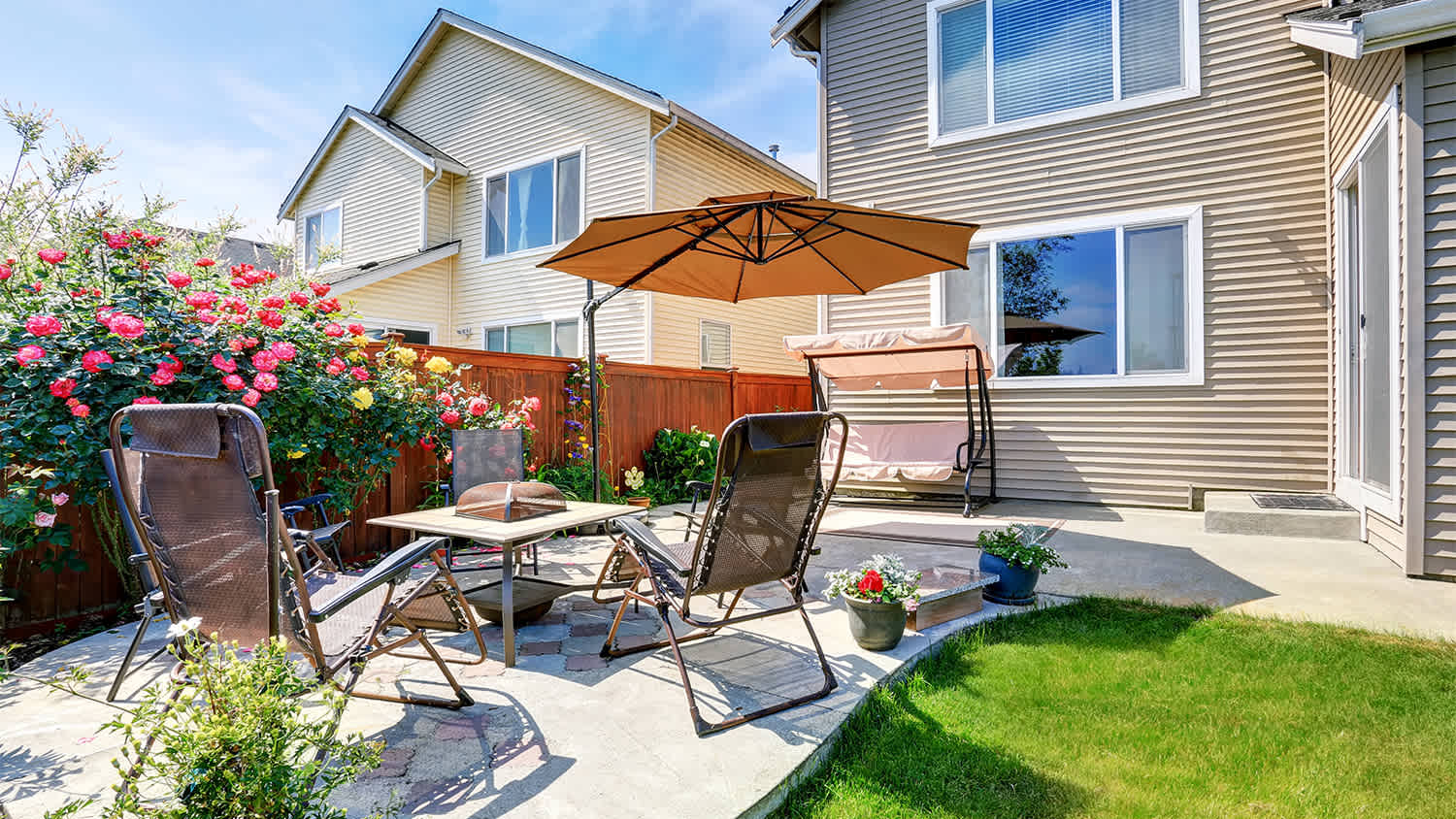
A concrete patio adds outdoor living space to your home. Learn how much a concrete patio costs in Minneapolis, MN, and the factors affecting the project price.
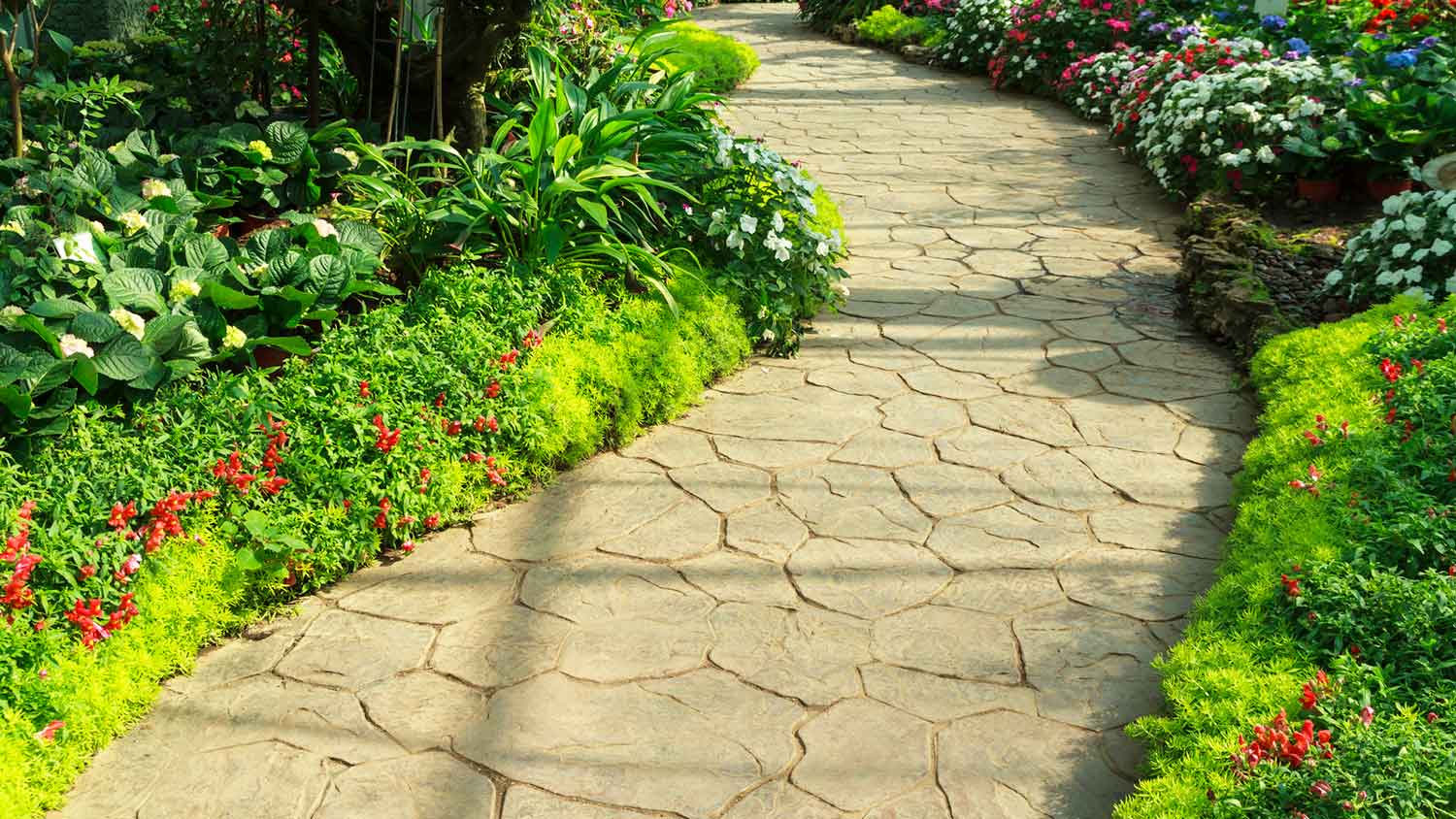
Discover stamped concrete costs in Minneapolis, MN. Learn about installation prices, cost factors, and how to save on your stamped concrete project.

When your patio, driveway, or walkway needs a new look, can you pour concrete over concrete? Read on to learn when it does—and doesn't—work.
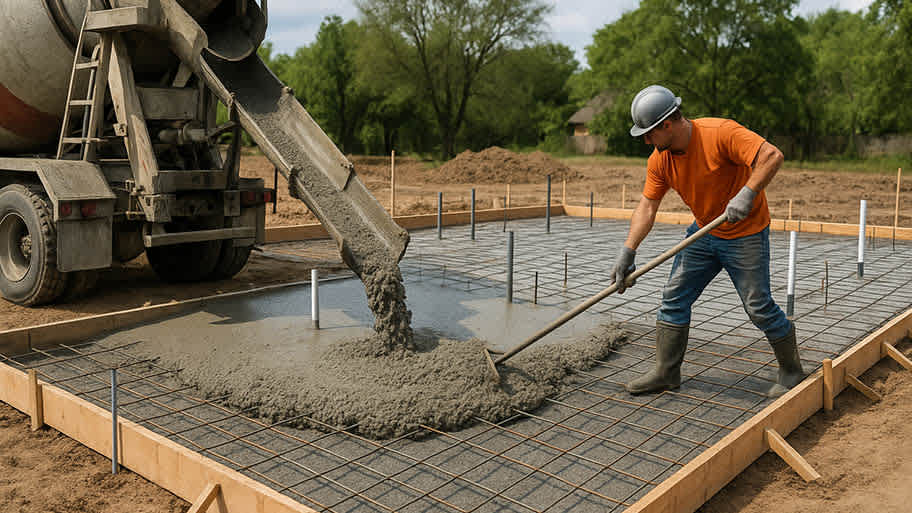
A foundation for a new-build home averages around $7,092. Find out all the factors that affect the cost of a foundation in Minneapolis, MN and how to save money.

Is your sidewalk in need of some TLC? Use this comprehensive guide to look at sidewalk repair costs in Minneapolis, MN, so you know what to expect.