
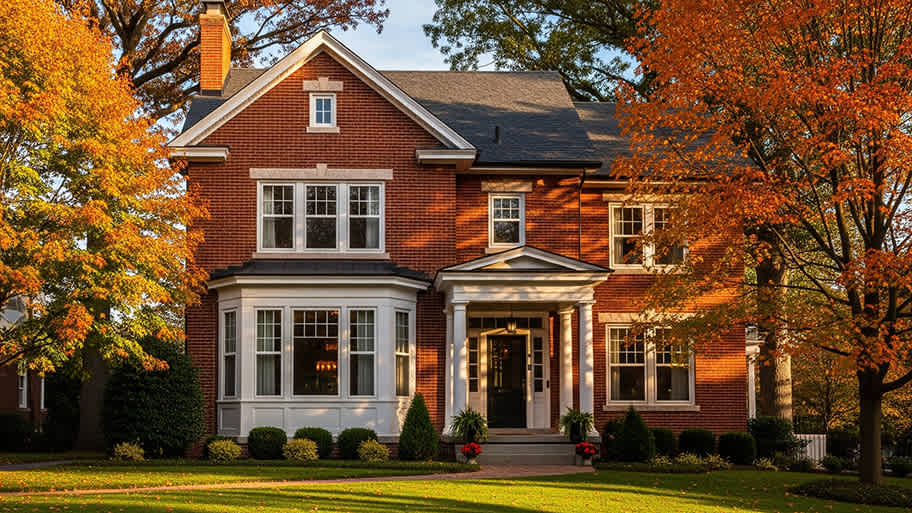
New insulation makes your home more comfortable and boosts energy efficiency. Use this guide to budget for insulation installation costs in Indianapolis, IN.
Insulation service costs depend on your project and location. Check with a local pro for your specific job.

Blown-in insulation in Indianapolis costs $1.85 to $7.85 per square foot.
Homeowners should budget for R-60 insulation for attics to comply with Indiana's requirements.
With the city's home inventory on the older side, you may need to budget for asbestos insulation removal as an extra cost.
Extreme local winter temps make blown-in insulation a great way to reduce energy bills and boost home value.
With the average blown-in insulation cost in Indianapolis at $1,751, locals pay around 5% above the national average. Overall, costs for this project can range from $1,114 to $2,540, depending on factors such as the size of your home and the R-value you select. Use this guide to budget for your Indianapolis home's insulation upgrade.
Blown-in insulation costs in Indianapolis, Indiana, can vary depending on the type of insulation, with options including fiberglass, wet-spray cellulose, dense-pack cellulose, rockwool, and natural, each in its own price tier. The amount of blown-in insulation you need, based on your home's size and layout, is the biggest price factor in most cases.
The biggest cost factor is the size of the area that requires insulation. A larger area requires more insulation and labor, increasing the overall price. This metric is calculated by multiplying your square footage by the cost per square foot of your chosen insulation materials, which are detailed below. However, a general range for blown-in insulation per square foot is $1.85 to $7.85, depending on the type.
| Area in Square Feet | Blown-in Insulation Cost Range |
|---|---|
| 500 | $925–$3,925 |
| 1,000 | $1,850–$7,850 |
| 1,500 | $2,775–$11,775 |
When measuring the efficacy of any insulation material, it all boils down to the R-value. Generally speaking, higher is better, though there are two metrics to consider. There’s the overall R-value and the per-inch R-value. For example, if you want a total R-value of 30, you’ll need ten inches of insulation at an R-value of 3.0 per inch. Materials with higher R-values cost more, like sheep’s wool, but you don’t need as much material to complete the installation.
Below is a breakdown of R-values and the corresponding prices:
| R-Value | Number of Bags per 1,000 sq. ft. | Description | Price Range |
|---|---|---|---|
| R-13–R-21 | 7–10 | Ideal for Indianapolis walls | $240–$346 |
| R-30–R-49 | 15–20 | Recommended for Indianapolis floors | $525–$1,680 |
| R-38–R-49 | 20–26 | Not ideal for Indianapolis homes | $1,365–$1,680 |
| R-49–R-60 | 26–32 | Recommended for Indianapolis attics | $1,680–$2,100 |
The cost to install blown-in insulation depends on the type of insulation you choose for the project. Anticipate spending anywhere between $0.52 and $3.25 per square foot for materials, not including installation. Below is a breakdown of each blown-in material type and how much it costs.
| Type of Blown-In Insulation | R-Value per Inch | Average Cost per Square Foot |
|---|---|---|
| Fiberglass | 2.5 to 3.5 | $0.52 to $1.15 |
| Wet-spray cellulose | 3.2 to 3.7 | $0.63 to $1.89 |
| Dense-pack cellulose | 3.2 to 3.7 | $2 to $2.40 |
| Rockwool | 3.0 to 3.7 | $1.47 to $2.45 |
| Natural wool | 3.5 to 3.8 | $1.57 to $3.25 |
Most Indianapolis contractors handling blown-in and other types of insulation price jobs by the square foot. This option lets you view how labor and material costs are allocated based on the project's size. Within labor costs, contractors nest costs for items such as contractor insurance and operational expenses.
Most insulation installers in Indianapolis charge between $2.75 and $4 per square foot for labor. With Indianapolis neighborhoods featuring many older homes, you may need to budget for the removal of insulation materials containing asbestos. In this case, budget for an extra $3 to $7 per square foot for this project.
Indianapolis homeowners must obtain permits for new insulation to ensure that updates comply with Indiana energy codes, which require special markers and R-values. A project like this is subject to a $30 base fee up to the first $3,000 in value—with an additional $69 for each additional $1,000 in value up to $25,000.
Indianapolis has some of the strictest requirements for contractor insurance in the country. To qualify for local licensing through the Department of Business & Neighborhood Services (DBNS), contractors must provide proof of a $10,000 surety bond, general liability insurance of at least $500,000, and workers' compensation (when applicable). Overall, this can add $50 to $300 per month to premiums, increasing the operating cost.
While the labor for insulation installation is exempt from sales tax charges in Indianapolis, homeowners should budget for an additional 7% on top of material costs to cover Indiana state sales tax.
While Indiana doesn't have a state licensure program, all Indianapolis contractors must be licensed through the city's Department of Business and Neighborhood Services (BNS). The fee to obtain a license is $247.
With wintertime temperatures in Indianapolis averaging 23 to 36 degrees Fahrenheit, keeping homes warm while taming energy bills is on the minds of locals. Increasing energy efficiency with new blown-in insulation is a smart way to boost home value by making lifetime ownership less expensive compared to similar homes without the same upgrade.
Home is the most important place on earth, which is why Angi has helped more than 150 million homeowners transform their houses into homes they adore. To help homeowners with their next project, Angi provides readers with the most accurate cost data and upholds strict editorial standards. We extensively research project costs to develop the pricing data you see, so you can make the best decisions for you and your home. We rely on reputable sources, including the U.S. Bureau of Labor Statistics, academic journals, market studies, and interviews with industry experts—all to ensure our prices reflect real-world projects.
Want to help us improve our cost data? Send us a recent project quote to [email protected]. Quotes and personal information will not be shared publicly.
Chris and Beau did a great job on our attic insulation! They both came to the house for a consultation. They took thorough notes and explained everything in laymen’s terms. They completed the work themselves and made sure to clean up afterwards. Very happy with our results and would work with...
 BC Services
James and his crew came out to our home and removed insulation that was damaged from having raccoons in our attic. They were on time and clean with the work, given the circumstances. They installed the new insulation and were all finished up at the end of the day! I will definitely use...
 JL Wilson, LLC
Chris and his team were awesome. It felt like having friends over. Plus they proactively offered ways for me to save money at their own expense. That kind of honesty has had me rebook them for another home and also referring them to anyone that needs insulation.
Had insulation added to our attic. Chris was quick to respond to our request for a quote. Price was good and the work was done within a week. It’s hard to get anyone out to perform any kind of work these days so we were very pleased with the promptness.
Advanced Insulation was professional from the quoting process to the completion of the work. Great job!
 Advanced Insulation
I had Frye install 4 recessed lights in the joists of a room I had gutted. I had said I was going to supply the light fixtures but when the 2 guys came they said I bought the wrong kind ( for remodeling jobs with drywall already in place vs. new construction ones with mounting brackets....
 Frye Electric Inc
Removed all debris and old insulation and sprayed in new insulation. They sealed the entry pointing, in the soffit, to the attic in which the raccoons were getting in. My only complaint is within 6 months the raccoons had damaged the soffit again so it is missing but they still haven’t gotten...
 Critter Control of Indianapolis
Blake and his team did a great job with our attic insulation. He was easy to contact and schedule our appointments, very knowledgeable, and professional. He even fixed a small issue with our HVAC free of charge. Highly recommend this team!
 iRestore,LLC
This company provided superb service installing our insulation. We will recommend them to our friends!
 All American Brick and Stone
Scheduling was fine. Estimate took about 15 minutes. <br /> Estimate for attic insulation for R-40 $850 and R-45 $1000 <br /> Estimate for foam bandjoist with 2" polyurethane $650. <br /> Opted to get the R-45 done and will probably do the bandjoist insulation at a later time. <br /> Came...
From average costs to expert advice, get all the answers you need to get your job done.
New insulation makes your home more comfortable and boosts energy efficiency. Use this guide to budget for insulation installation costs in Indianapolis, IN.
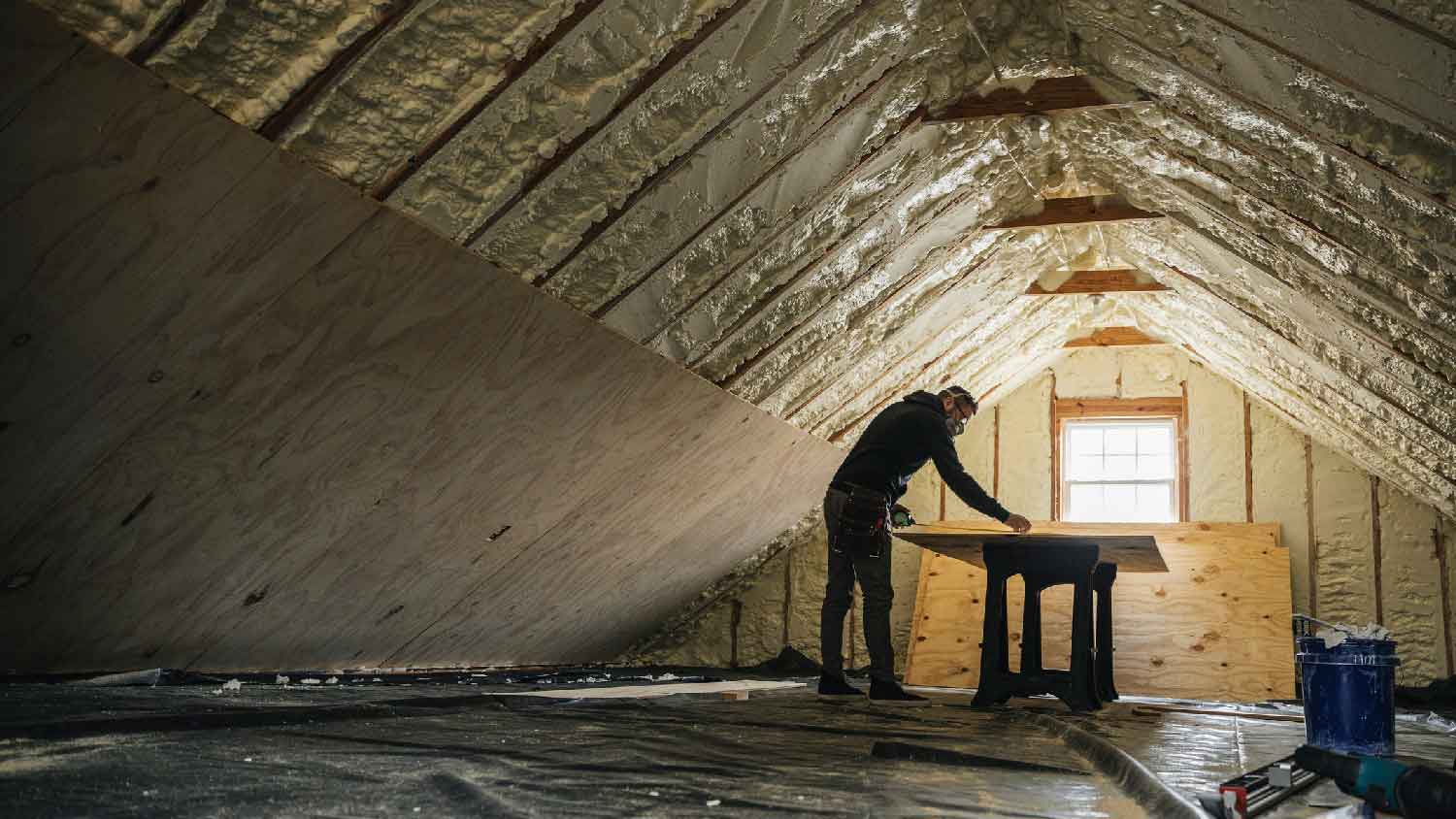
Attic insulation removal costs in Indianapolis, IN, vary based on a few factors, including why you're removing it and how easy it is to complete the task.
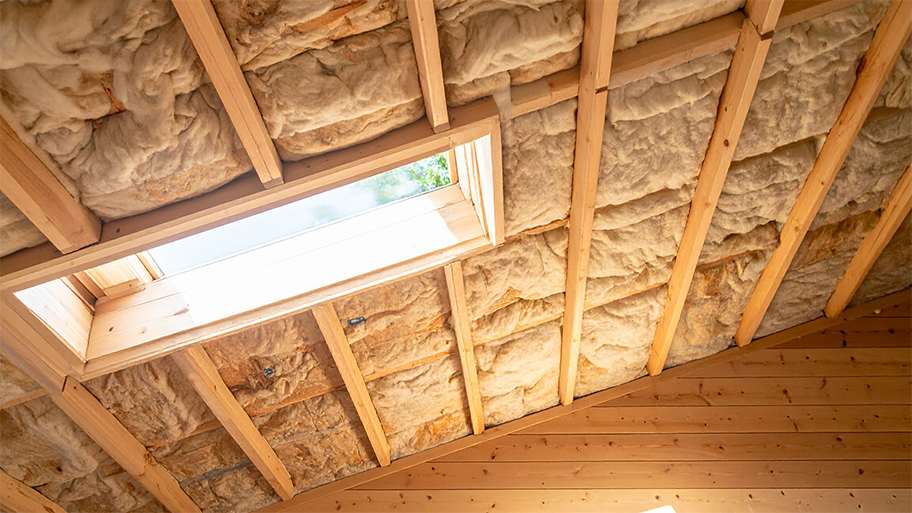
Insulating your attic can improve your home’s efficiency and reduce electric bills. Use this guide to find out what attic insulation will cost you in Indianapolis, IN.
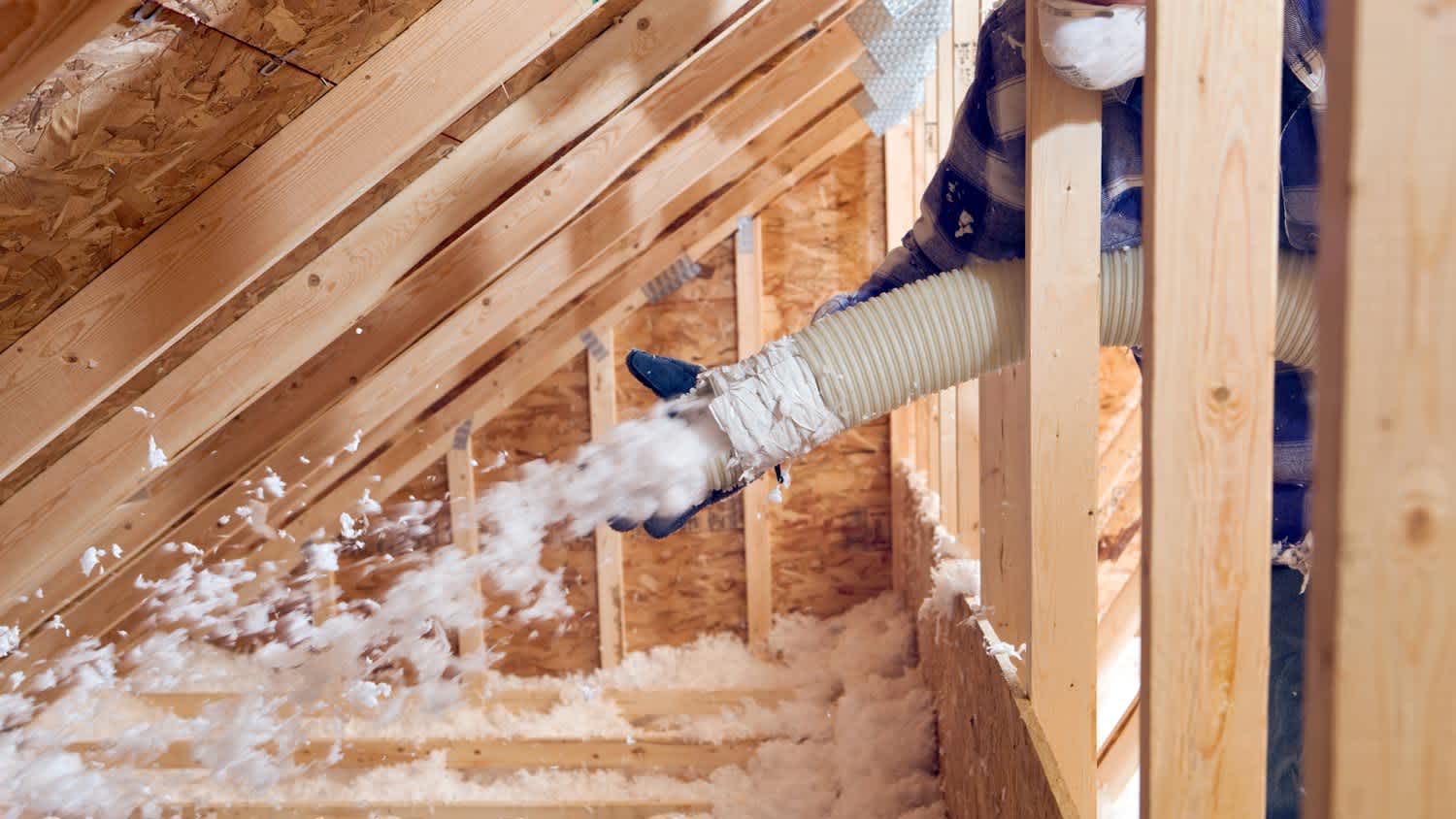
Are your energy bills spiking or rooms feeling drafty? Learn about blown-in insulation installation costs, urgency signs, and how to hire a local pro.

Remove blown-in insulation from your attic safely and efficiently by following this step-by-step guide and prep for your attic remodeling project.
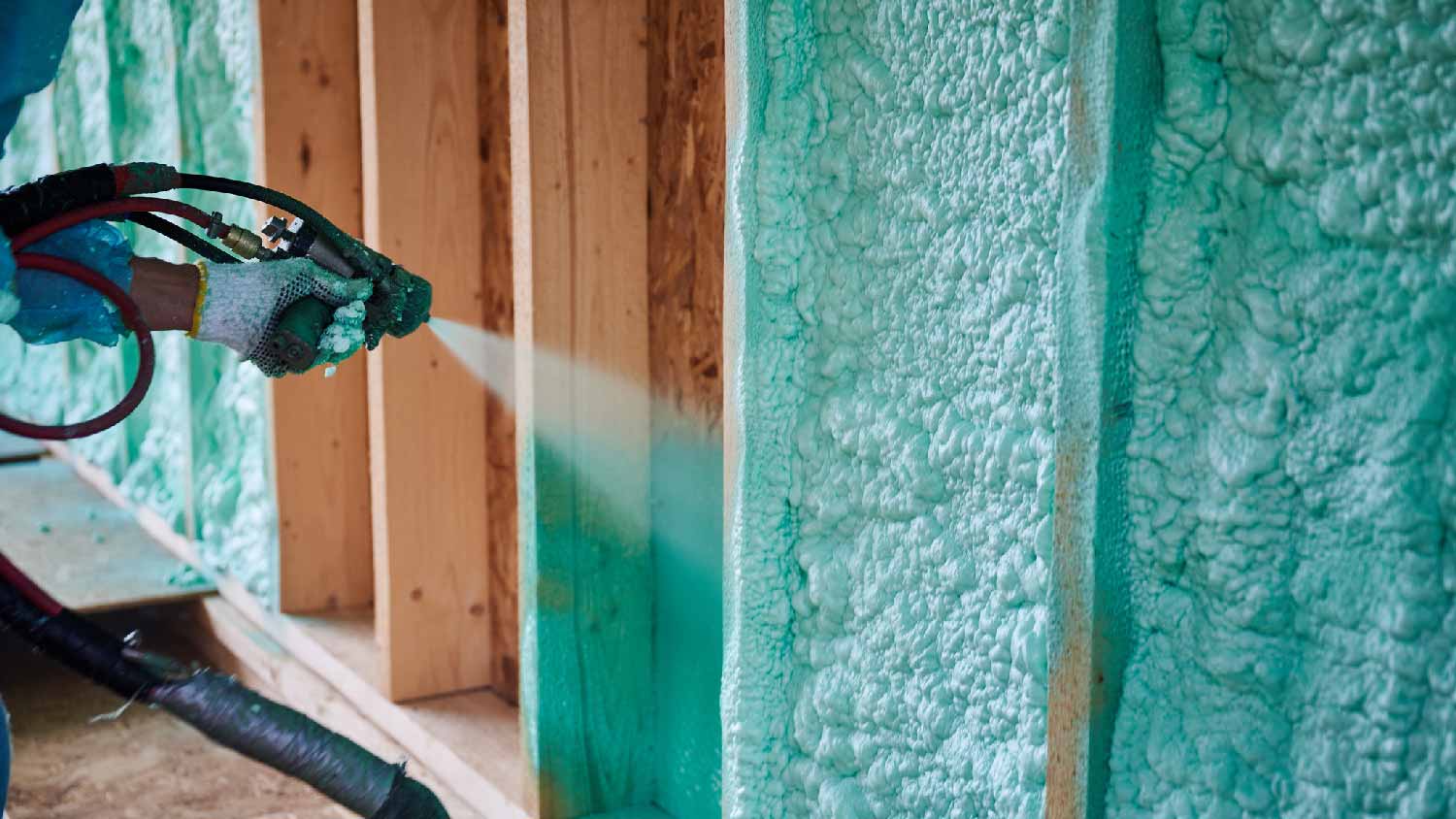
Are you stuck trying to decide between blown-in insulation and spray foam insulation? Factors like your budget and local climate will help you pick the right one.