The most common alternative is burning the stump first, then dealing with the cinders and ashes. As you can imagine, this option creates fire hazards, especially since roots can burn underground, hidden, for long afterward. That’s why many states and cities have outlawed the use of stump burning entirely. We do not recommend this option as a viable alternative unless you get a permit from the local fire department and practice all safe burning procedures.
Others prefer a more long-term DIY approach of degrading the stump with home mixtures like Epsom salt and vinegar injected directly into it. This may help the stump decay faster, allowing homeowners to dig it out themselves, but it’s still a lengthy process. It usually takes months for a stump to start falling apart with such treatments, and in the meantime, it can be vulnerable to rot, insects, and other problems.
This depends on how many leaves there are. Mowing over dry and crisp leaves with a bagging attachment saves most homeowners a lot of time. If you have a smaller lawn and few leaves to mulch, you can put the leaves into a stand-alone mulcher resembling a wood chipper and collect the mulch from a hopper. This prevents having to do multiple passes with a mower.
If you want to remove a bush that’s located on top of utility lines, you’ll need to call your local utility company to determine the best course of action. If you can’t dig out your stump its roots, cutting a bush off at ground level might be the best you can do. Adding a planter over top of the cut branch or planting something else around the stump can cover the area while the stump decomposes.
Yard waste should be professionally removed at least once per season, particularly during major landscaping projects, fall leaf accumulation, or after severe weather. Regular removal promotes lawn health and maintains a neat exterior.
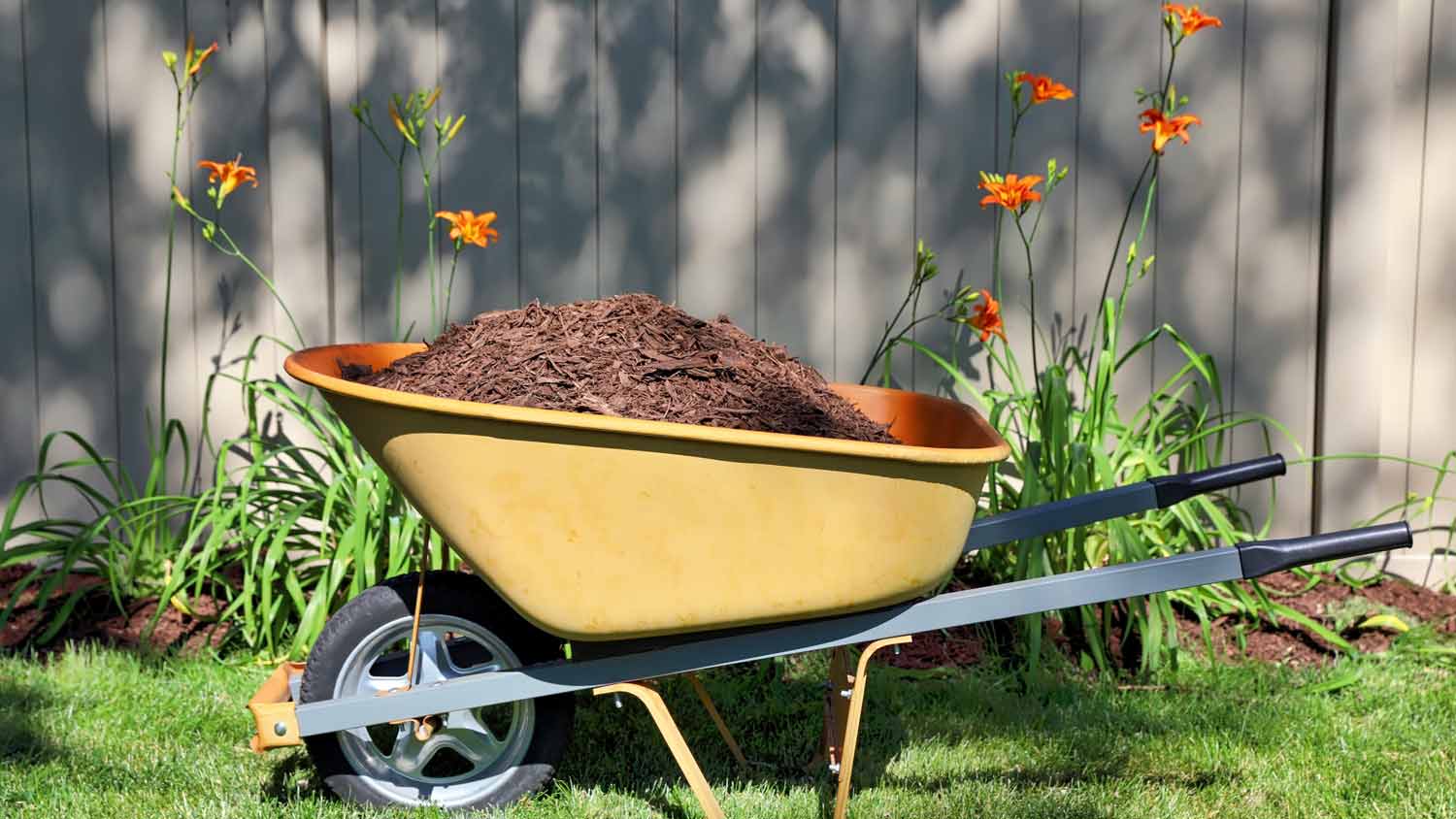
Generally, it is not necessary to remove old mulch before applying a new layer. As organic mulch breaks down, it enriches the soil with nutrients. However, you should remove the old layer if it shows signs of fungus or disease, which can be common in moist areas, or if the total depth is already too thick. Avoid letting the total mulch depth exceed 3 inches, as this can harm plant roots. If you do remove old, disease-free mulch, it can be added to a compost pile.
The Baggs, WY homeowners’ guide to brush chipping services
From average costs to expert advice, get all the answers you need to get your job done.
The cost of a tar and chip driveway falls between gravel and asphalt. Is this unique process the happy medium you've been looking for? Let's take a look.
Does your toilet water rise and then slowly drain? Find out common reasons why this is happening and how to fix them to get your toilet up and running again.
Revitalize your stainless steel with a fresh coat and color of paint. Find out how to paint stainless steel and create a new look for your appliances or countertops.
What’s the debate between wood chips vs. mulch? Wood chips are pieces or shredded wood from the interior of a tree trunk, while mulch can be made from a variety of materials.