








Top-rated deck cleaning pros.

Get matched with top deck cleaning pros in Arlington, WI

Enter your zip and get matched with up to 5 pros

Need a pro for your deck cleaning project in Arlington, WI?

Select your specific project to find the pro for you.

TRUSTED BY ARLINGTON, WI HOMEOWNERS

  • Average homeowner rating star icon4.4
    Average homeowner rating
  • Verified reviews icon139
    Verified deck cleaning services reviews

Find Deck cleaning pros in Arlington

Avatar for Work Horse Remodeling LLC
Work Horse Remodeling LLC
5.0(
3
)
Deck, Fence, Patio or Porch - Clean and SealDeck, Fence, Patio or Porch - Clean and Seal - For Business

Serving Arlington, WI and surrounding areas

In business since 2022

Free estimates

"I had my old deck removed and new deck built. Luke was Very Easy to get along with. He listened and was receptive to my ideas and changes last minute. The area was cleaned up and old wood taken away. I will definitely hire him for future projects!!!"
Kitchen Remodel
Decks & Porches Project
Kitchen Remodel
Decks & Porches Project
Kitchen Remodel

+19

Recommended by100%of homeowners
Showing 1-10 of 32
Deck Cleaning questions, answered by experts

Most building codes list a minimum width of 36 inches and a maximum height of 7¾ inches. However, for the most comfort and spaciousness, you’ll want to aim for a width of at least 48 inches and a height of 7 inches. Again, it’s always a good idea to base your numbers off steps that you already use comfortably.
Cutting the boards directly is one of the fastest ways to remove deck boards with hidden fasteners. Mark two parallel lines that are one-third of the total measurement on both ends and cut out the centerpiece. Then, remove the end of the board that doesn’t have a fastener. Finally, pry open the fastened side and pull it up to pop out the screw or access the fastener. This also allows you to salvage portions of boards for other projects.

Floating decks are a cost-effective and versatile option, but they come with some compromises. Since they sit on smaller footings instead of being deeply anchored, they’re more likely to shift over time, especially in areas with heavy rainfall or freeze-thaw conditions. Their low-to-the-ground design makes them more susceptible to moisture buildup and potential water damage.

The best base materials for a ground-level or floating deck are typically gravel and crushed stone (also known as landscaping rocks). These options are inexpensive, provide excellent drainage, prevent weeds, and help minimize moisture buildup, which reduces shifting and rotting. For added stability and to evenly distribute the weight, you can use concrete deck blocks or pavers. While more expensive, concrete blocks and pavers offer a sturdier base than gravel or crushed stone alone.
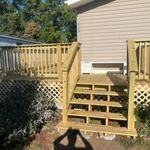
Ultimately, overapplication of stain can compromise the deck's appearance, durability, and longevity. It may result in an uneven finish, with excess stain pooling, dripping, or drying into thick patches. It can also obscure the wood's natural grain and texture, detracting from the desired aesthetic. Moreover, excessive staining may not fully penetrate the wood, leading to poor adhesion and premature wear. Additionally, thick layers of stain are prone to peeling, cracking, and blistering as they struggle to bond with the surface. 

The Arlington, WI homeowners’ guide to deck cleaning services

From average costs to expert advice, get all the answers you need to get your job done.