






Top-rated ceiling fan pros.

Get matched with top ceiling fan pros in Ryegate, VT

Enter your zip and get matched with up to 5 pros

Need a pro for your ceiling fan service project in Ryegate, VT?

Select your specific project to find the pro for you.

Find Ceiling fan pros in Ryegate

Avatar for American Home Shield – Home Warranty
American Home Shield – Home Warranty
3.5(
5,688
)
Ceiling Fan - InstallCeiling Fan - Repair

Serving Ryegate, VT and surrounding areas

In business since 1971

Credit card accepted

"The furnace took 4 days to get approved( not counting a Sunday) the others were quick but the water heater had to be ordered so without hot water for a week. One ceiling fan was easy but within a year their policy changed and They would not install the one I purchased and had to get a new one approved and then ordered online and took several weeks to get straightened out. Not sure who was at fault, AHS, installer or scheduling with renter. Fee is usually $75 per visit"
Additional Photos
Additional Photos
Additional Photos
Additional Photos
Additional Photos

+2

Recommended by65%of homeowners
Ceiling Fans questions, answered by experts

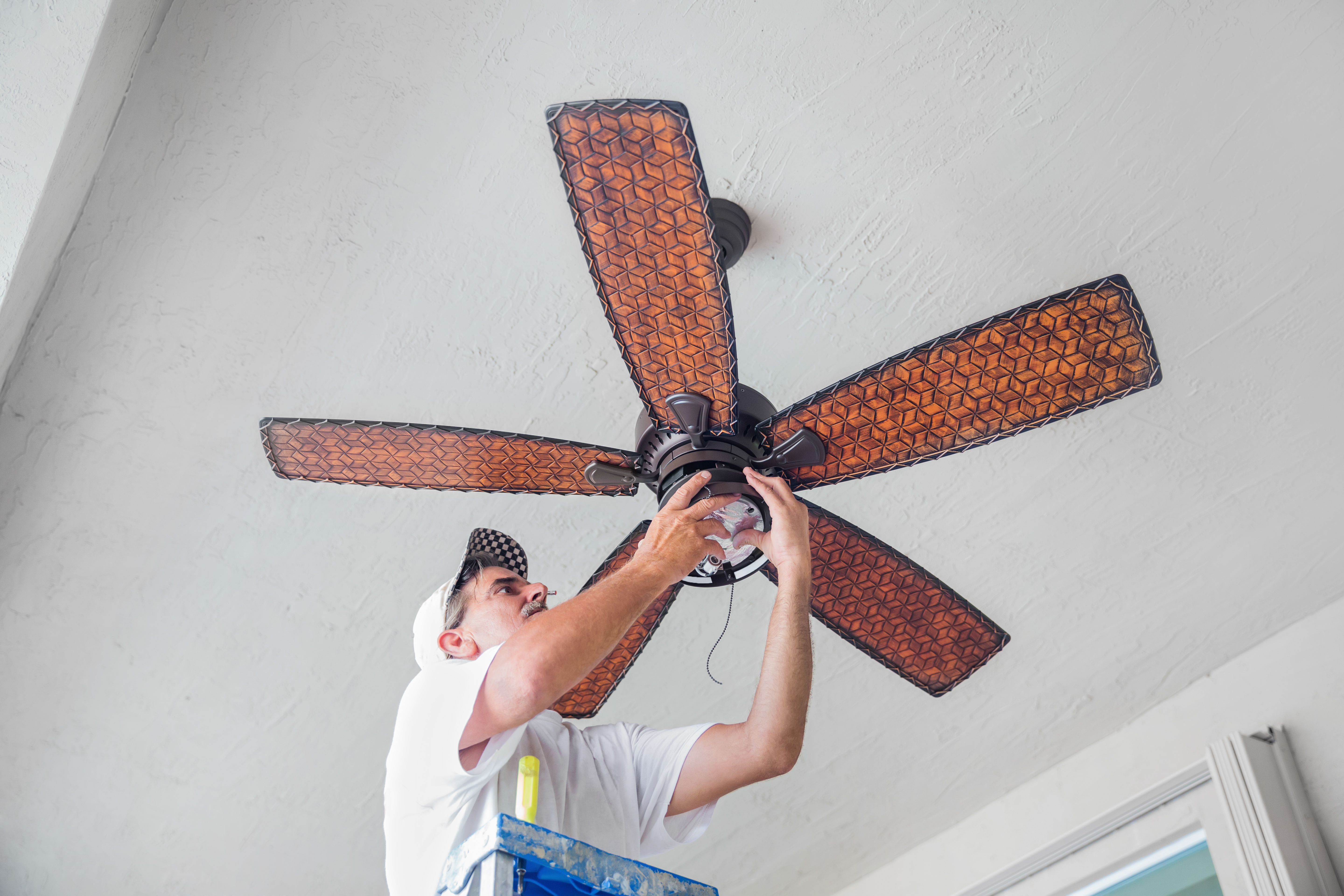
Essential tools for ceiling fan installation include a ladder, screwdriver, pliers, wire strippers, and a circuit tester. If the ceiling is angled or features unique configurations, ensure the availability of a compatible mounting bracket.

Yes, you can install a ceiling fan where a standard light fixture is, as the electrical wiring is often similar and may not need to be replaced. The most important step is to ensure the ceiling can support the fan's weight and motion. You will need to replace the existing light fixture's electrical box with a fan-rated electrical box, which is specifically designed to handle the extra weight and vibration. These boxes will be labeled as suitable for ceiling fan support and will indicate the maximum weight they can hold. Before you begin, also consider if you need an extension rod for a high ceiling or a special mount for an angled ceiling.

The square footage of your room will dictate the correct ceiling fan blade size. For example: 

  • Rooms smaller than 75 square feet require a fan that is 29 to 36 inches.

  • Rooms up to 175 square feet require 42- to 48-inch fans.

  • Rooms up to 350 square feet require 52- to 56-inch fans.

  • Expansive spaces over 350 square feet need a fan larger than 60 inches.

If your home already has wires for a ceiling fan (and optional light kit), then it’s quite safe to wire and install it yourself. Always be very careful to shut off the power before you begin, and confirm that the power is safely off with a non-contact voltage tester before touching anything. It’s also highly recommended to use eye protection, rubberized gloves, and tools with rubber handles to keep yourself safe from electric shock.

The direction your ceiling fan spins helps create comfortable airflow in your home and can also help cut down on energy costs. 

During summer, your ceiling fan should spin counterclockwise. This will push cooler air downward in a column and help lower your room’s air temperature. In the winter, set your ceiling fan to spin clockwise and at the lowest speed setting. This will pull cool air upwards, displacing the warm air that pools towards the top of your ceiling and bringing it down towards the floor.

The Ryegate, VT homeowners’ guide to ceiling fan services

From average costs to expert advice, get all the answers you need to get your job done.