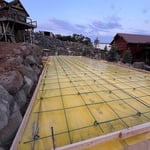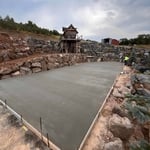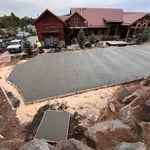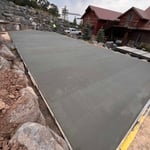









Top-rated excavation pros.

Get matched with top excavation pros in Cedar Valley, UT

Enter your zip and get matched with up to 5 pros

Need a pro for your excavation project in Cedar Valley, UT?

Select your specific project to find the pro for you.

Find Excavation pros in Cedar Valley

Dirt rich excavating
New to Angi

Serving Cedar Valley, UT and surrounding areas

Approved

At Dirt Rich Excavating, we take pride in delivering reliable, high-quality earthwork and utility services built on a foundation of integrity, hard work, and precision. We believe in doing the job right the first time, maintaining clear communication with our clients, and showing up with a commitment to safety and professionalism. Our goal is to build lasting relationships through honest work, dependable results, and a reputation you can trust—whether we’re on a small residential project or a large-scale site development.

...
Showing 1-10 of 111
Excavating questions, answered by experts

The cost to drill a well varies, with a national average of around $5,500 for a 150-foot well. However, prices can fluctuate significantly based on several factors, including your location, the required well depth, geological conditions, local regulations, and the specific drilling methods used. For the most accurate cost assessment, it is best to research and get quotes from local well-drilling professionals in your area.

No, a ditch isn’t a trench. A ditch is an open, relatively shallow channel that’s carved out of the ground and used for drainage purposes. In contrast, a trench is a deeper excavation that’s entirely underground. Trenches have many uses, including gas lines, sewage systems, and electrical wiring. Unlike trenches, ditches don’t get filled back in with dirt after they’re dug.

Above ground pools are not buried in the ground. Typically, above ground pools are semi-permanent. One reason they’re more affordable is that you don’t have to dig for an inground pool and pour concrete or another material. However, you can choose to install a semi inground pool, which is a hybrid between the two.

A walk-behind trencher can cut through roots as long as they’re not too thick, making a project much easier than digging with a shovel and other hand tools. Assess your terrain and the number of trees in the surrounding area to determine if a walk-behind trencher will ease the job. Digging a trench by hand is much more time-consuming and labor-intensive. 

Most residential basements are 8 to 10 feet deep. You can dig deeper depending on building codes, but it does become more difficult. You’ll likely need to install stronger foundation walls and additional supports to handle the increased load. Depending on the water table, you may also need a water management system. Clay soil can support a deeper foundation than sandy soil. A structural engineer will be able to tell you the maximum, feasible depth.

The Cedar Valley, UT homeowners’ guide to excavation services

From average costs to expert advice, get all the answers you need to get your job done.