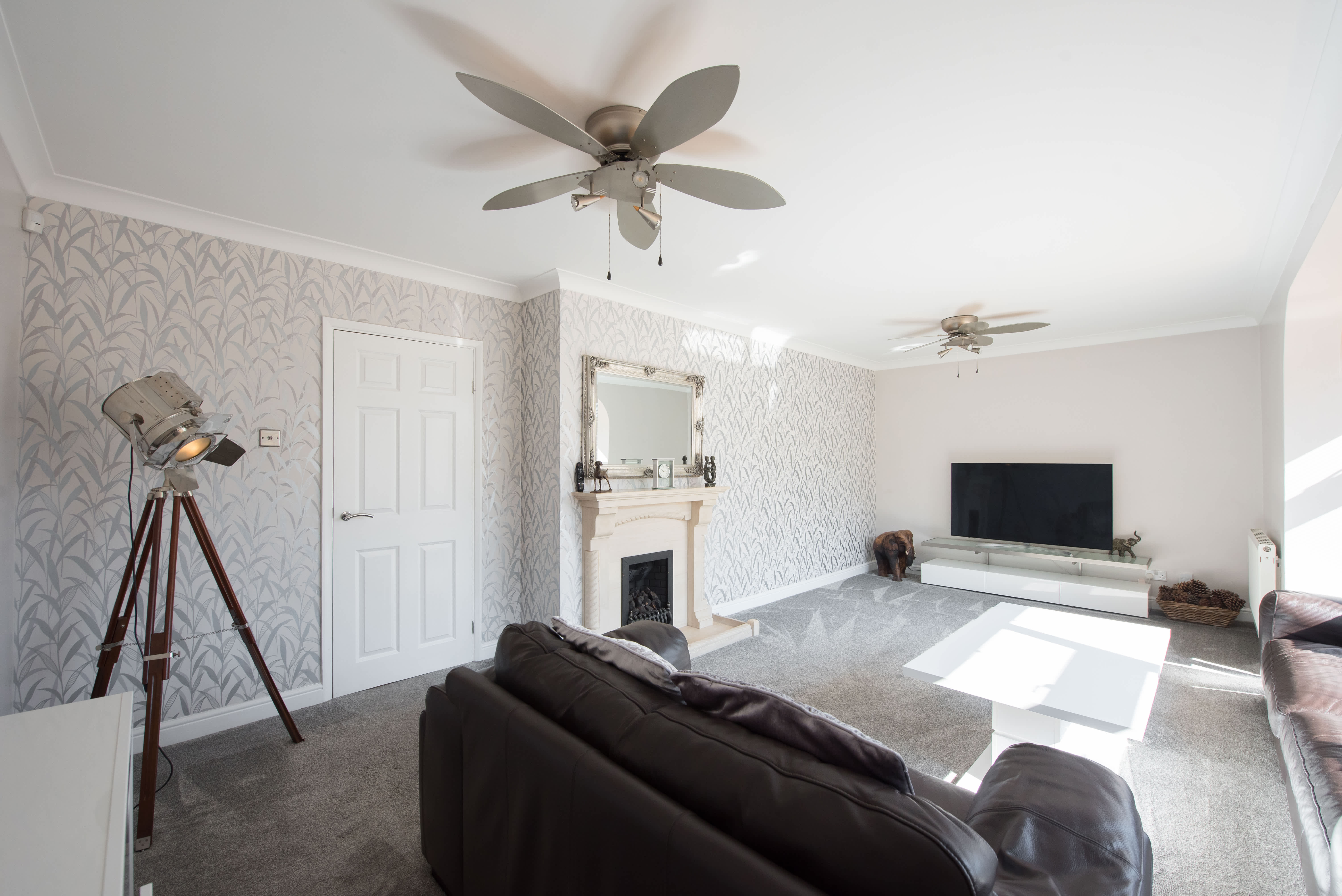
"This was such a pleasant experience!! He looked at the job in hand and discussed the possible actions,. We chose the one we wanted. Job completed exactly as we wanted and with an excellent result. No other contractors were prepared to even think about repairing our fan . All they wanted to do was replace it."
"I needed to see a ceiling fan installed and the floor to ceiling height was 19.5 feet. Kyle is just awesome. He's very thorough and does what he says he will do. He is VERY straightforward. He helps keep the work area clean. He has no problem with DIY. Old man, asking a bunch of questions. He listened, and has no issue with explaining anything. If there's an adjustment to be made, he will make it right. He's more than happy to come back out at no additional cost .Nice that no additional call, and adjust things as needed. You can't go wrong with Jade electric. THEY ARE my electric repair go to."
"I highly recommend this electrician! He was kind, courteous, professional, and extremely knowledgeable. I originally contacted him because the light pull chain on my ceiling fan had stopped working. Every other electrician I spoke with told me they wouldn't repair the chain and that I would need to replace the entire unit, but he fixed the pull chain with no issue and saved me the expense of buying a new ceiling fan. I also had him install a new ceiling fan in another room, and he did an excellent job. The installation was clean and efficient, and the fan works perfectly and looks fantastic. It's refreshing to find someone who is honest, skilled, and takes pride in their work. I wouldn't hesitate to hire him again and highly recommend him to anyone looking for a reliable electrician."
"Josh was my electrician. He was very professional, pleasant young man.
After locating the issue with the fan set up, he was able to explain to me what was the problem. Hes a real asset."
"I needed an additional lighting fixture wired in and mounted above our pantry as well as an outdoor outlet in our patio ceiling, Cool Hand crushed it! They were extremely respectful of our home and wore disposable booties over their shoes every time they had to come inside from the attic or backyard. The install was extremely clean & professional, and of course worked flawlessly. Luke was very kind to our curious daughter who didnâ t make his job any easier! We wouldnâ t hesitate to hire them for the next project, they are 1st class."
Here at Willard Heating, Cooling & Plumbing, we're excited to earn your business! Locally owned and operated, we're known in the area for our prompt service and attention to detail. Customer satisfaction is always our primary concern, so be sure to give us a call today!
Hello guys, I’m starting my own electrical service company. Been in the electrical industry since August of 2018 and now I’m licensed and insured running my own show. I’m familiar with rough in, troubleshooting, raceway installation, and many more. You have a problem, I have the solution.
"Absolutely love this company. Everyone was very friendly and the technician explained everything to me and answered all my questions. Definitely will use them again"
"Our unit would not turn on even though the thermostat was showing that it was cooling. I called George Wayne around 8:30 and a tech was at our home before 11:00. Our tech, SETH, was nice and knowledgeable. He figured out the problem in less than 10 min and fixed it. Not only that, he assisted my husband with our ceiling fan that needed some adjustments. Overall, I was very pleased with the service we received."
Fan power is measured by CFM, or cubic feet per minute. For every 1,000 feet of square footage in your attic, you need a minimum of 700 CFM. Steeper roofs may need larger fans or about 840 CFM. You can figure the size of attic fan you need by multiplying the square footage of your attic floor by 0.7. (multiply by 1.2 for a steep roof and 1.15 for a dark roof). That number is the CFM required for your fan to run efficiently.
If you’re removing a ceiling fan without visible screws, start by locating the fan canopy—a round cover placed above the fan blades and motor. There should be a thin ring that can be turned counterclockwise to remove the canopy and reveal the screws. After unscrewing the fan, you can disconnect the wires and remove the entire fan from the mounting hardware. For safety, make sure the fan switch is turned off before you remove the canopy. It may be easier to remove the fan blades first, too.
Essential tools for ceiling fan installation include a ladder, screwdriver, pliers, wire strippers, and a circuit tester. If the ceiling is angled or features unique configurations, ensure the availability of a compatible mounting bracket.
The direction your ceiling fan spins helps create comfortable airflow in your home and can also help cut down on energy costs.
During summer, your ceiling fan should spin counterclockwise. This will push cooler air downward in a column and help lower your room’s air temperature. In the winter, set your ceiling fan to spin clockwise and at the lowest speed setting. This will pull cool air upwards, displacing the warm air that pools towards the top of your ceiling and bringing it down towards the floor.
If you’re replacing an old fixture with a ceiling fan, you usually won’t need a permit, but if your electrician runs new wiring for the fixture, you likely will need a permit. Building permits are necessary in most municipalities if you’re making changes to your electrical system, so even if you have partial wiring run to the area and need new wiring installed for added functionality, you’ll probably need a permit. Your electrician should be able to let you know if you need one, and they’ll typically file the paperwork for you.
The Midlothian, TX homeowners’ guide to ceiling fan services
From average costs to expert advice, get all the answers you need to get your job done.
Find out the average cost to install a ceiling fan in Dallas, TX. Learn what you can expect to pay for local ceiling fan installation and get free estimates.
Discover the cost to install a ceiling fan, including labor, materials, and tips to save. Learn what impacts your price and how to budget for your project.
Ceiling fans cool down your home while stylishly accenting your space. With a variety of types of ceiling fan on the market to choose from, you can’t go wrong.
Although the risk is low, there are a few telltale signs that a ceiling fan will fall off your ceiling. This guide explains when to worry (and when not to).