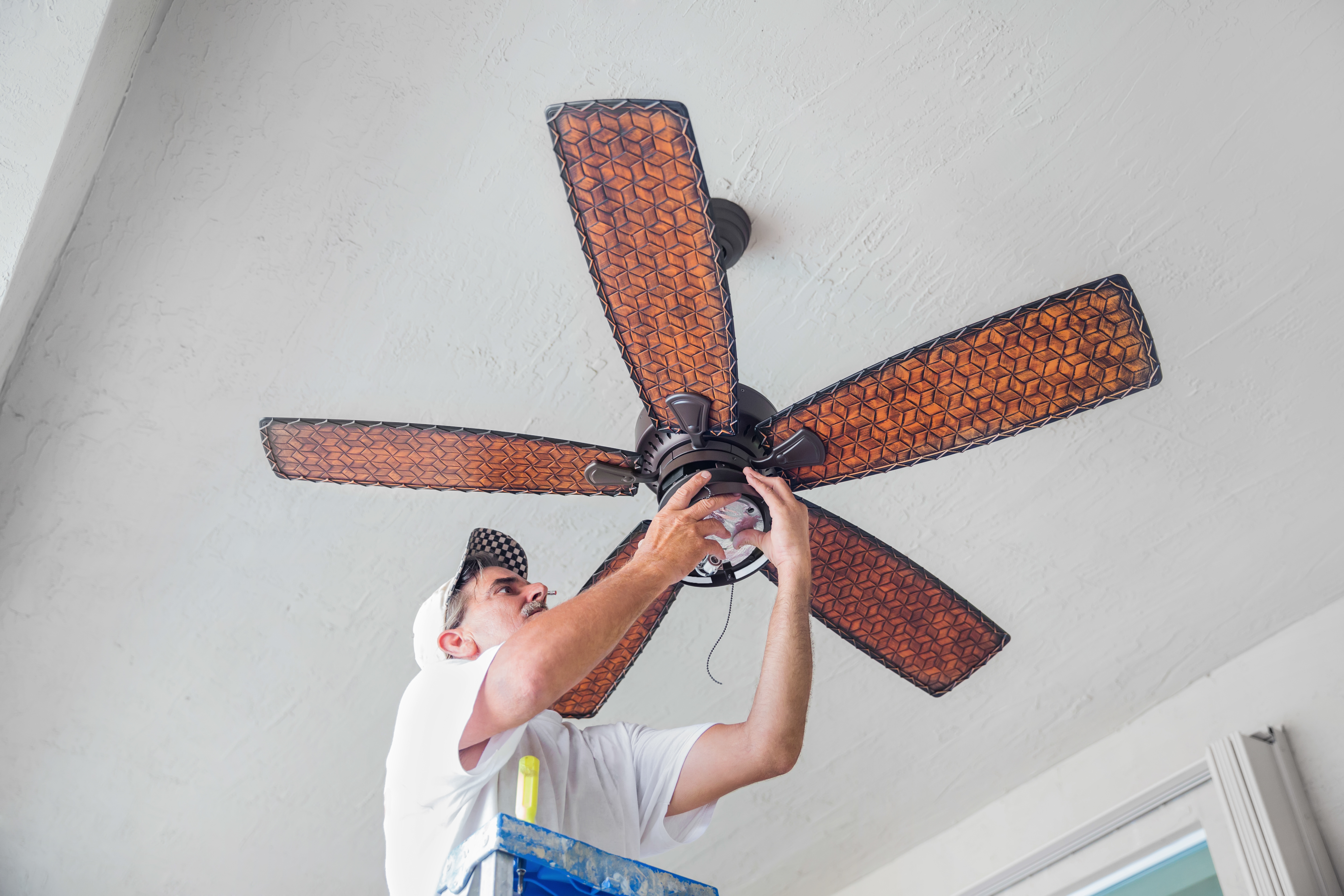





Top-rated ceiling fan pros.

Best ceiling fan pros near Gates, TN

Enter your zip and get matched with up to 5 pros

Need a pro for your ceiling fan service project in Gates, TN?

Select your specific project to find the pro for you.

Top-Rated Ceiling fan pros in Gates - Updated Nov 2026

Avatar for Choice Home Warranty
Choice Home Warranty
4.0(
5,680
)
Ceiling Fan - InstallCeiling Fan - Repair

Serving Gates, TN and surrounding areas

In business since 2008

Emergency services offered

Credit card accepted

"Dishwasher and ceiling fan service was wonderful. Garbage disposal is on its way, the shower fixture was a little messy and have to return 3 times to fix, pray its the last time. But not Choice Warranty's fault. Alittle pricey but allows you to pay them out."
Recommended by81%of homeowners

Avatar for American Home Shield – Home Warranty
American Home Shield – Home Warranty
3.5(
5,689
)
Ceiling Fan - InstallCeiling Fan - Repair

Serving Gates, TN and surrounding areas

In business since 1971

Credit card accepted

"I love American Shield.  I love American Shield.  I love them. We have 2 homes; this home is 30 years old, our home in California is twenty years old and we have used them in both places.
A, number 1, plus, plus!"
Additional Photos
Additional Photos
Additional Photos
Additional Photos
Additional Photos

+2

Recommended by65%of homeowners
Bluff City Electrical
New to Angi
Ceiling Fan - InstallCeiling Fan - Repair

Serving Gates, TN and surrounding areas

In business since 2010

Free estimates

Emergency services offered

Bluff City Electrical is committed to excellence in every aspect of our business. We uphold a standard of integrity bound by fairness, honesty, and personal responsibility. Our distinction is the quality of service we bring to our customers. Accurate knowledge of our trade combined with ability is what makes us true professionals. Above all, we are watchful of our customers' interests, and make their concerns the basis of our business.

Ceiling Fans FAQs, answered by experts

Whether you can install a ceiling fan yourself depends on if you're replacing an existing fixture or installing one where no wiring exists. If you are replacing an existing fan, an experienced DIYer may be able to do the job, which can save on labor costs. This work typically doesn’t require a permit, but there’s always a safety risk when dealing with electrical components, so hiring a pro is still a good idea, especially if you aren't handy. Keep in mind you may need a special ladder for high or vaulted ceilings. However, if you are installing a new ceiling fan where there is no current fixture, you must hire a licensed electrician. In most areas, it is required by law that a professional runs new wiring and pulls the necessary permits. Attempting to install wiring yourself can be dangerous and a code violation.

When choosing a mounting bracket, you have the option between flush mounts and downrod mounts. Flush mounts are the better option for low ceilings as they feature a lower profile. Downrod mounts are the optimal choice for rooms with high ceilings as they offer a pole that adjusts the height of the fan.

Fan power is measured by CFM, or cubic feet per minute. For every 1,000 feet of square footage in your attic, you need a minimum of 700 CFM. Steeper roofs may need larger fans or about 840 CFM.  You can figure the size of attic fan you need by multiplying the square footage of your attic floor by 0.7. (multiply by 1.2 for a steep roof and 1.15 for a dark roof). That number is the CFM required for your fan to run efficiently.

Generally, a ceiling fan should be mounted at least seven feet from the floor in the center of your room with a wall clearance of around 18 inches. If your ceiling is more than eight feet high, it’s recommended by experts that the ceiling fan be mounted around eight to nine feet from the ground. This helps ensure a better quality of circulated airflow.

If you’re removing a ceiling fan without visible screws, start by locating the fan canopy—a round cover placed above the fan blades and motor. There should be a thin ring that can be turned counterclockwise to remove the canopy and reveal the screws. After unscrewing the fan, you can disconnect the wires and remove the entire fan from the mounting hardware. For safety, make sure the fan switch is turned off before you remove the canopy. It may be easier to remove the fan blades first, too.

The Gates, TN homeowners’ guide to ceiling fan services

From average costs to expert advice, get all the answers you need to get your job done.