


Top-rated deck maintenance specialists.

Get matched with top deck maintenance specialists in Salisbury, PA

Enter your zip and get matched with up to 5 pros

Need a pro for your deck maintenance project in Salisbury, PA?

Select your specific project to find the pro for you.

Find Deck maintenance specialists in Salisbury

Avatar for Hinebaugh Restoration, LLC
Hinebaugh Restoration, LLC
4.0(
1
)

Serving Salisbury, PA and surrounding areas

In business since 2002

Free estimates

Emergency services offered

Phil Hinebaugh Carpentry provides best practices with integrity and the highest of standards in business and home restoration and cleaning services. Utilizing the most advanced equipment, innovative technologies and a built-in accountability system, our professional emergency restoration crews complete every job rapidly to assure an uncompromising commitment to service excellence and customer satisfaction. Ultimately, we don't just restore homes and businesses; we restore value, stability, and peace of mind.\n\nWhen disaster strikes you can rely on rapid and professional restoration service from Phil Hinebaugh Carpentry .We are on call 24-hours a day, seven days a week. Phil Hinebaugh Carpentry is fully certified by the Institute of Inspection, Cleaning and Restoration Certification. The IICRC has served as the industry guardian for inspection, restoration and cleaning services for over 30 years.

Recommended by100%of homeowners
Showing 1-10 of 16
Deck Maintenance questions, answered by experts

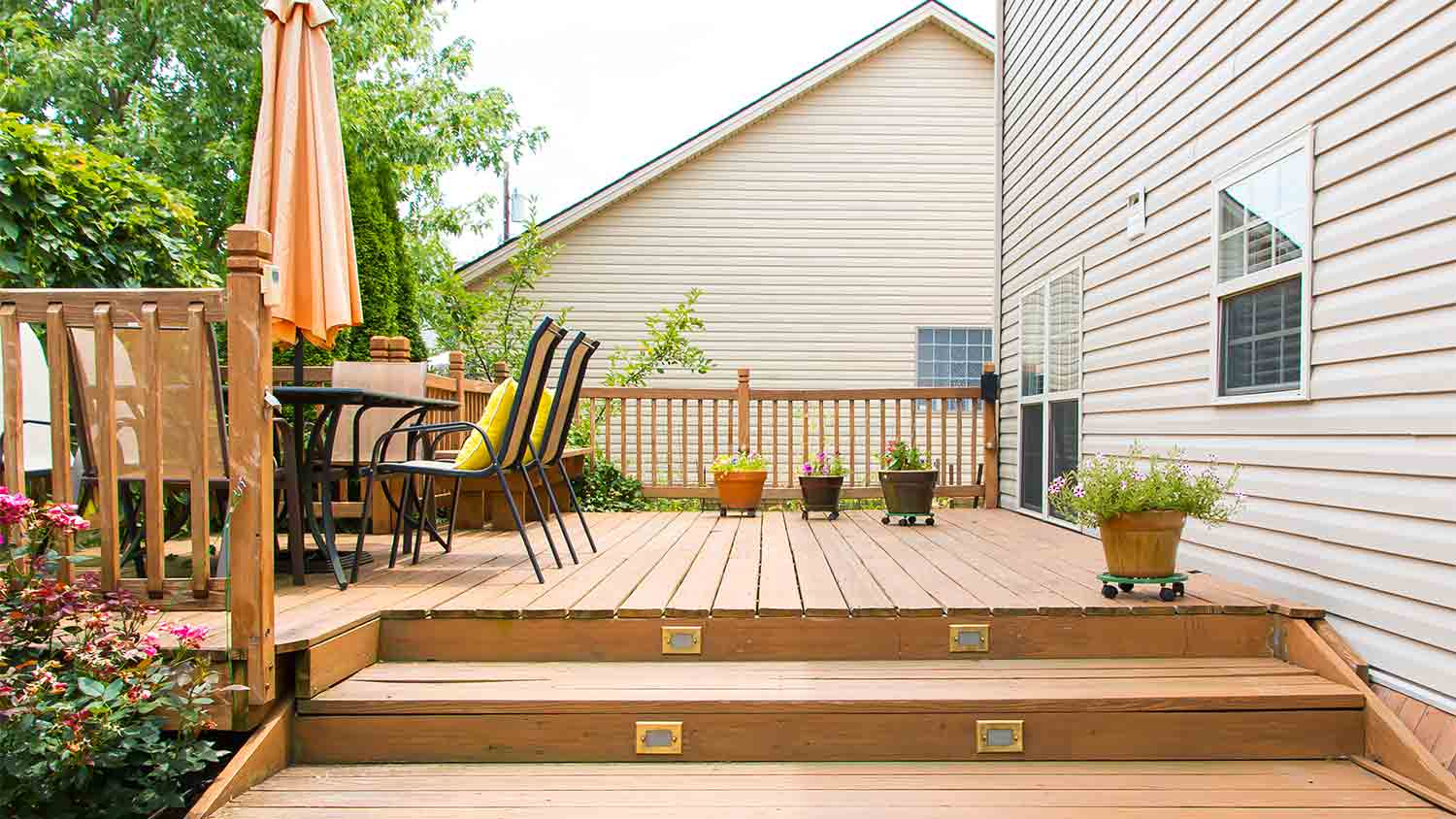
The overhang, or nosing, of deck steps is another area that will be covered in building code requirements. The noses on your deck steps should have a minimum overhang of ¾ inch. For safety, usability, and code compliance, the nosing of deck steps should not extend past 1¼ inches.

In the majority of cases, you don’t need regulatory permission or permits to remove decking components and materials. However, the exception is if you live in or near a wildlife conservation area, which could require permits and consent prior to beginning the demolition. Check with a local regulatory agency for more information.

In most cases, your deck will need some form of deck footing to hold it in place, preventing moisture from rotting your wood and decreasing your deck’s lifespan. Concrete deck blocks are the most common type of footing for floating decks. Some homeowners use ground-level deck footings. For added security, consider digging and laying your ground-level footings below ground.

Pavers are a great decking option for pools. They’re customizable, come in a variety of shapes, sizes, colors, textures, materials, and price points, and they’re slip-resistant. Concrete pool decks, on the other hand, are harder to repair and replace if damaged and aren’t as slip-resistant as most paver materials. However, not all pavers are equal in terms of durability, maintenance, and performance. Pavers also have their own cons that may encourage homeowners to opt for stamped concrete instead, such as higher upfront costs.

Composite decking might cost more upfront, but it delivers value in terms of durability. Unlike wood, composite material resists common deck problems such as rotting, fading, warping, and all the other things you don’t want a deck to do. The extra processes lead to a higher price tag, but you’ll save big in maintenance costs down the road.

The Salisbury, PA homeowners’ guide to deck maintenance services

From average costs to expert advice, get all the answers you need to get your job done.