




Top-rated deck cleaning pros.

Best deck cleaning pros near Philipsburg, PA

Enter your zip and get matched with up to 5 pros

Need a pro for your deck cleaning project in Philipsburg, PA?

Select your specific project to find the pro for you.

TRUSTED BY PHILIPSBURG, PA HOMEOWNERS

  • Average homeowner rating star icon4.4
    Average homeowner rating
  • Verified reviews icon12
    Verified deck cleaning services reviews

Top-Rated Deck cleaning pros in Philipsburg - Updated Nov 2026

Showing 1-10 of 39
Deck Cleaning FAQs, answered by experts

Both aluminum and composite decking materials are environmentally friendly, with aluminum decking coming in as the most eco-friendly option. 

Though composite decking helps remove plastics from landfills, recycles wood, and lasts longer than traditional wood decks, it’s not recyclable and only lasts for 25 to 30 years on average. Aluminum can last well over 30 years and is almost always recyclable.

No, termites do not eat Trex or any other composite decking brand. Termites eat cellulose, of which composite decking like Trex contains very little compared to natural wood. This feature can help justify the higher Trex decking costs if you live in an area with abundant termites.

The best way to clean your decking is to clear debris from the gaps between the boards, sweep the surface, rinse it, apply cleaner, rinse again, and let it dry fully. A homemade deck cleaner made of two gallons of warm water and 1/2 cup vinegar is a simple cleaning solution for both wood and composite decking. You can sprinkle baking soda on any spots with mold or mildew, then scrub the area and rinse clean. 

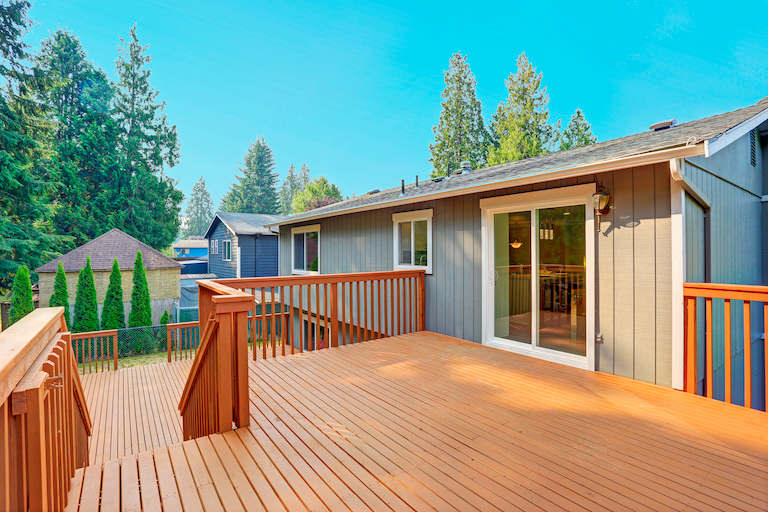
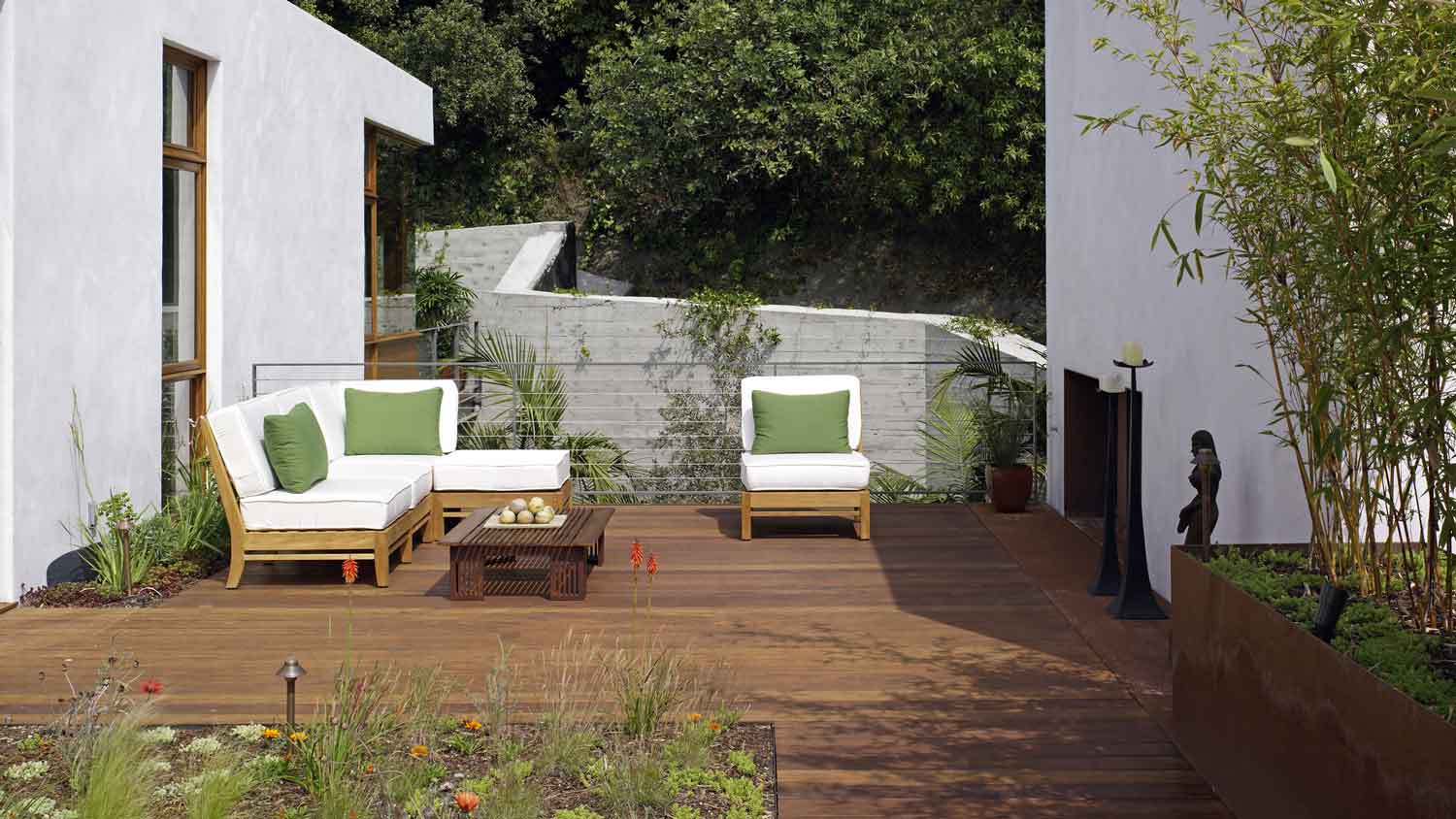
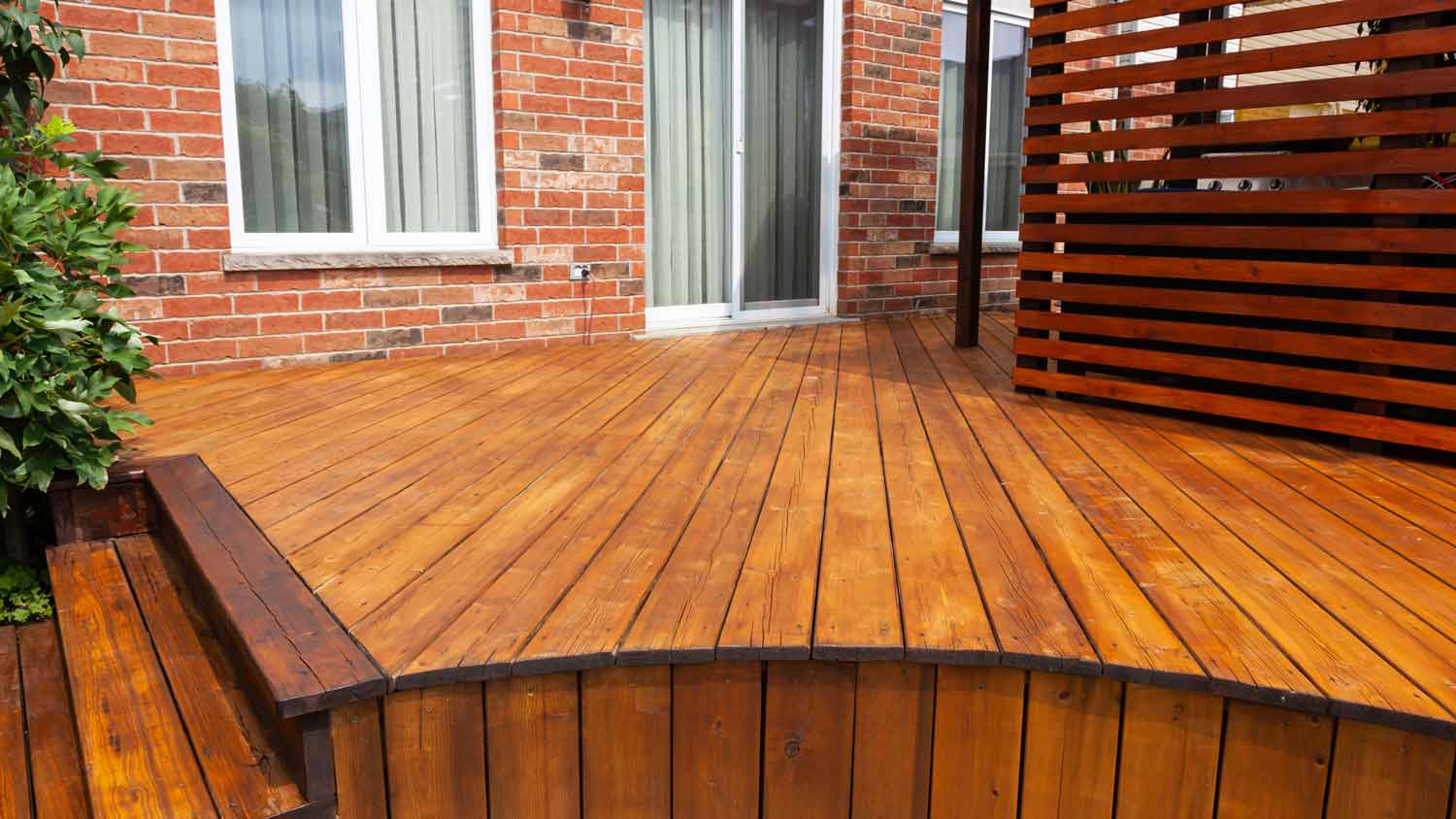
As with patios, there are many types of deck choices to choose from to add personalization to your home. Some common deck options include:

  • Attached decks are anchored to the home and include simple ground-level options or multi-level structures with stairways and separate landings. 

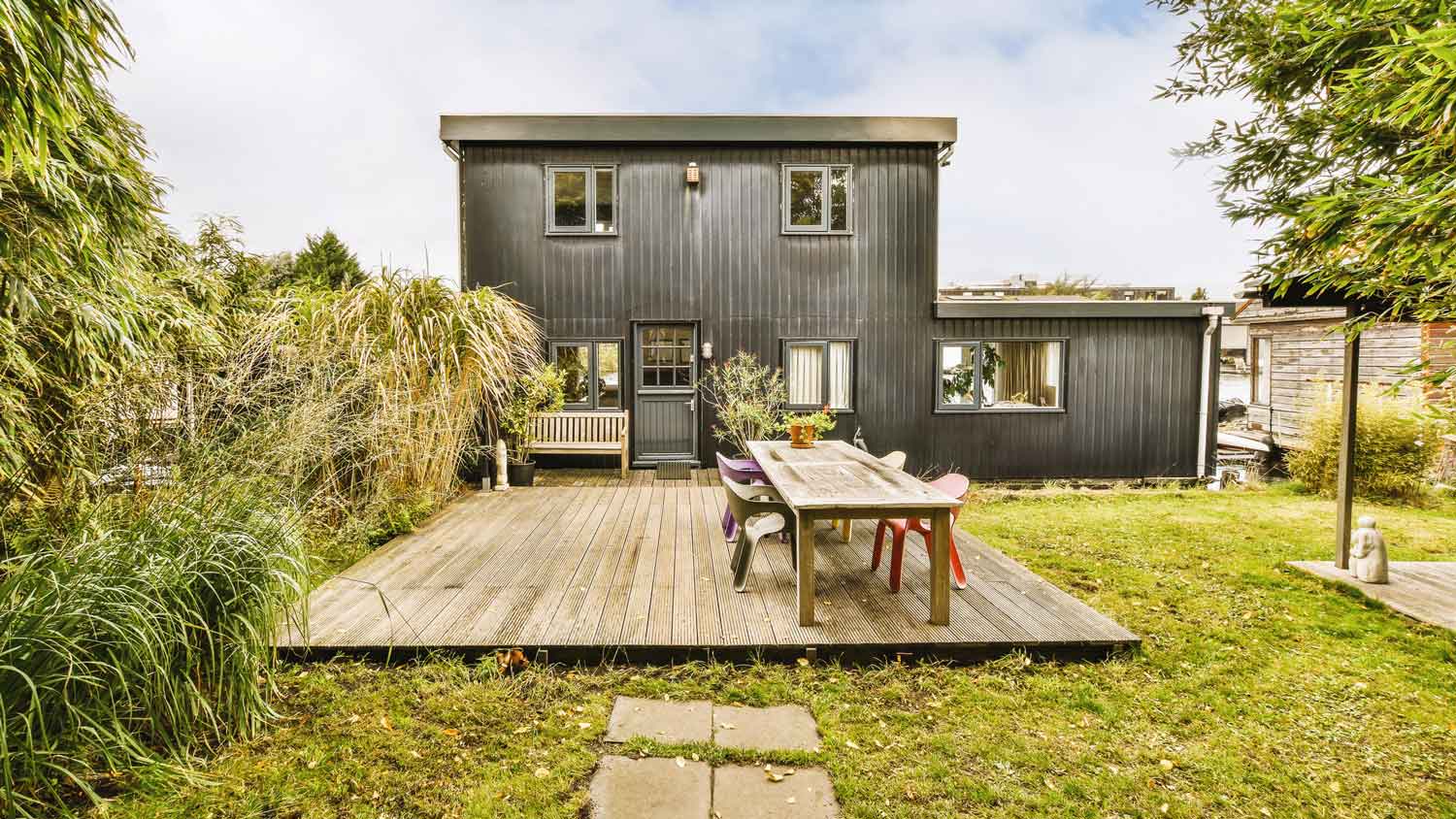
  • Detached island decks are not attached to the home; they’re a freestanding structure in the yard. 

  • Wraparound decks connect the back of the house with at least one other side and often are built with railings for safety. 

  • Multi-level decks connect your deck through varying levels of elevation, featuring landings that are attached to stairs.

A deck that isn’t attached to a house is called a floating or freestanding deck. These standalone decks are built near ground level, so they usually don’t need deck stairs. Some don’t even require permits. Generally speaking, building a floating deck is faster and more DIY-friendly than constructing one that’s connected to your home.

The Philipsburg, PA homeowners’ guide to deck cleaning services

From average costs to expert advice, get all the answers you need to get your job done.