

Top-rated excavation pros.

Get matched with top excavation pros in Palmyra, PA

Enter your zip and get matched with up to 5 pros

Need a pro for your excavation project in Palmyra, PA?

Select your specific project to find the pro for you.

TRUSTED BY PALMYRA, PA HOMEOWNERS

  • Average homeowner rating star icon4.3
    Average homeowner rating
  • Verified reviews icon21
    Verified excavation services reviews

Find Excavation pros in Palmyra

Avatar for Lawn DnD, LLC
Lawn DnD, LLC
5.0(
5
)
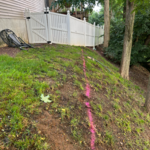
Landscape - Minor Grading or Resloping

Serving Palmyra, PA and surrounding areas

Approved

In business since 2021

Free estimates

Credit card accepted

Lawn DnD, LLC proudly serves its customers with pride, integrity and attention to the details that matter most to you. This is one of the many things that sets us apart from the rest. We are locally owned and operated. Give us a call today!

60 neighbors recently requested a quote
Creek View Construction, LLC
5.0(
1
)
Building Site - Preparation and Clearing

Serving Palmyra, PA and surrounding areas

Approved

In business since 2005

Free estimates

Credit card accepted

We are owner operated, and believe in building long-term relationships with our clients by delivering honesty along with exceptional work. We pride our company on reliability, great communication, integrity, and customer service. We are experts in our trade and will do our best to keep you as educated as we can on your particular project. We work for our customers on their schedule, as to make it as convenient as possible for you! We look forward to working with you!

Response time12 hrs
Hutchinson Excavating, Inc.
New to Angi
Excavation - Major Grading or Resloping - For Business

Serving Palmyra, PA and surrounding areas

Approved

In business since 1999

Free estimates

Offers commercial services

We take great pride in our experience, expertise, quality, and customer service that we provide to meet the consumer's needs.\nIt is our mission to provide excellent workmanship and complete customer satisfaction, from the start to the completion of a project.\nIn order to understand the needs and expectations of our customers, we take great care to work and communicate with every customer in a professional manner.\nOur reputation is based on service, safety, and quality, regardless of how large or small the job.

Response time3 hrs
...
Showing 1-10 of 102
Excavating questions, answered by experts

A crawl space can be as little as 42 inches below the grade of your house, but this is not always recommended in flood-prone areas. At a minimum, there must be at least 16 inches of clearance between the ground and the floor joists to access the space in an emergency.

Trenching and boring are two distinct methods for installing underground utilities. Trenching involves digging a channel using equipment like an excavator, trencher, backhoe, or shovel. While it is a simpler process, it causes significant disruption to the surface, landscaping, and surrounding ecosystems.

Boring, also known as directional boring, is a less invasive alternative that uses a drill to create a tunnel for utility lines without disturbing the surface. This method is more precise and is ideal for installations that need to go underneath buildings, roads, or bodies of water. Although boring is less disruptive, it is generally more expensive than trenching.

In most areas, you will need a permit for excavation work, even for projects that only involve grading or yard leveling. Permit requirements depend on your local government and the scope of the project, but they are especially common for significant digging or work that could affect utilities or public property. These permits help protect the local topography and prevent drainage issues. An experienced excavation company will typically know whether permits are needed and can often handle the process of pulling and closing them for you. You can also verify permit requirements by contacting your local building department and describing your project.

There is no standard depth for burying a septic tank; they are typically buried anywhere from 4 inches to 4 feet underground. The final depth depends on several factors, including the depth of your main sewer line, the height of the bedrock, soil type, local regulations, and the property's landscape. If you plan to grow grass or plants over the tank, a depth of at least 4 to 6 inches is recommended. Deeper tanks can be more difficult to locate, but a septic professional can help find it for you.

Sewer lines can be buried anywhere from 18 inches to 8 feet deep, with a common average depth between 18 and 30 inches. The exact depth depends on local factors like climate and soil type. In colder regions, pipes must be buried deeper (below the frost line) to prevent freezing, sometimes as deep as 8 feet. The digging depth can also impact the cost of sewer line replacement. To find the specific depth for your property, you can check the building plans for your system, which should be on file with your city or local sanitation department since permits are required for installation.

The Palmyra, PA homeowners’ guide to excavation services

From average costs to expert advice, get all the answers you need to get your job done.