Top-rated asbestos removal specialists.

Get matched with top asbestos removal specialists in Ryan, OK

Enter your zip and get matched with up to 5 pros

Need a pro for your asbestos abatement project in Ryan, OK?

Select your specific project to find the pro for you.

Find Asbestos removal specialists in Ryan

Asbestos Removal questions, answered by experts

Typically, homeowners insurance does not cover asbestos removal or abatement. Most policies exclude coverage for pollutants, contaminants, and hazardous materials, which includes asbestos. Because asbestos is often considered a pre-existing condition in older homes, its removal is usually viewed as a maintenance expense rather than an insurable loss. However, there is a key exception: if asbestos-containing materials are discovered or disturbed due to a covered event, such as a fire or storm, your policy may cover the abatement as part of the necessary repairs. For example, if a storm damages your roof and an insurance adjuster discovers asbestos while inspecting the damage, the policy might pay for the removal cost. If removal is not covered and is outside your budget, you might consider encapsulating the asbestos. The viability of this option depends on the condition of the contaminated materials. It is recommended to speak with an asbestos abatement specialist to understand your options.

Duration varies, commonly from a few days to a week, based on building assessment.

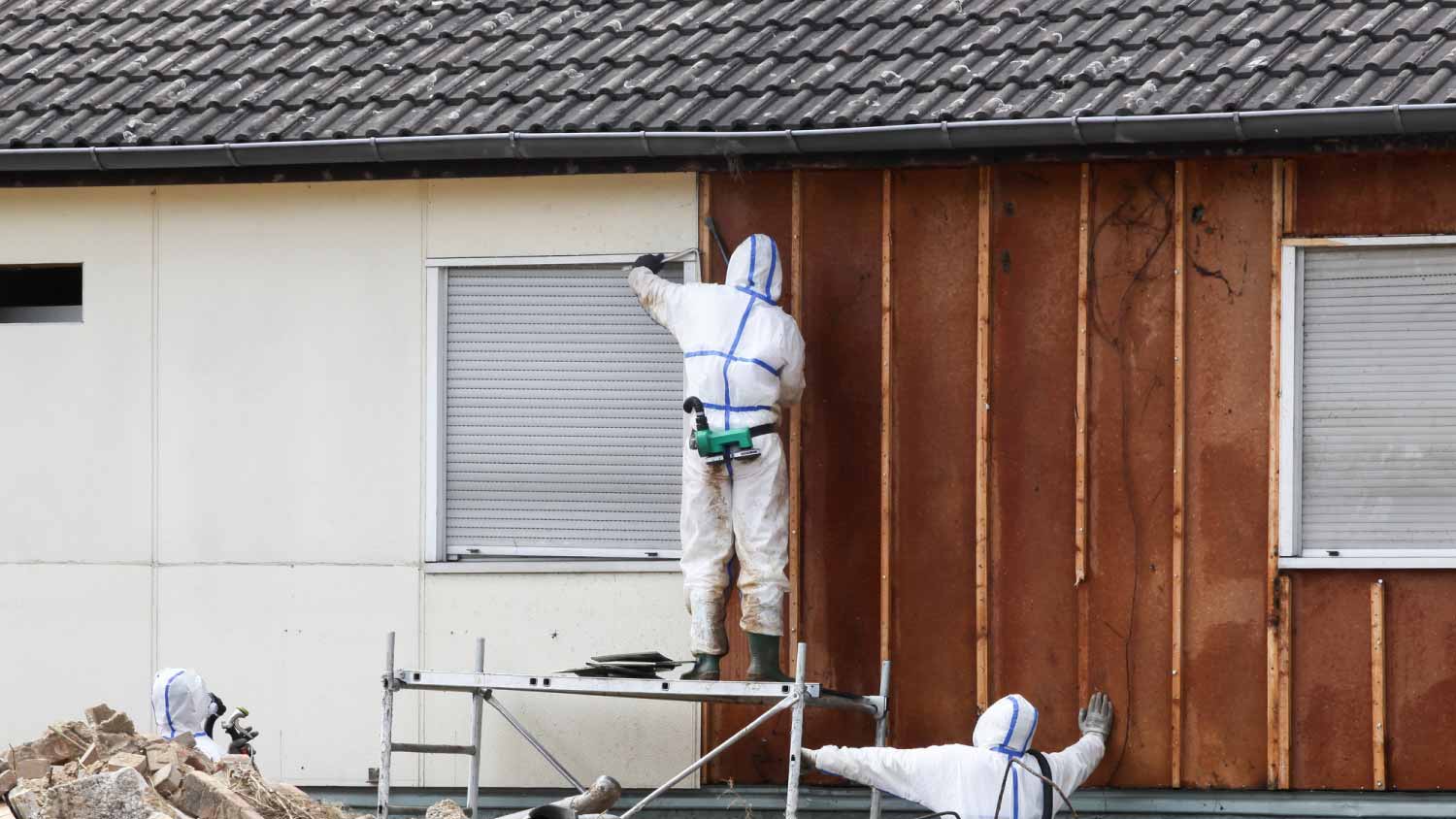
Asbestos-containing materials, like duct wrap, should be encapsulated using a sealant specifically formulated for asbestos. These sealants work to bind with asbestos fibers and help further neutralize them as a health risk. Whenever you’re working near asbestos-containing materials, be sure to keep safety as a top priority and wear a P-100-rated respirator as well as protective clothing.

Hazardous waste is waste that poses a threat to human or environmental health. This generally refers to waste that is flammable, corrosive, toxic, or reactive. To confirm if the waste you need to remove is considered hazardous waste, contact your local hazardous waste facility.

According to the Environmental Protection Agency (EPA), hazardous waste is generally classified into four main categories:

1. Characteristic Wastes: These exhibit at least one of four hazardous traits: ignitability (flammable, like gasoline), corrosivity (can rust or decompose materials, like car batteries), reactivity (unstable and can explode, like aerosol cans), or toxicity (harmful when ingested, like lead-based paint).

2. Listed Wastes: These are specific wastes from manufacturing and industrial processes that the EPA has officially designated as hazardous. They include byproducts from processes that use solvents, pesticides, and other chemicals.

3. Universal Wastes: These are commonly generated hazardous items that are subject to streamlined regulations. Examples include batteries, pesticides, mercury-containing equipment (e.g., bulbs), and some lamps.

4. Mixed Wastes: This category includes waste that contains both hazardous and radioactive components, making it subject to regulation by both the EPA and the Nuclear Regulatory Commission.

The Ryan, OK homeowners’ guide to asbestos removal services

From average costs to expert advice, get all the answers you need to get your job done.