





Top-rated asbestos removal specialists.

Get matched with top asbestos removal specialists in Binger, OK

Enter your zip and get matched with up to 5 pros

Need a pro for your asbestos abatement project in Binger, OK?

Select your specific project to find the pro for you.

Find Asbestos removal specialists in Binger

Avatar for Best Mold Testing & Inspection Services OKC
Best Mold Testing & Inspection Services OKC
5.0(
1
)
Asbestos - Testing

Serving Binger, OK and surrounding areas

In business since 2021

Free estimates

Credit card accepted

We are committed to excellence in every aspect of our business. We uphold a standard of integrity bound by fairness, honesty, and personal responsibility. Our distinction is the quality of service we bring to our customers. Accurate knowledge of our trade combined with ability is what makes us true professionals. Above all, we are watchful of our customers' interests and make their concerns the basis of our business.
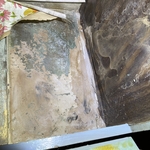
Mold in bathroom vanity
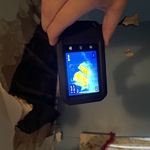
Thermal Imaging
Mold in bathroom
HVAC closet mold
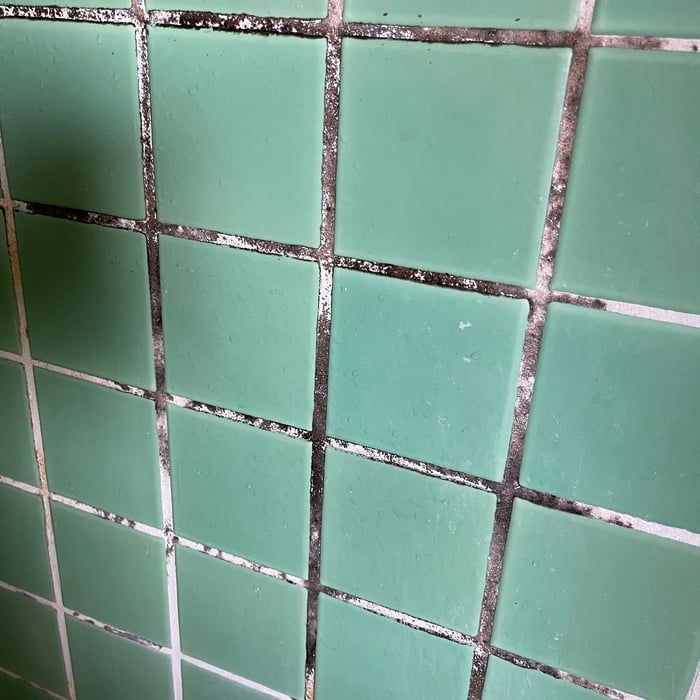
Mold In bathroom grout

+3

Response time20 mins
Response rate100%
Avatar for Premier Demolition
Premier Demolition
New to Angi
Asbestos - AbatementAsbestos Siding - Repair

Serving Binger, OK and surrounding areas

In business since 2010

Free estimates

Credit card accepted

At Jose Vargas we pride our company on reliability, great communication, integrity, and quality work. We are experts in our trade and will do our best to keep you as educated as we can on your particular task or project. We look forward to earning your business!

Asbestos Removal questions, answered by experts

According to the Environmental Protection Agency (EPA), hazardous waste is generally classified into four main categories:

1. Characteristic Wastes: These exhibit at least one of four hazardous traits: ignitability (flammable, like gasoline), corrosivity (can rust or decompose materials, like car batteries), reactivity (unstable and can explode, like aerosol cans), or toxicity (harmful when ingested, like lead-based paint).

2. Listed Wastes: These are specific wastes from manufacturing and industrial processes that the EPA has officially designated as hazardous. They include byproducts from processes that use solvents, pesticides, and other chemicals.

3. Universal Wastes: These are commonly generated hazardous items that are subject to streamlined regulations. Examples include batteries, pesticides, mercury-containing equipment (e.g., bulbs), and some lamps.

4. Mixed Wastes: This category includes waste that contains both hazardous and radioactive components, making it subject to regulation by both the EPA and the Nuclear Regulatory Commission.

Typically, homeowners insurance does not cover asbestos removal or abatement. Most policies exclude coverage for pollutants, contaminants, and hazardous materials, which includes asbestos. Because asbestos is often considered a pre-existing condition in older homes, its removal is usually viewed as a maintenance expense rather than an insurable loss. However, there is a key exception: if asbestos-containing materials are discovered or disturbed due to a covered event, such as a fire or storm, your policy may cover the abatement as part of the necessary repairs. For example, if a storm damages your roof and an insurance adjuster discovers asbestos while inspecting the damage, the policy might pay for the removal cost. If removal is not covered and is outside your budget, you might consider encapsulating the asbestos. The viability of this option depends on the condition of the contaminated materials. It is recommended to speak with an asbestos abatement specialist to understand your options.

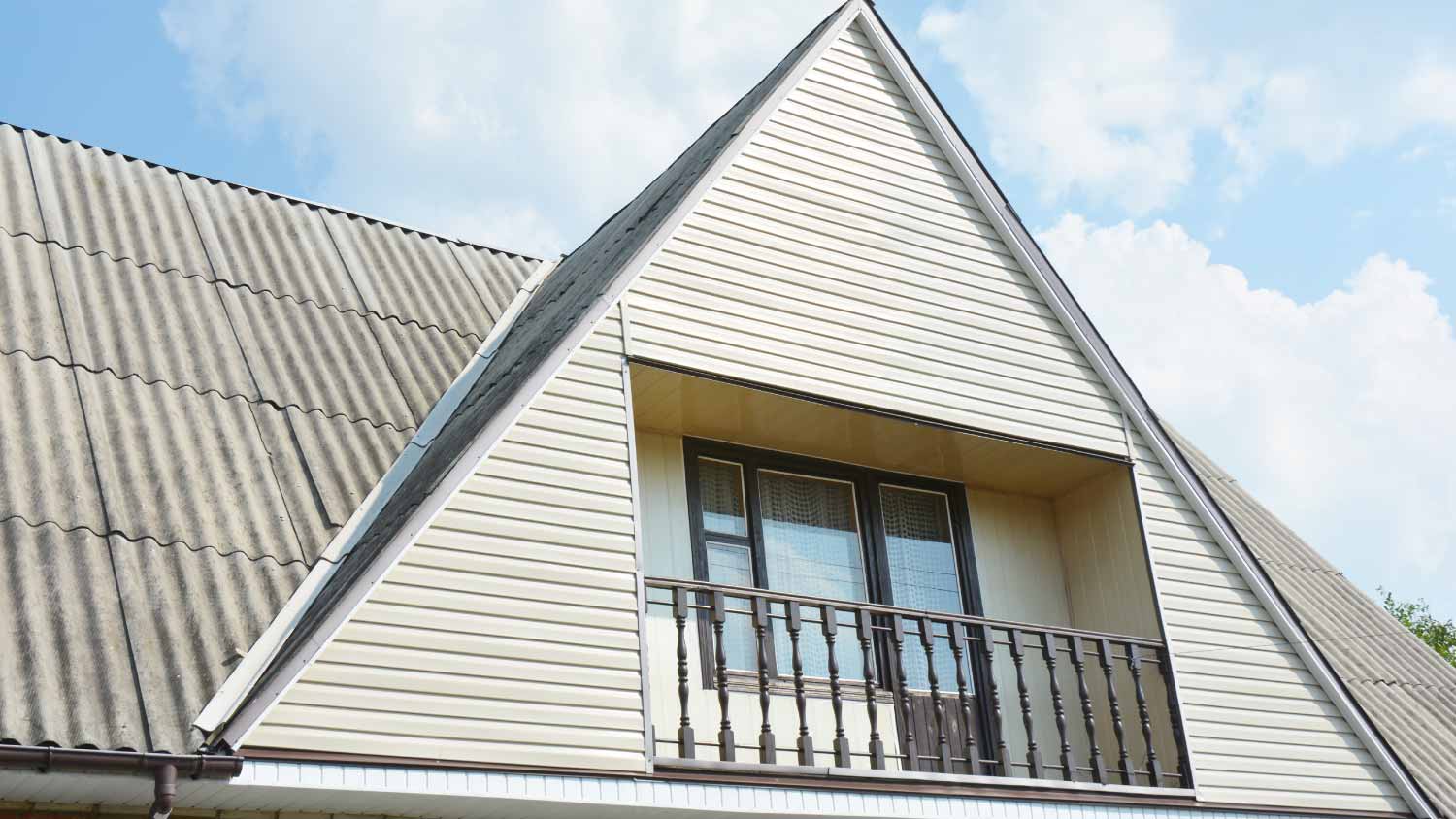
In the 1980s, the use of asbestos in house siding materials underwent a significant decline, ultimately being phased out by the mid-1980s to early 1990s. This change was largely due to a growing awareness of the severe health risks associated with asbestos exposure, particularly its link to lung diseases and cancers. With increased public concern and regulatory agency involvement, building codes and regulations were updated to restrict the use of asbestos in construction materials. 

Whether or not to buy a home containing asbestos is ultimately a decision for the homebuyer, and there are several things to consider. When in good condition and contained, asbestos is unlikely to present a health risk—it’s when those tiny fibers are loose and airborne that they become a problem. Consider any renovations you plan on doing to the home that could disturb existing asbestos and the cost of removal. If an inspection finds asbestos in a home on the market, you could negotiate with the seller for a lower price, though this isn’t a sure thing.

Asbestos-containing materials are not easily affected by water and do not disintegrate or dissolve when exposed to it. However, porous materials can deteriorate due to water exposure, leading to the release of asbestos fibers into the air. The settling of asbestos fibers can also occur as water makes them heavy, which reduces the risk of airborne exposure, though future disturbance of the materials could cause risk. Wetting asbestos-containing materials does not constitute safe removal, and the proper handling and disposal of asbestos materials should be left to professionals.

The Binger, OK homeowners’ guide to asbestos removal services

From average costs to expert advice, get all the answers you need to get your job done.