






Top-rated excavation pros.

Get matched with top excavation pros in Sherburne, NY

Enter your zip and get matched with up to 5 pros

Need a pro for your excavation project in Sherburne, NY?

Select your specific project to find the pro for you.

Find Excavation pros in Sherburne

Horton's Services, Inc.
New to Angi
Building Site - Preparation and Clearing - For Business

Serving Sherburne, NY and surrounding areas

Approved

In business since 2000

Free estimates

Offers commercial services

We take great pride in our experience, expertise, quality, and customer service that we provide to meet the consumer's needs. It is our mission to provide excellent workmanship and complete customer satisfaction from start to completion of a project. In order to understand the needs and expectations of our customers, we take great care to work and communicate with every customer in a professional manner. Our reputation is based on service, safety, and quality, regardless of how large or small the job.

Rail
Rail
Rail
Rail
Response time1 day
1 neighbors recently requested a quote
Avatar for Green Diamond Hauling LLC
Green Diamond Hauling LLC
New to Angi
Landscape - Minor Grading or Resloping

Serving Sherburne, NY and surrounding areas

Approved

Free estimates

Small jobs welcome

Credit card accepted

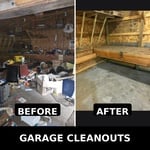
Green Diamond Hauling LLC is a veteran-owned local business proudly serving Central New York. We provide commercial and residential junk removal, cleanouts, dumpster rentals, light demolition, lawn care, and property management. We focus on clear communication, efficient service, and getting the job done right.\n\nWhen in doubt, throw it out!

4 neighbors recently requested a quote
...
Showing 1-10 of 60
Excavating questions, answered by experts

A crawl space can be as little as 42 inches below the grade of your house, but this is not always recommended in flood-prone areas. At a minimum, there must be at least 16 inches of clearance between the ground and the floor joists to access the space in an emergency.

Call 811 to locate and mark the gas lines at least three days before digging. In many areas, you can dig within 18 inches of the lines, though in some locations, the distance may be further. Check local regulations, as you may need a utility company representative onsite when digging. Document your calls to 811 and precautions taken to avoid gas lines. A homeowner can be held liable for hitting a gas line in some cases, but contacting the proper authorities and following all guidelines can offer protection.

There are several methods to hollow out a tree stump, and the best one depends on your tools, experience, and priorities. Common methods include using a chisel and hammer, a chainsaw, or burning.

  • Chisel and Hammer: This is often considered the easiest approach for those with limited tools or experience, though it is the most time-consuming.

  • Chainsaw: Using a chainsaw is the fastest method, but it comes with significant safety risks, especially for inexperienced users.

  • Burning: This can be an effective method, but it is not recommended unless you can first drill holes into the stump. Without holes, the stump will be difficult to light and may not burn completely through.

A power drill with at least a ⅜-inch diameter bit can make the job quicker and easier, regardless of the primary method. While you can use a chisel or chainsaw without a drill, it will require more time and effort. Always wear protective goggles and thick gloves, as splinters are an inevitable risk.

There is no standard depth for burying a septic tank; they are typically buried anywhere from 4 inches to 4 feet underground. The final depth depends on several factors, including the depth of your main sewer line, the height of the bedrock, soil type, local regulations, and the property's landscape. If you plan to grow grass or plants over the tank, a depth of at least 4 to 6 inches is recommended. Deeper tanks can be more difficult to locate, but a septic professional can help find it for you.

Directional drilling is complex and requires training to use the advanced machinery. It can be challenging to monitor the position of the drill since there’s no direct line of sight. Directional drilling can also be more expensive with a cost of $10 to $30 per linear foot compared to $5 to $12 per linear foot for trenching. 

The Sherburne, NY homeowners’ guide to excavation services

From average costs to expert advice, get all the answers you need to get your job done.