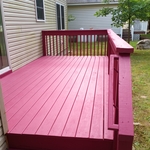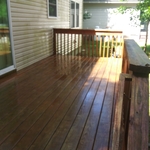





Top-rated deck staining pros.

Get matched with top deck staining pros in Nichols, NY

Enter your zip and get matched with up to 5 pros

Need a pro for your deck staining project in Nichols, NY?

Select your specific project to find the pro for you.

TRUSTED BY NICHOLS, NY HOMEOWNERS

  • Average homeowner rating star icon4.6
    Average homeowner rating
  • Verified reviews icon10
    Verified deck staining services reviews

Find Deck staining pros in Nichols

Avatar for Parlor City Construction and Property Services, Inc.
Parlor City Construction and Property Services, Inc.
3.9(
20
)
Exterior Home or Structure - Paint or Stain: LargeExterior Home or Structure - Paint or Stain: Medium

Serving Nichols, NY and surrounding areas

In business since 1999

Free estimates

Warranties offered

"Our aluminum siding on our 86 year old home looks beautiful after the crew from Parlor City Painting and Drywall painted it and we picked Sherwin Williams Smokey blue for the foundation. It looks stunning. They fixed corner pieces, replaced some siding by the front door. Chip and Elyis were meticulous in not getting paint anywhere other than where it was supposed to be and Chris did a fantastic job with siding issues. The guys were courteous and pleasant. Marc was pleasant to work with in explaining and scheduling the job and checking on the completion to make sure we were satisfied with the workmanship."
Johnson City addition
Johnson City
Johnson City
Johnson City
Popeyes

+16

Response time2 days
Response rate89%
Recommended by92%of homeowners
...
Showing 1-10 of 56
Deck Staining questions, answered by experts

Two coats of stain are ideal for the best protection and aesthetic appeal. However, if your decking is made of particularly dense hardwood, you may only need one coat. If you want an intense color, two coats are ideal.

Stains penetrate wood best when it's cool and dry, so you want to avoid moisture. If the wood is wet upon application, or if it rains before the stain dries, the water will soak into the wood and displace the staining solution. This leads to a flaky and blotchy look, which is the opposite of a sumptuous even coat. Once the stain has fully cured, after about 3 days, rain shouldn’t cause you any problems.

Limewash and whitewash are two techniques used to give brick a light, matte finish, but they differ in composition, application, and permanence. The best choice depends on your aesthetic goals and the specific surface.

Composition

  • Limewash: A natural and environmentally friendly option made from limestone, water, and sometimes pigments. It is breathable and soaks into porous surfaces like brick.

  • Whitewash: Traditionally made from lime, water, chalk, and binders, but a similar look can be achieved with watered-down white paint. It is paint-based and sits on top of the surface.

Appearance and Finish

  • Limewash: Provides a natural, textured appearance that allows the brick's character to show through. It offers a more traditional finish.

  • Whitewash: Creates a softer, more opaque finish, often used for a rustic or shabby-chic style.

Application and Permanence

  • Limewash: Is semi-permanent and can be removed, making it a good choice if you might want to change the look in the future. It requires more skill to apply and cannot be used on previously painted brick.

  • Whitewash: Is a more permanent solution. It is more forgiving to apply and can be used on painted brick. However, because it sits on the surface, it can trap moisture.

Ultimately, if you want a breathable, natural, and reversible finish for unpainted brick, limewash is a great option. If you need a more permanent, opaque coating that can be applied over painted surfaces, whitewash is the better choice. Whitewashing may also be more economical, costing approximately $1.40 to $4.20 per square foot.

Limewash and whitewash do not harm surfaces if you apply them correctly. Use on non-suitable surfaces can cause issues. For instance, applying limewash or whitewash to surfaces with existing sealants or incompatible materials may lead to poor adhesion or flaking. Also, harsh cleaning agents on limewashed or whitewashed surfaces can damage the finish. Proper preparation, application, and maintenance ensure that limewash and whitewash do not harm surfaces.

You’ll need to wait until the surface is completely dry, which can take anywhere from 24 to 48 hours under optimal conditions. The waiting period depends on several factors, including the type of siding and the weather conditions. Trying to paint before the surface is completely dry can trap moisture under the paint, leading to bubbling, blistering, and mold growth.

The Nichols, NY homeowners’ guide to deck staining services

From average costs to expert advice, get all the answers you need to get your job done.