





Top-rated weed maintenance pros.

Get matched with top weed maintenance pros in Dayton, NV

Enter your zip and get matched with up to 5 pros

Need a pro for your weed maintenance project in Dayton, NV?

Select your specific project to find the pro for you.

TRUSTED BY DAYTON, NV HOMEOWNERS

  • Average homeowner rating star icon4.4
    Average homeowner rating
  • Verified reviews icon228
    Verified weed maintenance services reviews

Find Weed maintenance pros in Dayton

No results for Weed maintenance pro in

Try adjusting your search criteria.
Weed Services questions, answered by experts

Clover is a sustainable, low-maintenance alternative to turfgrass, allowing homeowners to put away the mower while enjoying a lush and consistent lawn. The plant also attracts pollinators, adds nitrogen to low-nutrient soil, and holds up in a range of climates. Consult a local lawn care professional to determine whether replacing your grass with clover is right for your yard.
Technically, dandelions aren’t bad for your lawn, and they don’t directly kill grass. In fact, they appear in areas that are nutrient-deprived, and their long taproots can loosen the soil and bring nutrients closer to the surface. 

However, dandelions do spread quickly, and they can take over your lawn, eventually crowding out grass. This is why a healthy lawn is the best defense against dandelions.

A spot herbicide for weed control is effective at killing crabgrass and not grass, but it depends on the type of herbicide. Always check the label to ensure that your herbicide is safe for grass but tough on crabgrass. Overall, spot treatment is ideal because it puts fewer herbicides into the soil, which can damage the soil. If you’re wanting a natural remedy to crabgrass that also won’t harm surrounding grass, you can also hand-remove crabgrass or even pour boiling water or 5% vinegar over crabgrass as a spot treatment.

Sealing pavers helps cut down on weed growth, but it won’t wipe it out entirely. What it does really well is harden the joint sand—especially if you’re using a sealant with polymer additives—so weeds have a much harder time breaking through. It also blocks airborne seeds from settling in the cracks and keeps debris from building up. This results in fewer weeds, easier maintenance, and a cleaner-looking surface. Just remember, sealing is a strong defense—not a one-and-done solution. Stay on top of sweeping, spot-treating, and resealing every few years to keep your weeds in check.
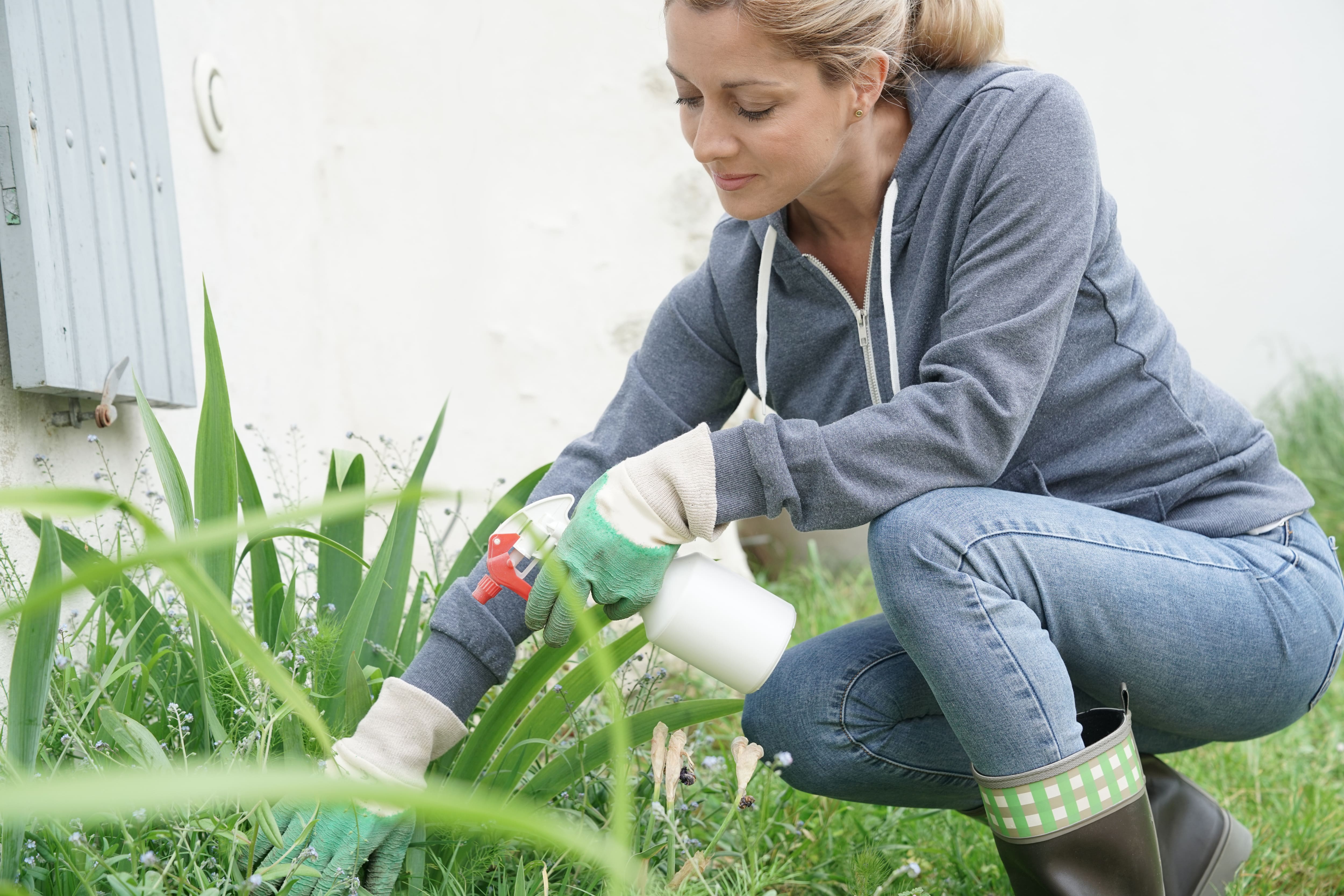
You should add 1 to 4 inches of mulch, depending on your garden type and needs. Keep in mind that no amount of mulch can completely prevent weeds, but a heavier coverage (closer to 4 inches) can suppress weeds enough that you are only seeing them sprout every few weeks. Finer mulch prevents weeds more effectively than large mulch, so if you’re using mulched leaves or shredded bark, 1 to 2 inches will likely suffice, while 3 to 4 inches is best for larger mulch, like bark chips or straw.

The Dayton, NV homeowners’ guide to weed maintenance services

From average costs to expert advice, get all the answers you need to get your job done.