We take great pride in our experience, expertise, quality, and customer service that we provide to meet the consumer's needs. It is our mission to provide excellent workmanship and complete customer satisfaction from start to completion of a project. In order to understand the needs and expectations of our customers, we take great care to work and communicate with every customer in a professional manner. Our reputation is based on service, safety, and quality, regardless of how large or small the job.\n
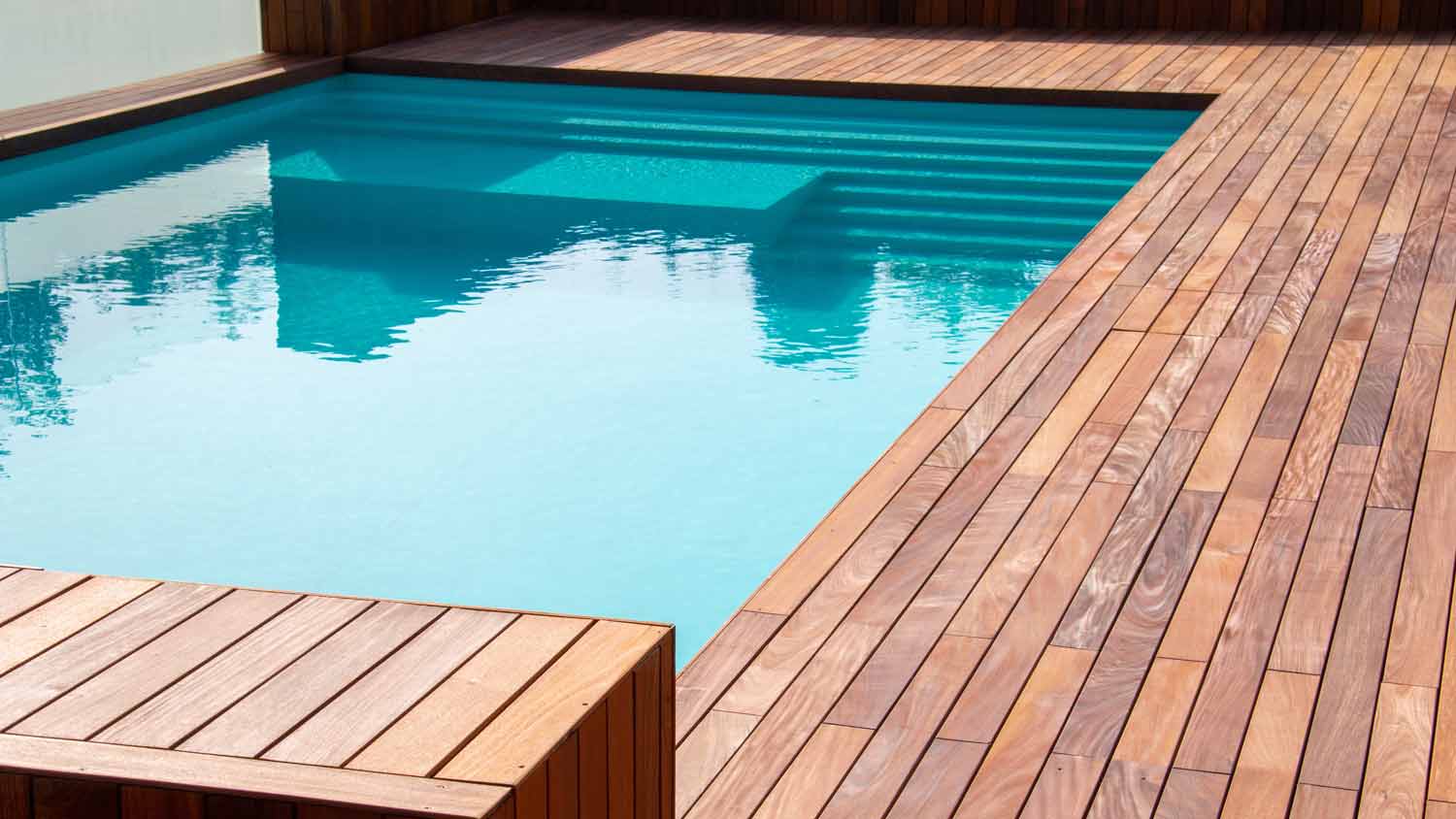
Coping is the material that lines the perimeter of a pool and seals the transition between the top of the pool wall and the water. Decking surrounds the poolscape and extends far beyond the water's edge to provide a safe walking and lounging area. In short, coping is the border between the decking and the pool itself.
In most cases, sanding an old deck before staining it is necessary to achieve a decent finish. If your old deck has a relatively new stain finish on it and you're only doing touch-ups, you can generally skip the sanding part. However, if your goal is to make the deck look and function better, sanding first is a must.
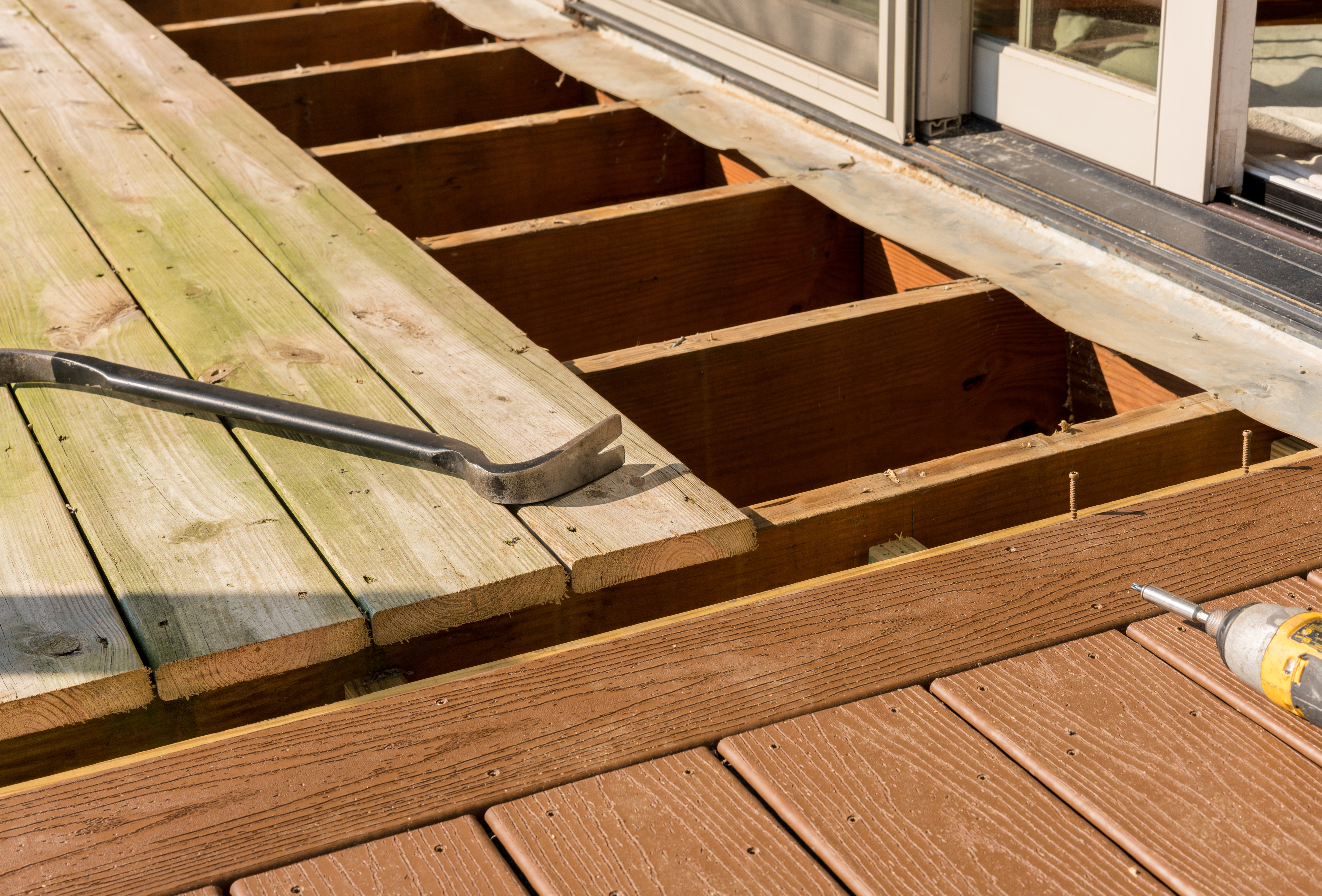
Composite decking might cost more upfront, but it delivers value in terms of durability. Unlike wood, composite material resists common deck problems such as rotting, fading, warping, and all the other things you don’t want a deck to do. The extra processes lead to a higher price tag, but you’ll save big in maintenance costs down the road.
When sourced responsibly, the most sustainable wood decking options are timber trees like redwood, pine, Douglas fir, Nootka cypress, and Western red cedar. These tree species are fast-growing with low carbon emissions. Plus, most timber woods make durable deck materials because of their resistance to rot and decay over time.
You can nail or screw composite decking, but 3-inch decking screws are the better fastener choice. Unlike nails, decking screws won’t back out of the composite material over time. There’s also little danger of splitting composite material when driving screws, so you don’t need to pre-drill holes unless otherwise recommended by your decking manufacturer.
The Beowawe, NV homeowners’ guide to deck repair services
From average costs to expert advice, get all the answers you need to get your job done.
Deck replacement costs depend on materials, any structural damage you need to fix, and more. This guide explores how much it costs to replace or repair a deck.
Refinishing your deck is a great way to restore its appearance and fall in love with your outdoor space. Use this guide to learn how much it costs based on factors like size and type.
Old and run-down porch railings can be an eyesore and pose a risk of falling. Find out how much it costs to replace your worn out porch railings with new materials.
If your deck is in bad shape, this deck repair checklist will help you inspect, clean, maintain, and repair it without missing any vital steps in the process.