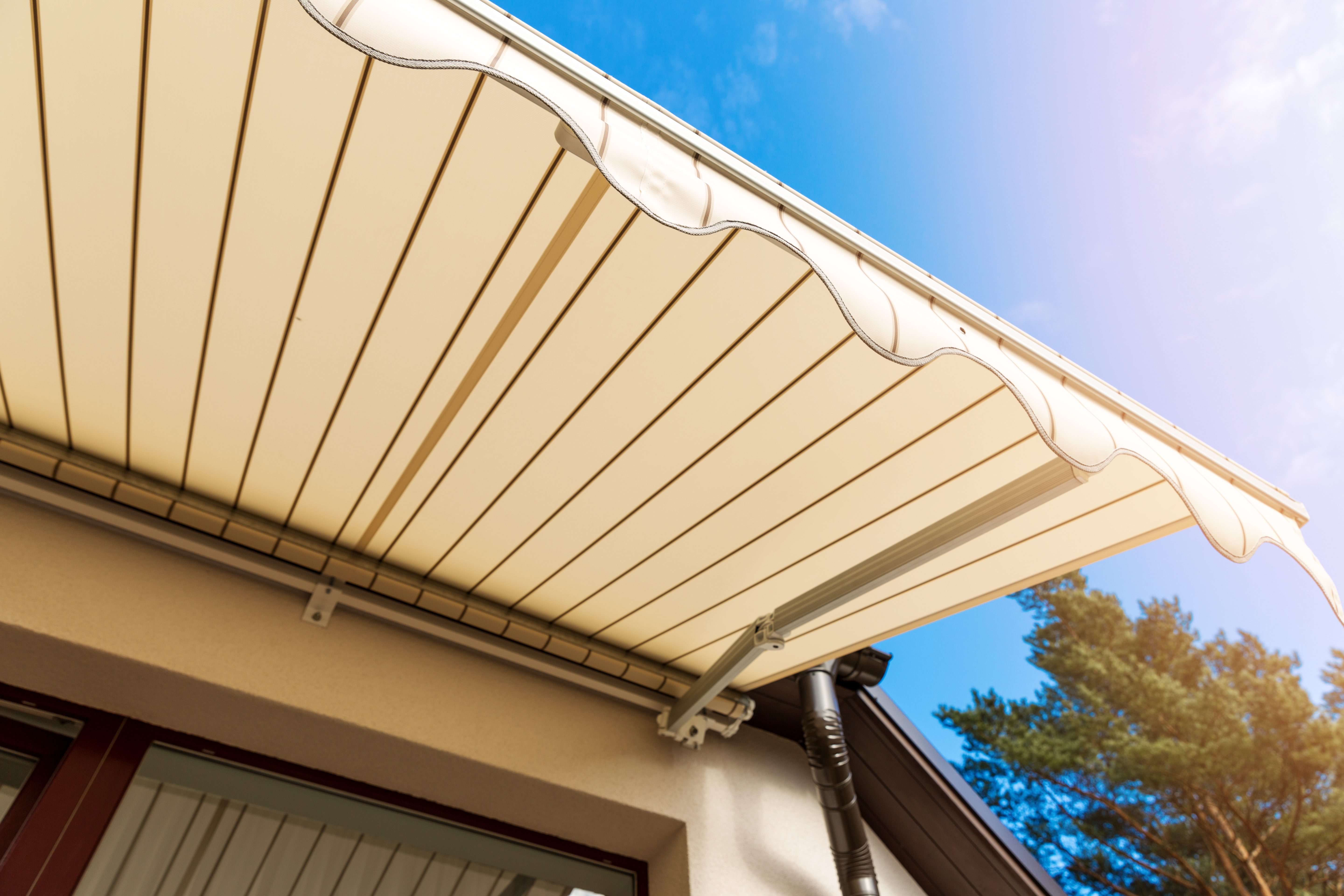
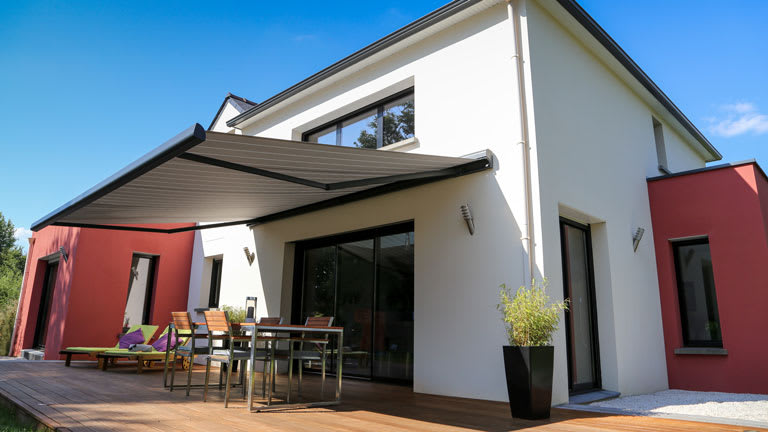
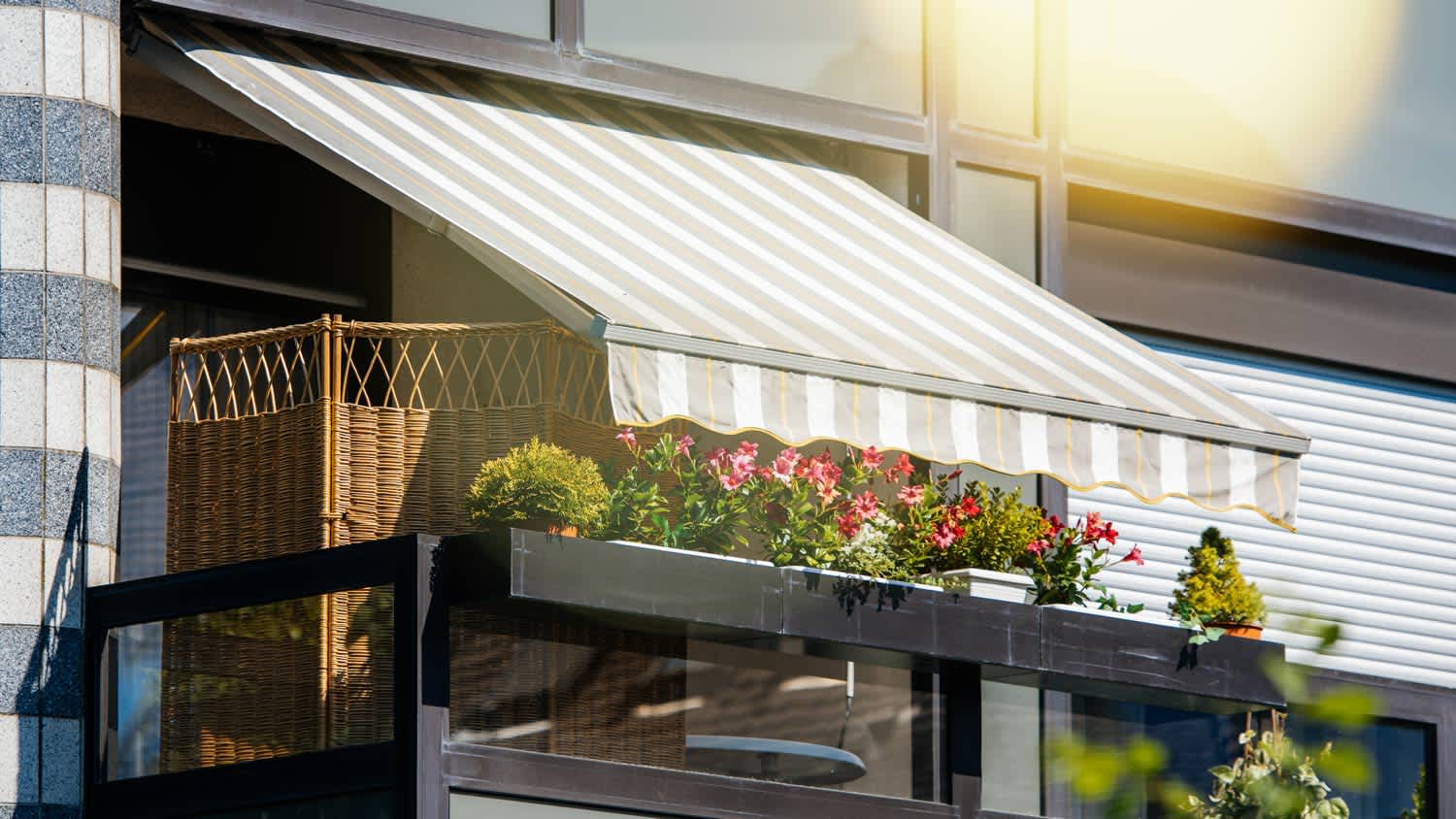
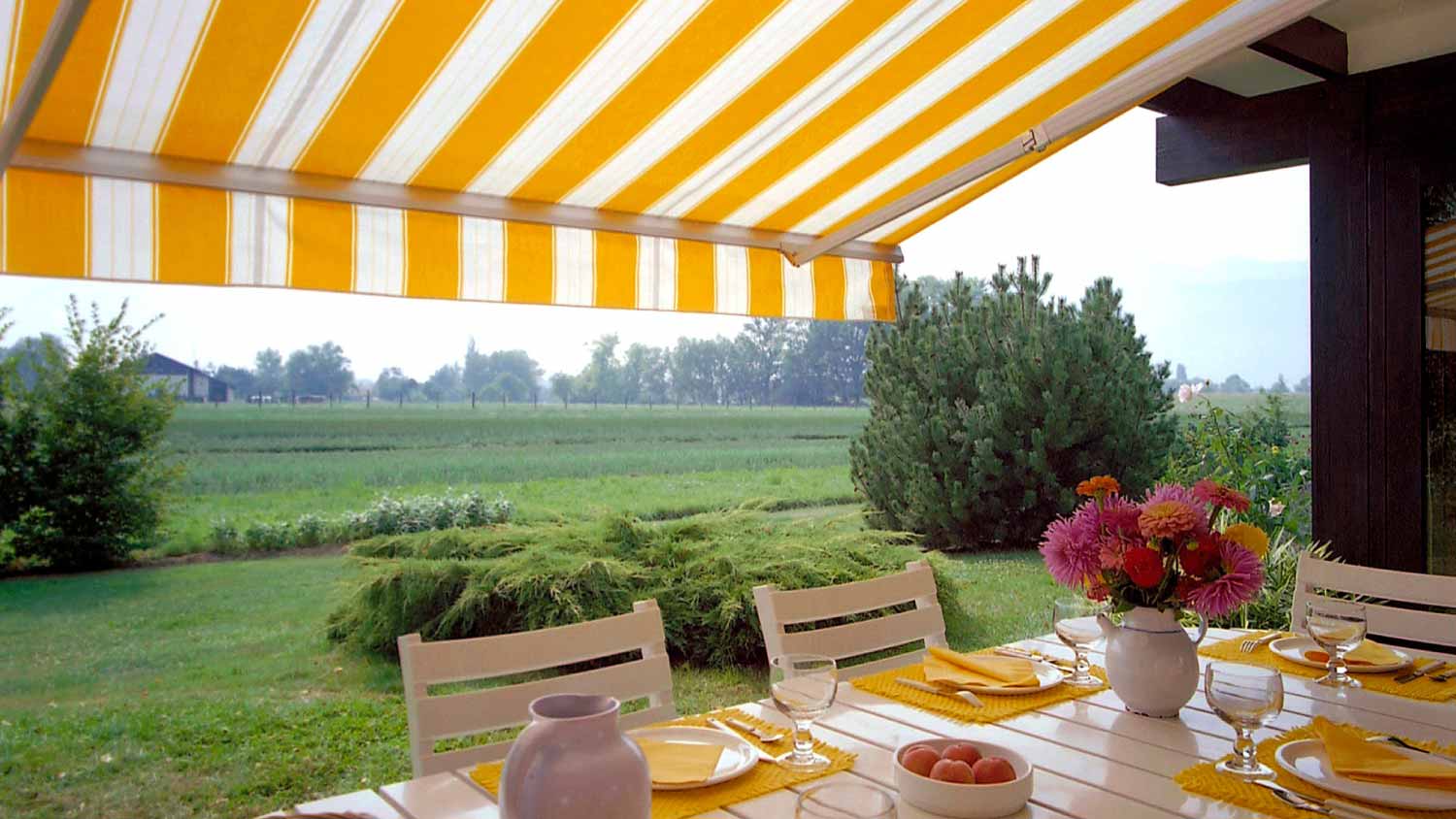
It’s not a good idea to allow heavy rain to fall on your awning, as puddling can occur and overload the awning. Your awning should be able to handle a light rain, though you should allow it to dry out before retracting it or open it to dry as soon as the rain stops. As always, consult manufacturer guidelines for using and caring for your awning.
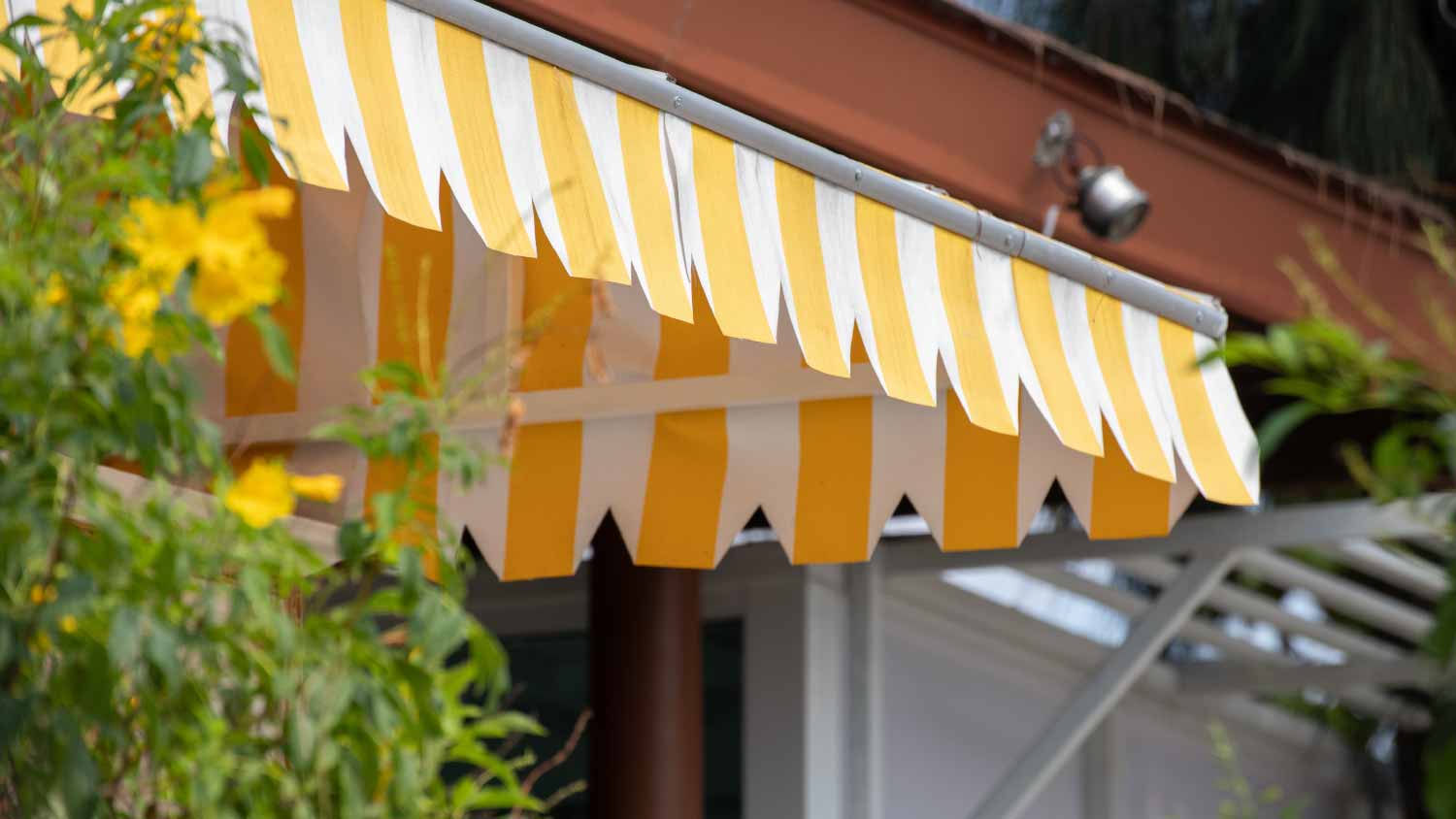
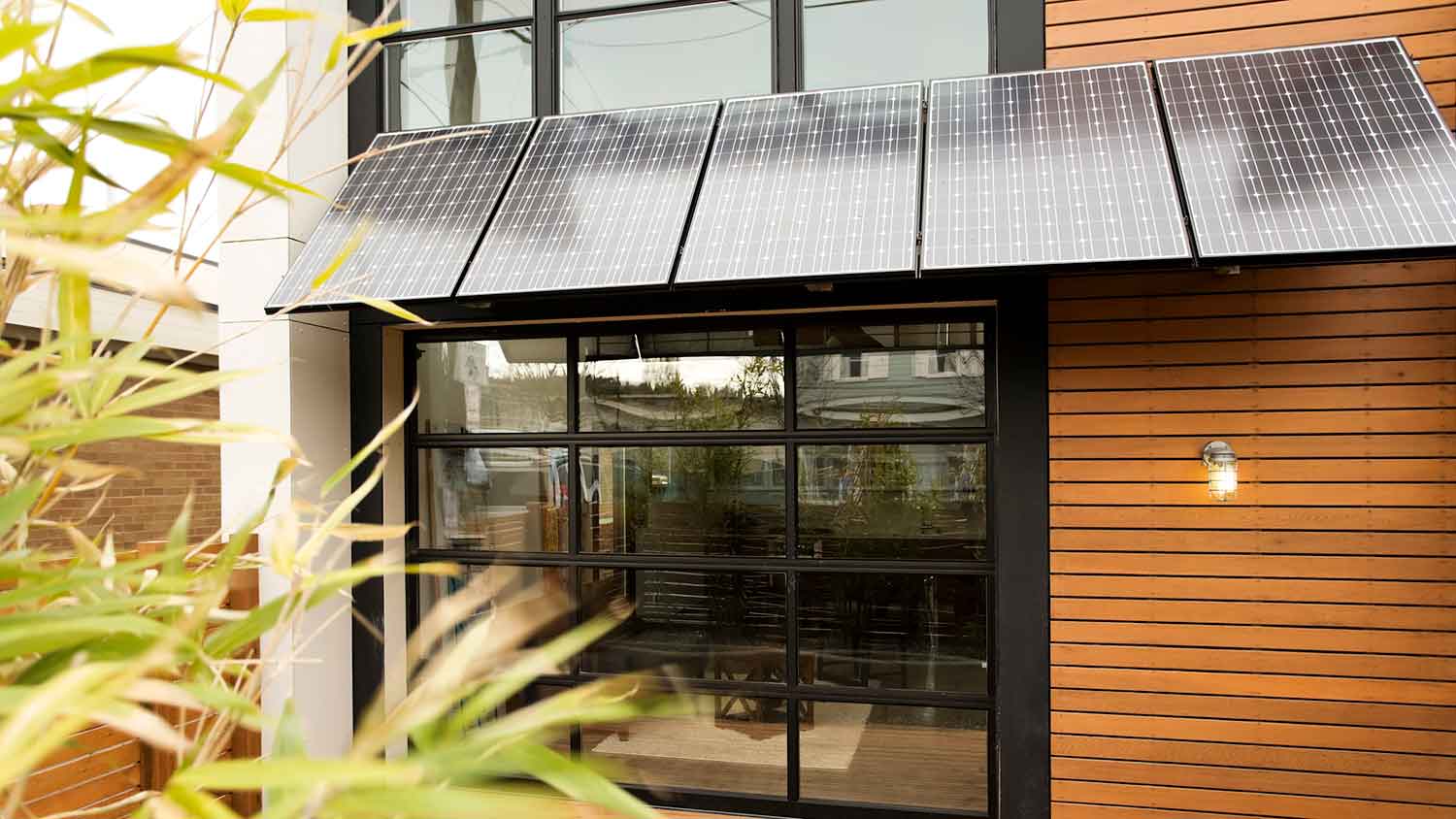
Awnings offer a variety of materials to choose from, each of which has its own benefits. Cotton is a lower-cost option that’s also more eco-friendly because it’s made from natural materials, while acrylic-coated polyester and vinyl offer better durability against harsh weather. Fiberglass and metal are also resilient to weather, although metal can be vulnerable to corrosion without protective sealant. Ultimately, you’ll need to consider your climate and your budget in deciding the best material for your awning.
Regular cleaning, inspecting for wear, and retracting during storms extend its lifespan.
Minor fabric patching is DIY-friendly, but frame and mechanical repairs should be professionally handled.
Acrylic, polyester, and vinyl are common options. Choose based on durability, UV resistance, and style.
The Roswell, NM homeowners’ guide to awning services
From average costs to expert advice, get all the answers you need to get your job done.
Need an awning that provides shade, comfort, and maybe some privacy from nosy neighbors? Use this guide to find the best awning for your home and lifestyle.